
Global Anemia Treatment Market Analysis (2025–2033): Innovation, Access, and the Next Phase of Patient Care
From iron deficiency to rare genetic disorders, anemia therapies are evolving rapidly as awareness, technology, and healthcare investments reshape a US$22.45 billion market by 2033

Introduction
Anemia, a condition marked by a shortage of healthy red blood cells or hemoglobin, remains one of the most widespread public health challenges worldwide. Affecting people across age groups and geographies, anemia reduces the blood’s capacity to carry oxygen, leading to fatigue, weakness, and in severe cases, life-threatening complications. While once considered primarily a nutritional disorder, modern medicine now recognizes anemia as a complex clinical condition tied to chronic diseases, genetic disorders, infections, and healthcare access.
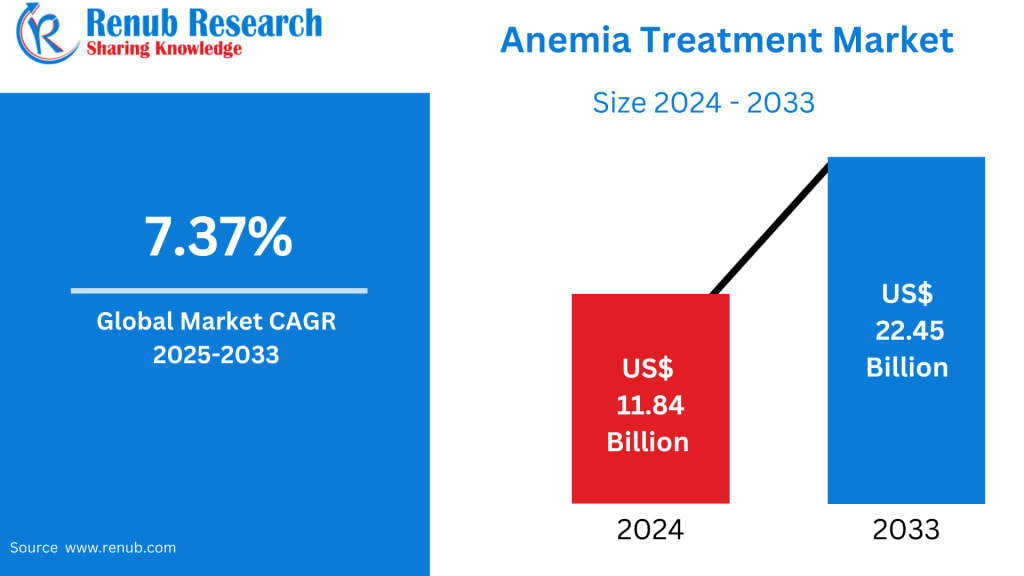
According to Renub Research, the global anemia treatment market is projected to expand from US$ 11.84 billion in 2024 to US$ 22.45 billion by 2033, registering a compound annual growth rate (CAGR) of 7.37% during 2025–2033. This growth is underpinned by rising disease awareness, expanding screening programs, and continuous innovation in therapeutic options. As healthcare systems worldwide prioritize early diagnosis and patient-centric care, anemia treatment is entering a new phase—one that blends affordability, technology, and targeted medicine.
Global Anemia Treatment Market Outlook
Anemia treatment aims to address the root cause of reduced red blood cell production or accelerated loss. Conventional approaches include dietary modifications, oral iron supplementation, vitamin B12 injections, and medications such as erythropoiesis-stimulating agents (ESAs) that encourage red blood cell formation. In more severe cases, patients may require blood transfusions or bone marrow transplantation.
Iron deficiency anemia remains the most prevalent form globally, particularly among women of reproductive age, children, and older adults. However, the therapeutic landscape has broadened to cover anemia linked to chronic kidney disease (CKD), cancer, inflammatory disorders, and inherited conditions such as thalassemia and sickle cell anemia. As preventive healthcare gains momentum, routine screening and early intervention are increasingly common, improving outcomes while expanding demand for treatment solutions.
Beyond clinical benefits, anemia management has become a quality-of-life issue. Effective treatment enhances energy levels, cognitive performance, maternal health outcomes, and workforce productivity—making it a critical focus area for public health planners and healthcare investors alike.
Growth Drivers in the Global Anemia Treatment Market
1. Rising Global Prevalence
The expanding burden of anemia is a primary growth engine for the market. More than 1.6 billion people worldwide are estimated to be affected, with iron deficiency as the leading cause. Women of childbearing age, children, and elderly populations are particularly vulnerable. Developing regions face disproportionate impact due to poor nutrition and limited healthcare access, while developed nations report growing cases linked to chronic diseases and aging demographics.
Renub Research highlights that the WHO Regions of Africa and South-East Asia are among the most affected, collectively accounting for hundreds of millions of women and children with anemia. This expanding patient pool continues to generate sustained demand for therapies across all income groups.
2. Technological and Therapeutic Innovation
Innovation is reshaping anemia management. New-generation intravenous (IV) iron formulations, long-acting ESAs, and emerging therapies such as hypoxia-inducible factor prolyl hydroxylase (HIF-PH) inhibitors are improving efficacy and patient compliance. Biopharmaceutical research has also introduced targeted treatments for specific conditions, including CKD-related anemia and myelodysplastic syndromes.
Notably, in August 2023, Bristol Myers Squibb received U.S. FDA approval for Reblozyl® (luspatercept-aamt) for first-line treatment of anemia in certain myelodysplastic syndrome patients. Similarly, in June 2024, Geron Corporation secured FDA approval for RYTELO™ (imetelstat) for transfusion-dependent anemia in lower-risk MDS patients. Such approvals reflect the industry’s focus on early intervention and precision medicine.
3. Healthcare Investment and Awareness
Government initiatives, international health organizations, and private players are significantly increasing investment in anemia awareness, screening, and treatment. Nutritional programs, food fortification policies, and maternal health campaigns are driving early diagnosis and therapy adoption. Diagnostic advancements have further improved detection rates, while pharmaceutical companies are expanding distribution in underserved markets.
In emerging economies, public-private partnerships are helping bridge affordability gaps, enabling wider access to both conventional and advanced therapies. As healthcare infrastructure strengthens, particularly in Asia-Pacific, Latin America, and the Middle East, anemia treatment uptake is set to accelerate.
Key Challenges
High Treatment Costs and Limited Accessibility
Advanced therapies such as ESAs, IV iron, and novel biologics remain expensive, limiting access in low- and middle-income countries. In regions with constrained healthcare budgets, patients often rely on low-cost oral supplements that may be insufficient for moderate to severe anemia. Inadequate reimbursement frameworks further restrict adoption of premium treatments, creating disparities between developed and developing markets.
Safety Concerns and Side Effects
Treatment-related side effects continue to influence patient compliance. Oral iron commonly causes gastrointestinal discomfort, while IV iron carries a risk of allergic reactions. ESAs, though effective, have been associated with cardiovascular risks in certain populations. For transfusion-dependent conditions, long-term iron overload and associated organ damage present additional clinical challenges. These safety considerations underscore the need for safer formulations and personalized treatment strategies.
Segment Insights
CKD Anemia Treatment Market
Anemia associated with chronic kidney disease represents one of the largest segments. Reduced erythropoietin production in damaged kidneys necessitates therapy using ESAs, iron supplementation, and, in advanced cases, transfusions. The global rise in diabetes and hypertension is driving CKD prevalence, directly boosting demand for anemia treatments. The emergence of HIF-PH inhibitors offers promising alternatives to conventional ESAs, positioning this segment for robust growth.
Aplastic Anemia Treatment Market
Although rare, aplastic anemia is a severe condition characterized by bone marrow failure. Treatment typically involves immunosuppressive therapy, transfusions, and bone marrow transplantation. Advances in stem cell transplantation and targeted therapies have improved survival rates, but high costs and donor availability remain barriers, particularly in developing nations. Ongoing research is expected to strengthen this niche segment.
Intravenous Iron Therapy
IV iron is gaining prominence due to its rapid efficacy in moderate to severe iron deficiency anemia, especially among CKD, cancer, and postpartum patients. Improved safety profiles and shorter treatment durations have enhanced its clinical appeal. Despite higher costs than oral supplements, its superior outcomes continue to drive adoption in hospital and perioperative settings.
Iron Chelators
Iron chelation therapy is essential for patients with transfusion-dependent anemias such as thalassemia and sickle cell disease. Oral chelators like deferasirox and deferiprone have improved compliance compared to older injectable formulations. While cost and side effects remain concerns, innovation in safer and more affordable chelators is expected to sustain growth.
Oral Anemia Treatments
Oral iron supplements remain the most widely used therapy due to affordability and ease of access, particularly in developing regions. They dominate mild to moderate cases but are limited by absorption issues and gastrointestinal side effects. Despite these drawbacks, oral treatments will continue to play a foundational role in global anemia management.
Regional Market Perspectives
United States
The U.S. market benefits from advanced healthcare infrastructure, high disease awareness, and strong pharmaceutical innovation. Rising CKD prevalence, cancer-related anemia, and nutritional deficiencies sustain demand. The FDA approval of Pyrukynd (mitapivat) in February 2024 for hemolytic anemia further highlights the country’s leadership in therapeutic innovation. However, high treatment costs and insurance coverage disparities remain challenges.
Germany
Germany’s market is characterized by early diagnosis, strong reimbursement frameworks, and high adoption of advanced therapies. In September 2024, PharmaNutra partnered with Fresenius Kabi to distribute Sucrosomal iron-based products, reflecting continued innovation in absorption technologies. Regulatory rigor may slow product launches, but Germany remains a key European hub for anemia treatment.
India
India represents a high-growth market driven by widespread anemia, particularly among women and children. Government initiatives such as Anemia Mukt Bharat and the National Sickle Cell Anaemia Elimination Mission are expanding awareness and access. While oral supplements dominate due to cost advantages, increasing availability of IV therapies and nutritional interventions is improving outcomes. Infrastructure gaps in rural areas remain a challenge, but long-term prospects are strong.
Brazil
Brazil’s market is supported by public health programs promoting food fortification and iron supplementation. Hospital adoption of IV iron is rising, although regional disparities in healthcare access persist. Public-private collaborations are gradually enhancing coverage, positioning Brazil for steady growth.
Saudi Arabia
In Saudi Arabia, high prevalence of genetic disorders such as thalassemia and sickle cell anemia, combined with strong government investment under Vision 2030, is fueling market expansion. Approval of PYRUKYND® (mitapivat) for thalassemia in 2025 underscores the country’s commitment to advanced care. While cultural and awareness barriers exist in some regions, Saudi Arabia is emerging as a major Middle Eastern market.
Market Segmentation Snapshot
By Disease Type:
Iron Deficiency Anemia
CKD Anemia
Sickle Cell Anemia
Aplastic Anemia
Thalassemia
Other Rare Anemias
By Therapy Class:
Oral Iron Supplements
Intravenous Iron
Erythropoiesis-Stimulating Agents (ESAs)
Iron Chelators
HIF-PH Inhibitors
Others
By Route of Administration:
Oral
Injectable
By Region:
North America, Europe, Asia Pacific, Latin America, Middle East & Africa, with in-depth coverage of major countries including the United States, Germany, India, Brazil, and Saudi Arabia.
Competitive Landscape
The global anemia treatment market features a mix of established pharmaceutical leaders and emerging biotechnology firms. Key players include Akebia Therapeutics, GSK plc, Vertex Pharmaceuticals, Pfizer, Sanofi, Takeda, Novartis, Johnson & Johnson, Roche, and Biocon Biologics. Companies are competing on innovation, geographic expansion, and patient-centric formulations, with a growing emphasis on targeted and long-acting therapies.
Final Thoughts
The global anemia treatment market is entering a transformative era. With Renub Research projecting a rise from US$ 11.84 billion in 2024 to US$ 22.45 billion by 2033, the industry’s growth reflects more than expanding patient numbers—it signals a shift toward earlier diagnosis, personalized therapies, and broader healthcare access.
While affordability, safety, and infrastructure gaps remain challenges, ongoing innovation in drug development, supportive government policies, and rising public awareness are reshaping the treatment landscape. As healthcare systems increasingly view anemia not just as a nutritional deficiency but as a complex, multi-faceted condition, the market is poised to deliver both improved patient outcomes and sustained economic opportunity.
In the years ahead, the convergence of technology, policy, and patient advocacy will determine how effectively the world addresses one of its most persistent health burdens—transforming anemia care from a basic intervention into a cornerstone of global preventive healthcare.
About the Creator
jaiklin Fanandish
Jaiklin Fanandish, a passionate storyteller with 10 years of experience, crafts engaging narratives that blend creativity, emotion, and imagination to inspire and connect with readers worldwide.
Keep reading
More stories from jaiklin Fanandish and writers in Longevity and other communities.
United States Rapid Acting Insulin Market Poised for Steady Growth Through 2033
United States Rapid Acting Insulin Market Overview The United States Rapid Acting Insulin Market is expected to witness consistent and meaningful growth over the forecast period, reflecting the country’s rising diabetes burden and continued advancements in diabetes care. According to Renub Research, the market is projected to increase from US$ 2.32 billion in 2024 to US$ 3.40 billion by 2033, expanding at a Compound Annual Growth Rate (CAGR) of 4.33% between 2025 and 2033.
By jaiklin Fanandish4 days ago in Longevity
Day 4 of Quitting
If this is how sobriety feels, maybe it’s better to go through life a little buzzed… this, along with other hits like, I want to kill myself, I wish I was dead, and I’m going to throw myself off a bridge have been the only thoughts on rotation these past few days. I promise myself that if, in a month, I still feel like this (‘this’ meaning despondent, full of rage, and simultaneously numb) I can go back to smoking. Until mid-February though? Nicotine is off the table.
By sleepy drafts4 days ago in Longevity
Mapped: Global Inflation by Country in 2025
As the world enters 2025, inflation remains a pressing concern, reshaping economies, influencing policymaking, and affecting the daily lives of millions. From soaring grocery bills to rising energy costs, global inflation continues to be a topic of intense scrutiny. Mapping inflation by country provides a revealing snapshot of the economic health of nations and highlights the uneven impact of monetary and fiscal policies worldwide. A Patchwork of Inflation Rates Inflation is far from uniform. While some countries are experiencing moderate price increases, others face alarming surges that threaten economic stability. According to recent global data, the highest inflation rates in 2025 are concentrated in countries grappling with political instability, currency devaluation, or supply chain disruptions. For instance, several emerging markets in Africa and South America report inflation exceeding 50%, reflecting deep structural challenges. Conversely, advanced economies like the United States, the Eurozone, and Japan have managed to keep inflation relatively contained, typically within the 2–4% range. Central banks in these regions continue to employ monetary tools, such as interest rate adjustments and quantitative easing measures, to balance growth with price stability. Yet even here, consumers notice subtle shifts in daily costs—from housing to transport—demonstrating that even moderate inflation has tangible effects. Drivers of Global Inflation in 2025 Several key factors have driven inflation patterns this year. One major contributor is energy prices. The global energy market has been volatile, with oil, gas, and renewable energy infrastructure costs impacting both production and household expenses. Countries heavily reliant on energy imports, particularly in Asia and Europe, have felt these effects acutely. Supply chain disruptions also play a role. While pandemic-related bottlenecks have eased compared to recent years, geopolitical tensions—such as conflicts in Eastern Europe and trade disputes in Asia—continue to create uncertainty. Industries from electronics to food production face challenges in sourcing materials, which in turn drives up prices for consumers. Currency fluctuations are another significant factor. Countries experiencing rapid depreciation of their national currencies see imported goods become more expensive, fueling domestic inflation. Venezuela and Zimbabwe remain extreme examples, where currency crises exacerbate the cost-of-living crisis. Regional Patterns and Surprises Mapping global inflation reveals intriguing regional trends. Latin America continues to experience high inflation, with countries like Argentina and Brazil witnessing double-digit increases due to fiscal deficits and volatile currencies. In contrast, neighboring Chile and Peru maintain relatively stable prices, reflecting stronger monetary frameworks and proactive policy responses. In Africa, inflation hotspots such as Nigeria and Sudan reflect both political instability and rising food costs, while South Africa and Kenya maintain moderate inflation thanks to more effective economic management. Asia presents a mixed picture: India and China have seen manageable inflation, while Pakistan and Sri Lanka confront higher rates due to energy and currency pressures. Europe largely benefits from coordinated policy responses through the European Central Bank and other regional mechanisms, though Eastern European nations face elevated costs due to energy dependence and geopolitical risks. North America remains relatively stable, but the U.S. Federal Reserve continues to weigh inflation control against potential economic slowdown. Implications for Policy and Consumers Global inflation data has profound implications for policymakers. Central banks must balance the need to curb inflation without triggering a recession, often requiring a careful mix of interest rate adjustments, monetary tightening, and stimulus measures. Fiscal policies, including taxation and government spending, also play a crucial role in influencing price levels. For consumers, inflation impacts purchasing power, savings, and lifestyle choices. High inflation erodes income, making essentials like food, housing, and healthcare less affordable. Countries with persistent inflation may also experience social unrest as citizens react to declining living standards. The Path Ahead The 2025 global inflation map underscores the importance of understanding both macroeconomic trends and local contexts. While advanced economies leverage sophisticated monetary tools, developing nations remain vulnerable to external shocks and internal inefficiencies. Economists argue that long-term solutions require structural reforms, improved governance, and diversified economies to withstand price pressures. As the year progresses, monitoring inflation by country provides valuable insight into global economic health. While challenges remain, data-driven strategies offer hope for stabilizing prices and ensuring that economies can grow without imposing unbearable burdens on citizens. In a world of interconnected markets, no nation is immune from the ripple effects of global inflation. By mapping these trends, policymakers, investors, and consumers gain a clearer understanding of where the risks lie—and how to respond to them effectively.
By Fiazahmedbrohi 4 days ago in Longevity


Comments
There are no comments for this story
Be the first to respond and start the conversation.