
Gallstones in women
Understanding Gallstones: Causes, Symptoms, and Treatment

Gallstones are solid particles that form in the gallbladder, a small organ located under the liver. These stones can vary in size, from tiny grains to large stones that can obstruct the normal flow of bile. Bile is a digestive fluid produced by the liver to help break down fats. When the gallbladder becomes dysfunctional or bile is not processed correctly, gallstones can develop. While not everyone with gallstones experiences symptoms, they can lead to severe health issues if left untreated.
Types of Gallstones
There are two main types of gallstones:
Cholesterol Gallstones: The most common type, these stones form when there is too much cholesterol in the bile. They appear as yellowish stones and can develop when the liver secretes excess cholesterol into the bile.
Pigment Gallstones: These stones are darker in color and are made from excess bilirubin, a substance produced when the liver breaks down red blood cells. They can form when the liver produces too much bilirubin, often due to liver diseases, infections, or blood disorders.
Causes and Risk Factors
The exact cause of gallstone formation is not always clear, but several factors can increase the risk of developing them. These include:
Obesity: Overweight individuals are more likely to have an imbalance in the substances that make up bile, increasing the likelihood of gallstone formation.
High-fat or high-cholesterol diet: Diets that are high in fat and cholesterol may increase the risk of gallstones.
Age and Gender: Women, especially those who are over 40, are at a higher risk of developing gallstones due to hormonal factors. Pregnancy, birth control pills, and hormone replacement therapy can increase estrogen levels, which may lead to gallstone formation. Men are generally at a lower risk, although it still increases with age.
Family history: A family history of gallstones can increase one's risk, suggesting a genetic predisposition.
Diabetes: People with diabetes are more likely to have high cholesterol, which can contribute to gallstone formation.
Liver diseases: Conditions such as cirrhosis or hepatitis can affect bile production, increasing the risk of pigment gallstones.
Rapid weight loss: Losing weight too quickly can lead to an imbalance in bile, which may promote the formation of cholesterol gallstones.
Certain medical conditions: Conditions like Crohn’s disease, irritable bowel syndrome, or sickle cell anemia can increase the likelihood of gallstones.
Symptoms of Gallstones
Many people with gallstones do not experience symptoms, a condition known as "silent" gallstones. However, when a gallstone obstructs the bile ducts, it can cause a sudden, sharp pain known as a gallstone attack or biliary colic. Common symptoms include:
Intense abdominal pain: This pain is typically felt in the upper right side of the abdomen and may radiate to the back or shoulder. The pain often occurs after eating, especially meals high in fat.
Nausea and vomiting: The blockage of bile flow can cause digestive issues, leading to nausea and vomiting.
Indigestion: A feeling of fullness, bloating, and discomfort after eating.
Jaundice: Yellowing of the skin and eyes, which can occur if the gallstone blocks the bile duct and prevents bile from flowing into the intestines.
Fever and chills: In severe cases, if an infection occurs (cholangitis), a person may develop a fever, chills, and other signs of infection.
If a gallstone blocks a bile duct and leads to inflammation or infection, medical intervention is necessary to avoid complications such as pancreatitis or gallbladder rupture.
Diagnosing Gallstones
Gallstones are typically diagnosed through a combination of physical examinations, patient history, and imaging tests. Some common diagnostic methods include:
Ultrasound: The most common and effective method for detecting gallstones. An ultrasound uses sound waves to create an image of the gallbladder and can reveal the presence of stones.
CT scan (Computed Tomography): This imaging test can help detect complications related to gallstones, such as infections or abscesses.
Blood tests: These can check for signs of infection, liver function abnormalities, or jaundice.
Endoscopic ultrasound (EUS): In some cases, a more detailed ultrasound may be performed by inserting a thin tube down the throat to provide closer images of the gallbladder.
Cholangiogram: A special X-ray of the bile ducts used to detect blockages or complications caused by gallstones.
Treatment Options for Gallstones
The treatment of gallstones largely depends on whether the individual is experiencing symptoms. If the gallstones are asymptomatic, doctors may recommend monitoring the condition without immediate treatment. However, if symptoms such as pain or complications arise, treatment options may include:
1. Medications
Oral bile acid pills: These can help dissolve cholesterol-based gallstones over time. However, this treatment is typically used for small stones and may take months or even years to be effective. It is not a common treatment due to the slow nature of the process and the potential for stones to recur.
2. Lithotripsy (Shockwave Therapy)
In rare cases, shockwave therapy can be used to break up gallstones into smaller pieces, which can then be passed through the bile ducts. However, this method is generally less effective and less commonly used than surgical options.
3. Surgery
The most common and effective treatment for symptomatic gallstones is cholecystectomy, which is the surgical removal of the gallbladder. This can be done through:
Laparoscopic cholecystectomy: A minimally invasive procedure where small incisions are made, and a tiny camera is inserted to guide the removal of the gallbladder. Most patients recover quickly with this method.
Open cholecystectomy: In cases where laparoscopic surgery is not an option, a traditional open surgery may be performed. This involves a larger incision to remove the gallbladder and usually requires a longer recovery time.
After a cholecystectomy, patients can live without a gallbladder, as bile will flow directly from the liver into the small intestine.
4. Non-Surgical Approaches
For some patients who cannot undergo surgery due to health reasons, non-surgical treatments like endoscopic retrograde cholangiopancreatography (ERCP) may be used to remove gallstones from the bile ducts.
Lifestyle and Preventive Measures
While certain risk factors for gallstones, such as genetics, cannot be controlled, lifestyle changes can help reduce the risk of developing them or prevent complications:
Maintain a healthy weight: Avoid rapid weight loss, as it can increase the risk of gallstones. Gradual weight loss through a balanced diet and regular exercise is the best approach.
Eat a high-fiber diet: Consuming plenty of fruits, vegetables, whole grains, and legumes can improve digestion and reduce the likelihood of gallstones.
Limit fatty foods: Reduce intake of high-fat and high-cholesterol foods, as they can promote the formation of gallstones.
Exercise regularly: Physical activity helps maintain a healthy weight and improves overall health, reducing the risk of gallstones.
Stay hydrated: Drinking plenty of water can help the liver function properly and promote bile production, which can reduce the risk of gallstone formation.
Gallstones are a common condition that can lead to significant discomfort and health complications if not properly managed. While they often do not cause symptoms, those who experience pain, nausea, jaundice, or other signs of a gallbladder problem should seek medical attention. Treatment options range from medications to surgical procedures, with cholecystectomy being the most common and effective method for treating symptomatic gallstones. Making healthy lifestyle choices, such as eating a balanced diet and exercising regularly, can help prevent gallstones and promote overall digestive health.
About the Creator
Keep reading
More stories from DIGITAL HUB and writers in Longevity and other communities.
Autoimmune Diseases (e.g., lupus, multiple sclerosis)
Autoimmune diseases are a group of conditions where the body's immune system mistakenly attacks its own healthy cells and tissues. This occurs because the immune system, which is designed to defend the body against harmful invaders like bacteria and viruses, fails to distinguish between foreign substances and the body's own cells. As a result, the body’s immune system targets and damages organs, tissues, and other bodily systems, leading to inflammation and a variety of symptoms.
By DIGITAL HUBabout a year ago in Longevity
Day 4 of Quitting
If this is how sobriety feels, maybe it’s better to go through life a little buzzed… this, along with other hits like, I want to kill myself, I wish I was dead, and I’m going to throw myself off a bridge have been the only thoughts on rotation these past few days. I promise myself that if, in a month, I still feel like this (‘this’ meaning despondent, full of rage, and simultaneously numb) I can go back to smoking. Until mid-February though? Nicotine is off the table.
By sleepy drafts14 days ago in Longevity
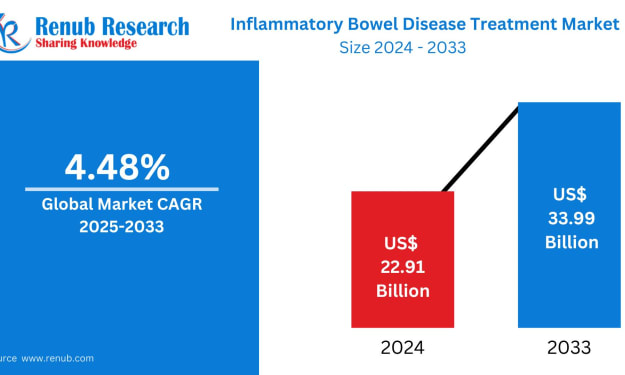
IBD Treatment Market Forecast and Size 2025–2033
Global IBD Treatment Market: Size, Growth, and the Forces Shaping the Next Decade The inflammatory bowel disease (IBD) treatment market is on a steady upward trajectory as innovation, awareness, and healthcare access converge across regions. Based on Renub Research estimates, the global IBD treatment market is expected to increase from approximately USD 22.91 billion in 2024 to about USD 33.99 billion by 2033, expanding at a CAGR of 4.48% between 2025 and 2033. This growth reflects the rising prevalence of IBD worldwide, the ongoing shift toward biologics and targeted therapies, and a broader push for early diagnosis and long-term disease management.
By Marthan Sir7 days ago in Longevity



Comments
There are no comments for this story
Be the first to respond and start the conversation.