
From Lab to Life: The Promise of Stem Cell Therapy
How a Revolutionary Treatment Gave My Father a Second Chance—and What It Means for the Future of Medicine

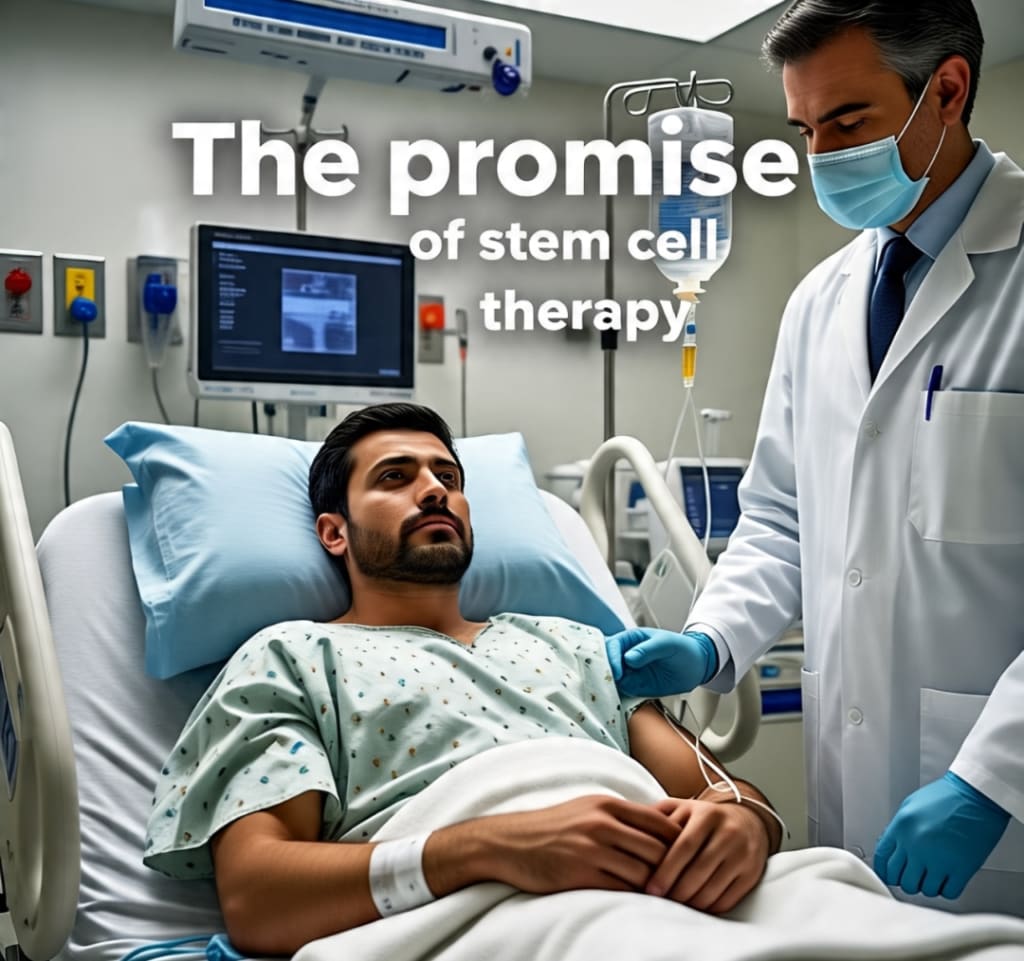
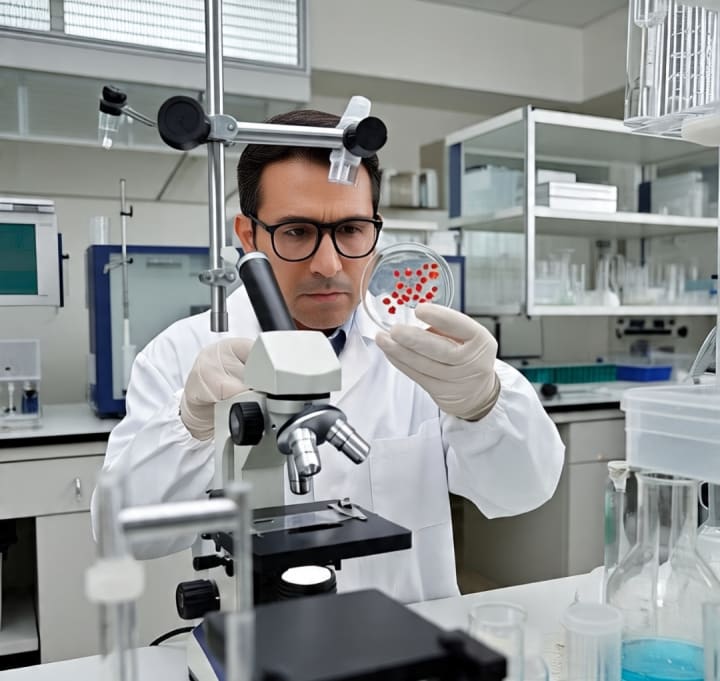
I never thought I’d find hope in a lab report. But when science and suffering collide, sometimes a miracle wears a white coat.
My father, once a vigorous man with a booming laugh and a green thumb that could resurrect a dying plant, was diagnosed with a severe degenerative spinal condition at 68. The news came like a crack of thunder in a clear sky: spinal stenosis with progressive nerve damage. He’d been having difficulty walking, numbness in his legs, and sudden sharp back pains for months. We’d chalked it up to aging or maybe arthritis, but this diagnosis was something else. Something that sounded... irreversible.
Doctors said it would only get worse. The nerves in his spine were slowly suffocating. “We can manage the pain, but there’s no real fix,” the neurologist said, as if reading off a menu. Surgery was risky. Physical therapy had limited success. And as weeks turned into months, my father—who once built a backyard shed from scratch—needed help getting out of a chair.
I watched his spirit deflate with every stumble and cane-assisted step. It broke something in me.
Then came the whisper of hope—stem cell therapy.
The First Glimmer
It wasn’t a traditional suggestion. One of my father’s old friends, an orthopedic surgeon, had attended a conference where doctors shared their success stories using mesenchymal stem cells—special cells found in bone marrow and fat that could, under the right conditions, transform into nerve, muscle, and bone cells.
“The science is new, but promising,” his friend said over coffee. “Some patients regain mobility, reduce pain significantly. It’s not mainstream yet, but it’s not snake oil either.”
We were skeptical. It sounded too good to be true—almost science fiction. But after weeks of reading journal articles, talking to specialists, and watching testimonial videos late into the night, we realized that maybe this wasn’t about chasing a miracle. Maybe this was about trying.
My father, usually a conservative man, said something that startled me.
“If there’s a chance I can walk without help again, I’ll take it. I don’t want to fade away in a recliner.”

The Journey Begins
The procedure wasn’t dramatic. There were no overnight transformations, no movie-magic scenes of a man rising from a wheelchair in slow motion. It began with harvesting stem cells from his own abdominal fat via a minimally invasive procedure. These cells were then processed in a lab, concentrated, and injected around the affected areas of his spine.
What followed was a waiting game—weeks of physiotherapy, movement tracking, and hope mixed with doubt. There were no guarantees. The doctors were careful not to overpromise. “Every body responds differently,” they said. “It may help. It may not.”
But then, one day, he walked—unassisted—from the bedroom to the kitchen.
It wasn’t perfect. He limped slightly, and you could see the strain. But he walked, without a cane, for the first time in over a year.
A Quiet Triumph
Progress came in inches, not miles. But each inch mattered.
He began gardening again, slowly tending to his roses. He started going on short walks with my mother. His voice, once dulled by chronic pain and frustration, became brighter. The laughter returned. And with it, hope—not just for us, but for others like him who had been told to "manage expectations."
Over the next few months, MRI scans showed reduced inflammation and nerve regeneration that was subtle but real. Pain levels dropped. Sleep returned. He was living—not just surviving.
We knew stem cell therapy wasn’t a magic wand. But for us, it was a bridge—between despair and possibility, science and healing, lab and life.
The Bigger Picture
I’ve come to realize that stem cell therapy isn’t just about one man walking again. It’s about rethinking the limits of medicine.
While still under research and regulatory scrutiny in many parts of the world, the field is rapidly evolving. From treating Parkinson’s and heart failure to potentially reversing diabetes and macular degeneration, stem cells are redefining what's possible in medicine.
The key is responsible innovation—not blind hope or unregulated clinics, but careful, ethical, patient-first science. My father’s treatment was conducted by a licensed medical team, within approved guidelines, and closely monitored. That distinction matters. Because while the promise is real, the path must be walked with both courage and caution.
The Moral of the Story
Watching my father regain control over his life taught me something deeper than science.
It taught me that hope is not naive. That the lines between lab experiments and human lives are thinner than we think. And that when guided by care, ethics, and relentless pursuit of knowledge, science can be deeply human.
If you're reading this and someone you love is suffering—don't stop asking questions. Don’t stop learning. Sometimes the very thing that sounds too experimental might be the answer we’ve been waiting for.
And to the scientists working behind microscopes, pipettes, and peer-reviewed journals: thank you. Because of your quiet brilliance, my father danced with my mother again on their 40th anniversary.
And that’s a miracle—delivered not by magic, but by medicine.
Moral of the Story:
Never underestimate the power of science guided by compassion. What begins in a lab can become the turning point in someone’s life. Stay informed, stay hopeful, and always fight for the possibility of healing.
About the Creator
Salman khan
Hello This is Salman Khan * " Writer of Words That Matter"
Bringing stories to life—one emotion, one idea, one truth at a time. Whether it's fiction, personal journeys.
Keep reading
More stories from Salman khan and writers in Longevity and other communities.
Understanding Alzheimer’s: Causes, Symptoms, and Hope
A Quiet Thief of Time Imagine sitting across from someone you’ve known all your life—your mother, father, spouse, or best friend—and they look at you with eyes that no longer recognize your face. It’s not just forgetting a birthday or misplacing keys. Alzheimer’s is a slow, painful unraveling of a person’s identity. It’s often called the long goodbye—a cruel thief of memories, language, emotions, and eventually, life.
By Salman khan9 months ago in Longevity
7 Essential Foods for Healthy Aging
As people grow older, their bodies go through many natural changes. Metabolism slows down, appetite may decrease, and nutrient absorption can become less efficient. Because of these changes, nutrition becomes even more important during the later stages of life.
By Being Inquisitive2 days ago in Longevity
Her Lab Worked to Future-Proof Fruits and Vegetables
In a world increasingly threatened by climate change, pests, and shifting agricultural conditions, scientists are racing to develop fruits and vegetables that can withstand unpredictable environments. At the forefront of this effort is Dr. Amara Patel, whose laboratory focuses on creating resilient crops through cutting-edge research in genetics, soil science, and sustainable farming practices. Her work is transforming the way we think about food security, nutrition, and the future of agriculture. Dr. Patel’s lab, based at a major research university in Davis, is dedicated to understanding how environmental stressors—such as drought, extreme temperatures, and soil nutrient depletion—affect crop yield and quality. By combining traditional breeding techniques with modern biotechnology, her team is developing varieties of fruits and vegetables that can thrive under these conditions without compromising nutritional value or flavor. “Food production is facing unprecedented challenges,” Dr. Patel explained. “If we want to ensure a stable supply of healthy produce for future generations, we need crops that are adaptable, resilient, and sustainable.” Her approach is multifaceted, involving the study of plant genetics, soil microbiomes, and pest resistance. By examining how different plant varieties respond to stressors, her team can identify traits that make certain crops more robust and suitable for diverse climates. One of the lab’s notable achievements has been the development of a drought-resistant tomato. Using a combination of selective breeding and genome analysis, Dr. Patel’s team identified key genes that allow the plant to retain moisture and maintain fruit quality even under prolonged dry conditions. This innovation is particularly valuable for regions experiencing water scarcity, offering farmers a way to maintain production while conserving a critical resource. In addition to tomatoes, the lab has worked on leafy greens, peppers, and root vegetables. For each crop, researchers focus on traits such as nutrient retention, disease resistance, and shelf life. By improving these characteristics, the lab aims to reduce post-harvest losses—a significant issue that contributes to global food waste. According to the Food and Agriculture Organization (FAO), roughly one-third of all food produced globally is lost or wasted, with much of it being fruits and vegetables that fail to reach consumers in optimal condition. Dr. Patel’s work also emphasizes the role of sustainable agricultural practices. Beyond genetics, her team studies how soil health, irrigation techniques, and microbial interactions can enhance plant resilience. Experiments in controlled greenhouses and field trials have demonstrated that crops grown in enriched soils with diverse microbiomes are better able to tolerate pests, pathogens, and environmental stress. This approach aligns with broader efforts to reduce reliance on chemical fertilizers and pesticides while promoting ecological balance. Collaboration is central to the lab’s mission. Dr. Patel partners with agricultural institutes, farmers’ cooperatives, and technology firms to translate lab findings into practical solutions. Pilot programs in California’s Central Valley have introduced resilient crop varieties to commercial farms, providing valuable data on performance in real-world conditions. Farmers report higher yields, reduced crop loss, and improved resistance to local pests, demonstrating the tangible benefits of scientific innovation in agriculture. The lab is also exploring ways to make these innovations accessible globally. Partnerships with organizations in Africa, South Asia, and Latin America aim to introduce resilient crops to regions vulnerable to climate change and food insecurity. By sharing knowledge and providing locally adapted seed varieties, Dr. Patel’s team hopes to empower communities to achieve sustainable food production. Challenges remain, including regulatory hurdles, public perception of genetically enhanced crops, and the need to balance innovation with ecological sustainability. Dr. Patel emphasizes that her team prioritizes transparency and safety in every project. Public engagement initiatives, workshops, and educational programs help communities understand the science behind resilient crops and the potential benefits for health and food security. The future of agriculture may depend on the kind of forward-thinking research conducted in labs like Dr. Patel’s. With climate models predicting more frequent extreme weather events, her work is helping to safeguard the global food supply. By combining scientific rigor, ecological awareness, and a commitment to community engagement, the lab is cultivating crops that are not only productive but also resilient enough to endure the challenges of the 21st century. Dr. Patel sees her work as part of a larger movement toward sustainable innovation in food systems. “We are trying to anticipate tomorrow’s challenges today,” she said. “By understanding plants at a genetic, ecological, and practical level, we can design crops that are ready for a changing world. It’s about resilience, sustainability, and feeding people without compromising the planet.” As research continues, the lab is expanding its focus to include fruits and vegetables rich in essential micronutrients, aiming to address not only quantity but also the quality of the global food supply. By future-proofing crops, Dr. Patel and her team are helping to ensure that healthy, nutritious food remains accessible for generations to come, no matter what challenges lie ahead. The combination of scientific innovation, practical application, and global outreach makes this lab a beacon of hope for agriculture in an era of uncertainty—proving that with the right tools, knowledge, and determination, the future of food can indeed be safeguarded.
By Fiaz Ahmed about 11 hours ago in Longevity
My First Time Skiing and I Got Lost, Alone, in the French Alps
Looking back, I can trace some of my life’s biggest adventures to a simple action from my sister. She’d introduced me to Tommy (a very long time ago), a colleague of hers, who had overshared his penchant for Italian-looking women, and I ticked that box.
By Chantal Christie Weissabout 16 hours ago in Humans



Comments
There are no comments for this story
Be the first to respond and start the conversation.