
Financial Fitness
The Link Between Wealth Habits and Longevity


How managing your money wisely may be just as important for a long life as eating well or staying active.
When we think about living a long and healthy life, the usual advice quickly comes to mind—eat nutritious food, exercise regularly, get good sleep, and manage stress. But there’s a less obvious factor that’s gaining attention among health experts and researchers alike: financial fitness.
While it might not seem like it at first glance, your relationship with money can significantly influence your mental well-being, physical health, and even your lifespan. According to multiple studies, individuals who manage their finances well—regardless of income level—tend to experience less stress, enjoy better health outcomes, and often live longer lives.
Let’s explore how smart financial habits can serve as a longevity booster, and how building wealth (not just money, but financial security and peace of mind) is truly a health investment.
Money Stress Is Health Stress
Financial stress is one of the most common and chronic sources of anxiety worldwide. Worries about bills, debt, job security, and future savings can lead to:
Chronic cortisol elevation (the stress hormone)
Insomnia and poor sleep
Anxiety and depression
Unhealthy coping behaviors like overeating or substance abuse
According to the American Psychological Association, 72% of adults report feeling stressed about money at least some of the time. This kind of ongoing mental pressure doesn’t just make you feel bad—it actively increases your risk of heart disease, inflammation, and weakened immunity.
Financial Security = Access to Better Health
When people have savings and financial stability, they’re far more likely to:
Afford healthier food options
Access regular medical care
Pay for gym memberships or wellness services
Invest in mental health support like therapy
Live in safer neighborhoods with green spaces
In contrast, those struggling financially often face “health deserts”—where nutritious groceries, quality healthcare, and wellness resources are hard to reach. Over time, these gaps can widen health disparities and reduce life expectancy, especially in marginalized or underserved communities.
The Wealth-Longevity Link: What the Science Says
A groundbreaking study published in JAMA Health Forum in 2021 revealed that greater wealth was strongly associated with longer life expectancy, even after accounting for other factors like education and lifestyle. The top wealth quartile lived an average of 8–10 years longer than those in the bottom quartile.
The reason isn’t just luxury—it’s security. Financially fit individuals can recover from setbacks faster, maintain autonomy as they age, and access high-quality healthcare without delay. Wealth becomes a buffer against life’s inevitable uncertainties.
Healthy Wealth Habits for a Long Life
You don’t have to be a millionaire to build financial habits that support your longevity. In fact, many of the most effective strategies are simple, consistent actions you can take over time. Here are a few key principles:
1. Spend Less Than You Earn
This timeless advice forms the core of financial wellness. Budgeting doesn’t mean restriction—it means giving your money direction. Every dollar saved is a deposit into your future freedom and peace of mind.
2. Emergency Fund = Stress Insurance
Having 3–6 months’ worth of living expenses saved can significantly reduce anxiety. Knowing you have a buffer can lower your daily stress levels and allow you to make better long-term decisions.
3. Automate Your Savings
Make saving a habit, not a hope. Set up automatic transfers to savings and retirement accounts. Over time, this "set it and forget it" method builds financial stability effortlessly.
4. Invest for the Long Term
Investing in stocks, mutual funds, or retirement plans like a 401(k) or IRA helps your money grow while you sleep. Compound interest is like a health supplement for your future self.
5. Avoid High-Interest Debt
Credit card debt can crush financial confidence and create ongoing stress. Pay it off as aggressively as possible, and consider working with a financial advisor if you’re struggling to stay afloat.
Financial Confidence Feeds Emotional Wellness
Beyond just practical outcomes, financial literacy and empowerment can improve self-esteem, decision-making, and emotional resilience. Feeling in control of your money often translates into feeling in control of your life—which leads to healthier choices, better relationships, and greater overall satisfaction.
Preparing for the Future: Retirement, Healthcare, and Legacy
Planning ahead doesn’t just benefit you—it reduces the burden on your loved ones. Securing retirement savings, long-term care insurance, and estate plans are all part of a healthy life strategy. These actions:
Preserve your independence
Ensure medical preferences are honored
Reduce stress for family members during tough times
A well-planned financial future can be a gift to both yourself and your descendants.
Final Thoughts: Wealth Is More Than Money
Financial fitness is not about being rich. It’s about being prepared, feeling secure, and reducing the chronic stress that chips away at well-being. Just like you exercise your muscles or choose a salad over fries, making wise financial decisions is an act of self-care—and one that pays dividends for decades. see this link site: https://youtube.com/shorts/zlQl7IeEIFg
So next time you think about longevity, don’t just reach for your sneakers or a superfood smoothie. Pull up your budget, check in on your savings, and remember: building financial health is building life itself.
About the Creator
Cotheeka Srijon
A dedicated and passionate writer with a flair for crafting stories that captivate, inspire, and resonate. Bringing a unique voice and perspective to every piece. Follow on latest works. Let’s connect through the magic of words!
Keep reading
More stories from Cotheeka Srijon and writers in Longevity and other communities.
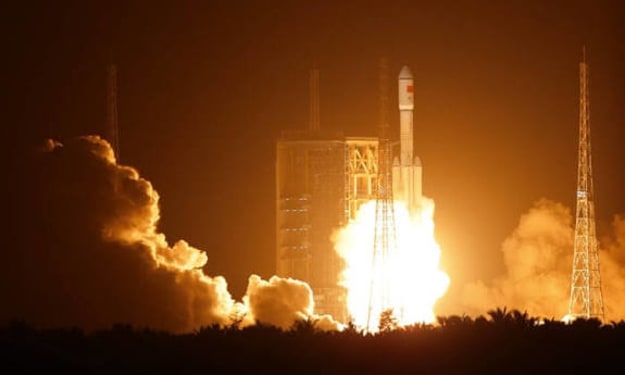
How China Is Challenging the U.S. to Become the Next Great Space Power
As Beijing’s space ambitions expand, Washington faces an intensifying geopolitical and technological rivalry in orbit and beyond. In the early decades of the 21st century, the United States long stood unchallenged as the dominant space power — a position built on decades of NASA leadership, unmatched launch capability, and a vibrant commercial space economy. But today, a determined China is mounting one of the most consequential strategic challenges in space since the Cold War, pushing to rival — and ultimately surpass — the U.S. in space influence, technology, and strategic advantage. National Strategy and Long‑Term Vision China’s leaders have openly signaled their ambition to become a global space powerhouse. Official space policy documents and state planning envision a broad array of capabilities — from heavy‑lift rockets to lunar exploration — aimed at reshaping the space order that has been U.S.‑dominated for decades. According to analyses of government planning, Beijing intends to establish a full suite of launch vehicles, satellites, and space infrastructure that could surpass current international norms by mid‑century. Underpinning this vision is a belief among Chinese space officials that self‑reliance and indigenous innovation are key to international competitiveness. Recent reports in state media emphasize that China’s aerospace industry is pushing far beyond imitation toward original technological breakthroughs in areas like rocket manufacturing, intelligent space systems, and advanced materials — all with the strategic goal of securing leadership in space. Commercial Space: From Government Giants to Private Innovators China’s rapid ascent isn’t limited to state space agencies. A growing ecosystem of private space companies — much like the commercial boom seen in the U.S. — has taken root, focusing on reusable rockets, satellite networks, and novel space services. A recent South China Morning Post report highlights Beijing’s push to encourage private innovation within its space sector, supporting technologies such as reusable launch vehicles, space debris monitoring, extraterrestrial resource utilization, and even in‑space biomanufacturing — fields long dominated by U.S. firms such as SpaceX or Blue Origin. This commercial expansion broadens China’s capabilities and compresses the technological gap with the U.S., challenging American assumptions that commercial innovation is exclusively an American forte. It also signals a shift in global space economics, where China may soon contend for commercial markets once dominated by Western companies. Military and Strategic Dimensions Alongside civil and commercial ambitions, China’s space strategy has clear military implications. U.S. strategic assessments note Beijing’s efforts to build counterspace capabilities — systems designed to deter, deny, or degrade another nation’s satellite operations — a key advantage in future conflicts. China has already deployed anti‑satellite weapons, jamming technologies, and sophisticated ground‑to‑space radar systems that could threaten U.S. space assets in a crisis. For the United States, which relies heavily on space systems for communication, navigation, and battlefield awareness, these capabilities represent a serious strategic challenge. Beijing’s ability to field space and counterspace technologies could blunt some of Washington’s military advantages in the Asia‑Pacific region and beyond. Lunar and Deep Space Objectives China’s Chang’e lunar exploration program is another marker of its space ambitions. With a series of increasingly complex robotic missions and plans for an International Lunar Research Station by the 2030s, Beijing aims to be a leading voice in lunar science and development — directly challenging the U.S. Artemis program and international partnerships spearheaded by NASA. � Wikipedia Missions like the strategically significant Queqiao‑2 communications relay satellite, which supports lunar missions over long distances, further demonstrate China’s growing sophistication in deep space operations and infrastructure deployment. U.S. Response: Maintaining Leadership Recognizing the challenge, U.S. policymakers are pushing legislative and strategic initiatives designed to preserve American competitiveness in space. A newly passed NASA authorization package includes provisions aimed at reinforcing U.S. lunar presence, strengthening Earth orbit assets, and countering Chinese influence in space science and technology — signaling a bipartisan consensus on the gravity of the space rivalry. A New Era of Cosmic Competition The emerging science and technological competition between China and the United States in space is unlike anything seen since the original Moon race. Today’s contest spans not only national prestige but military advantage, commercial opportunity, and scientific discovery. As each side pursues its vision of space dominance, the outcome will shape global power structures for decades to come — affecting diplomacy, security, and economic leadership both on Earth and beyond. If you’d like alternative versions, transcripts, or a set of headline + subtitle options for this topic, just let me know!
By Fiaz Ahmed 3 days ago in Longevity
Beginner Workout Routine at Home Without Equipment (Step-by-Step Full Body Guide)
Introduction Starting a fitness journey can feel overwhelming, especially for beginners who do not have access to a gym or expensive workout equipment. Many people want to improve their health and strength but are unsure where to begin or worry that working out at home may not be effective. The good news is that you do not need a gym membership or specialized machines to build a strong and healthy body. A well-structured beginner workout routine at home without equipment can help you develop strength, improve endurance, and establish a sustainable fitness habit.
By Core Well Fitabout 3 hours ago in Longevity



Comments (1)
Financial security and peace of mind it is truly a health investment and well written.