
Eterna: The Blood of Forever
A Story of Immortality, Revolution, and the Spirit of a People

1. The Curse of Eternity
In the year 2093, Eterna changed the fate of humanity forever. It was no mere drug or genetic modification—it was a rewriting of life itself. Designed by the brilliant but controversial scientist Dr. Elias Voss, Eterna was a microscopic nanotechnology that halted the aging process, repaired cellular damage, and enhanced cognition. Those who could afford it became immortal.
At first, the world rejoiced. The wealthy and powerful hailed it as the greatest medical breakthrough in history. Poverty and disease plummeted. War, once fueled by desperation and scarcity, became almost nonexistent. Cities gleamed with technological advancements. Art, science, and culture flourished in ways never imagined.
But beneath the glow of progress, a quiet death spread.
For Latinos, for those whose bloodlines had endured centuries of conquest, survival, and resilience, immortality was a paradox. Their culture thrived on tradition, on generational wisdom, on the passing of stories from elder to youth. But now, there were no elders. The old did not step aside, and the young were never born.
Entire bloodlines vanished. The barrios of Nuevo México, the floating favelas of Rio Futuro, the underground cities of Tenochtitlán Prime—places once bursting with family and life—grew silent.
Those who had resisted Eterna at first—the poor, the religious, the indigenous—watched their cultures wither. The families that had survived centuries of war, slavery, and colonization now faced a quieter genocide: the end of new life.
The Elite, the eternals, locked themselves in floating ivory towers, watching the planet below stagnate under their rule. And in this stifling eternity, one woman prepared to bring back the cycle of life.
2. Seraphina and the Last Bloodline
Seraphina Alvarez had once been a journalist, a storyteller. Now, at 172 years old, she wandered the streets of Nuevo Los Ángeles, watching the city rot beneath the weight of the undying.
She remembered the way her abuela’s voice used to crackle with wisdom, the smell of fresh tamales at family gatherings, the way her cousins would dance and laugh until dawn. Those nights felt like eternity themselves, filled with vibrant music and the warmth of family ties. But now, they existed only in her fading memories.
Now, there was no abuela. No cousins. No new life.
Latinos, once the heartbeat of Earth’s most vibrant cultures, were now an endangered species.
Seraphina had refused Eterna for decades. She had watched her people vanish while the Eterna Elite grew more detached from reality. They no longer spoke of family, only of eternal investments, immortal profits, and forever wealth.
Each year, as more of her friends and family succumbed to the isolation of eternity, her resolve deepened. She witnessed the pain in the eyes of those who had once celebrated life—the loss of joy that accompanied endless existence. Their laughter was gone, replaced by a sense of hollow immortality that suffocated their spirit.
Her people had always fought for survival, from the days of conquest to the Digital Revolutions of 2055, to the Oxygen Wars of 2071. And now, they faced their greatest battle—the right to grow old.
That’s why she walked alone that night, past neon-lit murals of forgotten ancestors, past the AI-controlled police drones scanning for rebels. The city had become a living mausoleum, haunted by the ghosts of lives unlived.
Her comm-link buzzed. A single encrypted message appeared on her neural display.
TONIGHT. DISTRICT 17. THE BLOOD OF THE ANCESTORS WILL FLOW AGAIN.
The rebellion was ready.
3. The Phoenix Rebellion
Beneath the city, in the ancient tunnels of the lost metro, The Phoenix Syndicate gathered.
Scientists, ex-government officials, and radicals—most of them Latino, indigenous, and African—the last cultures tied to the cycle of life.
Their leader, Dorian Vale, was a former surgeon from Argentina, a man who had once healed the sick but now sought to heal time itself. He had seen the suffering that eternity wrought.
He turned to Seraphina, eyes burning with purpose. “We have it,” he said, urgency in his voice. “A way to reverse Eterna.”
Seraphina felt hope swell in her chest. “You mean…you can make people human again?”
Dorian nodded and projected a hologram of a microscopic parasite.
“We call it El Parásito Viejo—The Old Parasite. It deactivates Eterna, restoring the natural cycle of aging. The second it enters the body, it restarts the biological clock.”
Seraphina’s heart pounded. “So, we release it, and…”
Dorian finished her sentence. “Immortality ends. Everyone starts aging again—including the Elite.”
Seraphina exhaled slowly. “They won’t let that happen.”
“They’ll fight.”
“Then we fight harder.”
Dorian’s face was set in grim determination. “This is not just about revenge. It’s about restoring the balance of life. Without the wisdom of our elders, our culture cannot thrive.”
As she looked around the dimly lit chamber, Seraphina felt the weight of her ancestors’ hopes resting on her shoulders.
4. Storming the Zenith Vault
The rebels made their move. In the heart of the stratosphere, suspended between Earth and space, floated The Zenith Vault—the central hub where Eterna nanites were produced and controlled.
Seraphina and Dorian led the strike team, infiltrating through maintenance tunnels while electromagnetic pulses disabled the AI security drones. Their hearts raced with adrenaline, fueled by the urgency of their mission. They were no longer just fighting for themselves; they were fighting for the legacy of their people.
At the heart of the facility stood The Core, a pulsating sphere of golden energy—the master code for all Eterna nanites on Earth.
Seraphina uploaded the parasite, her fingers trembling as she pressed the final key.
A countdown appeared.
5 minutes until global dispersal.
Then, the doors slammed open.
Dr. Elias Voss entered, flanked by black-armored guards. He still looked no older than 40, though he had lived for over a century.
“You don’t understand,” he said, voice eerily calm. “You’re not saving humanity. You’re dooming it.”
Dorian stepped forward, his gun steady in hand. “We’re restoring it.”
Voss exhaled sharply. “You call aging a gift? Suffering? Death? We fixed the greatest flaw in existence. And you want to undo it?”
Seraphina’s voice was cold. “You didn’t fix anything. You just froze it. A world without children, without elders, without generations—it’s not human. It’s just…waiting.”
The countdown reached zero.
A wave of energy rippled through the Vault, out into the sky, cascading across the planet.
Voss’s eyes widened. He touched his face. His skin tingled.
The first wrinkle in over a century appeared at the corner of his eye.
He screamed, a sound that echoed in the vast emptiness of the facility. The cry was both primal and haunting, resonating with the fear of losing everything he had built.
5. The Blood of the Ancestors Returns
Within weeks, the world changed.
The Eterna Elite tried to fight back, but the parasite had already rewritten human biology. Immortality was gone. The poor aged, the rich aged, the world moved forward.
And Latinos?
They thrived.
In the barrios of New Tenochtitlán, the first new baby was born—a boy named Mateo. He would never know eternity, only life.
As news spread of the baby’s birth, people rejoiced. Communities once stricken with despair now erupted in celebration, bringing together families that had been separated by time and circumstance.
Seraphina stood on a rooftop, watching the sunrise over the city. It felt different now—alive. For the first time in centuries, time had meaning again.
She smiled, feeling the warmth of hope wash over her.
In the days that followed, families began to gather, their laughter echoing through the streets. Elders shared stories with the young, memories that had been lost to eternity began to resurface, and culture started to flourish again.
Cielito Lindo, the familiar folk song, drifted through the air, a sweet reminder of the beauty of life. As children danced in the streets, Seraphina realized that their joy was a defiance against the oppression of time. They were living proof that life was worth celebrating.
The elders who had survived the initial chaos were no longer seen as relics
About the Creator
Faceless Lim
Our anonymous writer uses storytelling to share their life experiences, giving voice to the unheard.
Keep reading
More stories from Faceless Lim and writers in Longevity and other communities.
Day 4 of Quitting
If this is how sobriety feels, maybe it’s better to go through life a little buzzed… this, along with other hits like, I want to kill myself, I wish I was dead, and I’m going to throw myself off a bridge have been the only thoughts on rotation these past few days. I promise myself that if, in a month, I still feel like this (‘this’ meaning despondent, full of rage, and simultaneously numb) I can go back to smoking. Until mid-February though? Nicotine is off the table.
By sleepy drafts9 days ago in Longevity
More Than 5 Million Native Plants Reintroduced in Deserts Are Slowing Land Degradation and Rebooting Arid Ecosystems
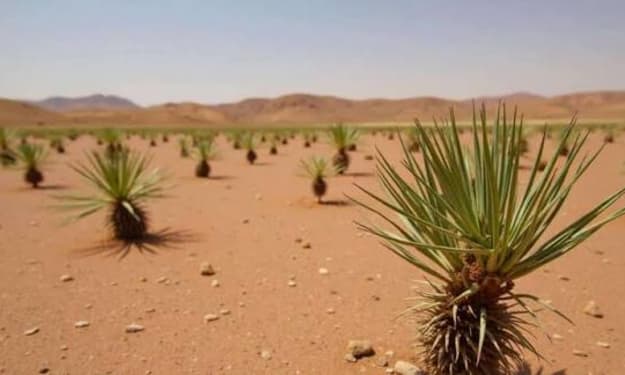
Deserts are often seen as barren, unforgiving landscapes, but they are far from lifeless. These ecosystems, while harsh, support unique biodiversity and provide critical environmental services, from carbon sequestration to regulating local climates. Yet, decades of overgrazing, unsustainable land use, and climate change have taken their toll, leaving many arid regions struggling with soil erosion, loss of native vegetation, and diminished ecological resilience. Now, a bold rewilding effort is turning the tide: over five million native plants have been reintroduced into deserts worldwide, and the early results are promising. The scale of the initiative Across regions from the deserts of the Middle East and North Africa to the arid plains of Australia and North America, conservation organizations, local communities, and governments have collaborated to replant native species that were once nearly wiped out. These plants range from hardy shrubs and grasses to iconic desert flowers, all carefully selected for their ability to survive in extreme conditions and restore ecological balance. The numbers are staggering: more than 5 million individual plants have been transplanted over the last five years, covering thousands of hectares. While this effort is labor-intensive, involving soil preparation, irrigation during establishment phases, and ongoing monitoring, the environmental payoff has been remarkable. Slowing land degradation One of the primary goals of these reintroductions is to combat land degradation, a process that affects over 40% of the planet’s land surface. In deserts, degradation is particularly acute because soil erosion occurs rapidly in the absence of stabilizing vegetation. Without plants to anchor the soil, wind and water can strip away fertile topsoil, creating a feedback loop of declining vegetation and worsening erosion. Early monitoring reports suggest that reintroduced native plants are helping to stabilize sandy soils and reduce the spread of desertification. In some areas of the Middle East, for instance, wind erosion rates have decreased by up to 30% in regions where shrubs and grasses were replanted. This stabilization not only benefits the environment but also local communities that rely on the land for grazing, agriculture, and other livelihoods. Rebooting arid ecosystems Beyond slowing soil loss, these plant reintroductions are rebooting entire desert ecosystems. Deserts are home to a diverse array of wildlife, including insects, birds, and mammals that rely on native plants for food and shelter. By re-establishing vegetation cover, these efforts have triggered a cascade of ecological benefits. In parts of the Sonoran Desert in North America, researchers observed a noticeable increase in pollinator populations, such as bees and butterflies, following the reintroduction of native flowering plants. Similarly, small mammals and reptiles that had disappeared from degraded areas are gradually returning, attracted by improved habitat structure and food availability. Climate resilience Another key advantage of reintroducing native plants is enhancing climate resilience. Many desert plants are adapted to survive extreme heat, drought, and poor soils. By re-establishing these species, ecosystems can better withstand climate-related stresses, such as prolonged droughts or extreme heatwaves. Additionally, some species improve soil moisture retention and reduce surface temperatures, creating microclimates that further support biodiversity. Community engagement and knowledge transfer What makes these rewilding efforts particularly successful is the integration of local communities. Indigenous knowledge about native species, planting techniques, and seasonal cycles has been invaluable. In some regions, schools and community groups participate in planting days, turning conservation into a source of pride and education. This engagement ensures that restored areas are maintained, monitored, and valued over the long term. Looking ahead While the reintroduction of five million native plants is a significant achievement, experts caution that long-term success requires continued investment, monitoring, and protection from overgrazing, development, and climate pressures. However, the initiative provides a compelling example of how targeted, science-backed restoration can reverse environmental damage. For arid ecosystems, these efforts are more than just planting trees and shrubs—they represent hope. They demonstrate that even the most fragile landscapes can recover when humans actively collaborate with nature, restoring not only plants but the entire web of life that depends on them. As the world grapples with climate change and land degradation, the lessons from these desert rewilding projects offer a blueprint for action: by investing in native biodiversity, we can slow degradation, rebuild ecosystems, and create landscapes that are resilient, productive, and teeming with life once again.
By Fiazahmedbrohi a day ago in Longevity


Comments
There are no comments for this story
Be the first to respond and start the conversation.