
Essential minerals and vitamins for prostate health.
A viable lifestyle with a healthy diet, regular exercise along with regular prostate exams is a great way for maintaining prostate health and keeping off prostate issues. Several trace elements are crucial for the normal functioning of the prostate gland and hence for its health.


The prostate is a small, walnut-sized gland that is vital for the normal sexual and urinary functions of men. And,as such the prostate health is of great concern for men.
As men age, they can be bothered with prostate issues such as prostate enlargement or prostate cancer. These can give rise to several uncomfortable urinary and ejaculatory symptoms that seriously deteriorate quality of life.
Developing a healthy lifestyle with a balanced diet and adequate physical activity coupled with regular prostate examinations is a great way to ensure prostate health on a long term basis.
The truth is that there is no "magic pill" that ensures prostate health. Through regular doctor visits one can know of the possible nutrient deficiencies. And, adding nutrient rich foods to the diet to supplement such deficiencies can lower the risk of onset and progression of prostate related diseases. This is the guaranteed first step towards preventing prostate issues and thereby, protecting prostate health.
Several trace minerals have been identified to be critical for prostate health.
Zinc
Zinc is the second most abundant trace element in humans. It is essential for the majority of the physiological functions of the body. It also enhances the immune system of the body. But it can’t be stored in the body, thus regular dietary intake is required.
Zinc plays a unique role in the prostate gland. The prostate gland can accumulate 10 to 15 times more zinc than any other body tissues. This is crucial for the development and normal functioning of the prostate. Such high levels of zinc facilitates citrate accumulation in the prostate cell and its secretion into prostatic fluid,its major function. Zinc is also an important constituent of prostatic fluid as well.
Zinc has been found to be a powerful tumor suppressor in prostate cells. It induces programmed cell death, apoptosis causing prostatic cells to die when they are not needed or could cause damage. It also inhibits cell migration and invasion into other tissues, a characteristic that is common in malignant cells.
Several studies have reported that zinc is markedly decreased (~60–80%) in prostate cancer cells compared to normal cells.This decrease in zinc, along with the corresponding decrease in citrate levels, is the most consistent and persistent biochemical marker that differentiates prostate cancer cells from normal and benign prostate cells.
Likewise, zinc also has a protective role in BPH.
It has been shown in several studies that older adults aged 50 and above frequently have low zinc status. Hence,older adults vulnerable to the onset of BPH and prostate cancer need zinc supplementation.
Zinc supplementation appears to positively benefit their general health, immune system, and prostate gland.
A 2009 study showed that the risk of advanced prostate cancer decreased significantly with intake of supplemental zinc.
Optimal zinc supplementation falls between 30-85 mg a day.Foods such as oysters,
cashew nuts,pumpkin seeds,eggs,yogurt,chickpeas etc are rich in zinc and can be included in the diet.
Selenium
Selenium is another essential trace mineral needed for many body functions, including immunity and reproduction. Hence it is indispensable for prostate health.
Selenium combats oxidative stress and therefore, may play a role in many diseases including cancer.
Several population studies and clinical trials have been done to find out if selenium can prevent or treat prostate cancer.The results of these studies have been mixed.
A review of 15 studies found that blood selenium levels and levels of selenium measured in toenail clippings were linked to a decreased risk of prostate cancer.
One study tracking men for up to 10 years found that those who had high levels of selenium in their blood had a lower risk of prostate cancer.
The Health Professionals Follow-Up Study including 4,459 men with localized prostate cancer that had not spread to other parts of the body found that taking selenium supplements after diagnosis may increase the risk of death from prostate cancer. The study investigators recommended caution for men with prostate cancer in taking selenium supplements.
SELECT,a large clinical trial begun by the National Cancer Institute in 2001 to test the efficacy of selenium and/or vitamin E in preventing prostate cancer when taken as dietary supplements with over 35,000 men, aged 50 years and older found that selenium supplements in men with low selenium levels at the start of the trial had no effect on prostate cancer risk. However, selenium supplements in men who had high levels of selenium at the start of the trial increased the risk of aggressive prostate cancer.
Further,SELECT suggested that changes in certain genes which control the selenium metabolism can be the reason for this increased risk.The authors concluded that men should avoid selenium at doses that are higher than the recommended dietary intake.
A meta-analysis of 38 studies including 36,419 cases and 105,293 controls found selenium most probably has a protective role against development of prostate cancer and its progression to advanced stages. Therefore, selenium supplementation can be proposed for prevention of prostate cancer.
In short, selenium supplementation should be done only under doctor's guidance.Optimum selenium dosage for adult men is 40 to 70 micrograms (mcg) per day. Some of the natural sources of selenium are eggs, sunflower seeds,brown rice, brazil nuts, chicken,turkey etc.
Lycopene
Lycopene is a carotenoid with antioxidant and anti-inflammatory properties and has been associated with numerous biological activities.
It modulates several important processes such as apoptosis and inflammation.
As an antioxidant, lycopene protects cellular biomolecules such as lipoproteins, lipids, DNA, and proteins and as such prevents cancer.
Studies have suggested the role of lycopene in preventing prostate cancer.
The anti-inflammatory effects of lycopene due to its lipophilic nature, makes it a potent agent for the treatment of cancer.
In some tissue culture experiments, lycopene has been shown to inhibit cancer cell growth by posing inhibition in the cell cycle and inducing apoptosis in the cancerous cells.
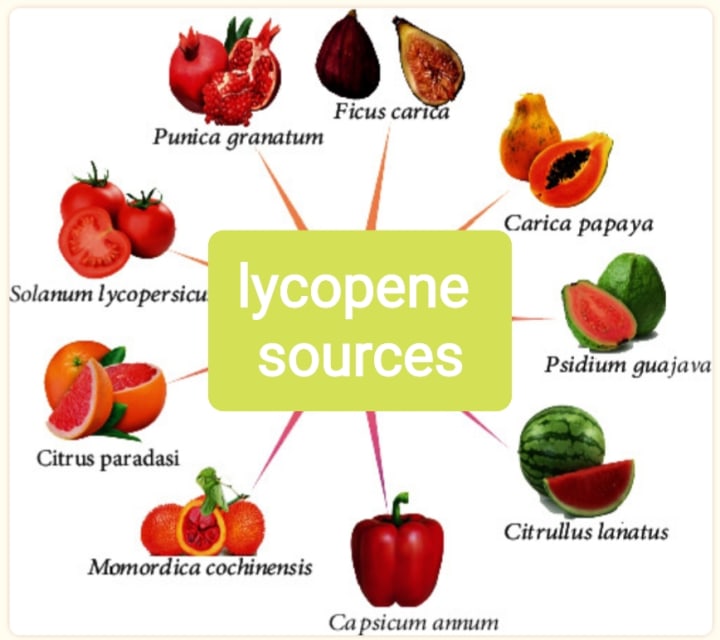
Red fruits and vegetables such as tomatoes, pink guavas, apricots, watermelons, and pink grapefruits are important sources of lycopene.
Vitamin D
Vitamin D is an essential nutrient that take part in a numerous biological activities such as calcium and bone metabolism and cell differentiation into different immune cells.It,thereby helps to keep the immune system strong.
Vitamin D has anti-proliferative, anti-inflammatory, antioxidant and neuroprotective properties. It supports immune health, muscle function and brain cell activity.
Vitamin D can bind to specific receptors in the prostate and bladder,and thus reduce inflammation and prostate growth.
Several studies have shown Vit D deficiency to be directly related to increased prostate volume and enlarged prostate of over 40 gm in BPH men and hence increased urinary symptoms.
New findings suggest that prostate tumors in particular can become highly aggressive when a man’s vitamin D levels are too low. A report in the journal Clinical Cancer Research showed that the lower the vitamin D level, the more aggressive the prostate cancer.
A 2017 study found lower vitamin D levels in people with prostate cancer. The study also found that prostate cancer was more severe in people with the lowest vitamin D levels and found a correlation between low vitamin D and higher levels of inflammation in people with prostate cancer.
Both in vivo and in vitro studies have shown Vit D to induce apoptosis, prevent tumor cell invasiveness, and suppress tumor-induced angiogenesis.
This points to a potential role of vitamin D in preventing or slowing cancer growth.
Optimum dosage of vitamin D is 600 international units for men up to age 70, and 800 international units thereafter.
Natural sunlight is a highly accessible source of vitamin D. 5 to 30 minutes of sun exposure during the brightest hours may offer sufficient vitamin D.
Some dietary sources of Vit D are cod liver oil, fishes like salmon, tuna, and sardines, orange juice, dairy products such as yogurt and milk, beef liver, egg yolks, and fortified cereals.
Calcium
Calcium is an essential mineral that helps to keep bones strong. Strong bones are important for supporting the prostate.
Good sources of calcium include milk,cheese,yogurt,
broccoli,kale, chinese cabbage,fortified cereals, juices, tofu,soy products etc.
Omega-3 fatty acids
Omega-3 fatty acids are found in fish, nuts, and seeds. They have been shown to reduce inflammation, which can be beneficial for prostate health.
Watch here: The Unexpected Link Between Prostate Problems And Your Kidneys
Vitamin C
Research indicates that vitamin C could reduce the chance of developing enlarged prostate symptoms.
Oxidative stress is thought to be a contributing factor in BPH so this may explain why nutrients such as vitamin C, which have rich antioxidant properties, may help to ease symptoms.
Natural sources of Vit C include citrus fruit,such as oranges and lemons,peppers,
strawberries,blackcurrants, broccoli, brussels sprouts,potatoes etc.

It is important to note that there is no one-size-fits-all approach to prostate health. What works for one man may not work for another. Also, overdose may cause more harm than benefit. So,it is important to talk to your doctor about what is best for you.
References
1.Park SY, Wilkens LR, Morris JS, Henderson BE, Kolonel LN. Serum zinc and prostate cancer risk in a nested case-control study: The multiethnic cohort. Prostate. 2013 Feb 15;73(3):261-6.
2.Gómez Y, Arocha F, Espinoza F, Fernández D, Vásquez A, Granadillo V. Zinc levels in prostatic fluid of patients with prostate pathologies. Invest Clin. 2007;48:287–94. [PubMed] [Google Scholar]
3.Costello LC, Franklin RB, Tan MT. A critical assessment of epidemiology studies regarding dietary/supplemental zinc and prostate cancer risk. Open Urol Nephrol J. 2008;1.
4. Costello LC, Franklin RB. A comprehensive review of the role of zinc in normal prostate function and metabolism; and its implications in prostate cancer. Arch Biochem Biophys. (2016) 611:100–12. 10.1016/j.abb.2016.04.014
5.Franz MC, Anderle P, Bürzle M, Suzuki Y, Freeman MR, Hediger MA, et al.. Zinc transporters in prostate cancer. Mol Aspects Med. (2013) 34:735–41. 10.1016/j.mam.2012.11.007
6.Kristal AR, Arnold KB, Schenk JM, Neuhouser ML, Goodman P, Penson DF, et al.. Dietary patterns, supplement use, and the risk of symptomatic benign prostatic hyperplasia: results from the prostate cancer prevention trial. Am J Epidemiol. (2008) 167:925–34. 10.1093/aje/kwm389.
7.Gonzalez A, Peters U, Lampe JW, White E. Zinc intake from supplements and diet and prostate cancer. Nutr Cancer. 2009;61(2):206-15.
8.Sayehmiri K, Azami M, Mohammadi Y, Soleymani A, Tardeh Z. The association between Selenium and Prostate Cancer: a Systematic Review and Meta-Analysis. Asian Pac J Cancer Prev. 2018 Jun 25;19(6):1431-1437. doi: 10.22034/APJCP.2018.19.6.1431. PMID: 29936712; PMCID: PMC6103565.
9.Holzapfel NP, Holzapfel BM, Champ S, Feldthusen J, Clements J, Hutmacher DW. The potential role of lycopene for the prevention and therapy of prostate cancer: from molecular mechanisms to clinical evidence. Int J Mol Sci. 2013 Jul 12;14(7):14620-46. doi: 10.3390/ijms140714620. PMID: 23857058; PMCID: PMC3742263.
10.Miller GJ, Stapleton GE, Ferrara JA, et al. The human prostatic carcinoma cell line LNCaP expresses biologically active, specific receptors for 1 alpha,25-dihydroxyvitamin D3. Cancer Res. 1992;52:515-520.
About the Creator
Keep reading
More stories from Krishna585 and writers in Longevity and other communities.
Prostate issues?? Know how to deal with it..
Men aged 50 or above often have to deal with prostate problems. The prostate that had dutifully functioned untill now begins to misbehave and opens up its pandora box. Often,with age,the prostate can undergo inflammation(prostatitis)or hypertrophy(overgrowth).This overgrowth can be cancerous(prostate cancer) or noncancerous (prostate enlargement).
By Krishna5853 years ago in Longevity
Nature Report, Killed by Trump, Is Released Independently
A major federal report assessing the state of nature and biodiversity across the United States — originally halted during the presidency of Donald Trump — has finally been released to the public after scientists decided to publish the findings independently. The report, years in the making, provides one of the most comprehensive analyses ever compiled about the health of ecosystems, wildlife populations, and natural resources across the country. The study was prepared as part of a nationwide effort coordinated by the U.S. Geological Survey and other federal agencies. Researchers involved in the project say the document was meant to provide policymakers with detailed scientific guidance on biodiversity loss, habitat degradation, and the growing impact of climate change on American landscapes. However, the report’s release stalled during the administration of Trump, when several environmental initiatives were scaled back or canceled. Scientists working on the project say the publication was effectively shelved before it could reach the public or be formally submitted to Congress. Now, years later, the authors have decided to release the research independently, publishing the findings through academic and scientific networks rather than through official government channels. The decision marks a rare step for researchers who typically rely on federal agencies to distribute major environmental assessments. According to the scientists behind the study, the report documents significant declines in biodiversity across the United States. Many native plant and animal species are facing mounting pressures from habitat loss, pollution, invasive species, and climate change. Wetlands and grasslands — ecosystems that support a large share of the country’s wildlife — have experienced particularly steep reductions in recent decades. The report also highlights the economic consequences of environmental decline. Natural ecosystems provide essential services such as pollination, water purification, and flood protection. Researchers warn that if biodiversity loss continues at its current pace, communities could face rising costs linked to environmental damage and weakened natural defenses against extreme weather events. Experts involved in the project say the findings were intended to inform national conservation strategies and guide land-management decisions at both federal and state levels. Without accurate scientific assessments, they argue, policymakers lack the information needed to design effective environmental protections. The controversy surrounding the report reflects broader tensions that existed between the scientific community and political leadership during the Trump presidency. Environmental policies adopted during that period included the rollback of several regulations related to emissions, land use, and wildlife protection. Critics argued that these decisions weakened safeguards designed to protect natural ecosystems. Supporters of those policies, however, maintained that regulatory reforms were necessary to support economic growth and reduce burdens on businesses, particularly in the energy and manufacturing sectors. Regardless of political debates, the authors of the biodiversity report say their goal is simply to ensure that the scientific data becomes available to the public. By releasing the document independently, they hope researchers, conservation organizations, and policymakers can still use the findings to inform future environmental strategies. Environmental groups have welcomed the publication, calling it an important contribution to understanding the state of nature in the United States. They say comprehensive national assessments are critical for tracking environmental changes and identifying areas where conservation efforts should be prioritized. The report’s release also highlights the evolving relationship between science and public communication. In an era where research findings can be shared widely through digital platforms, scientists increasingly have alternative ways to distribute their work when official channels fail. For the researchers who spent years compiling the study, the independent release represents both a scientific milestone and a statement about the importance of transparency. They argue that environmental data belongs not only to governments but also to the public, whose lives and livelihoods depend on the health of the natural world. While the report cannot retroactively influence past policy decisions, its authors hope the findings will still shape future discussions about conservation and sustainable development. As biodiversity loss continues to accelerate worldwide, they say timely access to scientific information has never been more important.
By Fiaz Ahmed 6 days ago in Longevity


Comments
There are no comments for this story
Be the first to respond and start the conversation.