
Energy Drink Ingredient Taurine Linked to Blood Cancer Risk, Study Warns
Could Your Energy Drink Be Harming You? Taurine Under Scrutiny


A groundbreaking study has raised alarms about a common energy drink ingredient found in popular brands like Red Bull and Celsius. Researchers suggest that taurine, an amino acid added to boost energy and focus, may increase the risk of blood cancers such as leukemia. Published in the journal Nature, the findings urge consumers to rethink their habits and highlight the need for further research into taurine’s long-term effects.
What Is Taurine?
Taurine is a naturally occurring amino acid produced by the human body and found in protein-rich foods like meat, fish, and dairy. It plays a role in supporting heart health, brain function, and immune system regulation. In recent decades, taurine has become a staple in energy drinks, where it’s marketed for its ability to enhance mental clarity, reduce fatigue, and combat inflammation. It’s even been used in clinical settings to help manage side effects of chemotherapy.
However, the new study warns that supplemental taurine particularly the high doses found in energy drinks—could have unintended consequences for those at risk of blood cancers.
Key Findings: How Taurine May Fuel Cancer Growth
Scientists at the University of Rochester’s Wilmot Cancer Institute uncovered a troubling link between taurine and leukemia. Their research focused on how leukemia cells interact with taurine in bone marrow, where blood cells are produced. Here’s what they discovered:
1. Leukemia Cells “Feed” on Taurine
Leukemia cells absorb taurine from their surroundings using a specific gene called SLC6A6. This gene acts like a transport system, moving taurine into cancer cells.
2.Taurine Powers Cancer Growth
Once inside leukemia cells, taurine fuels a process called glycolysis a method cells use to break down glucose (sugar) for energy. Cancer cells rely heavily on glycolysis to multiply rapidly, and taurine appears to accelerate this process.
3. Mice Studies Show Clear Patterns
In experiments with mice genetically modified to carry the SLC6A6 gene, researchers implanted human leukemia cells. They observed that healthy bone marrow cells produced taurine, which was then hijacked by leukemia cells to support their growth.
“The more taurine leukemia cells absorb, the faster they seem to spread,” explained one of the study’s lead authors.
Energy Drinks: A Hidden Risk?
While taurine is safe in moderation, energy drinks often contain levels far higher than what the body produces naturally. A single 16-ounce can of Red Bull, for example, provides about 1 gram of taurine equivalent to the daily amount found in a typical diet.
For most healthy individuals, occasional energy drink consumption is unlikely to cause harm. However, the study highlights two major concerns:
- Cancer Patients: Those with leukemia or in remission may inadvertently worsen their condition by consuming excess taurine.
- Frequent Consumers: Regular intake of taurine-heavy energy drinks could create an environment where cancerous cells thrive.
Blood Cancer Statistics: A Growing Concern
The American Cancer Society estimates that over 192,000 Americans will be diagnosed with blood cancers in 2025, including:
- 66,890 new leukemia cases
- 89,070 new lymphoma cases
- 36,110 new myeloma cases
While not all cases are linked to taurine, the study underscores the importance of understanding how lifestyle choices—like energy drink consumption—might influence cancer risk.
Could Blocking Taurine Lead to New Treatments?
Researchers are optimistic about the potential for therapies that target taurine absorption in cancer cells. By inhibiting the SLC6A6 gene, scientists hope to “starve” leukemia cells of the energy they need to grow. This approach could complement existing treatments like chemotherapy.
Additionally, the team is investigating whether taurine plays a role in other cancers, such as colorectal cancer, which has seen a mysterious rise in younger adults.
What Should Consumers Do?
While the study is in its early stages, experts recommend caution:
- Moderate Energy Drink Intake: Limit consumption, especially if you have a family history of blood cancers.
- Consult Healthcare Providers: Cancer patients or survivors should discuss taurine supplements with their doctors.
- Focus on Natural Sources: Obtain taurine through foods like turkey, salmon, or eggs rather than energy drinks.
The Bottom Line
Taurine’s dual role as a health supplement and potential cancer risk factor highlights the complexity of nutrition science. As energy drinks remain popular among teens and adults alike, this study serves as a reminder to approach trendy ingredients with caution.
Further research is needed to confirm these findings, but for now, moderation and awareness are key. As one researcher noted, “Understanding how everyday substances interact with our bodies is the first step toward making safer choices.”
Stay informed, stay healthy.
About the Creator
Akrang Raja
Welcome! Explore health 🩺 & business finance 💼 articles. Expert advice, actionable insights. Simplify money management, boost productivity, achieve wellness. Trusted content for your goals. Follow for regular updates!
Keep reading
More stories from Akrang Raja and writers in Longevity and other communities.
Nationwide Eye Care Product Recall: What You Need to Know
Over 1.8 million cartons of eye care products have been recalled across the U.S. due to safety concerns. Customers are being urged to stop using these items immediately and return them for a full refund. The recall, announced by healthcare distributor AvKARE, impacts five types of eye drops and gels sold nationwide.
By Akrang Raja 10 months ago in Longevity
A wildflower in California reveals a newly documented evolutionary process
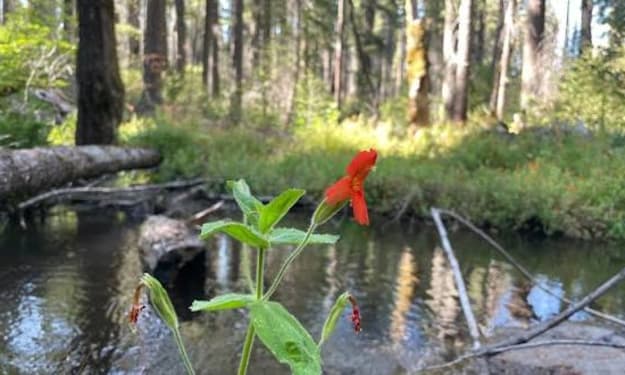
In a remarkable breakthrough for evolutionary biology, researchers studying wildflower populations in California have documented one of the clearest cases yet of rapid genetic evolution occurring in nature. The findings, centered on the bright red scarlet monkeyflower (Mimulus cardinalis), reveal how some plant populations were able to adapt and recover following the region’s most severe drought in over a millennium — providing tangible evidence of an evolutionary process known as evolutionary rescue. The scarlet monkeyflower, a wildflower native to moist areas along streams and springs in California, has long been familiar to botanists and hikers alike for its vivid blooms and distinctive habitat. However, during the early 2010s, California experienced an unprecedented megadrought that lasted several years, killing hundreds of millions of trees and dramatically altering the ecological landscape. While many plant species suffered catastrophic declines, some populations of Mimulus cardinalis showed a surprising resilience. Scientists from multiple institutions undertook a long‑term study to understand how this wildflower weathered such extreme conditions. Over eight years, researchers tracked 55 populations of the monkeyflower across its natural range, closely monitoring their numbers and health. They also conducted whole‑genome sequencing to observe genetic changes over time, looking for evidence that natural selection had acted on specific traits. The results were illuminating. At sites where populations had nearly collapsed — with numbers dropping by as much as 90% — genetic analysis revealed consistent shifts in allele frequencies across the genome. These shifts were not random; they were associated with traits that likely enhanced drought tolerance, enabling some individuals to survive and reproduce where others perished. As these “advantaged” genotypes became more common, the population as a whole began to recover, a hallmark of what biologists call evolutionary rescue. Evolutionary rescue occurs when the genetic variation present within a population allows it to adapt fast enough to avoid extinction under sudden environmental stress. While theoretical models have long predicted such processes, direct evidence in the wild—especially involving plants—has been limited. This study is among the first to document genomic changes in natural plant populations that are clearly linked to a major environmental crisis. For decades, evolutionary biologists have debated how quickly natural selection can operate in real‑world scenarios. Classic case studies like Darwin’s finches in the Galápagos have demonstrated adaptive changes in beak shape over a few generations. But plant studies have often lagged behind, in part because many species have long lifecycles or reproduce clonally, making rapid evolution harder to detect. The California wildflower case breaks new ground by combining long‑term fieldwork with cutting‑edge genomic analysis. Researchers noted that the recovery of the monkeyflower populations did not happen overnight — it took roughly two to three growing seasons for numbers to rebound significantly. Yet in evolutionary terms, this pace is considered rapid. The drought likely imposed intense selective pressure, filtering out less drought‑tolerant genotypes and leaving behind a smaller cohort better suited to the harsh conditions. As these were the individuals contributing more seeds to the next generation, their genetic traits spread through the population. The implications of this research extend beyond wildflowers. As climate change accelerates and extreme weather events become more frequent, scientists are increasingly interested in how species will respond — whether through behavioral changes, migration, or evolutionary adaptation. Cases like Mimulus cardinalis suggest that some species may harbor the genetic diversity necessary to adapt swiftly when environments change dramatically. However, not all species will be so fortunate, and the mechanisms of evolutionary rescue are still not fully understood. “This is one of the clearest cases we've seen where a wild plant species shows genomic evidence of adapting to extreme environmental stress,” said one of the study’s lead authors. “It gives us hope that under certain conditions, natural selection can work fast enough to help populations persist — but it also raises many questions about the limits of such adaptation.” The study’s methods also signal a new era in ecological research. By combining consistent field monitoring with high‑resolution genetic data, scientists can now track evolution as it happens rather than inferring processes from fossils or distant historical records. This “real‑time” view of evolution may become vital for conservation efforts, helping biologists identify which populations are most at risk and which may have the inherent capacity to adapt. For conservationists, the findings underscore both the resilience and vulnerability of natural ecosystems. While some populations like the scarlet monkeyflower demonstrate extraordinary adaptive potential, others with limited genetic diversity may face a greater threat of decline or extinction as climates shift. Understanding the genomic underpinnings of adaptation could therefore inform strategies to protect biodiversity in a warming world. As research progresses, scientists hope to explore similar evolutionary dynamics in other species and regions. The California wildflower study stands as a testament to the power of modern genomics and long‑term ecological research — and a reminder that evolution, far from being a slow, imperceptible force, can sometimes unfold before our eyes.
By Fiaz Ahmed 2 days ago in Longevity
TUS NUA - ch 53
TUS NUA – ch 53 New Beginnings – Mia and Midnight (*)(*)(*) Finola knew Ali’s brother-in-law needed to put his mind at rest. She fed her arm through his and led him outside. “We’ll sit here. If you like, I can put a block around us so our conversation will be private.”
By Margaret Brennan6 days ago in Fiction



Comments
There are no comments for this story
Be the first to respond and start the conversation.