
DON'T COMBINE THESE FOODS⚠️🙀
Some foods are not to be eaten together.
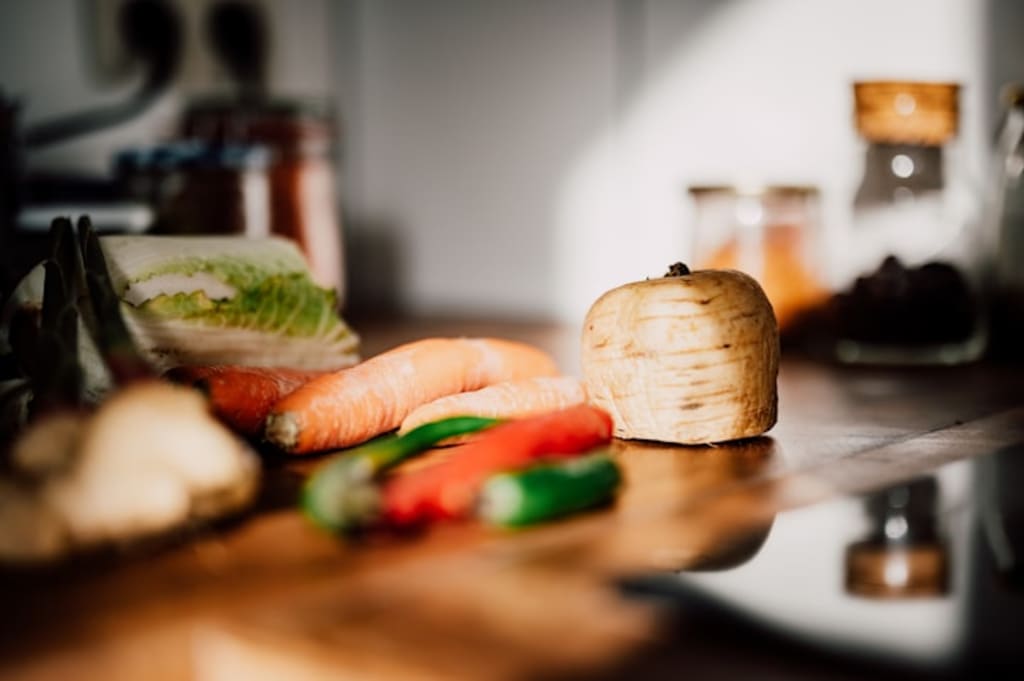
EATING TOMATOES WITH THESE FOODS CAN TURN INTO A TOXIC SUBSTANCE.
- CUCUMBERS
Cucumbers contain catabolic enzymes that can destroy the Vitamin C content in tomatoes when combined. Tomato is rich in vitamin C, while the catabolic enzyme contained cucumber will destroy vitamin C. As a result, if you eat these two kinds of food together, it is not conducive to the absorption of vitamin C.

There is a common belief that cucumbers can adversely affect the nutrients in tomatoes when combined, primarily due to the enzyme ascorbate oxidase present in cucumbers. This enzyme can potentially degrade vitamin C (ascorbic acid) found in tomatoes and other foods.
Here's a closer look at the interaction:
1. Ascorbate Oxidase*: Cucumbers contain the enzyme ascorbate oxidase, which can oxidize vitamin C, leading to its degradation. When cucumbers are combined with vitamin C-rich foods like tomatoes, there might be a reduction in the vitamin C content due to this enzymatic activity.
2. Impact on Nutrition*: The actual impact on nutrition depends on several factors, including the freshness of the produce, how long they are in contact, and the presence of other factors that might inhibit the enzyme. The effect is often minimal when consumed as part of a typical meal.
3. Overall Diet Consideration: While there might be some loss of vitamin C, the overall impact on a balanced diet is usually negligible. Eating a variety of fruits and vegetables ensures adequate nutrient intake.
In practical terms, unless you are consuming very large quantities or relying solely on tomatoes for your vitamin C intake, this interaction is unlikely to significantly affect your nutrient intake. If concerned, you might consider adding lemon juice or vinegar to salads, as the acidity can help inhibit the enzyme activity.
- POTATOES
Sweet potatoes and potatoes when eaten with tomatoes can create indigestible compounds leading to stomach pain diarrhea and digestive disorders. Potatoes are known to contain glycoalkaloids which may induce gastrointestinal and systemic effects if consumed in high amounts. Eating potatoes without removing the alkaloids leads to the development of symptoms such as nausea, vomiting, diarrhea, stomachache and feeling of weakness.

Let me take a moment to explain what glycoalkaloids are.
——What are glycoalkaloids?——

Glycoalkaloids are naturally occurring compounds found in various plant-based foods, including tomatoes. When combined with other foods containing glycoalkaloids, the effects on tomatoes can be:
1. Enhanced toxicity: Combining tomatoes with other glycoalkaloid-rich foods like potatoes, eggplants, or peppers may increase the overall toxicity of the dish. This is particularly concerning for individuals with compromised health or those consuming large quantities.
2. Inhibition of nutrient absorption: Glycoalkaloids can interfere with nutrient absorption, including proteins, carbohydrates, and fats. Combining tomatoes with other glycoalkaloid-rich foods may exacerbate this effect, potentially leading to nutrient deficiencies.
3. Altered flavor and texture: Glycoalkaloids can contribute to bitter flavors and astringent textures. Combining tomatoes with other glycoalkaloid-rich foods may intensify these characteristics, affecting the overall palatability of the dish.
4. Increased antioxidant activity: Some glycoalkaloids have antioxidant properties, which can be beneficial when combined with tomatoes. This may enhance the overall antioxidant activity of the dish.
5. Synergistic effects: Combining tomatoes with other glycoalkaloid-rich foods may produce synergistic effects, leading to increased bioavailability of nutrients or enhanced health benefits.
Examples of glycoalkaloid-rich foods that may interact with tomatoes include:
- Potatoes (solanine and chaconine)
- Eggplants (solanine and solasodine)
- Peppers (capsaicin and solanine)
- Okra (solanine and solasodine)
To minimize potential adverse effects, consume glycoalkaloid-rich foods in moderation and balance them with other nutrient-dense foods. Cooking and processing can also reduce glycoalkaloid content.
With the explanation above⬆️⬆️⬆️I believe you now understand why it's bad to combine tomatoes and potatoes.
——ONTO THE NEXT⬇️⬇️⬇️——
- CARROTS
Combining tomatoes with carrots can reduce the nutritional content of both the tomatoes and the carrots because carrots contain enzymes that break down the vitamin C.

- BEER OR WINE
The tannic acid in tomatoes can cause intestinal blockages when combined with beer or wine.

Combining beer or wine with tomatoes may pose some hazards, including:
1. Increased acidity: Tomatoes are acidic, and adding wine (particularly red wine) can enhance acidity, potentially leading to heartburn or digestive discomfort.
2. Interaction with tyramine: Fermented foods like beer and wine contain tyramine, a naturally occurring amino acid. Tomatoes also contain tyramine. Combining them may lead to increased tyramine levels, potentially causing blood pressure spikes, headaches, or migraines.
3. Enhanced histamine release: Fermented beverages like beer and wine contain histamine, which can be released by the acidity in tomatoes. This may exacerbate histamine intolerance symptoms, such as headaches, itching, or digestive issues.
4. Impaired nutrient absorption: The polyphenols in wine and the acidity in tomatoes may reduce iron absorption from plant-based sources.
5. Exacerbated digestive issues: The combination may worsen digestive conditions like acid reflux, irritable bowel syndrome (IBS), or stomach ulcers due to increased acidity and potential irritation.
6. Interaction with medications: Grapefruit and its products are known to interact with certain medications. Similarly, the combination of tomatoes and wine or beer may interact with medications like blood thinners, blood pressure medications, or antacids.
To enjoy tomatoes with beer or wine safely:
- Consume in moderation.
- Balance with alkaline-rich foods.
- Monitor body reactions and adjust consumption accordingly.
- Consider individual sensitivities and health conditions.
Remember, individual tolerance and sensitivity play a significant role in how the body reacts to food and drink combinations. If concerns arise, consult a healthcare professional for personalized guidance.
THE IMAGES IN THIS ARTICLE ARE AI GENERATED.
About the Creator
Keep reading
More stories from Dr_Vaganza🩺 and writers in Longevity and other communities.
BLACK LIVES MATTER.
These were their last words. Their names Define a movement; their deaths are rallying for justice.The killing of George Floyd has protesters demanding change, and black lives matter once again. It's time for us to stand up in George's name and say, Get your knees off our necks. [Music] The black lives matter group has been fighting to be heard since 2013, and the phrase itself is now being seen on streets and screens all over the world. But how did the movement get started? Their message comes from an urgent need to tackle police brutality, and the statistics are stuck. Police killed more than a thousand people in America in 2019. black people are currently three times more likely to be killed by police and 99 of killings by a police officer between 2013 to 2019 have not resulted in criminal charges but the black lives matter bubble didn't actually start with police brutality it began after the death of Trayvon Martin at the hands of an armed vigilante it is a story that no one can stop talking about the shooting of Trayvon Martin on a February evening in 2012 in Sanford Florida neighborhood watch volunteer George Zimmerman called the police to report suspicious person this guy looks like he sucks no good or he's on drugs or something it's raining he's just walking around looking about okay and this guy he went back to Hispanic he looks black he's told not to approach the person in question are you following him yeah okay we don't need you to do that Zimmerman ignored the instructions and started following 17 year old Trayvon Martin moments later neighbors reported hearing gunfire you just have gunshots yes how many verse one Zimmerman accepted he shot Martin claiming self-defense he wasn't immediately charged in fact it took 44 days for him to be arrested only after National media attention a petition signed by more than a million people and a public response from the then president you know if I had a son he'd look like Trayvon we're going to get to the bottom of exactly what happened a year later Zimmerman was found not guilty of all charges by a jury of Six Women five of them white the acquittal caused outraged and sparked the birth of a new kind of civil rights movement long before there was a black lives matter movement there was a movement for black lives it comes as a great shock to discover that the country which is your birthplace and to which you owe your life and your identity has not in its whole system of reality evolved any place for you BLM from its beginning was the continuation of a tradition uh and a remix of a much longer black Freedom struggle but it has its roots uh and the labor of black women after Zimmerman's acquittal activist Alicia Garza posted on Facebook black people I love you. I love us. Our lives matter. Black lives matter. Garza's friend Patrice Collier shared the final three words as a hashtag on March 7th, 2013. Black lives matter was first seen on Twitter. Writer and immigrant rights activist Opel Tumetti offered to build social media platforms for it where activists could connect with one another. With this hashtag, new conversations were being created online, and ultimately, in our everyday lives, black lives matter. It is our call to action. It is a tool to re-imagine a world where black people are free to exist and free to live. It is a tool for our allies to show up differently for us. The movement gained popularity in the summer of 2014 with Eric Garner's last words of rallying cry. I can't breathe caught on video. The incident went viral in July 2014 on a street in New York Staten Island. 43-year-old Ghanaian was arrested on suspicion of illegally selling cigarettes. He died in a confrontation with officer Daniel Pantaleo after being placed in a choke hold. He was the father of six. Pantalea was fired five years later, but a state grand jury still refused to press criminal charges. Black lives do not matter to the system when, time and time again, you're seeing us being murdered and time and time again, you're seeing the police go free just two months after Eric Garner's death. There is growing outrage tonight after an unarmed African-American teenager was shot and killed by police in the St. Louis suburb of Ferguson. Missouri 18-year-old Michael Brown allegedly stole a pack of cigarillos from a corner store. Police officer Darren Wilson shot Brown after suspecting him of being involved in the robbery. Police shot this man for no reason. Brown was due to Stark College two days after he was killed for weeks. Hundreds of people who'd never taken part in organized protests before took to the streets. More tear gas, more rubber bullets anger boiled over Ferguson's governor calling in the National Guard black lives matter was used on Twitter over 50 000 times a day despite the anger surrounding the case, Darren Wilson wasn't prosecuted he resigned from the fourth and said he acted in self-defense and Michael Brown Jew will be a defining moment in how this country deals with policing. After Ferguson, the black lives matter movement took root and gained momentum as black people continued to die at the hands of white police. It was a cycle of killings, protests, and no criminal charges. No federal charges, no state criminal charges This was all happening with America's first black president and attorney general at the helm. I chose to run for president at this moment in history because I believe deeply that we cannot solve the challenges of our time unless we solve them together. Racial discrimination has been around since the founding of this country. To ask that the first black president fix that is asking too much. This is lawyer Roy Austin, who works in the White House as a Deputy Assistant to President Obama in the Office of Urban Affairs. For justice and opportunity, we took a ton of steps under very difficult circumstances because there was this narrative that we were anti-police for taking these steps. Some of the steps taken under Obama included issuing consent decrees, which allow the court to overhaul police departments accused of civil rights abuses, putting limits on the ability of local police forces to have military-grade weapons, and more pattern and practice investigations into police departments, so where are they using excessive force repeatedly, where are they aging, and discriminatory policing repeatedly? At the time, activists thought the administration should have been doing more to dismantle the systems in place that were protecting the police. Qualified immunity is a legal doctrine that essentially shields police from persecution or legal retribution. Police officers are protected by union contracts, which make it very difficult for them to be fired. Police officers have an all-too cozy relationship with District Attorneys. All these ingredients taken together create a culture where police officers are licensed to kill and almost always get away with it. So even though black lives matter representatives were invited to the Obama White House, they were also some of its harshest critics, so their idea was yes, show up, yes, be at the table, but if you don't get the kind of policy responses that you demand, then flip that team, and then the table flipped totally in 2016. Well, you see them marching, and you see them on occasion; at least I've seen it where they're essentially calling death to the police, and that's not acceptable. In the years leading up to the 2016 election, black lives matter faced a backlash, and some started using the slogans. All lives matter. White lives matter, and blue lives matter. In response, when you say black lives matter, that's inherently racist. Well, I think there are other lives that matter. White lives matter; Asian lives matter. Hispanic lives matter; that's anti-American, and it's racist. America's police and law enforcement Personnel are what separates civilization from total chaos. I am the Law and Order candidate. Donald Trump's election marked a new era for America and the world. The summer after the inauguration, racial tensions inflamed again. Last night's torchlight protest march by the alt-right in Charlottesville Virginia has Eerie Echoes of past violence unfolded as white nationalists clashed with counter-protesters. A car accelerated into the crowd, killing a woman and leaving five others critically injured. President Trump failed to immediately call out the white supremacists we condemn in the strongest possible terms. This egregious display of hatred, bigotry, and violence on many sides The following year, violent hate crime in the states hit a 16-year high. Killings of black people at the hands of white police continued; it just barely made the news. Donald Trump essentially sucked all the life and oxygen out of the media; black lives mattered no longer. You know the lead story. Many Americans were also enjoying the relative calm of a booming economy. African Americans had a record low unemployment rate of 5.4 percent in August 2019. That shows his support for the black community when the president says, I understand. I hear you. The president has people around him that look like me who get what's happening at the beginning of the 2020 U.S. election year." Echoes of 2012 and 2013 hit the headlines again, with public outcry at the actions of Vigilantes and a video gone viral. We turn now to the case of Ahmad Aubry, the unarmed African-American man who was shot and killed while out for a jog in his Georgia neighborhood. I thought that a mod story would open the eyes of the other leaders, and I thought maybe losing them on it would help. By the 21st of May, the men involved in the kidding had been arrested and faced murder charges, but in less than a month after Aubry's death, Rona Taylor would help. By the 21st of May, the men involved in the kidding had been arrested and faced murder charges, but in less than a month after Aubry's death, Rona Taylor was fatally shot by police in her own apartment in Louisville, Kentucky. Fiona Taylor was an emergency room technician, yet her killing slipped largely under the radar as COVID-19 swept the U.S., disproportionately affecting communities of color. I and many black Americans are at higher risk for COVID. The coronavirus is killing more African Americans. African Americans bear the brunt of the economic downturn brought on by the coronavirus in Minneapolis. Minnesota 46-year-old George Floyd was victim to these conditions; he lost his restaurant job and tested positive for COVID-19, suspecting Floyd of using a forged 20 Bill police officer Derek Chauvin held his knee on his neck for several minutes, watched the world, and started speaking out. Certainly, with 40 million people unemployed, 100 thousand Americans dead, a white nationalist in office, and then a televised public lynching, those are certainly the perfect conditions for the emergence of rebellion. All four police officers involved in Floyd's killing were arrested on murder charges brought about by that video, but also in part by the strength of black lives matter protests. Across America and the world, people of all backgrounds, genders, and races have come together to demand change, honor him on a charge, and make the necessary changes that make law enforcement the solution in the run-up to Floyd's death. President Trump's critics have pointed to his dismantling of the steps Obama took to tackle racist policing. Those things we mentioned earlier—consent decrees limiting military-grade weapons and expanding investigations into police units accused of abuses—have all been overturned under President Trump. Some campaigners are arguing for those measures to be reinstated and enforcing policies like banning chokeholds and better de-escalation training, but the black lives matter movement is calling for a more radical solution. The group is demanding the money spent on policing should instead be spent on health care education and community programs. The institution of the police is fundamentally corrupt, and many of us believe it is unpreparable. It simply must end in its current formation, and that's a deep cultural conversation that takes a long time for us to figure out why he is angry at 46. I'm angry at 31. You are angry at 16. Three generations of African-American men stood together here looking for solutions. Y'all are coming up with a better way. A call to defund the police has been at the center of the black lives matter campaign since 2016, but now that it has media attention, countries around the world are now working out what black lives matter means to them, and campaigners hope that the year 2020 will be the last time they'll need to have protests like this again.
By Dr_Vaganza🩺2 years ago in Humans
Day 4 of Quitting
If this is how sobriety feels, maybe it’s better to go through life a little buzzed… this, along with other hits like, I want to kill myself, I wish I was dead, and I’m going to throw myself off a bridge have been the only thoughts on rotation these past few days. I promise myself that if, in a month, I still feel like this (‘this’ meaning despondent, full of rage, and simultaneously numb) I can go back to smoking. Until mid-February though? Nicotine is off the table.
By sleepy drafts14 days ago in Longevity



Comments (2)
Amazing
Interesting one