
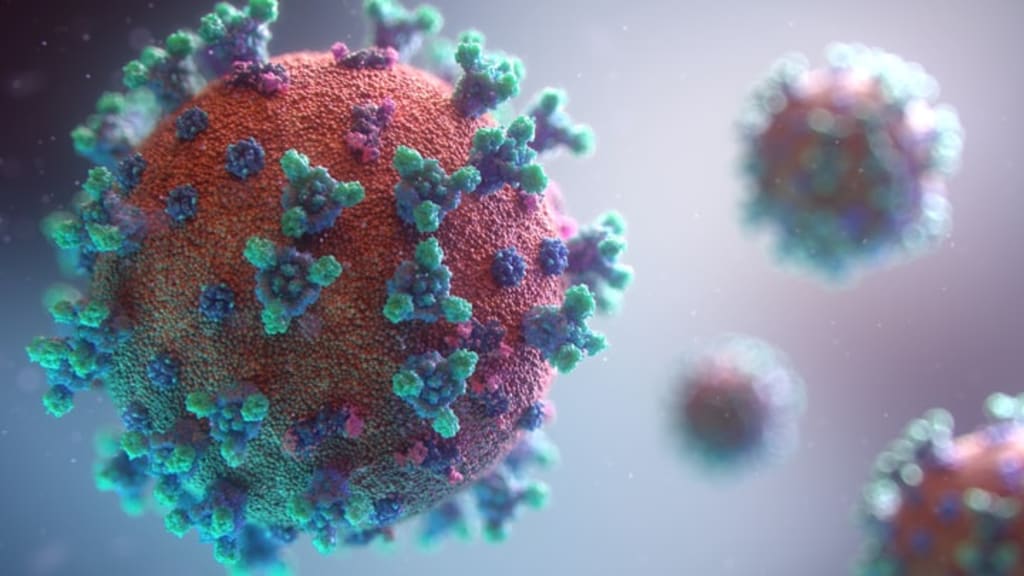
It is normal for viruses to change and evolve as they spread between people over time. When these changes become significantly different from the original virus, they are known as “variants.” To identify variants, scientists map the genetic material of viruses (known as sequencing) and then look for differences between them to see if they have changed.
Since the SARS-CoV-2 virus, the virus that causes COVID-19, has been spreading globally, variants have emerged and been identified in many countries around the world.
A variant is considered a variant of interest if it has mutations that are suspected or known to cause significant changes, and is circulating widely (e.g., known to cause many clusters of infected people, or found in many countries). There are many variants of interest that WHO is continuing to monitor in case they become variants of concern.
A variant of interest becomes a variant of concern if it is known to spread more easily, cause more severe disease, escape the body’s immune response, change clinical presentation, or decrease effectiveness of known tools – such as public health measures, diagnostics, treatments and vaccines.
For the purpose of discussing variants in the media and the public, WHO began using the Greek alphabet in May of 2021 to make it easier for people to keep track of variants without linking their names to the places where they were first identified, as variants can emerge anywhere at any time.
In accordance with WHO best practices for naming new diseases, some letters may not be used if they cause confusion in major languages or stigmatize certain groups. These WHO labels do not replace the existing scientific names of the variants, which convey important scientific information to researchers and scientists.
The Omicron variant, variant B.1.1.529, was first reported to WHO on 24 November 2021 and was classified as a variant of concern by WHO on 26 November 2021. The classification was made on the advice of the Technical Advisory Group on Virus Evolution, based primarily on information from South Africa that the variant has a large number of mutations and has caused a detrimental change in COVID-19 epidemiology.
All variants are different. The Omicron variant has a large number of mutations which may mean the virus acts differently from other variants that are circulating.
As of 1 December 2021, there is limited information about Omicron. Studies are ongoing to determine if there is a change in how easily the virus spreads or the severity of disease it causes, and if there are any impacts on protective measures.
It will likely take time before there will be clear evidence to determine if there is any change in the transmission of Omicron compared to other variants, how the variant responds to existing therapeutics, or whether infection or re-infection with Omicron causes more or less severe disease.
WHO is working with technical partners to understand the potential impact of Omicron on vaccine effectiveness. Currently, the Delta variant is dominant worldwide and COVID-19 vaccines are highly effective at protecting you from serious illness and death, including from infection with Delta. Researchers will assess the performance of current vaccines against Omicron and will communicate these findings as soon as they become available.
See the announcement and short video on the classification of the Omicron variant.
WHO continues to coordinate with a large number of researchers around the world to understand more about all variants of SARS-CoV-2, the virus that causes COVID-19, including Omicron. Many studies are needed, including assessments of:
Transmissibility, or ease of spread from person to person, of Omicron as compared to other variants
Severity of infection and re-infection with Omicron
Performance of current COVID-19 vaccines against Omicron
Performance of diagnostic tests, including antigen tests, to detect infection with Omicron
Effectiveness of current treatments for management of patients with COVID-19 disease
WHO’s Technical Advisory Group on Virus Evolution will continue to monitor and evaluate the data as it becomes available and assess if mutations in the Omicron variant alter the behaviour of the virus.
About the Creator
Day 4 of Quitting
If this is how sobriety feels, maybe it’s better to go through life a little buzzed… this, along with other hits like, I want to kill myself, I wish I was dead, and I’m going to throw myself off a bridge have been the only thoughts on rotation these past few days. I promise myself that if, in a month, I still feel like this (‘this’ meaning despondent, full of rage, and simultaneously numb) I can go back to smoking. Until mid-February though? Nicotine is off the table.
By sleepy drafts18 days ago in Longevity
Poland’s Energy Grid Targeted by Never-Before-Seen Wiper Malware
How cyberattacks are threatening critical infrastructure and national security Poland’s energy grid has recently come under attack from a never-before-seen wiper malware, marking one of the most serious cybersecurity incidents targeting the country’s critical infrastructure. While officials report that the attack did not cause widespread blackouts, the incident underscores the growing threat of cyber warfare against essential services such as electricity, water, and telecommunications. Experts warn that attacks on energy grids are increasingly sophisticated and could have devastating consequences if preventive measures are not implemented rapidly. What Is Wiper Malware? Wiper malware is a type of malicious software designed to erase data and disrupt systems. Unlike traditional ransomware, which seeks financial gain, wiper malware is often used to sabotage infrastructure, making it particularly dangerous for utilities and national security. Key characteristics of wiper malware include: Data destruction: Deletes critical files and system backups System disruption: Can render computers or networks inoperable Stealth operations: Often hides its activity to delay detection The malware targeting Poland’s grid is reported to be novel, indicating it was designed specifically for this operation rather than reusing existing malicious tools. Details of the Attack Polish cybersecurity authorities detected unusual activity in the energy grid’s control systems, which manage electricity distribution across the country. Key points include: Malware targeted operational technology (OT) systems, which control physical infrastructure No major power outages have been reported so far, thanks to rapid containment measures Authorities are conducting a full forensic investigation to understand the malware’s origin, design, and potential impact Officials emphasize that prevention and monitoring played a critical role in minimizing the attack’s effects. Cybersecurity Experts Weigh In Experts on industrial cybersecurity warn that this incident demonstrates how critical infrastructure is increasingly vulnerable to digital attacks: Targeted design: The malware appears to be tailored for energy systems, suggesting state-sponsored or highly skilled attackers Global pattern: Energy grids, water supplies, and hospitals worldwide have been targeted in recent years Need for resilience: Authorities stress the importance of redundant systems, real-time monitoring, and cyber drills “This is a wake-up call for all countries relying on digital networks to run essential services,” said a leading cybersecurity analyst. “The potential damage could range from temporary blackouts to major national crises.” Impact on National Security Energy grids are considered critical national infrastructure, and attacks on them can have far-reaching effects: Economic disruption: Power outages could affect industries, banking, and transportation Public safety: Hospitals, traffic control, and emergency services rely on electricity Political implications: Cyberattacks may be used as tools of coercion or influence in geopolitical conflicts Poland’s government has increased cyber defense measures, coordinating with NATO allies and private sector partners to strengthen resilience and deter future attacks. Global Concerns About Cyber Warfare The attack highlights a growing trend in international cyber conflict, where digital tools are used as weapons alongside traditional military strategies. Global experts point out: Cyberattacks on energy systems are more frequent and sophisticated than ever Some malware, like the one used in Poland, is designed to avoid detection while causing maximum disruption Nations are investing heavily in cyber defense, artificial intelligence monitoring, and threat intelligence sharing In the past, similar attacks have targeted countries such as Ukraine, the United States, and Saudi Arabia, demonstrating that no nation is immune. Preventive Measures and Response Poland’s response to the malware attack includes: Isolating infected systems to prevent spread Conducting real-time scans and forensic investigations Coordinating with international cybersecurity teams for threat analysis Strengthening security protocols, employee training, and backup systems Authorities also emphasize public reassurance, stating that power supply and public safety have not been compromised despite the attack. The Road Ahead The incident in Poland underscores the urgent need for countries to: Invest in advanced cybersecurity for critical infrastructure Develop national response plans for cyber emergencies Collaborate internationally to share intelligence and mitigate threats As energy systems become increasingly digitized and interconnected, governments must balance efficiency and security to protect citizens from digital disruptions. Conclusion Poland’s energy grid attack by never-before-seen wiper malware is a stark reminder of the growing risks facing modern infrastructure. While immediate damage was contained, the event highlights the potential consequences of cyber warfare, from economic disruption to public safety risks. Experts stress that robust cybersecurity measures, international cooperation, and continuous vigilance are essential to defend critical systems. As nations digitize their energy, water, and communication networks, incidents like this serve as a wake-up call: cyber threats are no longer hypothetical—they are a present and pressing danger.
By Fiaz Ahmed about 9 hours ago in Longevity




Comments
There are no comments for this story
Be the first to respond and start the conversation.