
Choosing Between Crystal and Himalayan Singing Bowls
How to Pick the Right Singing Bowl for You


If you've dipped your toes into the world of sound healing, there's a good chance you've come across singing bowls. These bowls are widely used in sound healing and relaxation practices, and the two most common types you’ll encounter are crystal singing bowls and Himalayan (the metal kind) singing bowls. Both types produce beautiful, calming tones—but they’re quite different in how they’re made, how they sound, and how they feel when played.
Let’s start by going over what these bowls have in common.
Similarities
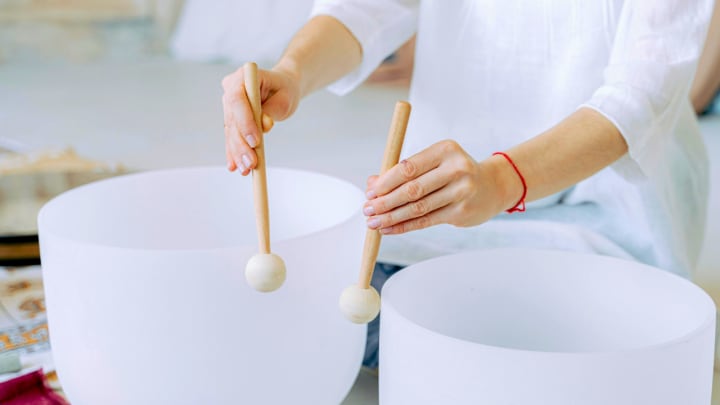
To begin with, both crystal and Himalayan bowls are typically played using a mallet. You can gently strike the bowl for a bell-like tone or run the mallet around the rim to create a continuous ringing sound—something many people associate with meditation, breathwork, or energy balancing practices. This method of sound production is essentially the same across both types.
Each type of bowl also comes in a range of sizes and pitches. Larger bowls tend to produce deeper, grounding tones, while smaller ones often create higher, more ethereal notes. You can use them on their own or combine them in sets to create harmonic layers of sound.
And finally, both types of bowls are used with the same goal in mind: to help calm the mind, soothe the nervous system, and support deeper states of relaxation or healing.
Differences
Now let’s explore where these bowls start to diverge.
1. Materials and Construction
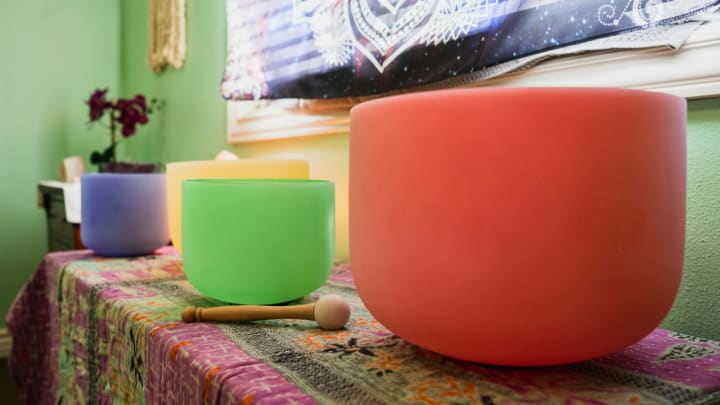
Crystal singing bowls are most often made from pure quartz crystal, often fused and shaped into perfect circles using high heat. They are typically opaque white or frosted, though you can also find clear versions, and ones with colored finishes. You can also find crystal bowls that are made from fusions of quartz and other minerals or gemstones such as amethyst or aquamarine.
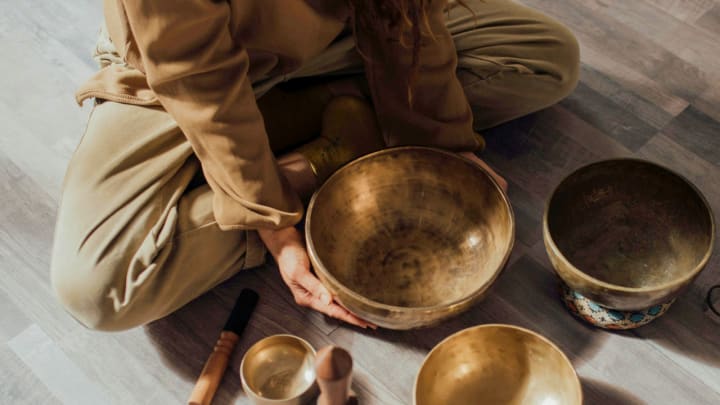
Himalayan bowls—often called Tibetan singing bowls—are made from metal. Traditionally, they’re hand-hammered from a mix of metals like copper, tin, and sometimes silver or gold. This gives them a more rustic, earthy appearance with plenty of visual variation from one bowl to the next. There are also Himalayan bowls that are made from casts, and these are often ones used in therapeutic practices
2. Sound and Vibration
The sound of a crystal bowl is typically very pure, bright, and sustained. It can feel almost electric or crystalline in nature, with a tone that lingers and fills the space. Many people describe the experience of crystal bowls as more etheric or energizing, making them especially popular for activating the higher chakras or working with subtle energy fields.
Crystal bowls are also typically tuned to precise musical notes, often aligned with specific chakras or sound healing protocols. This precision makes them particularly useful in sessions that involve intentional pitch work or harmonics. They also tend to project their sound more loudly and across greater distances, which makes them a natural choice for large group sound baths, expansive healing ceremonies, or outdoor settings. These bowls are most often experienced sonically—meaning they’re used for their audible resonance rather than placed directly on the body.
Himalayan bowls, by contrast, offer a warmer, more layered sound. Their tones often include both a fundamental pitch and rich overtone frequencies, which gives them a textured, grounding quality. Unlike crystal bowls, they’re usually not tuned to a specific Western musical note. Instead, their unique character and tone emerge from the thickness, shape, and composition of the metal alloy used, along with hand-forging techniques.
Most people find the sound of these metal bowls to be more intimate and calming—ideal for small spaces, personal rituals, or meditative one-on-one sessions. In many traditions, Himalayan bowls are also used physically on the body. Their dense metal construction allows vibrations to travel into the tissues when the bowl is placed directly on the skin and played. That said, this kind of application isn't recommended for individuals with surgical implants such as pacemakers, due to the potential effect of the vibration.
3. Mallets and Playing Tools
While both types of singing bowls are played with mallets, the mallets themselves differ in both material and purpose. Crystal bowls are typically paired with a suede- or silicone-covered wand. These wands are designed to grip the bowl’s smooth surface, helping to draw out its long, clear tone. They're usually lightweight, which also helps reduce the risk of damaging the more fragile crystal structure during play.
Himalayan bowls, on the other hand, are most often played with wooden mallets wrapped in suede or felt. These mallets tend to be heavier and more substantial, allowing for deeper contact with the bowl’s metal surface and producing a fuller, more resonant tone. The added weight also helps bring out the layered overtones of the metal.
4. Durability and Care
Crystal singing bowls are more fragile than their metal counterparts. While they’re sturdier than they may appear, they can crack or chip if dropped or struck against a hard surface. They require a bit of mindfulness when transporting or storing, especially the larger bowls or those with thinner walls. Some practitioners invest in padded cases or cushions for added protection.
Himalayan bowls, on the other hand, are generally more durable. Their metal construction can withstand more impact without damage, making them a practical choice for travel or frequent use. That said, they’re not indestructible—it's still possible for them to crack under extreme conditions, and over time, they may develop oxidation spots or discoloration due to humidity and handling. These signs of aging don’t typically affect the sound and can be managed with gentle cleaning and care.
5. Price Point
Another important difference is the cost. On average, Himalayan singing bowls tend to be more affordable than crystal bowls of the same size. This can be especially helpful if you're just starting out or building a collection over time. Crystal bowls are often priced higher due to the material cost, the manufacturing process, and their more modern aesthetic appeal and trendiness. The price can climb even more when you're looking at gemstone-infused or quartz fusion bowls, which are often considered specialty items in the sound healing world.
Choosing the Right Bowl for You
At the end of the day, the most important factor is how the bowl feels to you. Some people are drawn to the clean, spacious resonance of crystal bowls, while others prefer the earthy depth and ancient feel of a Himalayan bowl. If you’re able, I recommend listening to recordings of both types—or even better, trying them out in person.
If you plan to blend your singing bowls with other instruments, crystal bowls are often the better choice since they’re tuned to more precise and distinctive notes. That said, it’s worth checking the specific tuning of any crystal bowl you’re interested in, as they’re commonly tuned to either A = 440 Hz or 432 Hz. There can also be subtle variations in which overtone stands out most, so listening closely to individual bowls can help you find the best fit for your projects.
It also helps to consider your space, your budget, and how you plan to use the bowl. Crystal bowls project beautifully in large rooms or outdoor spaces, and their bright, sustained tones can create an expansive atmosphere—great for group work or meditative listening. But because they’re more fragile, they may not be ideal for travel or mobile sessions. If you’ll be moving around frequently or offering hands-on healing work, a metal bowl might be the more practical choice due to its durability and versatility.
Climate can also play a role. Crystal bowls are more sensitive to temperature shifts and sudden impacts, while Himalayan bowls—though not immune to wear—are generally more resilient. And if you’re building a collection or just starting out, the affordability of Himalayan bowls can be a helpful factor too.
Ultimately, the right bowl is the one that resonates with you—literally and energetically. Trust your ears, your hands, and your instincts.
About the Creator
Cate Calvert
My name is Cate, and I'm a professional musician and sound-healer. I'm the creator of Aligned Muse, and you can find my work on Insight Timer, YouTube, and streaming platforms such as Spotify.
Keep reading
More stories from Cate Calvert and writers in Longevity and other communities.
Koshi Chime 101
Koshi chimes have become a very popular instrument in the sound healing and meditation fields. They have pleasant, deeply soothing sounds to them, and they're incredibly simple to play. Whether you're considering purchasing some or already own them, this article provides essential maintenance tips and solutions to common playing issues. Let's dig in!
By Cate Calvert12 months ago in FYI
Day 4 of Quitting
If this is how sobriety feels, maybe it’s better to go through life a little buzzed… this, along with other hits like, I want to kill myself, I wish I was dead, and I’m going to throw myself off a bridge have been the only thoughts on rotation these past few days. I promise myself that if, in a month, I still feel like this (‘this’ meaning despondent, full of rage, and simultaneously numb) I can go back to smoking. Until mid-February though? Nicotine is off the table.
By sleepy drafts20 days ago in Longevity
Global Cell and Gene Therapy Third-Party Logistics Market Size and Forecast 2025–2033
Introduction The global healthcare landscape is undergoing a historic transformation as personalized medicine becomes the cornerstone of modern treatment. Among the most revolutionary developments are cell and gene therapies (CGTs), which offer the potential to treat — and in some cases cure — previously untreatable diseases. However, the success of these therapies depends not only on scientific innovation but also on the ability to transport, store, and deliver them safely and efficiently. This has placed third-party logistics (3PL) providers at the heart of the CGT value chain.
By Marthan Sir28 minutes ago in Longevity


Comments
There are no comments for this story
Be the first to respond and start the conversation.