
Koshi Chime 101
Simple Practices for Maintaining Your Koshi Chimes


Koshi chimes have become a very popular instrument in the sound healing and meditation fields. They have pleasant, deeply soothing sounds to them, and they're incredibly simple to play. Whether you're considering purchasing some or already own them, this article provides essential maintenance tips and solutions to common playing issues. Let's dig in!
Care Guide
Koshi chimes are mostly made out of bamboo. Like all wooden items, they need a little bit of maintenance from time to time to prevent them from natural wear and tear. If you're storing them in a case, you really won't have to do very much. But if you store them elsewhere, have them on display, or keep them outside, they'll need a little more TLC to keep them in working order.
Storing
The best way to prolong your Koshi chimes' lifespan is to store them in a case when not in use. While specially made cases are available, any soft, padded case that secures the chimes and prevents clashing will suffice. Displaying chimes indoors will lead to dust accumulation, which can be easily wiped away. Position them away from temperature fluctuations, such as near windows or air vents, and avoid humid environments to prevent mold. You can keep these chimes outdoors if you've treated them properly with an oil so that they have a little protection. However, the more these chimes are exposed to the elements, the faster they'll wear down.
Dusting
To keep your Koshi chimes looking their best, simply dust them off with a soft, dry cloth every now and then. Microfiber cloths are a great choice - they're gentle on the chimes and won't leave behind any lint. You can even use a clean microfiber dish towel if you don't have a specialized instrument cleaning cloth. Just be sure to get both the outside and inside of the chimes, taking care around the delicate tines.
Oiling
Over time, you may notice your Koshi chimes looking and feeling dried out. This is a signal that it’s time to oil them. Oiling helps protect the wood and prevents it from cracking. The manufacturer recommends using clear teak or tung oils. Many sound healing folks also suggest using a furniture oil. Personally, I like to use a mix of olive oil and tea tree oil that I blend myself. This mixture is just olive oil with several drops of tea tree added so that it has some antifungal properties to it. This is the same blend that I use to treat my Native American-style flutes when they need to be treated. I have examples of what Koshi chimes look like before and after an oiling to help you gauge whether or not you need to treat yours.
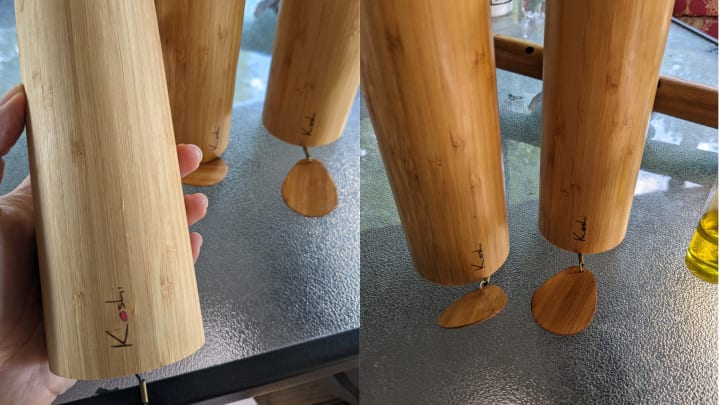
When a Koshi chime's too dried out, it will show. The color will become lighter, and the texture will feel dry and almost rough. It'll also appear pretty dull, as illustrated by the chime on the left in the image above. After oiling, the chime will be a little darker and feel much smoother. You'll also notice a it gets a subtle shine to it, as you can see in the right side here of the image.
How often you oil your Koshi chimes really depends on where you live and how you store them. If you're in a hot, dry climate and keep your chimes outdoors, you'll need to oil them the most frequently to prevent cracking. In more humid environments, you can oil them less often, but it's still important to use a protective oil with antifungal properties to prevent mold growth.
Mold Treatment
Koshi chimes are susceptible to mold because they're made from bamboo, especially if exposed to regular moisture like rain. If you spot mold, start by spot-cleaning with warm water and a sponge, being careful not to soak the bamboo to prevent swelling. Let the chime dry completely, then treat it with an antifungal oil like tea tree or clove. For more severe mold, apply a baking soda and warm water paste to the affected area, let it dry, brush it away, and follow with the antifungal oil.
Rusting Tines
The nickel-coated steel tines inside the chime may develop some rust over time. But don't worry, this won't affect the sound or playability. It's best not to try removing the rust, as the tines are could bend or break. Bending them could cause the chime to go out of tune, and broken tines will affect the full range of notes.
Common Playing Issues
Now that we've covered care, let's troubleshoot some common technical issues. Two problems can affect the chime's playability: tangled cords and uneven sounds caused by the striker hitting a single tine repeatedly. Here are the solutions for each.
Tangled Cord
Sometimes, the inner cord can tangle around the tines, restricting the striker's movement. A lot of sound healing shops will actually intentionally wrap the cord around the tines because this limits its movement during shipping, thus protecting the chimes better. To untangle it, gently pull the cord upwards and over the tines, returning it to the central space. You can try this with the chime upright or inverted, whichever is easier for you. Prioritize getting the cord back to the center first because its much easier to unravel once it's there. Once it's centered, carefully unravel any knots. Tweezers can be helpful for straightening stubborn tangles.
Uneven Sound
An uneven sound, with the striker repeatedly clunking into a single tine, indicates an imbalance in the cord's suspension. For this, we want to adjust the rings connecting the cord to the bar at the top. Gently rotate a ring clockwise or counterclockwise to center the cord within the hook, promoting balanced striker movement. Often, the cord gets lodged in a ring's split, causing the imbalance. Experiment with adjusting the rings, starting with the one below the bar. While it may require patience, this adjustment will fix the sound issue and allow the striker to regain a full range of motion.
So there you have it. These are the ins and outs of caring for Koshi chimes. By following these simple tips, you can keep your chimes sounding their best and enjoy the peace they bring to your space for a long time!
About the Creator
Cate Calvert
My name is Cate, and I'm a professional musician and sound-healer. I'm the creator of Aligned Muse, and you can find my work on Insight Timer, YouTube, and streaming platforms such as Spotify.
Keep reading
More stories from Cate Calvert and writers in FYI and other communities.
The Difference Between Koshi and Zaphir Chimes
If you have ever experienced a sound bath, chances are high that you've heard someone play a certain type of wind chime that has an especially pleasant and calming sound to it. These chimes are also wildly popular on platforms such as YouTube, so you may have encountered them there. Maybe you've even looked into getting one of these chimes for yourself. The market is full of options these days, but the two most popular brands are Koshi and Zaphir. While these brands do have their differences, the chimes have several things in common. This article can help clear up any confusion over how the chimes compare.
By Cate Calvert2 years ago in FYI



Comments
There are no comments for this story
Be the first to respond and start the conversation.