
Cataract Surgery Devices Market Size & Forecast (2025–2033)
Aging Populations, Advanced Surgical Technologies, and Expanding Global Healthcare Access Drive Steady Growth


The global Cataract Surgery Devices Market is entering a period of steady and significant expansion. According to Renub Research, the market is projected to grow from USD 8.91 billion in 2024 to USD 12.47 billion by 2033, registering a CAGR of 3.80% between 2025 and 2033. This upward shift reflects not only the growth of an aging global population, but also the rapid advancement of ophthalmic surgical technologies and the rising awareness of early intervention and vision restoration.
As cataract remains one of the leading causes of vision impairment worldwide, there is a clear and persistent demand for safe, effective, and cutting-edge surgical solutions. From premium intraocular lenses (IOLs) to robotic-precision lasers, new technology is transforming patient outcomes, reducing recovery time, and reshaping the way cataract care is delivered across hospitals, ophthalmic clinics, and research institutes.
Understanding the Cataract Surgery Devices Market
Cataract surgery devices comprise the specialized systems, lenses, and surgical tools used to remove cataracts— the clouding of the eye’s natural lens— and replace them with artificial intraocular lenses. These devices are vital in today’s ophthalmic sector, with cataract surgery ranking among the most common and successful surgical procedures worldwide.
Key technologies include:
Phacoemulsification systems, which use ultrasonic energy to break and remove cataract-affected lenses.
Intraocular lenses (IOLs), used to replace the natural lens and sometimes correct refractive errors like presbyopia and astigmatism.
Femtosecond lasers, which dramatically improve incision accuracy and surgical precision.
Ophthalmic viscoelastic devices and micro-surgical tools, which support minimally invasive procedures.
Continuous innovation is enabling ophthalmologists to offer procedures with smaller incisions, less trauma, greater visual clarity, and significantly faster recovery.
Market Growth Drivers
1. Aging Population and Rising Cataract Incidence
Cataracts overwhelmingly affect older adults, and global demographics are shifting rapidly. By 2030, one in six people will be over the age of 60. The global population aged 60+ is projected to grow from:
1 billion (2020)
1.4 billion (2030)
2.1 billion (2050)
Even more striking, the number of individuals aged 80+ will triple to 426 million by 2050.
This demographic transition directly fuels cataract surgery demand, shifting countries—both developed and emerging—into higher patient throughput and increased medical device adoption. As healthcare access expands and awareness about vision-restoring procedures grows, more patients worldwide are opting for cataract surgery earlier than ever before.
2. Technological Breakthroughs in Ophthalmic Surgery
Advancement in surgical technology stands as a central driver for the cataract surgery devices market. Innovations such as:
Femtosecond laser-assisted cataract surgery (FLACS)
Next-generation phacoemulsification systems
Premium IOLs (multifocal, toric, and accommodating lenses)
…are transforming the standards of care.
These advancements offer:
Minimally invasive procedures
Higher accuracy in lens removal and placement
Reduced procedure times
Better vision correction beyond cataract removal
Patients increasingly prefer surgeries that not only restore vision but also reduce dependence on corrective lenses. Manufacturers continue to invest in R&D to introduce more precise, safer, and customizable technologies.
A notable example is the February 2024 launch of Johnson & Johnson MedTech’s Tecnis PureSee lens in the EMEA region, designed to elevate visual clarity and reduce visual disturbances.
3. Expanded Access to Eye Care in Emerging Markets
Asia-Pacific, Latin America, and Africa are experiencing a significant rise in cataract-related healthcare efforts. Factors accelerating adoption include:
Government programs targeting preventable blindness
Mobile surgical units for rural regions
Subsidized surgeries
Expansion of medical training programs
Growing private-sector investments
Emerging economies are prioritizing eye health as part of broader public health initiatives. As insurance coverage widens and affordability improves, demand for both standard and advanced cataract surgery devices continues to surge.
Market Challenges
1. High Cost of Advanced Surgical Devices
While premium technologies offer exceptional precision and outcomes, their cost remains a major barrier—especially in low- and middle-income countries. Femtosecond lasers, premium IOLs, and the equipment required for high-end phacoemulsification systems can be prohibitively expensive.
Even in technologically advanced markets, smaller clinics struggle to invest in high-cost equipment. In many regions, premium IOLs are not covered by insurance, forcing patients to pay out of pocket. As a result, widespread adoption remains slower than expected.
2. Shortage of Skilled Ophthalmic Surgeons
There is an acute global shortage of trained ophthalmologists capable of performing cataract surgeries. This gap is especially prominent in:
Rural areas
Low-income regions
Emerging markets with limited medical training infrastructure
Without sufficient specialists, even the most advanced surgical devices remain underutilized. Training new surgeons requires time, investment, and infrastructure—creating an unavoidable bottleneck in market expansion.
Regional Market Overview
North America
North America continues to represent one of the most technologically advanced cataract surgery device markets. Both the United States and Canada experience:
High awareness of vision restoration benefits
Well-established healthcare infrastructure
Early adoption of femtosecond lasers and premium IOLs
Canada Spotlight
Canada’s market is expanding steadily, largely due to its aging population and universal healthcare coverage, which increases access to surgeries. With one-third of Canadians classified as obese in 2022, obesity-related cataracts may further increase demand.
Europe
Europe plays a key role globally due to strong surgical infrastructure and high adoption of advanced technologies. Major markets include:
Germany
France
Italy
Spain
United Kingdom
Netherlands
Turkey
Germany Leads Europe
Germany holds the largest share in Europe. The nation’s strong focus on medical innovation, large elderly population, and widespread access to minimally invasive procedures support market growth.
An important development occurred in July 2022, when Carl Zeiss Meditec partnered with Precise Bio to develop artificial corneal tissue— a breakthrough initiative likely to influence future ophthalmic device innovation.
Asia-Pacific
The Asia-Pacific region is the fastest-growing cataract surgery devices market globally. Major countries include:
China
Japan
India
South Korea
Australia
Thailand
Malaysia
Indonesia
Japan and Australia represent technologically advanced markets, while China and India lead in procedure volume due to massive patient populations.
China Spotlight
China’s rising geriatric demographic, rapid healthcare expansion, and preference for minimally invasive procedures are driving substantial growth. Increasing disposable income and government-backed eye health programs further accelerate adoption of advanced devices such as premium IOLs and femtosecond lasers.
Middle East & Africa
The Middle East & Africa region is growing steadily due to large-scale government healthcare investments and rising awareness of cataract treatment.
UAE Spotlight
The UAE market is rapidly expanding. Its strong medical tourism hub, adoption of cutting-edge technologies, and well-developed healthcare system support increasing demand for:
Femtosecond laser systems
Premium IOLs
Skilled ophthalmic surgeons
Growing awareness around age-related vision impairment is further pushing the adoption of advanced cataract surgery devices.
Market Segmentation
By Product Type
Intraocular Lens
Phacoemulsification Systems
Femtosecond Laser
Ophthalmic Viscoelastic Devices and Other Consumables
By End Use
Hospitals
Ophthalmic Clinics
Research Institutes
By Region
North America: United States, Canada
Europe: France, Germany, Italy, Spain, UK, Belgium, Netherlands, Turkey
Asia-Pacific: China, Japan, India, South Korea, Thailand, Malaysia, Indonesia, Australia, New Zealand
Latin America: Brazil, Mexico, Argentina
Middle East & Africa: Saudi Arabia, UAE, South Africa
Competitive Landscape
Key companies operating in the cataract surgery devices market include:
Alcon, Inc.
Johnson & Johnson
Carl Zeiss Meditec AG
Bausch & Lomb, Inc.
Topcon Corp
STAAR Surgical Co
Glaukos Corp
Abbott Laboratories
Each company’s profile includes four viewpoints:
Overview, Key Person, Recent Developments & Strategies, and Revenue Analysis.
Final Thoughts
The cataract surgery devices market is poised for healthy and consistent growth through 2033. As global populations age and vision impairment becomes a more pressing public health concern, demand for efficient and advanced cataract treatment solutions will increase steadily.
Coupled with rising awareness, technological breakthroughs, and the expansion of healthcare access in developing regions, the market is expected to witness continuous innovation and deeper penetration across global markets. Despite challenges such as high device costs and surgeon shortages, strategic investments and global eye-care initiatives will help bridge these gaps.
With a forecast value of USD 12.47 billion by 2033, the industry stands on the brink of a transformative decade—one that will redefine precision eye care, improve patient outcomes, and shape the future of vision restoration worldwide.
About the Creator
Sushant. Renub Research
I’m Sushanta Halder, Digital Marketing Manager at Renub Research with 15+ years in SEO, content, PPC & lead generation. Passionate about data-driven growth strategies.
Keep reading
More stories from Sushant. Renub Research and writers in Longevity and other communities.
Genetic Testing Market Size and Forecast 2025–2033: A Rapidly Evolving Revolution in Global Healthcare
The global Genetic Testing Market is entering a transformative decade—one defined by precision healthcare, predictive diagnostics, and accelerating adoption of next-generation sequencing (NGS). According to Renub Research, the Genetic Testing Market is expected to reach US$ 49.72 billion by 2033, rising significantly from US$ 21.47 billion in 2024, registering a CAGR of 9.79% during 2025–2033. This rapid expansion reflects both technological evolution and growing consumer awareness regarding genetic health risks.
By Sushant. Renub Research2 months ago in Longevity
Day 4 of Quitting
If this is how sobriety feels, maybe it’s better to go through life a little buzzed… this, along with other hits like, I want to kill myself, I wish I was dead, and I’m going to throw myself off a bridge have been the only thoughts on rotation these past few days. I promise myself that if, in a month, I still feel like this (‘this’ meaning despondent, full of rage, and simultaneously numb) I can go back to smoking. Until mid-February though? Nicotine is off the table.
By sleepy drafts8 days ago in Longevity
Saudi Arabia Generic Drugs Market Size and Forecast 2025–2033
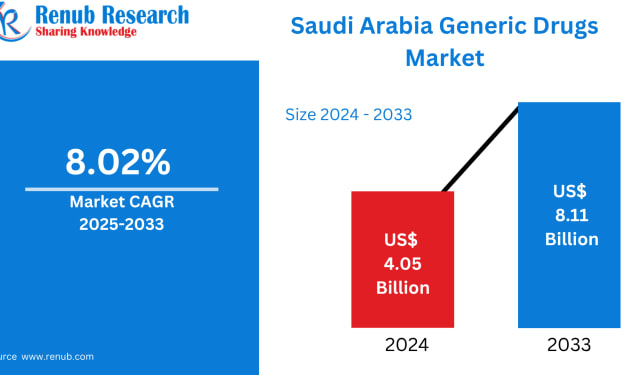
Saudi Arabia Generic Drugs Market Outlook The Saudi Arabia Generic Drugs Market is anticipated to grow to US$ 8.11 billion by 2033 from US$ 4.05 billion in 2024, expanding at a CAGR of 8.02% during 2025–2033. This growth is attributed to rising healthcare needs, proactive government efforts to curb pharmaceutical expenditure, and increasing awareness of cost-effective medication alternatives. Expanding domestic pharmaceutical manufacturing and regulatory support for generics are further strengthening the market’s long-term outlook.
By Marthan Sirabout 2 hours ago in Longevity



Comments
There are no comments for this story
Be the first to respond and start the conversation.