
Cancer’s Silent Killer: The Importance of Early Detection
A true story of loss, hope, and the life-saving power of paying attention to the quietest symptoms.

A Whisper Before the Storm
It didn’t start with a lump.
It didn’t start with a sudden collapse or a dramatic moment in a hospital.
It started, simply, with tiredness.
My aunt, Rehana, was one of those women who never sat still. She was 48, strong-willed, always on the move, always putting others first. Whether it was cooking for the whole family or working late at her small tailoring business, she never complained.
When she started feeling “off,” she didn’t make a big deal of it. “Probably just gas,” she laughed one day, rubbing her abdomen after a meal. “Maybe I’m just getting old.”
We all brushed it off. She had always been strong, and the symptoms didn’t seem serious. Just mild bloating, some fatigue, and a little back pain. Minor issues, we thought. But we were wrong — dangerously wrong.
The Symptoms No One Talks About
Ovarian cancer is called “the silent killer” for a reason. It doesn't shout. It doesn’t usually come with obvious signs like a visible tumor or intense pain in its early stages. The symptoms — if they even show up — are often so vague that most women ignore them.
That was true for Rehana. She kept going, day after day, while the cancer inside her grew.
She started losing weight, but we praised her for “finally taking care of herself.” She began to look pale, but we blamed it on her busy schedule. She skipped meals, saying she wasn’t feeling hungry. None of it seemed alarming — until it was.
When the Alarm Bells Finally Rang
Six months passed like this. The bloating got worse. She started looking five months pregnant, even though she wasn’t eating much. Her feet began to swell. She had trouble sleeping, and the back pain became unbearable.
That’s when she finally agreed to see a doctor.
They did a scan. Then blood tests. Then more scans. And then the news came crashing down like thunder: Stage III ovarian cancer. It had spread beyond the ovaries — silently, stealthily, without giving her a fair chance.
The doctors looked at us with sad eyes. “If only we had caught it earlier,” they said. “This type of cancer hides well.”
The Fight — and the Pain
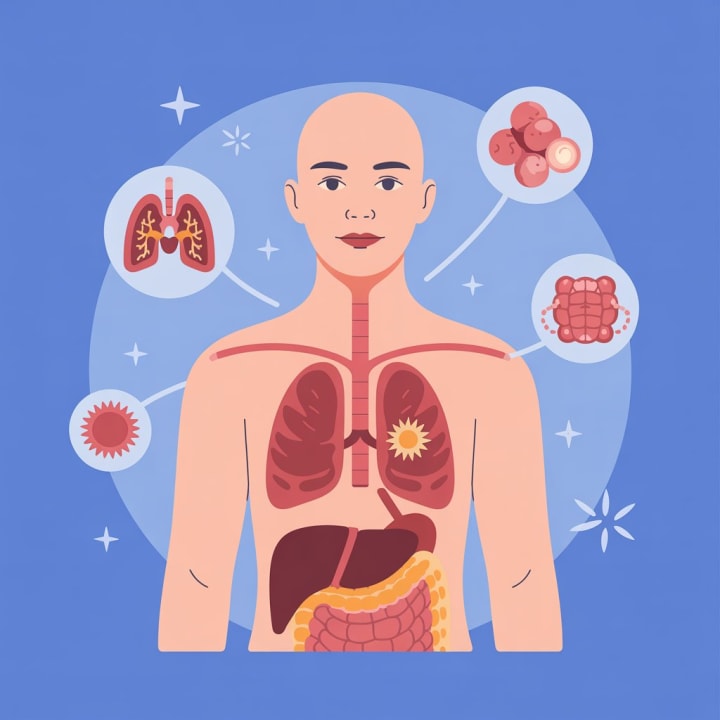
She began chemotherapy immediately. She lost her hair. Her skin changed color. The strong, independent woman we had known all our lives was now dependent on others for even the smallest things. She was in pain — physically, emotionally, spiritually.
There were days she still smiled, cracked jokes, and asked about our meals. But behind that smile was a woman slowly fading. The treatments helped for a while, but it was too late. The cancer was too advanced. The doctor’s words from the beginning kept echoing in our minds: “If only we had caught it earlier…”
Ten months after her diagnosis, we lost her.
And just like that, a life full of laughter, love, and care was silenced forever — not because she didn’t fight, but because she didn’t know. Because we didn’t know.
Why This Story Needs to Be Told
There are thousands of Rehanas out there. Women (and men) who ignore small symptoms because they don’t want to “make a fuss.” People who think they’re too busy to go to the doctor. Cultures that teach us to be strong and silent instead of cautious and curious.
Cancer doesn’t always come with a warning sign. But when it does, it whispers — and we need to listen carefully.
Many types of cancer — ovarian, pancreatic, kidney, and even colon — have symptoms that can be mistaken for something minor. But when caught early, many of these cancers are highly treatable.
So, what can we learn?
Lessons from Rehana’s Story
1. Your Body Talks — Don’t Ignore It
If something feels wrong for more than a couple of weeks — persistent fatigue, unexplained bloating, changes in bathroom habits, appetite loss, or unusual pain — see a doctor. It might be nothing. But it might be everything.
2. Don’t Let Fear or Pride Delay You
Many people avoid doctors out of fear of bad news or not wanting to “waste their time.” But getting checked early could be the difference between life and death.
3. Routine Checkups Matter
Annual health checkups, Pap smears, mammograms, colonoscopies, and other screenings save lives. Don’t wait for a symptom to show up. Prevention and early detection are far easier (and more affordable) than treatment.
4. Educate Others — Especially Women
In many cultures, women are taught to prioritize others above themselves. They care for everyone but often neglect their own health. We need to break that cycle. Talk to your mothers, sisters, wives, and friends. Tell them Rehana’s story.
A Life Remembered — and a Warning to Others
I still think of her. Every time I hear someone say they’re tired or bloated, I remember how it all started. I remember the quiet suffering behind her smile. I remember the day we got the diagnosis. The helplessness. The guilt.
This article isn’t just a tribute to Rehana. It’s a message. A plea.
Please — don’t ignore the whispers.
💬 Moral of the Story:
Cancer doesn’t always roar. Sometimes, it arrives in silence. But silence is not safety — it’s a warning. Listen to your body. Speak up. Check early. Because in the fight against cancer, time is your greatest ally — and silence, your deadliest enemy.
About the Creator
Salman khan
Hello This is Salman Khan * " Writer of Words That Matter"
Bringing stories to life—one emotion, one idea, one truth at a time. Whether it's fiction, personal journeys.
Keep reading
More stories from Salman khan and writers in Longevity and other communities.
New Science, New Hope: The Fight to End HIV with CRISPR
When Daniel M., a 29-year-old graphic designer from San Francisco, first heard the words "You are HIV positive," his world dimmed. The noise of the clinic faded into a low, muffled hum. He had been safe, careful even. But now, his life would change forever.
By Salman khan9 months ago in Longevity
A wildflower in California reveals a newly documented evolutionary process
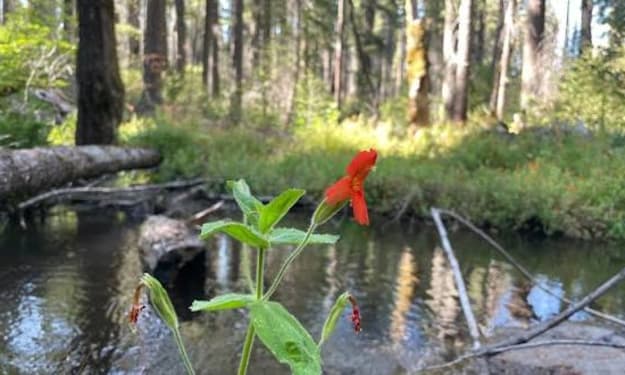
In a remarkable breakthrough for evolutionary biology, researchers studying wildflower populations in California have documented one of the clearest cases yet of rapid genetic evolution occurring in nature. The findings, centered on the bright red scarlet monkeyflower (Mimulus cardinalis), reveal how some plant populations were able to adapt and recover following the region’s most severe drought in over a millennium — providing tangible evidence of an evolutionary process known as evolutionary rescue. The scarlet monkeyflower, a wildflower native to moist areas along streams and springs in California, has long been familiar to botanists and hikers alike for its vivid blooms and distinctive habitat. However, during the early 2010s, California experienced an unprecedented megadrought that lasted several years, killing hundreds of millions of trees and dramatically altering the ecological landscape. While many plant species suffered catastrophic declines, some populations of Mimulus cardinalis showed a surprising resilience. Scientists from multiple institutions undertook a long‑term study to understand how this wildflower weathered such extreme conditions. Over eight years, researchers tracked 55 populations of the monkeyflower across its natural range, closely monitoring their numbers and health. They also conducted whole‑genome sequencing to observe genetic changes over time, looking for evidence that natural selection had acted on specific traits. The results were illuminating. At sites where populations had nearly collapsed — with numbers dropping by as much as 90% — genetic analysis revealed consistent shifts in allele frequencies across the genome. These shifts were not random; they were associated with traits that likely enhanced drought tolerance, enabling some individuals to survive and reproduce where others perished. As these “advantaged” genotypes became more common, the population as a whole began to recover, a hallmark of what biologists call evolutionary rescue. Evolutionary rescue occurs when the genetic variation present within a population allows it to adapt fast enough to avoid extinction under sudden environmental stress. While theoretical models have long predicted such processes, direct evidence in the wild—especially involving plants—has been limited. This study is among the first to document genomic changes in natural plant populations that are clearly linked to a major environmental crisis. For decades, evolutionary biologists have debated how quickly natural selection can operate in real‑world scenarios. Classic case studies like Darwin’s finches in the Galápagos have demonstrated adaptive changes in beak shape over a few generations. But plant studies have often lagged behind, in part because many species have long lifecycles or reproduce clonally, making rapid evolution harder to detect. The California wildflower case breaks new ground by combining long‑term fieldwork with cutting‑edge genomic analysis. Researchers noted that the recovery of the monkeyflower populations did not happen overnight — it took roughly two to three growing seasons for numbers to rebound significantly. Yet in evolutionary terms, this pace is considered rapid. The drought likely imposed intense selective pressure, filtering out less drought‑tolerant genotypes and leaving behind a smaller cohort better suited to the harsh conditions. As these were the individuals contributing more seeds to the next generation, their genetic traits spread through the population. The implications of this research extend beyond wildflowers. As climate change accelerates and extreme weather events become more frequent, scientists are increasingly interested in how species will respond — whether through behavioral changes, migration, or evolutionary adaptation. Cases like Mimulus cardinalis suggest that some species may harbor the genetic diversity necessary to adapt swiftly when environments change dramatically. However, not all species will be so fortunate, and the mechanisms of evolutionary rescue are still not fully understood. “This is one of the clearest cases we've seen where a wild plant species shows genomic evidence of adapting to extreme environmental stress,” said one of the study’s lead authors. “It gives us hope that under certain conditions, natural selection can work fast enough to help populations persist — but it also raises many questions about the limits of such adaptation.” The study’s methods also signal a new era in ecological research. By combining consistent field monitoring with high‑resolution genetic data, scientists can now track evolution as it happens rather than inferring processes from fossils or distant historical records. This “real‑time” view of evolution may become vital for conservation efforts, helping biologists identify which populations are most at risk and which may have the inherent capacity to adapt. For conservationists, the findings underscore both the resilience and vulnerability of natural ecosystems. While some populations like the scarlet monkeyflower demonstrate extraordinary adaptive potential, others with limited genetic diversity may face a greater threat of decline or extinction as climates shift. Understanding the genomic underpinnings of adaptation could therefore inform strategies to protect biodiversity in a warming world. As research progresses, scientists hope to explore similar evolutionary dynamics in other species and regions. The California wildflower study stands as a testament to the power of modern genomics and long‑term ecological research — and a reminder that evolution, far from being a slow, imperceptible force, can sometimes unfold before our eyes.
By Fiaz Ahmed about 8 hours ago in Longevity



Comments
There are no comments for this story
Be the first to respond and start the conversation.