
Building a Strong Foundation
Youth Baseball Pitching Instruction


In recent years working with young pitchers, one problem has arisen that needs to be addressed. A solid foundation in the lower half is essential for the development of creating force that gets to the baseball and the feel for release point. There are a variety of reasons for this, but most likely it is the lack of well rounded multiple sport athletes that we now find on the baseball field and pitchers’ mound. With the concentration of year round play increasing, we see fewer multiple sport athletes. This concentration on one sport limits a variety of motor skill that are learned, naturally.
As a result of the lack of a variety of motor skills learned, movement patterns have been limited to the activities youth pitchers have participated in. A youth athlete that has only pitched in his past will develop the foundational weaknesses or strengths that they naturally gravitate to. Realizing this, it is very important that proper strength, mobility and balance be acquired to further develop proper throwing mechanics.
The importance of a stable foundation cannot be over stated. As research has shown, there is a direct correlation of hip mobility (or the lack of) to Tommy John surgery in youth pitchers. “UF researchers correlated the hip range of motion to what they already knew could risk injury, and found that the less range of motion in their hips that pitchers had, the higher the risk to the pitchers’ arms. Pitchers unknowingly compensate for limited range of motion in their hips, which could place more torque on their elbows.” (University of Florida, 2014). Developing this foundation that works correctly will allow other aspects of the delivery to be more efficient in create force to the baseball.
Understanding the importance of hip mobility enables the proper exercise prescription for ensuring the proper function of the hips in the pitching delivery. The first area of focus are hip flexors. One important item to realize is that whe the hip flexors are overworked (even in the simple task of walking) they become tired and tight. A muscle will tend to tighten when it fears of being pulled apart due to fatigue. Thus, walking can tighten the hip flexors when young athletes walk from there hips instead of through knee extension and flexion. “Everyday habits however, add up to uneven flexibility and strength in the hips. This lack of symmetry becomes highlighted and even reinforced in athletic endeavors, especially those that tend to favor one sided movement such as golf, tennis or baseball.” (Golden, B., 2010). The first task will be to increase flexibility of the hip flexors. The following article is a solid source for these type of movements. https://www.healthline.com/health/fitness-exercise/hip-flexor-exercises#takeaway.
After increasing hip flexor mobility, it is time to coordinate your lower body foundation with the movement patterns of the pitching delivery. The most important aspect of this is to learn how to properly hinge the lower body and upper body. Practicing proper body weight squats and split squats are a good start in learning how to hinge properly. The hinge is a folding into the hip during both exercises, below.


I simple test to see your progress is the overhead squat with a closet dowel or broomstick.

After improving the hip flexor mobility and learning how to hinge, properly the next step is to take these improvement to the pitching delivery. The key is to control the lower body effort. As we improve our overall athleticism, we improve the control of our lower half. In time the improved control will allow us to add more force that is created by the lower body. It is important to not jump ahead and create increased strength levels (and ability to generate force) until the movement pattern is correct. In youth pitchers it is of utmost importance to improve the efficiency of the movements before attempting to increase force.
Remember that there are many hip flexor mobility programs available with a little research. This also can be true of the teaching mechanism for learning to hinge properly. If you would like further assistance, check out https://nextlevelkidz.com/sport-classes/ and book a class with Cristina Teaver. Baseball skill training and athletic conditioning are available.
References
Golden, B. (2010, June 11). Hips in Balance - Correcting Asymetrical Flexibility. Tune Up Fitness. https://www.tuneupfitness.com/blog/hips-flexibility-balance/
University of Florida. (2014, April 30). "In pitching injuries, the elbow is connected to the hip." ScienceDaily. https://www.sciencedaily.com/releases/2014/04/140430142818.htm
About the Creator
Keep reading
More stories from James Rooney and writers in Longevity and other communities.
Day 4 of Quitting
If this is how sobriety feels, maybe it’s better to go through life a little buzzed… this, along with other hits like, I want to kill myself, I wish I was dead, and I’m going to throw myself off a bridge have been the only thoughts on rotation these past few days. I promise myself that if, in a month, I still feel like this (‘this’ meaning despondent, full of rage, and simultaneously numb) I can go back to smoking. Until mid-February though? Nicotine is off the table.
By sleepy drafts8 days ago in Longevity
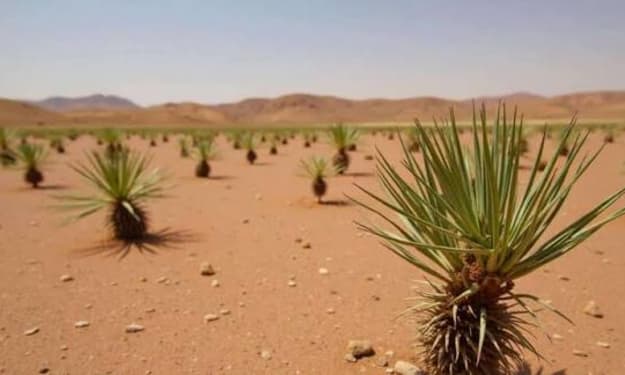
More Than 5 Million Native Plants Reintroduced in Deserts Are Slowing Land Degradation and Rebooting Arid Ecosystems
Deserts are often seen as barren, unforgiving landscapes, but they are far from lifeless. These ecosystems, while harsh, support unique biodiversity and provide critical environmental services, from carbon sequestration to regulating local climates. Yet, decades of overgrazing, unsustainable land use, and climate change have taken their toll, leaving many arid regions struggling with soil erosion, loss of native vegetation, and diminished ecological resilience. Now, a bold rewilding effort is turning the tide: over five million native plants have been reintroduced into deserts worldwide, and the early results are promising. The scale of the initiative Across regions from the deserts of the Middle East and North Africa to the arid plains of Australia and North America, conservation organizations, local communities, and governments have collaborated to replant native species that were once nearly wiped out. These plants range from hardy shrubs and grasses to iconic desert flowers, all carefully selected for their ability to survive in extreme conditions and restore ecological balance. The numbers are staggering: more than 5 million individual plants have been transplanted over the last five years, covering thousands of hectares. While this effort is labor-intensive, involving soil preparation, irrigation during establishment phases, and ongoing monitoring, the environmental payoff has been remarkable. Slowing land degradation One of the primary goals of these reintroductions is to combat land degradation, a process that affects over 40% of the planet’s land surface. In deserts, degradation is particularly acute because soil erosion occurs rapidly in the absence of stabilizing vegetation. Without plants to anchor the soil, wind and water can strip away fertile topsoil, creating a feedback loop of declining vegetation and worsening erosion. Early monitoring reports suggest that reintroduced native plants are helping to stabilize sandy soils and reduce the spread of desertification. In some areas of the Middle East, for instance, wind erosion rates have decreased by up to 30% in regions where shrubs and grasses were replanted. This stabilization not only benefits the environment but also local communities that rely on the land for grazing, agriculture, and other livelihoods. Rebooting arid ecosystems Beyond slowing soil loss, these plant reintroductions are rebooting entire desert ecosystems. Deserts are home to a diverse array of wildlife, including insects, birds, and mammals that rely on native plants for food and shelter. By re-establishing vegetation cover, these efforts have triggered a cascade of ecological benefits. In parts of the Sonoran Desert in North America, researchers observed a noticeable increase in pollinator populations, such as bees and butterflies, following the reintroduction of native flowering plants. Similarly, small mammals and reptiles that had disappeared from degraded areas are gradually returning, attracted by improved habitat structure and food availability. Climate resilience Another key advantage of reintroducing native plants is enhancing climate resilience. Many desert plants are adapted to survive extreme heat, drought, and poor soils. By re-establishing these species, ecosystems can better withstand climate-related stresses, such as prolonged droughts or extreme heatwaves. Additionally, some species improve soil moisture retention and reduce surface temperatures, creating microclimates that further support biodiversity. Community engagement and knowledge transfer What makes these rewilding efforts particularly successful is the integration of local communities. Indigenous knowledge about native species, planting techniques, and seasonal cycles has been invaluable. In some regions, schools and community groups participate in planting days, turning conservation into a source of pride and education. This engagement ensures that restored areas are maintained, monitored, and valued over the long term. Looking ahead While the reintroduction of five million native plants is a significant achievement, experts caution that long-term success requires continued investment, monitoring, and protection from overgrazing, development, and climate pressures. However, the initiative provides a compelling example of how targeted, science-backed restoration can reverse environmental damage. For arid ecosystems, these efforts are more than just planting trees and shrubs—they represent hope. They demonstrate that even the most fragile landscapes can recover when humans actively collaborate with nature, restoring not only plants but the entire web of life that depends on them. As the world grapples with climate change and land degradation, the lessons from these desert rewilding projects offer a blueprint for action: by investing in native biodiversity, we can slow degradation, rebuild ecosystems, and create landscapes that are resilient, productive, and teeming with life once again.
By Fiazahmedbrohi about 21 hours ago in Longevity



Comments
There are no comments for this story
Be the first to respond and start the conversation.