
Build Strong Bones for Life: 10 Exercise Tips to Combat a Sedentary Lifestyle
"How to Keep Your Bones Healthy and Strong: Essential Exercises for a Sedentary Lifestyle"

Our bones are the foundation of our bodies, providing structure, support, and protection for our organs. However, like any other living tissue, bones need regular exercise to stay strong and healthy. A sedentary lifestyle, unfortunately, is a major risk factor for bone loss, increasing the chances of developing osteoporosis, a condition that weakens bones and makes them more prone to fractures.
The good news? Exercise plays a crucial role in promoting bone health throughout your life. This article explores 10 expert-recommended exercises to combat a sedentary lifestyle and build strong bones for a lifetime.
1. Weight-Bearing Exercises:
These exercises force your body to work against gravity, stimulating bone growth and increasing bone density. Here are some excellent options:
Walking: This simple, low-impact activity is a fantastic foundation for bone health. Aim for at least 30 minutes of brisk walking most days of the week.
Running/Jogging: These activities provide a greater challenge than walking, putting more stress on your bones and promoting bone density. Start slowly and gradually increase duration and intensity.
Stair Climbing: Climbing stairs strengthens your legs, hips, and spine, all crucial for bone health. Find opportunities to incorporate stairs into your daily routine.
Dancing: This fun activity is a weight-bearing exercise that builds bone density and improves coordination. Choose dances you enjoy, from ballroom to Zumba.
2. Strength Training:
Strength training builds muscle mass, which in turn strengthens bones. Focus on exercises that target major muscle groups in your legs, hips, back, and core. Here are some suggestions:
Bodyweight Exercises: Squats, lunges, push-ups, planks, and bridges are fantastic bodyweight exercises you can do anywhere. Start with lighter weights and gradually increase difficulty as you get stronger.
Free Weights/Resistance Bands: These tools offer a wider range of exercises to target specific muscle groups. Seek guidance from a certified trainer to ensure proper form and prevent injuries.
Weight Machines: Gyms offer various weight machines that can be tailored to your fitness level and target specific muscle groups. Get proper instruction to maximize benefits and avoid injury.
3. High-Impact Exercises:
These exercises involve jumping or rapid changes in direction, putting a higher load on your bones and promoting bone density. Start slowly and progress gradually to minimize the impact on your joints. Examples include:
Jumping rope: A fun and effective way to improve bone density in your legs and lower back. Start with short jumps and gradually increase duration and intensity.
Plyometrics: Exercises like jumping jacks, box jumps, and squat jumps can be highly beneficial for bone health, but proper form is crucial. Consult a trainer for guidance.
Tennis/Badminton: These racquet sports involve jumping, quick movements, and reactive changes in direction, making them great for bone health.
4. Balance Exercises:
Balance exercises may not seem directly related to bone health, but they are crucial in preventing falls, a major cause of bone fractures in older adults. Here are some simple exercises to improve balance:
Heel-toe walking: Walk in a straight line, placing your heel in front of your toe with each step. This challenges your balance and core strength.
Single-leg stance: Stand on one leg for a designated period, gradually increasing the time as you get more comfortable. Challenge yourself by closing your eyes once you have mastered balance.
Tai Chi/Yoga: These mind-body practices involve gentle movements and poses that improve balance, coordination, and flexibility.
5. Consider Your Fitness Level:
It's important to choose exercises appropriate for your current fitness level. If you're a beginner, start with low-impact activities like walking or bodyweight exercises. Gradually increase the intensity and duration of your workouts as your fitness improves.
6. Consistency is Key:
Regular exercise is essential for building and maintaining bone health. Aim for at least 30 minutes of moderate-intensity exercise most days of the week. Even short bursts of activity throughout the day can be beneficial.
7. Consult Your Doctor:
Before starting any new exercise program, consult your doctor, especially if you have any existing medical conditions. They can recommend safe and effective exercises for you and monitor your progress.
8. Listen to Your Body:
Don't push yourself too hard, especially when starting a new exercise routine. Pay attention to your body's signals and take rest days when needed. Pain is a sign to stop and consult a doctor before continuing.
About the Creator
Keep reading
More stories from Amit Chakraborty and writers in Longevity and other communities.
The Future of Cardiovascular Disease Prevention and Care: What the Next Century May Hold
Cardiovascular disease (CVD) continues to be a leading cause of death worldwide, claiming millions of lives each year. As medical science advances, the next century holds promising possibilities for the prevention and care of CVD. From innovative technologies and personalized medicine to public health initiatives and lifestyle modifications, the future of cardiovascular health is poised to undergo transformative changes. This article explores the potential developments and trends in CVD prevention and care over the next hundred years.
By Amit Chakraborty2 years ago in Longevity
A wildflower in California reveals a newly documented evolutionary process
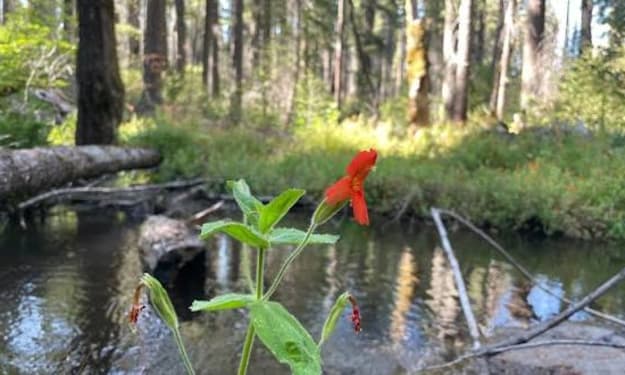
In a remarkable breakthrough for evolutionary biology, researchers studying wildflower populations in California have documented one of the clearest cases yet of rapid genetic evolution occurring in nature. The findings, centered on the bright red scarlet monkeyflower (Mimulus cardinalis), reveal how some plant populations were able to adapt and recover following the region’s most severe drought in over a millennium — providing tangible evidence of an evolutionary process known as evolutionary rescue. The scarlet monkeyflower, a wildflower native to moist areas along streams and springs in California, has long been familiar to botanists and hikers alike for its vivid blooms and distinctive habitat. However, during the early 2010s, California experienced an unprecedented megadrought that lasted several years, killing hundreds of millions of trees and dramatically altering the ecological landscape. While many plant species suffered catastrophic declines, some populations of Mimulus cardinalis showed a surprising resilience. Scientists from multiple institutions undertook a long‑term study to understand how this wildflower weathered such extreme conditions. Over eight years, researchers tracked 55 populations of the monkeyflower across its natural range, closely monitoring their numbers and health. They also conducted whole‑genome sequencing to observe genetic changes over time, looking for evidence that natural selection had acted on specific traits. The results were illuminating. At sites where populations had nearly collapsed — with numbers dropping by as much as 90% — genetic analysis revealed consistent shifts in allele frequencies across the genome. These shifts were not random; they were associated with traits that likely enhanced drought tolerance, enabling some individuals to survive and reproduce where others perished. As these “advantaged” genotypes became more common, the population as a whole began to recover, a hallmark of what biologists call evolutionary rescue. Evolutionary rescue occurs when the genetic variation present within a population allows it to adapt fast enough to avoid extinction under sudden environmental stress. While theoretical models have long predicted such processes, direct evidence in the wild—especially involving plants—has been limited. This study is among the first to document genomic changes in natural plant populations that are clearly linked to a major environmental crisis. For decades, evolutionary biologists have debated how quickly natural selection can operate in real‑world scenarios. Classic case studies like Darwin’s finches in the Galápagos have demonstrated adaptive changes in beak shape over a few generations. But plant studies have often lagged behind, in part because many species have long lifecycles or reproduce clonally, making rapid evolution harder to detect. The California wildflower case breaks new ground by combining long‑term fieldwork with cutting‑edge genomic analysis. Researchers noted that the recovery of the monkeyflower populations did not happen overnight — it took roughly two to three growing seasons for numbers to rebound significantly. Yet in evolutionary terms, this pace is considered rapid. The drought likely imposed intense selective pressure, filtering out less drought‑tolerant genotypes and leaving behind a smaller cohort better suited to the harsh conditions. As these were the individuals contributing more seeds to the next generation, their genetic traits spread through the population. The implications of this research extend beyond wildflowers. As climate change accelerates and extreme weather events become more frequent, scientists are increasingly interested in how species will respond — whether through behavioral changes, migration, or evolutionary adaptation. Cases like Mimulus cardinalis suggest that some species may harbor the genetic diversity necessary to adapt swiftly when environments change dramatically. However, not all species will be so fortunate, and the mechanisms of evolutionary rescue are still not fully understood. “This is one of the clearest cases we've seen where a wild plant species shows genomic evidence of adapting to extreme environmental stress,” said one of the study’s lead authors. “It gives us hope that under certain conditions, natural selection can work fast enough to help populations persist — but it also raises many questions about the limits of such adaptation.” The study’s methods also signal a new era in ecological research. By combining consistent field monitoring with high‑resolution genetic data, scientists can now track evolution as it happens rather than inferring processes from fossils or distant historical records. This “real‑time” view of evolution may become vital for conservation efforts, helping biologists identify which populations are most at risk and which may have the inherent capacity to adapt. For conservationists, the findings underscore both the resilience and vulnerability of natural ecosystems. While some populations like the scarlet monkeyflower demonstrate extraordinary adaptive potential, others with limited genetic diversity may face a greater threat of decline or extinction as climates shift. Understanding the genomic underpinnings of adaptation could therefore inform strategies to protect biodiversity in a warming world. As research progresses, scientists hope to explore similar evolutionary dynamics in other species and regions. The California wildflower study stands as a testament to the power of modern genomics and long‑term ecological research — and a reminder that evolution, far from being a slow, imperceptible force, can sometimes unfold before our eyes.
By Fiaz Ahmed about 16 hours ago in Longevity
TUS NUA - ch 53
TUS NUA – ch 53 New Beginnings – Mia and Midnight (*)(*)(*) Finola knew Ali’s brother-in-law needed to put his mind at rest. She fed her arm through his and led him outside. “We’ll sit here. If you like, I can put a block around us so our conversation will be private.”
By Margaret Brennan5 days ago in Fiction



Comments
There are no comments for this story
Be the first to respond and start the conversation.