
Australia Intravenous Solution Market on Steady Climb — Poised to Reach USD 465.66 Million by 2033
Rising chronic disease, aging population and hospital admissions are fueling demand for IV solutions, with market set to grow at a 4.55% CAGR to 2033.

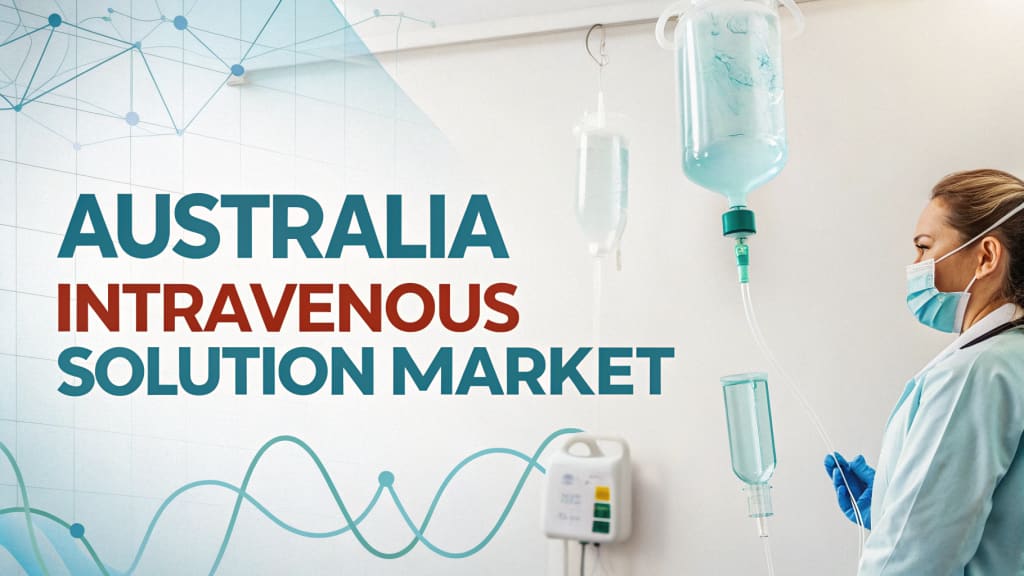
The market for intravenous (IV) solutions in Australia is experiencing consistent growth, underpinned by increasing healthcare demand across hospitals, clinics and home-care settings. According to the latest IMARC Group analysis, the Australia Intravenous Solution Market was valued at USD 312.00 million in 2024 and is forecast to reach USD 465.66 million by 2033, at a compound annual growth rate (CAGR) of 4.55% over 2025–2033.
This upward trajectory reflects a strengthening demand for IV therapies — including partial and total parenteral nutrition — across various patient care segments. With hospitals, specialty clinics and even home-based care providers increasingly relying on IV solutions to deliver hydration, nutrients, electrolytes and medications, the market is becoming a critical backbone of Australia’s clinical care infrastructure.
Why the Market Is Growing So Rapidly
The growth of the Australian IV solution market is being driven by multiple structural and demographic factors.
Firstly, the rising prevalence of chronic diseases such as diabetes, cancer, kidney disorders and cardiovascular illnesses is a major contributor. These conditions often require long-term care, frequent hospitalizations, or continuous fluid, nutrient or drug administration — all of which depend on IV solutions.
Secondly, there is a noticeable increase in surgical procedures and hospital admissions. As surgical volumes go up — whether for elective operations, emergency care, or age-related interventions — the demand for IV therapies for rehydration, pain management, and post-operative nutrition support also rises.
Thirdly, an aging population in Australia is contributing significantly. Elderly patients are more susceptible to dehydration, malnutrition, chronic conditions, and hospital stays — all scenarios where IV solutions become essential. The growing geriatric demographic is therefore a stable source of demand.
Fourthly, technological advancements and customized IV formulations are reshaping the market. Beyond standard saline or glucose solutions, there is growing adoption of tailored IV solutions enriched with electrolytes, vitamins, minerals, amino acids — especially for parenteral nutrition, oncology, critical care and post-surgical recovery.
Finally, improved healthcare infrastructure — including expansion of hospitals, specialty clinics, and home-care services — plus government support for local manufacturing and supply-chain resilience, are creating a favorable environment for IV solution adoption.
Request a Sample Report with Latest 2026 Data & Forecasts:
What the Opportunities Are
Here are key business and investment opportunities emerging in this market:
• Expansion of Parenteral Nutrition Solutions: Demand for both Partial Parenteral Nutrition (PPN) and Total Parenteral Nutrition (TPN) is rising — especially among patients with chronic diseases, cancer, renal disorders or post-surgery — presenting opportunities for manufacturers of nutrient-rich IV formulations.
• Customized Nutrient-Enriched IV Solutions: IV solutions containing tailored blends of carbohydrates, electrolytes, minerals, vitamins and amino acids are increasingly preferred over standard solutions. Producers who can deliver high-quality, specialized IV nutrition stand to benefit strongly.
• Growth in Home-Care and Outpatient IV Therapy: As home-based care becomes more common — for chronic patients or post-hospitalization recovery — there’s potential for IV therapy providers to offer home infusion services, reducing pressure on hospitals and increasing convenience for patients.
• Supply-Chain & Domestic Manufacturing Strengthening: With policy support for local production (to reduce import dependency), domestic manufacturers can capture demand. Investments in local production infrastructure will help ensure consistent supply, especially during global supply disruptions.
• Hospital Infrastructure & Post-Surgical Care Services: Hospitals and clinics undertaking surgical and critical-care procedures will continue to need reliable IV supply — offering steady demand over time.
• Niche Therapeutic IV Products: Specialized IV formulations for oncology, renal care, electrolyte imbalance, and chronic disease management represent high-value opportunities for product differentiation.
• Regional Coverage and Distribution Networks: With segmentation across regions (e.g., New South Wales & ACT, Victoria & Tasmania, Queensland, Western Australia, Northern Territory & Southern Australia), there is room to expand distribution — particularly into underserved or rural areas.
• Integration with Home Infusion and Ancillary Services: Providers who combine IV solutions with infusion pumps, home nursing, telehealth follow-up and patient support services can differentiate themselves and capture a larger share of the long-term care market.
Recent News & Developments in Australia Intravenous Solution Market
• March 2025: The government, in partnership with Baxter Healthcare, announced a AUD 40 million investment to expand on-shore manufacturing of IV fluids at Baxter’s facility in Western Sydney — aiming to raise annual production from 60 million to 80 million units by 2027, thereby strengthening supply-chain resilience and reducing import dependency.
• June 2025: Major hospitals across several Australian states reported a surge in IV therapy usage — driven by rising admissions for chronic illness management and post-surgical care — resulting in a nearly 8% year-on-year increase in demand for IV solutions compared to 2024. (Hospital supply-chain reports confirm sharp uptick in orders of nutrient and electrolyte IV bags.)
• September 2025: Regulatory authorities introduced updated guidelines for sterile manufacturing and quality control of IV solutions, streamlining approval processes for new formulations. This is expected to accelerate the introduction of advanced nutrient-rich and patient-specific IV products into hospitals and clinics.
Why Should You Know About Australia Intravenous Solution Market?
The Australia Intravenous Solution Market is small compared to many healthcare segments — but its steady growth is underpinned by fundamental, long-term trends: an aging population, rising chronic disease burden, increasing surgical and hospital volume, and a shift toward more personalized, nutrient-rich IV therapies.
For manufacturers and pharmaceutical companies, it represents a stable, predictable source of demand — especially if they focus on customized parenteral nutrition, high-quality sterile manufacturing and distribution.
For healthcare providers and service operators, it signals the growing importance of IV therapies in both acute care and long-term management — including home-based care. Adapting to these trends could improve patient outcomes and efficiency.
For policymakers and health-system planners, the market highlights a critical area where ensuring supply-chain resilience, domestic production and quality standards can directly impact public health — particularly for vulnerable populations such as the elderly and chronically ill.
In short: as Australia’s health-care needs evolve, IV solutions are not just a consumable — they are becoming a strategic asset supporting a growing and changing patient population.
About the Creator
Rashi Sharma
I am a market researcher.
Keep reading
More stories from Rashi Sharma and writers in Longevity and other communities.
Australia Geriatric Healthcare Market Set to Double by 2033 Driven by Aging Population and Digital-First Senior Care
As Australia’s population ages, the demand for specialized geriatric healthcare is surging — and the numbers back it up. According to IMARC Group, the Australia Geriatric Healthcare Market reached USD 25,575.8 million in 2024, and is forecast to expand to USD 50,701.6 million by 2033, growing at a compound annual growth rate (CAGR) of 7.9% between 2025 and 2033.
By Rashi Sharmaabout a month ago in Longevity
Day 4 of Quitting
If this is how sobriety feels, maybe it’s better to go through life a little buzzed… this, along with other hits like, I want to kill myself, I wish I was dead, and I’m going to throw myself off a bridge have been the only thoughts on rotation these past few days. I promise myself that if, in a month, I still feel like this (‘this’ meaning despondent, full of rage, and simultaneously numb) I can go back to smoking. Until mid-February though? Nicotine is off the table.
By sleepy drafts12 days ago in Longevity
United States Insulin Pump Market Size and Forecast 2025–2033
Introduction Diabetes continues to be one of the most widespread chronic diseases in the United States, affecting millions of people across all age groups. With the growing emphasis on precision medicine, patient convenience, and digital healthcare integration, insulin delivery technologies are undergoing a major transformation. Among these innovations, insulin pumps have emerged as a cornerstone in modern diabetes management.
By jaiklin Fanandish3 days ago in Longevity



Comments
There are no comments for this story
Be the first to respond and start the conversation.