
A man was "blown" into ICU by the air conditioner!
The doctor urgently reminded the use of air conditioning


Slimy, wet, and sultry in the summer
Many friends have to rely on air-conditioning to "continue their lives"
But sometimes
The illness was blown out of the air conditioner too!
How dangerous is an air conditioner that has not been cleaned for a long time?
How did "air-conditioned lungs" cause it?
Why is it so powerful?
How dangerous is it to not clean the air conditioner for a long time?
Air conditioners that have not been cleaned for a long time may breed Legionella bacteria.
Legionella infection first broke out at the Philadelphia Veterans Conference in 1976. Once the infection is usually severe, 50% of patients need to be treated in the intensive care unit, and the case fatality rate can be as high as 30%.
Legionella is a kind of aerobic gram-negative bacilli. It is widely found in natural water sources such as rivers and lakes, soil and other humid environments. It can also multiply in artificial water systems such as cold and hot water pipes.
The air-conditioning cooling water system in central air-conditioning has suitable water temperature and a large amount of organic matter, which provides a suitable environment and nutrients for the growth of Legionella.
In household vertical or wall-mounted air conditioners, filters and heat sinks are the ideal living environment and potential source of propagation for the growth of Legionella.
In the process of air conditioning, Legionella can spread into the air in the form of aerosol, and cause illness after being inhaled by the human body, resulting in a series of symptoms of atypical pneumonia.
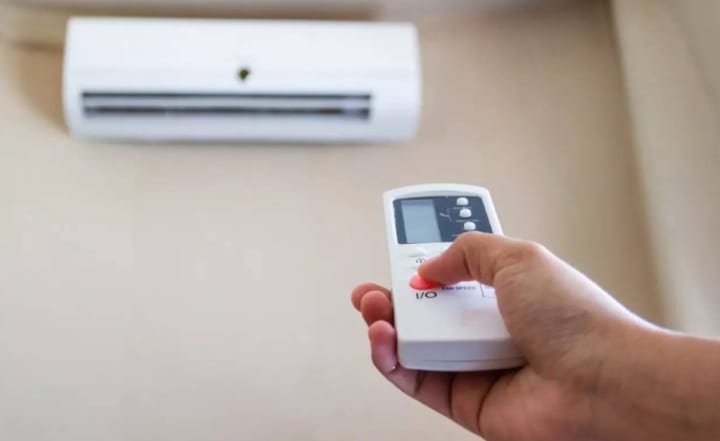
What are the symptoms of "air-conditioned lung"?
Legionella pneumonia can affect all organs of the body. The prodromal period of typical cases is mainly fatigue, muscle pain, headache, persistent high fever, chills, bradycardia and other symptoms.
There are often painless diarrhea, watery stools, or nausea and vomiting in the early stage. There may be mild dry cough, hemoptysis, rapid progress, and progressive dyspnea.
Nervous system symptoms are common, such as mental disorders, headaches, disorientation, etc. It may also cause endocarditis, myocarditis, shock, DIC, etc.
Legionella is most suitable for living in 40~45℃ water, some studies have found no positive findings in cold water or water above 55℃. Therefore, "air-conditioned lungs" generally occur in hot summer, and the disease occurs less in winter.
"Air-conditioned lungs" tend to occur in elderly people with weakened immunity, immunosuppression, or poor physical fitness.
After the diagnosis of "air-conditioned lung", the most important thing is to stay away from the allergenic environment.
Two-thirds of patients leave the sensitized environment to be relieved naturally without medication. If you continue to stay in a sensitized environment, the worsening of the disease can lead to severe lung inflammation and even pulmonary fibrosis.
"Air-conditioned lungs" are easily misdiagnosed as bacterial pneumonia and viral colds. This requires doctors to have rich experience. Through popular science, everyone's understanding of this disease can also be increased, which is helpful for the first time to get out of the allergic environment.
How to prevent "air-conditioned lungs"?

Pay attention to air conditioning clean
Every summer and winter, the air conditioner should be professionally cleaned before using it, especially in families with elderly people over 70 years old, patients with chronic diseases, people with weakened immunity, infants and young children, and more attention should be paid to the cleaning of the air conditioners. The air filter of the air conditioner is best cleaned once a month.
The cleaning of air-conditioning cooling tower pipes should be carried out regularly to ensure that the water injected into the air-conditioning cooling system is clean and avoid the use of long-term storage water.
The central air-conditioning system of large buildings should regularly use Legionella-sensitive disinfection and antibacterial agents to ensure effective inhibition of the growth of Legionella.
Sanitary products that have not been used for a long time are waterproof before use
Legionella likes a humid and warm environment, so the shower pipes in the bathroom are high-risk locations, especially when you go out for a long time. Since the sanitary products at home have not been used for a long time, the water staying in the pipes is actually very suitable for the survival of Legionella. location.
Therefore, in this case, all the stored water must be released, especially for showers, and hot and cold water must be alternately placed to avoid inhaling bacteria into the lungs to reduce the chance of infection.
The humidifier needs to be cleaned frequently
Many people use humidifiers to increase the humidity in the room. As everyone knows, humidifiers are also particularly suitable for the survival and reproduction of Legionella bacteria, so it is particularly important to clean the humidifier regularly.
Don't be greedy for cold, ventilate regularly
When using the air conditioner in summer, do not be greedy for coolness. Generally, the temperature of the air conditioner should be adjusted to 26~28℃.
Do not keep air-conditioned rooms airtight for a long time, and pay attention to opening windows regularly for ventilation. Achieving effective air circulation will also greatly reduce the chance of bacterial infection.
Generally, ventilate for 10 minutes every 2 hours. In an air-conditioned room, the continuous time is not easy to be too long, and it is best to be outdoors for 5-10 minutes every hour.
Drink more water
Avoid dryness in the throat, drink plenty of water appropriately
About the Creator
Keep reading
More stories from writers in Longevity and other communities.
Day 4 of Quitting
If this is how sobriety feels, maybe it’s better to go through life a little buzzed… this, along with other hits like, I want to kill myself, I wish I was dead, and I’m going to throw myself off a bridge have been the only thoughts on rotation these past few days. I promise myself that if, in a month, I still feel like this (‘this’ meaning despondent, full of rage, and simultaneously numb) I can go back to smoking. Until mid-February though? Nicotine is off the table.
By sleepy drafts24 days ago in Longevity
Concierge Medicine Market Size and Forecast 2025–2033
Concierge Medicine Market Outlook: A New Era of Personalized Care The global healthcare system is undergoing a profound transformation as patients increasingly seek care that is not only effective but also personal, accessible, and proactive. In this evolving landscape, concierge medicine has emerged as one of the fastest-growing healthcare models worldwide.
By Sakshi Sharma23 minutes ago in Longevity




Comments
There are no comments for this story
Be the first to respond and start the conversation.