
A Complete Guide to Dental Implants: Restoring Your Smile with Confidence
Everything You Need to Know About This Long-Lasting Tooth Replacement Solution
Losing a tooth can be more than a cosmetic issue—it can impact one's ability to eat, speak, and maintain overall oral health.
A space created by missing teeth allows neighbouring teeth to move, which results in bite misalignment and possible jawbone destruction. Traditional dental solutions involving dentures and bridges exist, but dental implants offer patients a more durable solution that also provides comfort and a natural tooth appearance.
Dental implants could be ideal for individuals who need to restore their smile and enhance their oral function. This guide will explain everything you need to know about dental implants, their benefits, and what to expect during the process.
What Are Dental Implants?
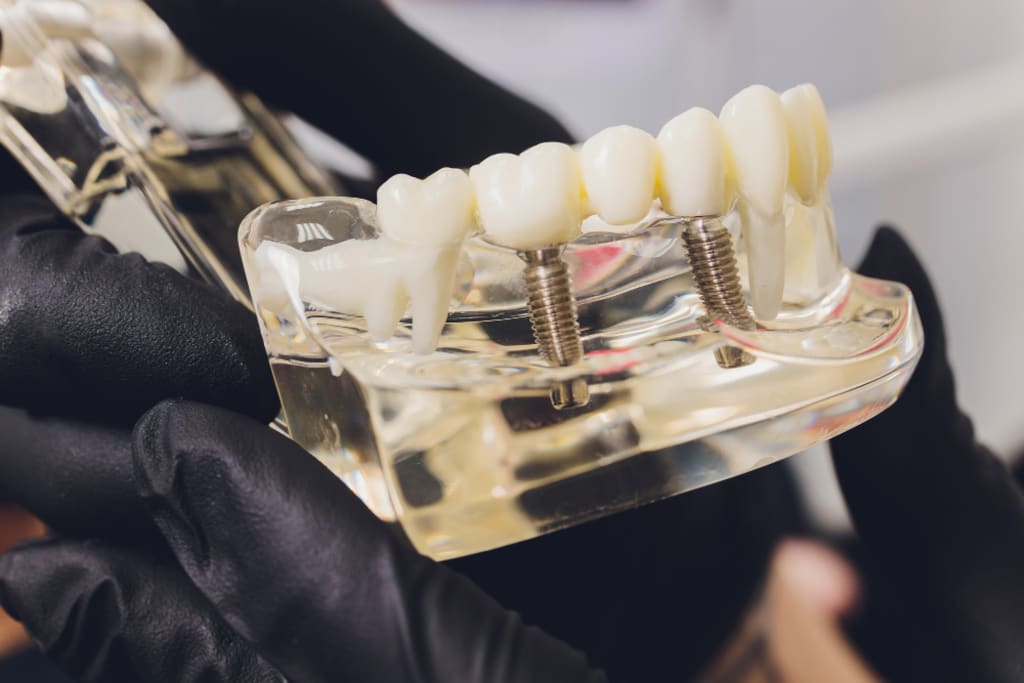
Dental implants use natural titanium to create artificial tooth roots that substitute for missing teeth. They are surgically inserted into the mandible, undergoing osseointegration and becoming part of the bone.
The procedure forms an absolute base for prosthetic appliances such as crowns, bridges, and complete dentures.
Implants operate like real tooth roots, whereas traditional dentures occupy the gums, and bridges need nearby teeth for support. They provide exceptional stability, prevent bone loss, and offer a long-term solution for missing teeth.
The Benefits of Dental Implants
Because of their many benefits, dental implants have emerged as the preferred method of replacing missing teeth. Here’s why they stand out:
- Natural Look and Feel—Implants offer a natural appearance and operational properties, so you can feel secure about showcasing your smile.
- Long-Term Durability – Proper care maintenance enables implants to survive throughout a person's life span, resulting in long-term cost savings.
- Prevention of Bone Loss – Tooth loss leads to bone resorption, but implants stimulate the jawbone, maintaining its strength and structure.
- No Impact on Adjacent Teeth – Unlike dental bridges, implants do not require grinding down neighbouring teeth for support.
- Improved Comfort and Stability—When implanted in jawbone structures, implants function naturally as teeth do, with no slipping or discomfort for the patient.
- Enhanced Chewing Ability – Implants enable you to eat a wide range of foods because they stay securely in place while improving your ability to chew any desired food.
Understanding the Dental Implant Process
Getting dental implants involves multiple steps, each crucial for ensuring long-term success. The process typically unfolds as follows:
1. Initial Consultation and Evaluation
During an implant consultation, your dentist will conduct oral examinations to check your dental health and obtain digital images while measuring your jawbone structure. You may proceed with implant placement with sufficient bone structure and healthy gums.
However, bone grafting may be necessary before implant placement if bone loss is present.
2. Implant Placement Surgery
During this procedural phase, a dentist inserts a titanium post into the jawbone under local anaesthesia. Following implant placement, the medical personnel stitches gum tissue over the implant before it integrates with the bone through healing.
3. Healing and Osseointegration
Over the next three to six months, the implant fuses with the jawbone in osseointegration. This phase is essential for the artificial tooth to have a solid basis.
4. Abutment and Crown Placement
Once healing is complete, an abutment (a small connector) is attached to the implant. When the restoration process ends, an abutment receives a custom-built dental crown that matches your natural teeth's appearance and secures the abutment for completion.
Are You a Candidate for Dental Implants?
Most people with missing teeth and good overall health are candidates for dental implants. However, certain factors may affect eligibility, including:
✅ Sufficient Jawbone Density – A healthy jawbone supports the implant. Bone grafting will become necessary when bone loss occurs.
✅ Healthy Gums – Gum disease can affect healing, so gum issues should be treated before implant surgery.
✅ Commitment to Oral Hygiene – Regular brushing, flossing, and dental check-ups are essential to maintaining implant health.
✅ Non-smoker or Willing to Quit – Smoking impairs wound healing and raises the chance of implant system failure.
If you have diabetes, heart disease, or other medical conditions, consult with your dentist to determine if implants are a safe option for you.
Caring for Your Dental Implants
Maintaining dental implants proves straightforward because of their numerous beneficial features. Unlike dentures requiring unique cleaning solutions, implants are cared for like natural teeth.
Here’s how to keep them in top condition:
- Brush Twice Daily – Choose fluoride toothpaste alongside a toothbrush with soft bristles to clean the implant area.
- Floss Daily – Special floss or interdental brushes can help clean around the implant and gumline.
- Regular Dental Check-Ups – Routine visits allow your dentist to monitor implant health and catch any issues early.
- Avoid Hard or Sticky Foods – Excessive pressure on implants can cause damage, so be mindful of what you eat.
- Quit Smoking – Smoking raises the risk of gum infections and implant failure.
Long-term care of dental implants allows them to function for the entirety of a person's life, thus making them an optimal dental health investment.
Restore Your Smile with Dental Implants
Dental implants are essential for achieving permanent restoration and natural aesthetic appearances of missing teeth. These implants return your eating ability while offering confidence in your daily speaking and smiling skills.
If you’re looking for dental implants in Campbelltown, schedule a consultation today. Professional advice and modern technology enable you to reconstruct your smile while gaining a better quality of life.
About the Creator
A Plus Dental – dentist Campbelltown
A Plus Dental your trusted family dentists in Campbelltown providing advanced dentistry and same day emergency care. Call us on (02) 4627 3833 or visit us at Suite 3/300 Queen Street, Campbelltown NSW 2560.
Keep reading
More stories from A Plus Dental – dentist Campbelltown and writers in Longevity and other communities.
Day 4 of Quitting
If this is how sobriety feels, maybe it’s better to go through life a little buzzed… this, along with other hits like, I want to kill myself, I wish I was dead, and I’m going to throw myself off a bridge have been the only thoughts on rotation these past few days. I promise myself that if, in a month, I still feel like this (‘this’ meaning despondent, full of rage, and simultaneously numb) I can go back to smoking. Until mid-February though? Nicotine is off the table.
By sleepy drafts25 days ago in Longevity


Comments (1)
Smile for the camera! You’ve got dental implants now! Great work!