
7 Reasons Building Muscle Is More Important Than Cardio
If your goal is long-term health, fat loss, and a body that actually holds up

Cardio gets praised because it's visible. You sweat. You're tired. You feel like you "did something."
Muscle building is quieter. Slower. Less dramatic.
But if you care about long-term results - how your body functions, ages, looks, and responds to food - building muscle matters more than cardio ever will.
That doesn't make cardio useless. It just means it's not the foundation.
Here's why.
1. Muscle Raises Your Metabolism Around the Clock
Cardio burns calories while you're doing it.
Muscle burns calories all the time.
Muscle tissue is metabolically active. The more muscle you have, the more energy your body requires at rest. That means you burn more calories sitting, sleeping, and living your life.
This is why people who rely heavily on cardio often end up stuck:
Doing more cardio
Eating less
Feeling exhausted
Hitting plateaus
Regaining weight when they stop
They never changed the engine. They just kept flooring the gas pedal.
2. Muscle Improves Insulin Sensitivity and Blood Sugar Control
Muscle is one of the primary places glucose goes after you eat.
When you build muscle, your body becomes better at:
Clearing glucose from the bloodstream
Using carbohydrates efficiently
Maintaining stable energy levels
This improves insulin sensitivity and reduces metabolic stress.
Cardio helps temporarily.
Muscle helps continuously.
That distinction matters - especially over years, not weeks.
3. Muscle Protects Your Joints, Bones, and Connective Tissue
Cardio strengthens your heart.
Muscle protects your structure.
Strength training improves:
Joint stability
Bone density
Tendon and ligament strength
Balance and coordination
Most injuries don't happen because someone wasn't doing cardio. They happen because the body wasn't strong enough to handle load, movement, or repetition.
You don't lose mobility because you stopped running.
You lose mobility because you lost strength.
4. Muscle Preserves Function as You Age
Adults begin losing muscle mass as they get older if they don't actively train against it. This loss accelerates with time.
Less muscle can lead to:
Slower metabolism
Weaker bones
Higher fall and injury risk
Loss of independence
Cardio alone does not prevent this.
Strength training is one of the strongest predictors of maintaining physical autonomy later in life. Muscle is not just aesthetic - it's functional insurance.
5. Cardio-Only Training Often Leads to "Skinny Fat"
Many people who focus primarily on cardio lose weight - but not body fat in a meaningful way.
They lose muscle and fat together.
The scale goes down.
The body doesn't improve.
This is where frustration shows up:
"I'm smaller, but softer."
"I'm tired all the time."
"I can't eat much without gaining weight." (THIS ONE I HEAR A TON)
Without muscle, your body has very little margin for error.
Muscle gives shape, firmness, and metabolic flexibility. Cardio alone does not.
6. Muscle Improves Cardio Performance (Not the Other Way Around)
Strong muscles make cardio easier.
Weak muscles make cardio harder - and riskier.
Building strength improves:
Running economy
Posture
Power output
Injury resilience
This is why endurance athletes lift. Strength supports endurance far more than endurance builds strength.
If your muscles can't handle force efficiently, your heart ends up compensating.
7. Muscle Changes Your Relationship With Food
With more muscle, food becomes fuel instead of something you constantly have to restrict.
More muscle allows for:
Higher caloric intake without immediate fat gain
Better recovery
Improved carbohydrate tolerance
Less dependence on chronic dieting
Cardio-heavy approaches often require ongoing restriction to maintain results.
Muscle-focused approaches create flexibility - and flexibility is what makes a lifestyle sustainable.
Where Cardio Fits (And Where It Doesn't)
Cardio is valuable. It supports heart health, endurance, and stress management.
But it should support a foundation of strength - not replace it.
If you only have limited time or energy, prioritize muscle first. Cardio can be layered in strategically once that base exists.
Hierarchy matters.
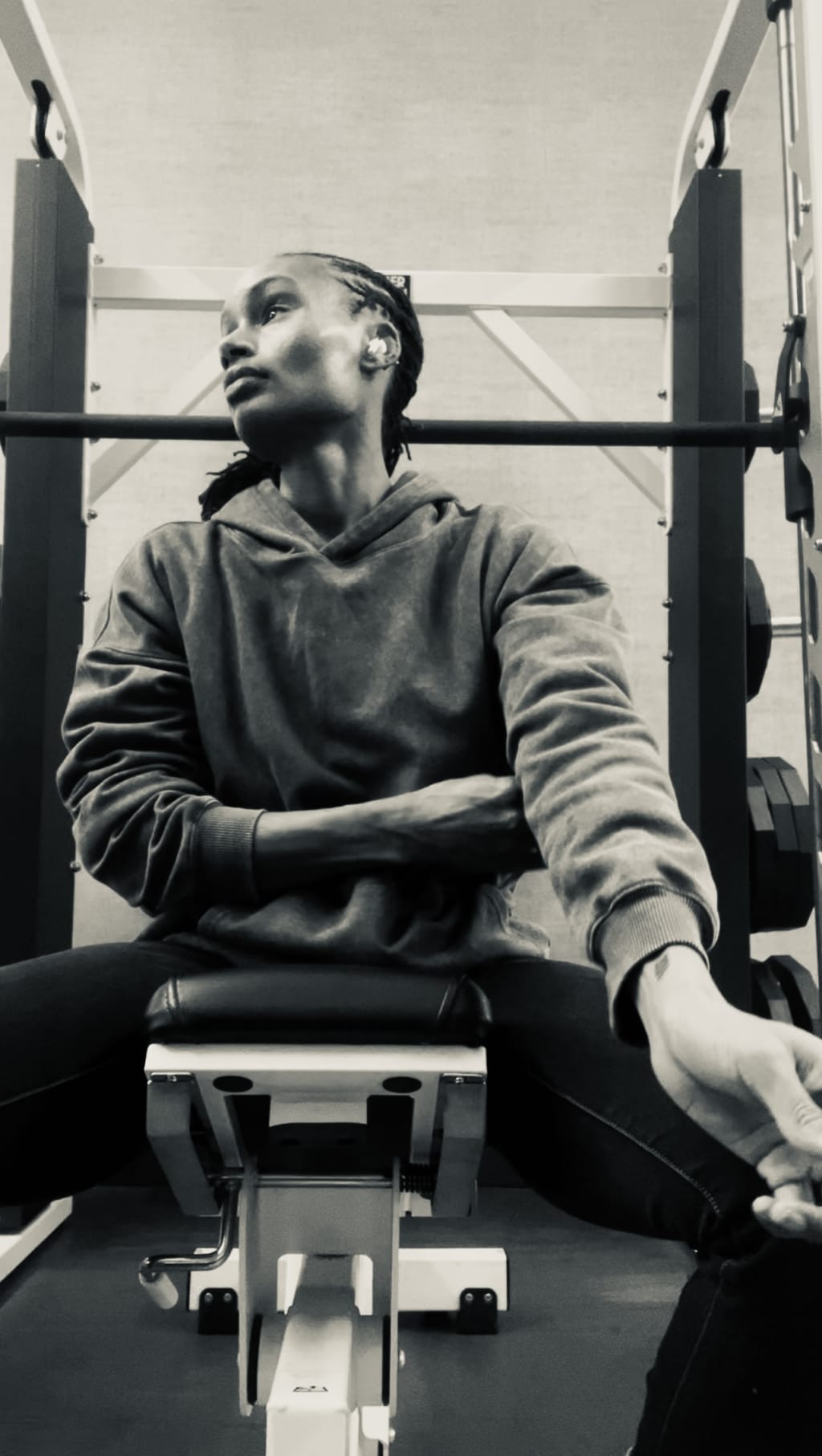
My primary avenue of getting in cardio is through walking all of my dogs.
We often mix in incline to increase the intensity.
Weights > Cardio
If you had to choose:
Build muscle first
Maintain it consistently
Use cardio as a tool, not a crutch
Muscle improves how your body looks, functions, ages, and handles food and stress.
Cardio improves how long you can sustain effort.
Both matter - but they are not equal.
Muscle is the foundation.
Read the Fit For Life Playbook
-
This content is for informational and educational purposes only and is not medical, fitness, or professional advice. Always consult with a qualified healthcare provider or certified fitness professional before starting any new exercise or training program, especially if you have pre-existing health conditions or injuries.
About the Creator
Destiny S. Harris
Writing since 11. Investing and Lifting since 14.
destinyh.com
Keep reading
More stories from Destiny S. Harris and writers in Longevity and other communities.
How China Is Challenging the U.S. to Become the Next Great Space Power
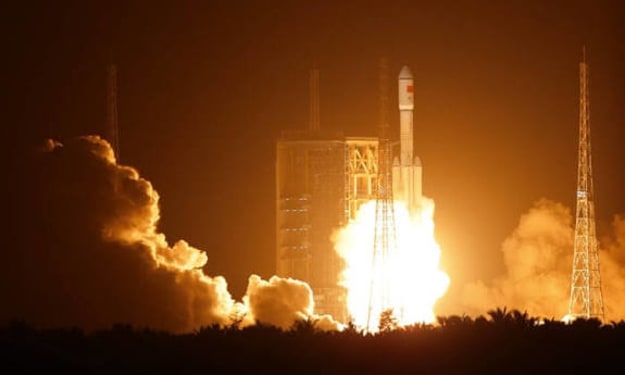
As Beijing’s space ambitions expand, Washington faces an intensifying geopolitical and technological rivalry in orbit and beyond. In the early decades of the 21st century, the United States long stood unchallenged as the dominant space power — a position built on decades of NASA leadership, unmatched launch capability, and a vibrant commercial space economy. But today, a determined China is mounting one of the most consequential strategic challenges in space since the Cold War, pushing to rival — and ultimately surpass — the U.S. in space influence, technology, and strategic advantage. National Strategy and Long‑Term Vision China’s leaders have openly signaled their ambition to become a global space powerhouse. Official space policy documents and state planning envision a broad array of capabilities — from heavy‑lift rockets to lunar exploration — aimed at reshaping the space order that has been U.S.‑dominated for decades. According to analyses of government planning, Beijing intends to establish a full suite of launch vehicles, satellites, and space infrastructure that could surpass current international norms by mid‑century. Underpinning this vision is a belief among Chinese space officials that self‑reliance and indigenous innovation are key to international competitiveness. Recent reports in state media emphasize that China’s aerospace industry is pushing far beyond imitation toward original technological breakthroughs in areas like rocket manufacturing, intelligent space systems, and advanced materials — all with the strategic goal of securing leadership in space. Commercial Space: From Government Giants to Private Innovators China’s rapid ascent isn’t limited to state space agencies. A growing ecosystem of private space companies — much like the commercial boom seen in the U.S. — has taken root, focusing on reusable rockets, satellite networks, and novel space services. A recent South China Morning Post report highlights Beijing’s push to encourage private innovation within its space sector, supporting technologies such as reusable launch vehicles, space debris monitoring, extraterrestrial resource utilization, and even in‑space biomanufacturing — fields long dominated by U.S. firms such as SpaceX or Blue Origin. This commercial expansion broadens China’s capabilities and compresses the technological gap with the U.S., challenging American assumptions that commercial innovation is exclusively an American forte. It also signals a shift in global space economics, where China may soon contend for commercial markets once dominated by Western companies. Military and Strategic Dimensions Alongside civil and commercial ambitions, China’s space strategy has clear military implications. U.S. strategic assessments note Beijing’s efforts to build counterspace capabilities — systems designed to deter, deny, or degrade another nation’s satellite operations — a key advantage in future conflicts. China has already deployed anti‑satellite weapons, jamming technologies, and sophisticated ground‑to‑space radar systems that could threaten U.S. space assets in a crisis. For the United States, which relies heavily on space systems for communication, navigation, and battlefield awareness, these capabilities represent a serious strategic challenge. Beijing’s ability to field space and counterspace technologies could blunt some of Washington’s military advantages in the Asia‑Pacific region and beyond. Lunar and Deep Space Objectives China’s Chang’e lunar exploration program is another marker of its space ambitions. With a series of increasingly complex robotic missions and plans for an International Lunar Research Station by the 2030s, Beijing aims to be a leading voice in lunar science and development — directly challenging the U.S. Artemis program and international partnerships spearheaded by NASA. � Wikipedia Missions like the strategically significant Queqiao‑2 communications relay satellite, which supports lunar missions over long distances, further demonstrate China’s growing sophistication in deep space operations and infrastructure deployment. U.S. Response: Maintaining Leadership Recognizing the challenge, U.S. policymakers are pushing legislative and strategic initiatives designed to preserve American competitiveness in space. A newly passed NASA authorization package includes provisions aimed at reinforcing U.S. lunar presence, strengthening Earth orbit assets, and countering Chinese influence in space science and technology — signaling a bipartisan consensus on the gravity of the space rivalry. A New Era of Cosmic Competition The emerging science and technological competition between China and the United States in space is unlike anything seen since the original Moon race. Today’s contest spans not only national prestige but military advantage, commercial opportunity, and scientific discovery. As each side pursues its vision of space dominance, the outcome will shape global power structures for decades to come — affecting diplomacy, security, and economic leadership both on Earth and beyond. If you’d like alternative versions, transcripts, or a set of headline + subtitle options for this topic, just let me know!
By Fiaz Ahmed 3 days ago in Longevity
Beginner Workout Routine at Home Without Equipment (Step-by-Step Full Body Guide)
Introduction Starting a fitness journey can feel overwhelming, especially for beginners who do not have access to a gym or expensive workout equipment. Many people want to improve their health and strength but are unsure where to begin or worry that working out at home may not be effective. The good news is that you do not need a gym membership or specialized machines to build a strong and healthy body. A well-structured beginner workout routine at home without equipment can help you develop strength, improve endurance, and establish a sustainable fitness habit.
By Core Well Fitabout 3 hours ago in Longevity



Comments
There are no comments for this story
Be the first to respond and start the conversation.