
3 Natural Products of Honey Bees and Their Amazing Health Benefits
There's more to honey bees than just honey.

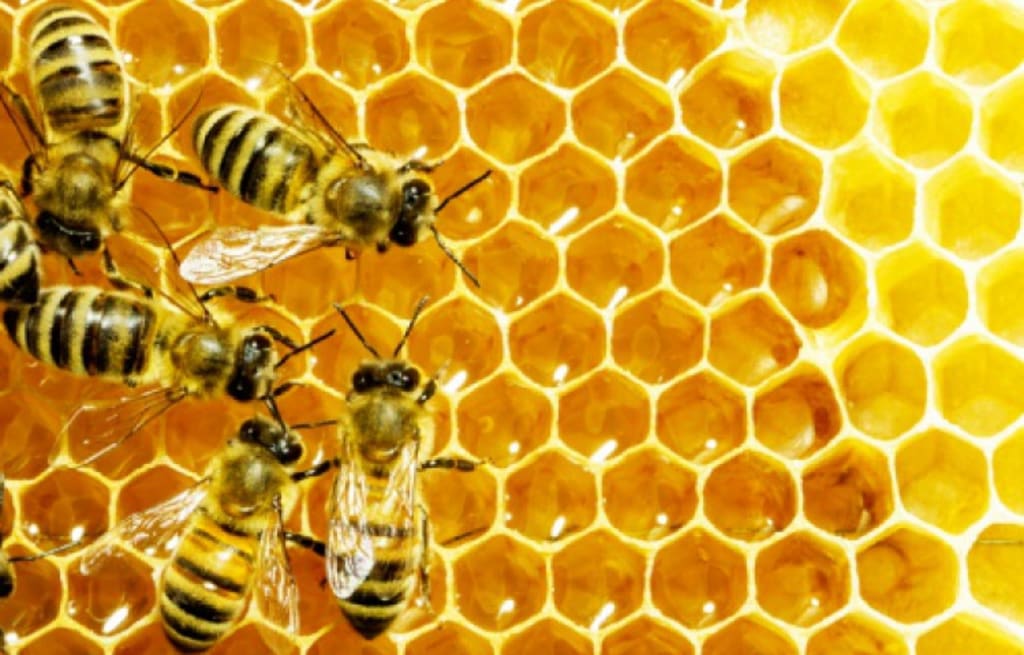
We all know where to turn when we get a sore throat. A hot cup of tea loaded with honey hits the spot. But many of us are not aware of the range of products that honey bees produce. In fact, the health benefits range from soothing cuts and burns to helping alleviate the symptoms of asthma and allergies. You can find many of these awesome products at your local health food store so be sure to look for them during your next experience. These three very common products from the honey bees and their amazing benefits will make you more aware of how much we owe thanks to the honey bee population. They are truly miracle workers who create miracle products.
1. Propolis
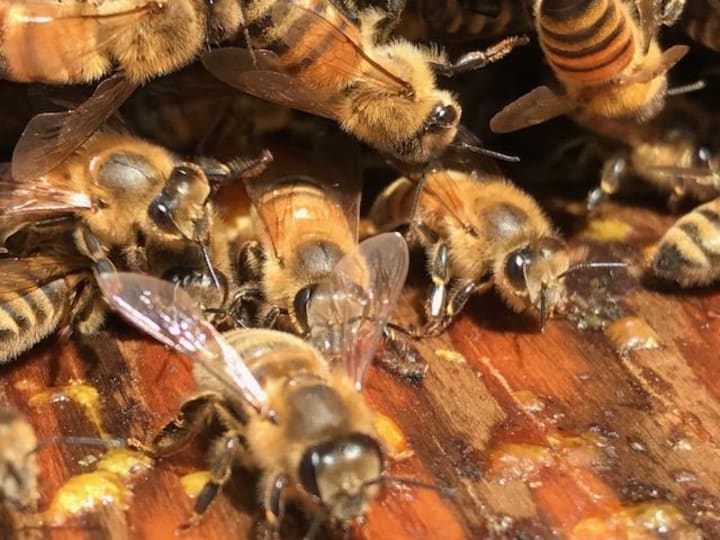
Our bees working on their propolis landing board.
Let’s dive right into a honey bee compound that has a rich history and great topical benefits, propolis.
Bee propolis is a resin resulting from the combination of bee’s saliva, beeswax, and substances bees extract from a wide array of botanical sources. The make-up of propolis varies depending on the type of plant sources, collection time, and location but consists of approximately:
- 50% Resins
- 30% Beeswax
- 10% Essential Oils
- 5% Pollen
- 5% Other Organic Compounds
Bees use propolis in order to seal small cracks in their hives to ward off predators. But humans have also used propolis throughout historic times.
- Egyptians used propolis for medicinal purposes, but amazingly incorporated propolis into the mummification process.
- The ancient Greeks, as recommended by Aristotle, used propolis to speed up the healing of wounds and al skin afflictions.
- The Roman warriors kept small amounts of propolis with them during battle in order to speed up wound healing and for its numbing properties.
- The Incas used propolis for infections.
- British used propolis to prevent infection of wounds during the Boer War.
The chemical composition of propolis consists of over 300 natural compounds with amazing health benefits. Propolis is thought to have antibacterial, antiviral, antifungal, and anti-inflammatory properties. Propolis can be consumed orally or applied topically. Among the remedies that propolis treats include:
- Propolis works wonders as a topical treatment for acne due to its antibacterial properties.
- Propolis contains an antifungal flavonoid called pinocembrin. This makes propolis great for topical application for toe and nail fungus.
- Propolis's antibacterial and antiseptic properties are great for minor wounds such as cuts, scrapes, and burns.
- Propolis can be used as a mouth rinse to treat painful mouth sores, sore throat, and for fast healing following oral surgery.
- Anti-inflammatory and antiviral properties make propolis great as a preventative treatment for cold sores and stomach ulcers when consumed orally.
Bee pollen is made by honey bees and is the food of the young bee. Not to be confused with the pollen that causes common seasonal allergies, bee pollen infrequently causes allergies. Honey bees collect the male seeds of flower blossoms and mix it with their digestive enzymes. This creates a seed like substance that is low in calories but extremely rich in many essential nutrients required by humans. Bee pollen is made up of over 40 percent proteins and contains other essential compounds including B-complex, folic acid, and amino acids. Astoundingly, bee pollen has a higher protein concentration than any animal source. In addition, bee pollen contains bioflavonoids, which are antiviral and antibacterial compounds with amazing health benefits.
Some key benefits of adding bee pollen to your diet and skincare routine include:
- Energy – Bee pollen is a great natural energy source due to its richness in B vitamins, protein, and carbohydrates. Bee pollen provides a sustainable energy source that can last through the day.
- Anti Asthma – The anti-inflammatory benefits of bee pollen can help inflammation of the lung tissues, keeping asthma symptoms at bay.
- Allergies – Simply put: Pollen lowers histamine levels in the body, clearing allergies and sinus problems.
- Digestion – The many enzymes in bee pollen help aid in digestion, helping prevent digestion-related conditions such as indigestion and acid reflux.
- Immune System Support – Antibiotic-type and antiviral properties help humans avoid viruses. Further, its rich antioxidant make-up helps protect cells from damaging oxidation of free radicals.
Make sure to thank the honey bee for its tireless efforts making bee pollen.
Fun Fact: It takes a honey bee one month of eight-hour workdays to produce one teaspoon of bee pollen. Each pellet consists of about two million flower pollen grains, which means that one teaspoon of bee pollen is made up of over 2.5 billion grains of flower pollen.
3. Royal Jelly
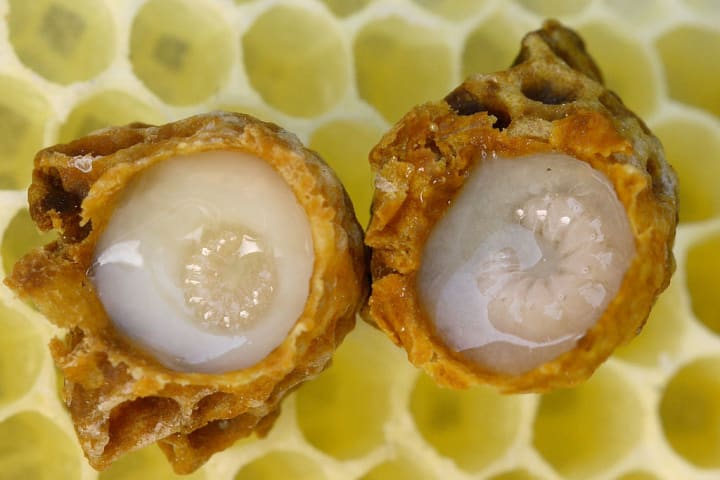
Royal Jelly is also known as the “milk of the bees”. All bee larvae are fed it for the first three or four days after hatching. For potential queen bees, this jelly is their lifeblood. In fact, queen larvae are put into special queen cells and are surrounded by royal jelly. This is what helps them to develop their “queen morphology”. Royal jelly is the queen bee's extraordinary source of food. It is a blend of secretions from the salivary glands of the worker bee and contains a high concentration of vitamins B5, B6, and amino acids and is believed to be a potent antioxidant a special rejuvenating substance that promotes tissue growth and muscle and cell regeneration.
The wondrous properties Royal Jelly is known for include:
- Anti-aging: Royal jelly contains antioxidants to fight the signs of aging. It rejuvenates your skin, tightens pores, and gives you a radiant look. It eliminates the free radicals that cause aging and restores a healthy glow to your skin.
- Brain benefits: The antioxidants in Royal Jelly help protect fatty acids in the brain tissue from free radical attacks. The nutrients in royal jelly can help restore chemical imbalances in the brain, helping alleviate symptoms of depression and anxiety.
- Antibiotic and antiseptic properties that are very similar to the benefits of propolis.
- Bone health: When combined with bee pollen, Royal Jelly can help prevent bone loss due to osteoporosis. Royal Jelly enhances internal calcium absorption, which can build also work to build bone health.
We hope you found this piece educational regarding the health benefits of products produced naturally by honey bees. If you are interested in learning more about where to buy propolis, please check out 35 Hives. 35 Hives is dedicated to the preservation of the American bee population and its native habitats. We hand-collect these amazing substances from our own bees without harming them in any way.
About the Creator
35 Hives
35 Hives is passionate about preserving the American honey bee population and its native habitats. Since 2012, we have been raising honey bees right in America's heartland, north of Ann Arbor, Michigan.
Keep reading
More stories from writers in Longevity and other communities.
Day 4 of Quitting
If this is how sobriety feels, maybe it’s better to go through life a little buzzed… this, along with other hits like, I want to kill myself, I wish I was dead, and I’m going to throw myself off a bridge have been the only thoughts on rotation these past few days. I promise myself that if, in a month, I still feel like this (‘this’ meaning despondent, full of rage, and simultaneously numb) I can go back to smoking. Until mid-February though? Nicotine is off the table.
By sleepy drafts12 days ago in Longevity
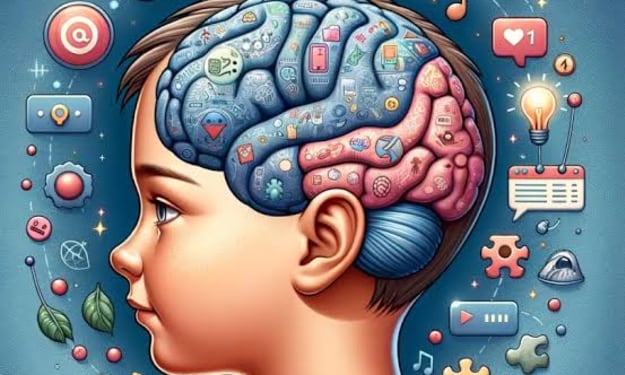
How Social Media Is Rewiring the Teenage Brain
In the last decade, social media has evolved from a simple tool for communication into an immersive ecosystem shaping how we think, feel, and interact. Among the most vulnerable to these changes are teenagers. The adolescent brain, still in its developmental phase, is especially susceptible to the effects of constant connectivity, curated content, and digital validation. Emerging research suggests that social media is not just influencing teenage behavior—it is literally rewiring their brains. The Brain in Adolescence Teenagers undergo profound neurological changes, particularly in the prefrontal cortex, which governs decision-making, impulse control, and planning. At the same time, the limbic system, responsible for emotions and reward processing, is highly active. This imbalance makes teens more prone to risk-taking, peer influence, and emotional volatility. Social media, with its instant feedback loops of likes, comments, and shares, exploits these natural developmental tendencies. Reward Systems and Dopamine Every notification, heart, or comment triggers a release of dopamine—a neurotransmitter associated with pleasure and reward. In the offline world, rewards are typically delayed or earned through effort, but social media delivers instant gratification. Over time, this creates a pattern where teens begin to seek validation from digital platforms rather than internal motivation or real-life achievements. Neuroscientists warn that this constant activation of reward pathways can make adolescents more impulsive and reduce attention spans. The Attention Economy Social media platforms are designed to capture attention. Infinite scrolling, autoplay videos, and algorithm-driven feeds keep users engaged for hours. For teens, whose executive functions are still developing, this can interfere with concentration and memory. Studies have found that teenagers who spend excessive time on social media often experience difficulties focusing on schoolwork, have shorter attention spans, and struggle with task persistence. Emotional Impact and Mental Health The impact of social media on teenage mental health is complex. On one hand, it offers community, self-expression, and connection. On the other, it exposes adolescents to cyberbullying, unrealistic comparisons, and social pressure. Constantly seeing idealized versions of peers’ lives can foster feelings of inadequacy, anxiety, and depression. Researchers have observed changes in brain regions linked to emotional regulation in teens who spend several hours daily on social media. The amygdala, for instance, shows heightened activity in response to perceived social threats, amplifying stress reactions. Social Skills and Empathy Another concern is the effect of social media on social cognition. Face-to-face interactions help teenagers develop empathy, read emotional cues, and understand complex social dynamics. Online interactions, often filtered through text, emojis, and memes, can limit these experiences. Teens who rely heavily on digital communication may find it harder to navigate real-world social situations, potentially impacting long-term relationship skills. Adaptive or Maladaptive? Not all changes induced by social media are negative. Platforms can enhance creativity, provide access to global perspectives, and facilitate learning communities. Some teens leverage social media for activism, skill-building, and self-expression in ways that strengthen their sense of identity and social connectedness. The key lies in moderation, mindful usage, and parental guidance. Toward Healthy Digital Habits Experts recommend several strategies to help teens navigate the social media landscape without compromising brain development. Setting daily time limits, encouraging offline hobbies, and promoting in-person social interactions can balance the benefits and risks. Open communication between parents and teens about online experiences is critical, as is educating adolescents on the impact of digital validation on their emotional and cognitive health. The Road Ahead As neuroscientists continue to study the long-term effects of social media on the teenage brain, one thing is clear: the digital environment is reshaping adolescent development in unprecedented ways. While social media can be a source of learning, community, and creativity, it also presents challenges that require careful navigation. Awareness, education, and proactive strategies can help ensure that teens benefit from the digital age without falling prey to its potential pitfalls. Social media is more than just a tool—it is a force capable of rewiring young minds. Understanding its influence is the first step toward harnessing its potential while safeguarding the next generation’s mental, emotional, and cognitive well-being.
By Fiaz Ahmed Brohiabout 10 hours ago in Longevity



Comments
There are no comments for this story
Be the first to respond and start the conversation.