
World Sleep Day: 3 Things You need to know about sleep
Sleep well refreshed, sleep is not good spirit, and even cause health problems. March 21 is the World Sleep Day, this issue, the People's health network "health" know early "column, Xiaobian and you talk about: what are the dangers of sleep deprivation? What are the characteristics of good sleep? How can we overcome sleep disorders?
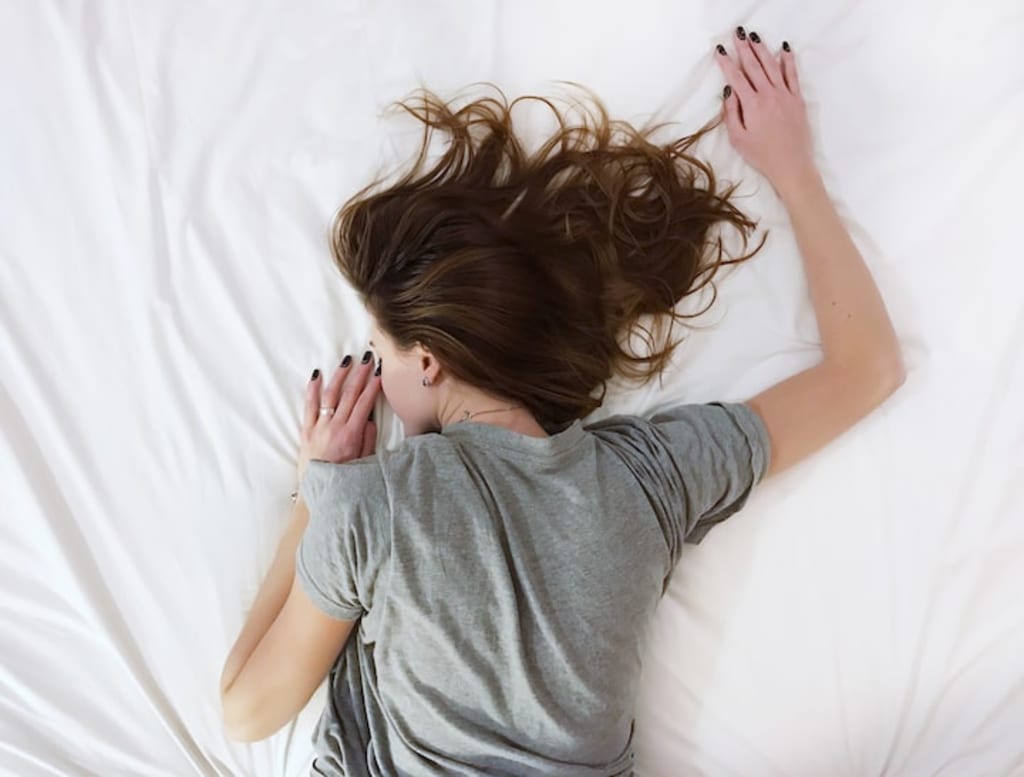
Sleep well refreshed, sleep is not good spirit, and even cause health problems. March 21 is the World Sleep Day, this issue, the People's health network "health" know early "column, Xiaobian and you talk about: what are the dangers of sleep deprivation? What are the characteristics of good sleep? How can we overcome sleep disorders?
3 Things You need to know about sleep
Adequate sleep, a balanced diet and proper exercise have become three internationally recognized health standards. But the Chinese Sleep Research Society points out that a few years ago, we averaged eight hours of sleep a night; Today that number is down to 6.8 hours.
There are risks to not sleeping enough and sleeping too much
"A large number of studies have shown that sleep and sleep disorders are closely related to cardiovascular and cerebrovascular diseases, diabetes, respiratory diseases and other chronic diseases." Zhang Hui, deputy director of the Department of Medical treatment and Rehabilitation at the Aviation General Hospital of China Medical University, told Science and Technology Daily that sleep deprivation can affect people's attention and judgment in mild cases, while long-term sleep deprivation can increase the risk of developing diseases such as heart disease, high blood pressure and depression, directly harm human health, and even increase the risk of death in severe cases.
"In recent years, the incidence of mental illness has been increasing, and lack of sleep is one of the 'accomplices'." Yu Xiaonian, director of the department of psychosomatic medicine at the Aviation General Hospital of China Medical University, told Science and Technology Daily that chronic sleep deprivation can be linked to all mental illnesses, and in some cases the two even cause and effect each other, with sleep deprivation causing mental disorders, which in turn keep people awake and unable to sleep, creating a vicious cycle. Long-term lack of sleep, may cause depression, anxiety and other diseases, childhood long-term lack of sleep may even induce mental retardation or emotional psychological problems.
Why does lack of sleep bring a series of risks? "The human brain needs a certain amount of excitatory and inhibitory rhythm regulation to ensure the normal operation of its activities. Long-term sleep deprivation is the destruction of this rhythm, which will cause the brain to not work smoothly in nature, thus showing the whole person is not conscious, slow thinking and accompanied by bad mood and other external behaviors, and even mental disorders in severe cases." Yu Xiaonian said. Studies have found that people who are chronically sleep-deprived have a statistically higher risk of depression, anxiety, suicide and more than 1.4 times that of the general population.
'There is a danger of not getting enough sleep, and not a good thing about sleeping too much, yet many people don't realise this.' Yu Xiaonian pointed out that there is a medical condition characterized by excessive sleep, namely narcolepsy. Patients often show drowsiness regardless of the occasion, varying degrees of irresistible sleep, excessive sleep during the day or a prolonged transition to full awakening state after sleep, etc. Too much sleep is not only associated with reduced quality of work and life, but also with cognitive degradation, such as loss of recent memory, decreased thinking skills, decreased ability to learn new things, and more likely manifestations of other physical diseases.
Duration and quality ensure good sleep
Given the dangers of chronic sleep deprivation and oversleep, how much sleep should we actually get each day? "In general, adults need between seven and eight hours of sleep per day, but this can vary depending on individual health conditions and age span." Yu pointed out that some young and middle-aged people in good physical condition can meet their normal life needs even if they sleep five to six hours a day, and will not suffer from sleep deprivation signals such as fatigue, mental distress and mental numbness during the day. Children, whose brains are still developing, need more sleep than adults.
Zhang pointed out that length is only one indicator of sleep quality. Sleep is not only full sleep, but also sleep soundly. If you always toss and turn when you sleep, or sleep "light", tolerate no noise, even if the length of the "standard", the body has not obtained enough rest and adjustment effect. Quality sleep is reflected in many aspects, such as falling asleep quickly, can fall asleep in 10-30 minutes; Not easy to wake up in the process of sleep, or occasionally wake up, and can fall asleep quickly; Few dreams at night or soon forgotten after waking; Wake up conscious mind, good mood, energetic and so on.
Develop a sleep rhythm to sleep soundly
What aspects of daily life should we pay attention to help us sleep soundly? "The most important thing is to develop a regular schedule and a good sleep rhythm." Yu Xiaonian said. Zhang Hui also pointed out that sleep is a regular self-protective inhibition of the human body, and also a reflection of the adaptation of human and nature to the law of day and night alternation, which is the "correspondence between nature and human" in traditional Chinese medicine. Therefore, only when the rhythm of life is consistent with the change of seasons or environment, can we survive better.
According to the Chinese Sleep Research Society, the healthiest sleep schedule in the world is to get up at 7 a.m., have breakfast before 8 a.m., have lunch at 12 a.m., take a one-hour nap at 13 a.m., the best time of day for exercise is 19 a.m., and go to bed at 22:30.
"If you stay up late occasionally, you can remedy this by catching up on sleep, resting, exercising moderately after waking up, and returning to a normal sleep routine as soon as possible." Zhang Hui told reporters that we should try to avoid staying up late, especially in playing games, watching videos and other entertainment activities not self-made "late sleepers" should change the bad habit of staying up late for a long time. 'Staying up late can also be detrimental to the condition of your skin. When you stay up late, you oversecrete adrenaline and other stimulant hormones, which interferes with the normal metabolism of the skin, causing acne, dull color and dark circles under the eyes." Yu Xiaonian points out that a good night's sleep is actually the best skin-care product.
"In addition to a regular sleep schedule, good habits such as not eating a large meal before bed and not drinking strong tea or coffee can also help you fall asleep quickly." Zhang Hui said. Yu suggested taking a hot bath, soaking your feet, moderately relaxing activities or listening to soft, soothing music before going to bed to improve sleep quality. 【 Details 】
Lack of sleep can cause 25 diseases
Modern people because of work pressure or other factors, often lack of sleep, over a long period of time, cause extremely serious harm to the body:
1, temper: when people focus on doing something, if interrupted because of unexpected interference, will produce negative emotions; If you don't get enough sleep, these negative feelings are magnified.
2. Headache: Scientists still can't figure out what's behind it, but between 36 and 58% of sleep-deprived people wake up with a headache.
3. Reduced learning ability: Short-term memory is an important factor that determines learning effectiveness. People who don't get enough sleep will have weakened short-term memory ability, which also affects learning effectiveness.
4, weight gain: Sleep deprivation, the body hormone imbalance, not only increased appetite, but also more want to eat high-calorie food, while the ability to control impulsive behavior will be reduced, these factors together, resulting in rapid weight gain.
5, poor vision: the less sleep time, the more prone to visual mistakes, and even hallucinations.
6. Heart disease: According to research, people who sleep for as little as four hours a night have higher blood pressure than those who sleep for eight hours a night, making them more susceptible to heart disease.
7. Slow Reactions: Lack of sleep can also dull your reactions to things in the outside world.
8, easy to catch diseases: sleep for a long time, the body's immunity will decline, easy to get sick.
9. Investing Mistakes: According to research, people who don't get enough sleep make risky investment decisions that lead to financial losses.
10. More urine: When you sleep, your body slows down the production of urine. However, if you do not get enough sleep at night, you will have a problem called "excessive nocturnal urination" and have to go to the bathroom frequently.
11. Lack of concentration: If you don't get enough sleep, you can't focus and get distracted easily.
12. Vaccines are less effective: As mentioned earlier, sleep deprivation weakens the body's immune system, so vaccinations may be less effective if they are administered at this time.
13. Slurred speech: According to research, people who haven't slept for 36 hours tend to repeat the same words, speak slowly and slurred, sometimes like drunk people.
14, cold upper body: If you occasionally, be infected with a cold, it may be caused by lack of sleep. The study showed that people who slept less than seven hours a day for two weeks were three times more likely to catch a cold than those who slept eight hours or more.
15. bowel problems: lack of sleep, which are prone to inflammatory bowel syndrome.
16. Car accident risk: The fact that sleep-deprived people drive is just as dangerous as drunk driving is often overlooked.
17. Decreased libido: Lack of sleep reduces the production of testosterone in the body, leading to decreased libido.
18. Reduced pain tolerance: Studies have shown that not getting enough sleep at night increases sensitivity to pain and decreases pain tolerance.
19. Increased risk of diabetes: Lack of sleep affects the body's metabolic function, which increases the risk of developing diabetes.
20, work mistakes: lack of adequate sleep, leading to mental distress, will also increase the error rate of work.
21. High cancer risk: Research into the link between sleep and cancer is still in its infancy, but the results so far suggest that sleep deprivation does increase the risk of cancer, particularly colorectal and breast cancer.
22. Prone to forgetfulness: The less sleep you get, the more likely you are to be forgetful, and the higher your risk of Alzheimer's disease in old age.
23. Genetic interference: A recent study in 2013 showed that sleep deprivation interferes with the normal activity of genes, with more than 700 genes, including those related to immunity and stress, having less than six hours of sleep a day for a week.
24, depressed mood: scientists clinical research shows that people with good sleep quality at night, mood is more positive; Poor sleep can also affect your mood at work the next day.
25. High risk of death: The biggest risk for chronically sleep-deprived people is that they have a significantly increased risk of dying within a short period of time. 【 Details 】
About the Creator
Smartphones Are Better Than Ever
A few years ago, it was fun to get a new phone. You took it out of the box, looked at all the features, tried out the camera, and felt that calm joy that comes with possessing something truly new. Smartphones are objectively more powerful than ever today, with faster processors, smarter software, and better displays. But the enthusiasm is essentially gone.
By abualyaanart3 days ago in Lifehack
Autonomy Is The Real Privilege
Good morning, freedom-seekers! Today we’re gonna be looking at autonomy. A strange word, I know; one many would probably look at blankly and run away from on sight. We’re gonna figure out what it actually means, consider how it’s achieved, and decipher just how deeply most of us are tangled up in dependence without realising it.
By That ‘Freedom’ Guy4 days ago in Humans




Comments
There are no comments for this story
Be the first to respond and start the conversation.