
The Whisper Before the Roar: Tuning Into Your Body's Signals About Prostate Health
Let’s talk about something many guys avoid like a tax audit

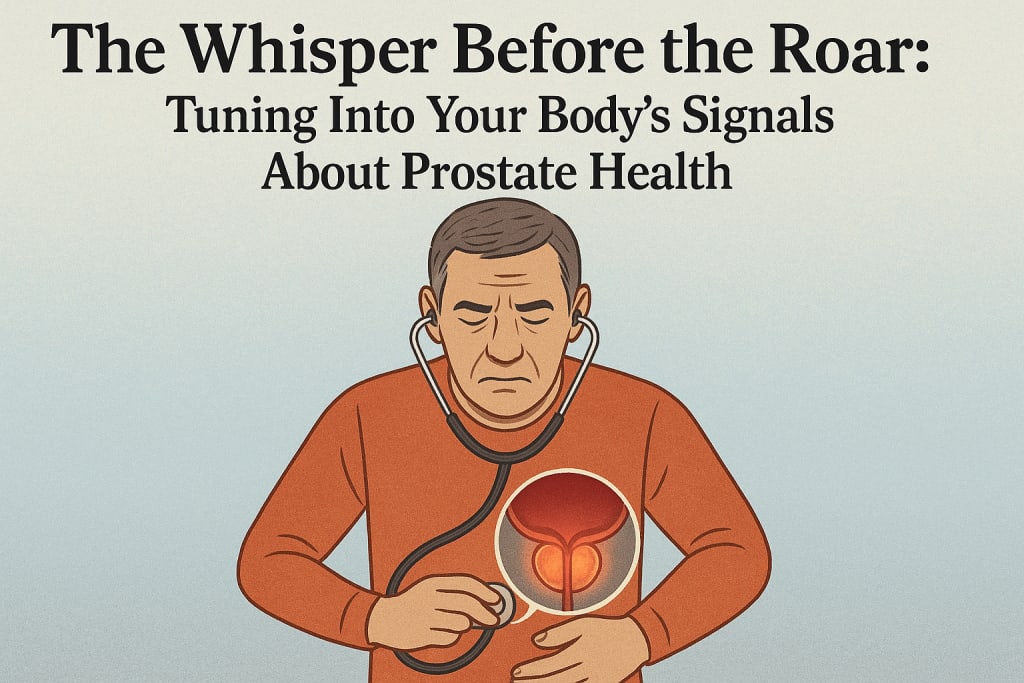
Let’s talk about something many guys avoid like a tax audit: changes down below. Specifically, the kind of whispers your body might send when something’s not quite right with the prostate. Forget cold, clinical lists. This is about recognizing those subtle shifts that feel… off. Because when it comes to prostate cancer, catching it early often hinges on noticing these quiet signals before they start shouting. Knowing the prostate cancer symptoms isn’t about fear; it’s about empowerment.
Picture Dave. He’s 58, runs his own landscaping business, strong as an ox. Lately, though, his nightly routine involves more trips to the bathroom than actual sleep. "Just getting older," he grumbles to his wife, dismissing her concern. Or Mark, a dedicated gym-goer in his early 50s, who notices his urine stream isn’t quite the forceful jet it used to be. He chalks it up to maybe not drinking enough water. Then there’s Ben, who experiences a sharp ache deep in his lower back after sitting for long hours at his desk. "Must have pulled something," he thinks, reaching for the ibuprofen.
These aren’t just random stories. They’re glimpses into the everyday reality of how prostate cancer symptoms often first appear – disguised as minor annoyances, easily brushed aside by the busyness of life or the understandable desire to avoid awkward doctor visits.
The Prostate: Your Body's Unsung Traffic Cop
Before we dive into the signals, a quick, painless anatomy lesson. Your prostate is a small, walnut-sized gland nestled below the bladder. Its main job? Helping make semen fluid. It wraps around the urethra – the tube carrying urine out of your body. Think of it like a helpful ring around a garden hose. When this gland acts up, whether due to inflammation (prostatitis), benign growth (BPH - common as we age), or cancer, it directly impacts that hose – your urine flow – and can send ripples through nearby areas.
Listening to the Murmurs: Common Prostate Cancer Symptoms
Prostate cancer is famously sneaky in its early stages. Often, it grows slowly and initially causes no noticeable signs. That’s why routine checkups become crucial, especially as you hit your 50s (or earlier with a family history). But when symptoms do show up, they usually stem from the prostate pressing on the urethra or spreading beyond its local area. Here’s what to tune into:
The Bathroom Battleground (Urinary Changes):
The Hesitation Halt: That moment standing at the urinal, waiting… and waiting… for the flow to start. It’s not just slow; it feels like your body forgot how to begin.
The Feeble Flow: Remember the satisfying power of a strong stream? When that weakens significantly – turning into a dribble or a trickle – it’s a classic sign things are getting crowded down there.
The Stop-Start Surprise: Your flow isn't smooth. It starts, stops abruptly, starts again. Like a faucet with air in the pipes, only it’s your own body.
The Dribble Dilemma: Finishing up, you shake, walk away, and then feel that annoying dribble in your underwear. It’s messy, frustrating, and definitely not normal.
The Nightly Pilgrimages (Nocturia): Waking up two, three, even four times a night just to pee. This isn’t just about having a glass of water before bed. It’s your bladder constantly feeling full, even when it’s not.
The Urgency Alarm: That sudden, overwhelming, "I have to go RIGHT NOW!" feeling, even if you just went. It can be hard to control, leading to embarrassing moments.
The Burning or Discomfort: Feeling pain or a burning sensation during urination. While often linked to infections, it shouldn’t be ignored.
The Elusive Empty Feeling: You go, but it feels like you haven’t quite finished. Like there’s still something left behind, creating a constant, nagging urge.
Beyond the Bathroom: Other Signals:
Blood: The Unwanted Guest: Seeing blood in your urine (hematuria) or semen (hematospermia) is always a red flag. It can look pink, red, or even brownish. Don't panic, but do call your doctor. It could be other things (like an infection or a small burst blood vessel), but it demands investigation.
The Bedroom Shift (Sexual Issues): Experiencing trouble getting or keeping an erection (erectile dysfunction) can be linked to many factors (stress, blood pressure meds, etc.), but prostate problems can play a role. Painful ejaculation is another potential sign not to dismiss.
The Deep Ache: Pain or stiffness deep in the lower back, hips, ribs, or upper thighs. This is less common with early prostate cancer and often suggests the cancer might have spread to bones. Benign prostate issues rarely cause bone pain. Ben’s backache? That’s the kind of deep, persistent ache that warrants a deeper look.
Feeling Wiped Out: Unusual, persistent fatigue that doesn't improve with rest. Cancer, anywhere in the body, can drain your energy.
Sudden Weight Loss (Without Trying): Losing a noticeable amount of weight without changing your diet or exercise habits is another potential sign something systemic might be happening.
Why the "Wait and See" Game is a Losing Strategy
Here’s the hard truth: Prostate cancer symptoms frequently overlap exactly with symptoms of benign prostate enlargement (BPH), which affects millions of men as they age. This overlap is why Dave, Mark, and Ben might shrug it off. "It’s just my prostate getting bigger, happens to everyone, right?"
Maybe. But how do you know? You don’t know. That’s the point.
Ignoring these whispers because "it’s probably nothing serious" is like ignoring a faint smoke alarm because you don’t see flames. By the time the flames are visible, the situation is drastically more serious. Early-stage prostate cancer confined to the gland is often highly treatable, with excellent long-term outcomes. Waiting until symptoms become severe or include things like bone pain often means the cancer has advanced, making treatment more complex and less certain.
The Power of the Conversation (Yes, That One)
Talking about pee problems, bedroom hiccups, or mysterious aches isn't exactly pub banter. It feels vulnerable. But here’s the thing: silence is the real enemy. Your doctor has heard it all. Seriously. There is no symptom too embarrassing, too minor, or too weird to bring up. That’s literally their job.
Think of it like this: You wouldn’t hesitate to tell your mechanic about a strange noise your car makes, right? Your body is infinitely more complex and valuable. Give your doctor the same information.
Action Steps: Don't Just Read, Do
Know Your Baseline: Pay attention to your normal. How often do you usually pee during the day? At night? How’s your flow? Being aware of your own patterns makes it easier to spot changes.
Don't Brush It Off: If you notice any of the prostate cancer symptoms we’ve talked about – especially if they are new, persistent, or worsening – don't chalk it up to "just getting old." Listen to your body.
Talk to Your Partner: Often, partners notice changes before we do. That extra trip to the bathroom at 2 AM? She knows. That hesitation you think you’re hiding? She might sense your frustration. Have open conversations.
Schedule the Chat: Make an appointment with your doctor. Go in prepared. Write down your symptoms: When did they start? How often? How severe? Be honest and thorough. Bring a list of medications.
Know Your Risk: Discuss your personal risk factors with your doctor. Age (risk increases significantly after 50), family history (especially a father or brother with prostate cancer), and race (African American men are at higher risk) all play a role. This helps determine when screenings (like the PSA blood test and digital rectal exam - DRE) should start.
Understand Screening: The PSA test isn't perfect, but it's a valuable tool. Talk to your doctor about the pros and cons for you. The DRE, while briefly uncomfortable, takes seconds and provides direct information. Together, they offer important insights.
The Final Word: Your Health Isn't Passive
Prostate cancer whispers before it roars. Those whispers – the changes in flow, the nighttime interruptions, the unexplained aches – are your body sending memos. Ignoring them isn't stoic; it's risky. Treating your health with the same proactive attention you give your car, your career, or your finances isn’t weakness; it’s the ultimate form of self-respect and responsibility.
Dave finally went to the doctor after his wife practically booked the appointment for him. It was BPH, thankfully. Mark’s weak stream? Turned out to be an early, treatable prostate cancer caught because he didn’t ignore it. Ben’s back pain? Unrelated to his prostate, but getting it checked led to discovering a different issue needing attention. The point is, they all took action.
Knowing the prostate cancer symptoms isn’t about living in fear. It’s about living with awareness. It’s about giving yourself the best possible chance. So tune in. Pay attention. Have the conversation. Your future self will thank you for not letting stubbornness or embarrassment silence the whispers. Your health, your life, is worth that simple, powerful act of listening.
About the Creator
John Arthor
seasoned researcher and AI specialist with a proven track record of success in natural language processing & machine learning. With a deep understanding of cutting-edge AI technologies.
Keep reading
More stories from John Arthor and writers in Lifehack and other communities.
Untangling the Truth About Your Enlarged Prostate
Let’s be honest, gentlemen. There are conversations we’d rather avoid, and for many of us past a certain age, the one about our plumbing sits right at the top of that list. You know the signs. That sudden, urgent need to go now, especially inconvenient when you’re miles from the nearest rest stop. The frustratingly weak stream that turns a quick pit stop into a prolonged negotiation. Or perhaps worst of all, the relentless nighttime symphony of getting up… and up… and up again, leaving you feeling like a zombie by dawn. If this sounds painfully familiar, you’re not imagining things, and you’re certainly not alone. What you’re likely experiencing is Benign Prostatic Hyperplasia, or BPH – a mouthful meaning your prostate has decided to get a little too comfortable. But here’s the crucial part: Enlarged prostate treatment isn't just possible; it can genuinely give you your life back. Forget the doom and gloom. Let’s talk solutions, real life, and finding what works for you.
By John Arthor7 months ago in Lifehack
How to Improve the Immune System During Pregnancy?
Immunity is your body’s capacity to defect against infections and harmful health effects caused from viruses, bacteria, pathogens, and other complications. During a pregnancy, your immune system is focused on supporting your wellness. Thus, it can become vulnerable to illnesses from all the overactivity. In this blog, we will discuss how to improve immune system during pregnancy and why strong immunity is needed when you are expecting.
By Jessica Perryabout 2 hours ago in Lifehack
How to Recover a Yahoo Account: The Ultimate Step-by-Step Guide for 2026
Losing access to your Yahoo account can feel like losing a digital key to your personal and professional life. With a history that includes some of the largest data breaches globally, securing and knowing how to recover your account is more critical than ever. Whether you’ve been locked out due to a forgotten password, a hacked account, or an old, inactive email address, this comprehensive guide walks you through every official method to regain access. We will cover explicit recovery techniques, essential protection strategies to prevent future lockouts, and answer the most frequently asked questions, all based on professional insights.
By Alexander Hoffmann3 days ago in Lifehack
March 15, 2026
Merriam Webster - Word of the day: Tranche refers to a division or portion of a whole. World Contact Day is commemorated every year on March 15. It is a unique observance held globally to focus on communicating with extraterrestrial life and exploring the possibility that intelligent beings may exist beyond Earth. World Contact Day inspires people to invoke their curiosity and spend time thinking about the universe and the mysteries surrounding it. What is the “Ides of March”? According to the Roman calendar, the Ides are a monthly occurrence. In March and other months with 31 days, the Ides always falls on the 15th; it falls on the 13th in months with 30 days. The Ides traditionally marked the arrival of the new Moon and was cause for celebration. The word “Ides” is derived from Latin, meaning “to divide.” Mothering Sunday in 2026 falls on Sunday, March 15. Mothering Sunday, celebrated in the United Kingdom and Ireland, occurs on the fourth Sunday of Lent, which is exactly three weeks before Easter. Unlike the fixed-date Mother's Day in countries like the United States, Canada, and Australia, Mothering Sunday’s date changes each year according to the Christian liturgical calendar. On March 15, 2026, several notable observances and events are celebrated: Dumbstruck Day: A day to express frustration. Everything You Think is Wrong Day: A day to challenge and celebrate wrong beliefs. International Day Against Police Brutality: A day to raise awareness and advocate against police violence. My look at today, March 15, 2026 below:
By Denise E Lindquistabout 12 hours ago in Writers




Comments
There are no comments for this story
Be the first to respond and start the conversation.