
Untangling the Truth About Your Enlarged Prostate
(and Finding Relief That Fits Your Life)

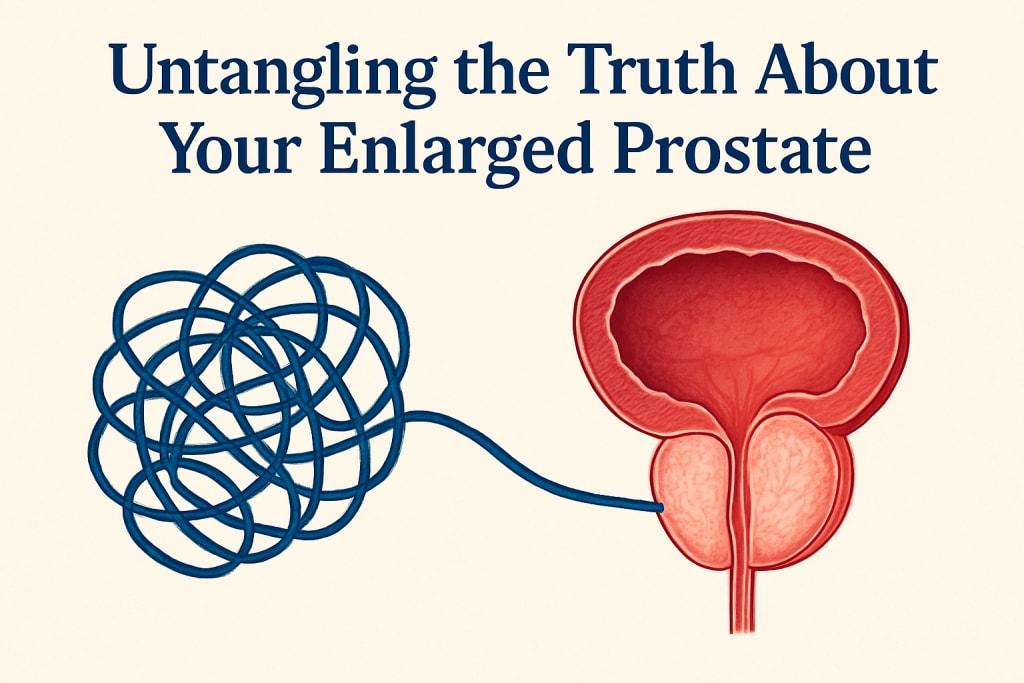
Let’s be honest, gentlemen. There are conversations we’d rather avoid, and for many of us past a certain age, the one about our plumbing sits right at the top of that list. You know the signs. That sudden, urgent need to go now, especially inconvenient when you’re miles from the nearest rest stop. The frustratingly weak stream that turns a quick pit stop into a prolonged negotiation. Or perhaps worst of all, the relentless nighttime symphony of getting up… and up… and up again, leaving you feeling like a zombie by dawn. If this sounds painfully familiar, you’re not imagining things, and you’re certainly not alone. What you’re likely experiencing is Benign Prostatic Hyperplasia, or BPH – a mouthful meaning your prostate has decided to get a little too comfortable. But here’s the crucial part: Enlarged prostate treatment isn't just possible; it can genuinely give you your life back. Forget the doom and gloom. Let’s talk solutions, real life, and finding what works for you.
Picture this: Tom, a sprightly 68-year-old who used to dominate the local tennis courts. Lately, though, his biggest opponent wasn’t across the net; it was the walk to the court. The constant urge meant scoping out every bathroom location beforehand, the anxiety of a weak stream making him hesitant to hydrate properly during games, and the sheer exhaustion from four or five nightly bathroom trips. He started skipping games, making excuses. "Just getting old," he mumbled. But Tom wasn't just getting old; his prostate was getting bigger, squeezing the life out of his urethra – the tube that carries urine out. That’s BPH in action: non-cancerous, incredibly common (affecting over half of men in their 60s, and even more as the years go by), but undeniably disruptive.
Why Does This Happen? (The Simple Version)
Think of your prostate like a doughnut sitting snugly under your bladder, with the urethra running right through the hole. As the years roll on, influenced by hormones like testosterone and its byproduct DHT, the cells in this doughnut start multiplying. The doughnut swells. Slowly, steadily, it begins to press inward on that crucial central tube. It’s like stepping on a garden hose. The result? All those frustrating symptoms:
The Nagging Urgency: Feeling like you gotta go right now, even if your bladder isn't full.
The Feeble Flow: Starting takes forever, the stream is weak and hesitant, maybe even stopping and starting.
The Never-Ending Drip: Feeling like you’re never quite finished, leading to dribbling afterward.
The Midnight Marathons: Nocturia – waking up multiple times a night just to pee.
The Incomplete Feeling: That sensation your bladder still hasn't fully emptied, even after you just went.
The Strain: Having to push or strain to get things moving.
Ignoring these isn't just annoying; it can lead to bigger problems like urinary tract infections, bladder stones, or even kidney damage in severe cases. The biggest hurdle? Often, it's pride or plain old embarrassment. But trust me, doctors have heard it all. Taking that first step – talking to your GP or a urologist – is the single most important move towards reclaiming your comfort and freedom.
So, What Can We Do About It? Navigating the Treatment Maze
The fantastic news about Enlarged prostate treatment is the sheer variety of options available today. It’s not one-size-fits-all anymore. Finding the right path depends entirely on how much your symptoms bother you, the size of your prostate, your overall health, and honestly, what fits your lifestyle. Let’s break down the main avenues:
1. Watchful Waiting (Active Surveillance):
For Whom? Guys with very mild symptoms that aren't really cramping their style.
What It Means: This isn't doing nothing. It means regular check-ins with your doctor to monitor symptoms and prostate size. It often pairs beautifully with lifestyle tweaks (more on that soon!). Think of it as keeping a watchful eye, ready to act if things change.
Real-Life Angle: Think of Dave, 62. His symptoms are barely noticeable – maybe a slightly weaker stream and one nightly trip. He’s healthy, active, and prefers minimal intervention. His doc gives him the green light for watchful waiting, advising simple habit changes and scheduling a follow-up in 6 months. Dave feels empowered knowing he’s being proactive without jumping into treatments he doesn’t need yet.
2. Medications: Easing the Squeeze or Shrinking the Source
Medications are often the first line of attack for moderate symptoms. They generally fall into two camps:
Alpha-Blockers (The Muscle Relaxers): Names like Tamsulosin (Flomax), Alfuzosin (Uroxatral), Silodosin (Rapaflo). These work fast – often within days. They relax the muscles in the prostate and bladder neck, like loosening that grip on the hose, improving flow and reducing urgency. Great for symptom relief.
Downside: Can cause dizziness (especially when standing up fast), fatigue, and a peculiar one – retrograde ejaculation (where semen goes backward into the bladder instead of out – harmless but noticeable). Usually taken once daily.
Real-Life Angle: Mike, 58, started experiencing significant urgency and weak flow that disrupted his long commute. His doctor prescribed an alpha-blocker. Within a week, Mike noticed a huge difference. The urgency calmed down, the flow was stronger. The slight dizziness when he stood up too quickly was a minor trade-off for regaining peace of mind on the road.
5-Alpha Reductase Inhibitors (The Shrinkers): Names like Finasteride (Proscar) and Dutasteride (Avodart). These tackle the root cause – they block the hormone (DHT) that makes the prostate grow. They actually shrink the prostate over time (6+ months). Best for larger prostates.
Downside: Slower to work, potential for decreased libido or erectile dysfunction (though often temporary or mild for many). Often used long-term.
Combo Power: Frequently prescribed with an alpha-blocker for men with larger prostates – the blocker gives quick relief while the 5-ARI works on shrinking things down.
Other Meds: Sometimes medications specifically for overactive bladder symptoms (like frequency/urgency) might be added if that’s a major issue, even alongside the BPH meds.
3. The Procedure Pathway: When Meds Aren't Enough (or You Want More)
When symptoms are severe, medications cause bothersome side effects, or they just stop working effectively, it’s time to consider procedures. The landscape here has exploded with minimally invasive options alongside the tried-and-true surgeries. The goal? Remove or destroy enough prostate tissue to open up that urethral channel.
Minimally Invasive Options (Often Office-Based):
UroLift: Imagine tiny implants acting like curtain ties, pulling the enlarged prostate lobes apart to open the urethra. No cutting, no heating. Preserves ejaculation. Recovery is super fast – often back to normal activities in days. Best for prostates that aren't massively enlarged.
Real-Life Angle: Robert, 70, hated the sexual side effects of his medication. His prostate was moderately enlarged. UroLift was perfect. Done in the urologist's office under light sedation, he was home the same afternoon. Within days, his flow was dramatically better, and his sex life was unaffected. "Wish I hadn't waited so long," he said.
Rezum Therapy: Uses targeted steam (water vapor) to destroy overgrown prostate cells. Over a few weeks, the body naturally removes this tissue, opening the channel. Also preserves ejaculation for most. Requires a catheter for a short time afterward (usually a few days).
Optilume BPH Catheter: A newer option involving a drug-coated balloon dilated in the urethra. The drug helps keep the channel open longer after the procedure.
Surgical Options (More Invasive, Often More Definitive):
TURP (Transurethral Resection of the Prostate): The "gold standard" for decades. A scope goes up the urethra, and an electrified loop shaves away the inner prostate tissue blocking urine flow. Highly effective, especially for larger glands. Requires a hospital stay (usually 1-2 nights) and a catheter for a few days. Risks include bleeding, retrograde ejaculation (very common), and potential for temporary erectile issues or incontinence (though techniques have improved greatly).
GreenLight Laser PVP (Photoselective Vaporization): Similar idea to TURP, but uses a laser to vaporize prostate tissue. Often less bleeding risk and potentially shorter catheter time than TURP. Very effective.
HoLEP (Holmium Laser Enucleation of the Prostate): Uses a laser to core out the obstructive inner prostate tissue like peeling an orange. Excellent for very large prostates where TURP might be riskier. Highly effective and durable. Requires significant surgical skill.
Aquablation (ROSE Procedure): Robotically controlled, heat-free water jets remove prostate tissue. Combines the precision of robotics with the safety of no heat energy. Shows promise in preserving sexual function while effectively treating even large prostates. Requires general anesthesia.
Open Prostatectomy: Reserved for extremely large prostates. Involves open surgery through the lower abdomen. Less common now with advanced laser techniques available.
Choosing the Right Path: It's a Conversation
How do you know which Enlarged prostate treatment is right for you? It starts with an honest chat with your urologist. They’ll likely do:
Symptom Check: Using a questionnaire (like the IPSS - International Prostate Symptom Score) to gauge how much trouble you're really in.
Physical Exam: Including the dreaded but essential digital rectal exam (DRE) to feel the prostate.
PSA Blood Test: Helps rule out prostate cancer and can give clues about prostate size/inflammation.
Urine Test: Checks for infection or blood.
Flow Test: Measures how fast and strong your urine stream is.
Bladder Scan: Checks how much urine is left behind after you go (post-void residual).
Ultrasound: Might be used to measure prostate size accurately.
Bring your questions, your concerns (especially about side effects like sexual function or incontinence), and be clear about what bothers you most. Is it the sleep disruption? The constant worry about finding a bathroom? The impact on intimacy? This helps tailor the approach.
Life Hacks: Beyond the Doctor's Office
While treatments do the heavy lifting, small daily changes can make a noticeable difference in managing BPH symptoms:
Hydration Smarts: Drink plenty of water during the day, but start tapering off a few hours before bedtime. Avoid guzzling large amounts at once.
Bladder Irritant Alert: Cut back on caffeine (coffee, tea, cola), alcohol (especially beer), spicy foods, and artificial sweeteners. They can irritate your bladder and worsen urgency.
Double Voiding: After you finish peeing, wait 30 seconds, relax, and try again. Helps empty the bladder more completely.
Timed Trips: Don’t just wait for urgency. Schedule bathroom visits every 2-4 hours during the day, even if you don’t feel you have to go.
Pelvic Floor Power: Kegel exercises aren't just for women! Strengthening these muscles can help with bladder control and stopping the flow, potentially reducing dribbling. Ask your doc how to do them correctly.
Medication Review: Talk to your doctor about all your medications. Some cold/allergy pills (decongestants) and certain antidepressants can worsen BPH symptoms.
Stay Active: Regular exercise helps overall health and can sometimes improve urinary symptoms. Even walking helps.
Dispelling the Shadow: BPH is NOT Prostate Cancer
This is crucial. An enlarged prostate (BPH) and prostate cancer are entirely different conditions. Having BPH does not mean you have cancer, nor does it increase your risk of developing cancer. They can coexist, simply because they both become more common as men age. This is why screenings like the PSA test and DRE are important – they help differentiate between the benign enlargement and something more serious. Don’t let fear of cancer diagnosis prevent you from seeking help for BPH symptoms. Getting checked brings clarity and peace of mind.
The Takeaway: Your Comfort is Worth the Conversation
Living with an untreated, enlarged prostate isn't a badge of honor; it's an unnecessary burden. Those nightly treks to the bathroom, the constant planning around restrooms, the hesitation to enjoy a long drive or a cold beer – they chip away at your quality of life. The journey of Enlarged prostate treatment for BPH is about reclaiming simple freedoms. It’s about uninterrupted sleep, confidence on the road, enjoying activities without the nagging worry, and yes, even restoring intimacy without medication side effects hanging over you.
The landscape of treatment has never been better. From simple lifestyle shifts and effective pills to quick, minimally invasive procedures with rapid recovery and preserved function, there’s almost certainly an option tailored to your specific situation and comfort level. You don’t have to resign yourself to "just getting old." The solutions exist. The relief is real.
That first conversation with your doctor might feel awkward, but think of what’s on the other side: waking up feeling refreshed. Enjoying a road trip without mapping every gas station. Standing confidently at the urinal. Playing tennis, golf, or just enjoying a movie without constant interruptions. Isn’t that worth a slightly uncomfortable chat?
Don't let a benign condition dictate your life. Take back control. Talk to your doctor about your symptoms. Explore your options. Find the Enlarged prostate treatment path that fits you, and step back into the full flow of your life. You’ve earned it.
About the Creator
John Arthor
seasoned researcher and AI specialist with a proven track record of success in natural language processing & machine learning. With a deep understanding of cutting-edge AI technologies.
Keep reading
More stories from John Arthor and writers in Lifehack and other communities.
That Nagging Feeling: When Your Body Whispers About Prostate Health
Let’s talk about something many guys tuck away in the "I’ll deal with it later" drawer: changes down below. Specifically, those subtle, sometimes confusing signals that might point towards prostate health, including prostate cancer symptoms. It’s not exactly dinner table conversation, right? But here’s the thing – ignoring those whispers can have serious consequences. And understanding them? That’s power.
By John Arthor7 months ago in Lifehack
This Is What I Do When People Throw Rocks At Me
Rocks have been thrown at me for a greater part of my life. Some have been small and missed hitting me. When people don't get a reaction from me, they throw bigger rocks with a better aim. Many have been hurled at me with precision over the years. For a long time, I thought my only options were to dodge them or be crushed by them.
By Margaret Minnicks7 days ago in Confessions


Comments
There are no comments for this story
Be the first to respond and start the conversation.