
Recognizing the Symptoms of Heart Disease
Take Heart: What You Can Do
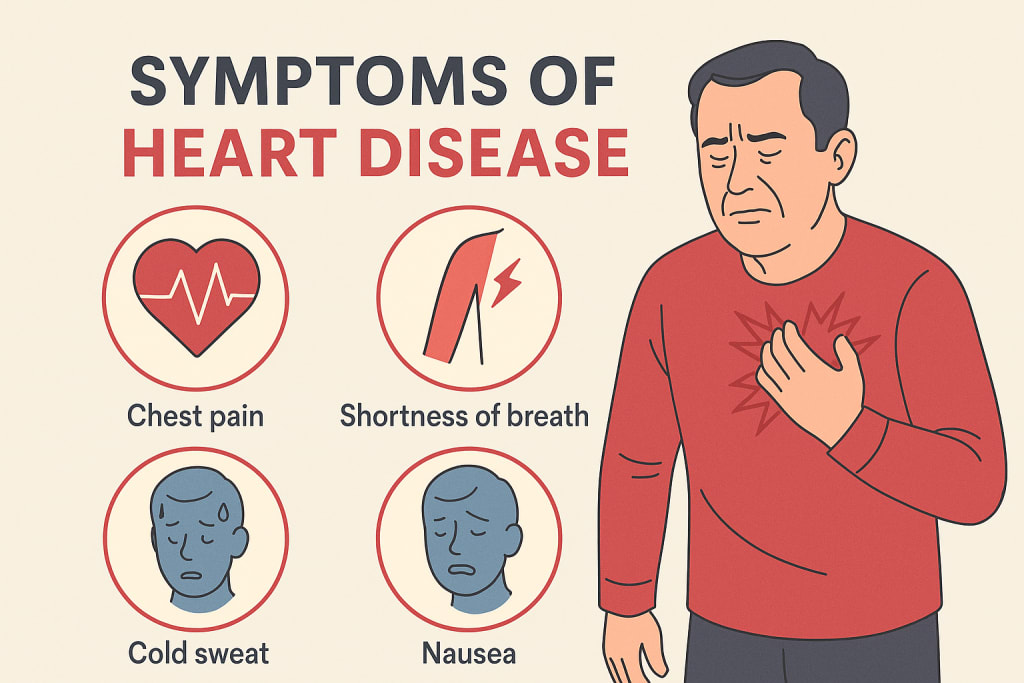
Heart disease is alarmingly common in the United States. In 2022 about 702,880 Americans died from heart disease – roughly one in every five deaths. It’s the leading killer of both men and women, and someone in the U.S. has a heart attack every 40 seconds. With stakes this high, knowing the warning signs is crucial.
Why Heart Disease Matters
Heart disease isn’t just an “old person” problem. Over 60 million U.S. women have some form of heart disease, and in 2021 it caused about 310,000 women’s deaths (about 1 in 5 female deaths). These numbers show heart trouble can affect anyone at any age. Shockingly, only about half of U.S. women realize heart disease is their number-one killer. Paying attention to warning signs and seeking early care can save lives.
Common Warning Signs
One of the most familiar symptoms is chest pain or discomfort. People often describe it as a sensation of pressure, squeezing or fullness in the center of the chest. This ache or pressure usually lasts several minutes and may come and go. It can feel like a heavy weight or tight band.
Heart-related pain can also spread to other areas:
• Arm, shoulder, neck or jaw pain: Pain or pressure may travel from the chest into the arms (often the left arm), shoulders, neck, jaw or upper back.
• Shortness of breath: You might suddenly feel like you can’t catch your breath, even without chest pain.
• Cold sweat, nausea or lightheadedness: Breaking out in a cold sweat, feeling suddenly sick to your stomach or dizzy can accompany a heart event.
• Extreme weakness: Unexplained weakness or fainting can also occur.
If you notice any of these symptoms, don’t ignore them. Call 911 immediately if they occur. Quick medical care is vital – the sooner it begins, the more heart muscle is saved. For example, someone having a heart attack needs blood flow restored as quickly as possible to minimize damage.
Subtle and Less-Obvious Symptoms
Not all heart problems cause dramatic chest pain. Some warning signs are sneaky:
• Unusual fatigue: Feeling suddenly tired or exhausted for no clear reason can signal heart trouble. This goes beyond ordinary tiredness.
• Jaw, neck or back discomfort: Dull pain or pressure in the jaw, neck, shoulder or upper back can be a heart warning.
• Indigestion or stomach pain: A burning feeling in the upper belly or new heartburn-like pain can be related to the heart.
• Shortness of breath without chest pain: Feeling breathless at rest or with little exertion can be a sign of heart trouble.
• Heart palpitations: An awareness of your heartbeat (pounding, fluttering or skipping beats) can also be a clue.
These subtle signs can be easy to dismiss (for example, blaming fatigue on stress or stomach pain on a bad meal). But if these symptoms happen repeatedly or seem out of the ordinary for you, they deserve medical attention. Don’t assume they will go away on their own.
Women vs. Men: Spotting the Differences
Men and women often share many symptoms, but women tend to have more atypical signs. For example:

• Women: In addition to chest discomfort, women may have pain in the jaw, neck, back or shoulders. They also often feel nausea, indigestion or extreme fatigue during a heart eventheart.org.
• Men: Men are more likely to have the “classic” intense chest pain that radiates to the left arm, along with heavy sweating and shortness of breath.
Don’t shrug off unusual signs just because they don’t fit the stereotype. Any combination of these symptoms – in anyone – should be taken seriously. In fact, about 1 in 5 heart attacks have no obvious symptoms (these are called silent heart attacks), which is why recognizing even subtle clues matters.
When to Seek Help
If you experience any concerning symptoms, act immediately:
• Emergency (Call 911): Any sudden chest pressure or pain (especially if it spreads to an arm or jaw) with symptoms like sweating, shortness of breath or fainting means call 9-1-1 right away. Remember, minutes matter in saving heart muscle.
• Doctor visit: If symptoms are milder but unusual (like new fatigue, mild chest discomfort, or unexplained nausea), schedule a prompt medical check-up. Explain all your symptoms – it’s better to be cautious than to risk a bigger problem.
Even if you suspect something harmless (like acid reflux or the flu), it’s wise to get checked. Medical teams are trained to tell the difference. In the ER they can do an ECG or blood test to confirm whether a heart attack is happening and start the right treatment. And if you see someone else showing these signs, don’t hesitate to call 9-1-1 on their behalf – you could save a life.
Take Heart: What You Can Do
Learning the warning signs empowers you to act. This is especially important if you have risk factors (such as high blood pressure, diabetes, high cholesterol or a family history of heart disease). Keep up with regular check-ups and manage known risks. Don’t hesitate to mention even small worries to your doctor. Trust your instincts – if something feels off, speak up. For many people, quick action has literally saved their lives. Always remember: it’s better to be safe than sorry with your heart. Acting quickly can save your life – in fact, every minute counts in a heart attack.
About the Creator
Ranjan Kumar Pradhan
Unleash your curiosity and dive into a realm of captivating wonders. Join me on a journey of knowledge, inspiration, and thought-provoking insights. Let's embark on an extraordinary adventure together.
Keep reading
More stories from Ranjan Kumar Pradhan and writers in Lifehack and other communities.
Gallstone Disease and Minimally Invasive Treatment Options: A Modern Approach to Gallbladder Health
Introduction Gallstones are solid particles that form in the gallbladder, a small organ located beneath the liver. They can cause sudden and intense pain, digestive issues, and serious complications if left untreated. With advancements in medical technology, laparoscopic cholecystectomy has become the gold standard for treating gallstone disease. In this article, we explore the benefits of this minimally invasive surgery, the significance of diagnostic imaging in gallstone detection, and the ICD-10 coding involved in gallstone management.
By Ranjan Kumar Pradhan10 months ago in Lifehack
Who is your "Person"?
It's important to recognize that you cannot go through life as easily on your own. My name is Elizabeth and I'm a survivor of child abuse and horrific trauma. Healing from trauma is not a quick fix and recognizing that it will take time, is part of the struggle.
By Elizabeth Woods2 days ago in Psyche




Comments
There are no comments for this story
Be the first to respond and start the conversation.