
I Tried Living Like Every Productivity
Guru on TikTok for 30 Days: Here’s What Actually Worked

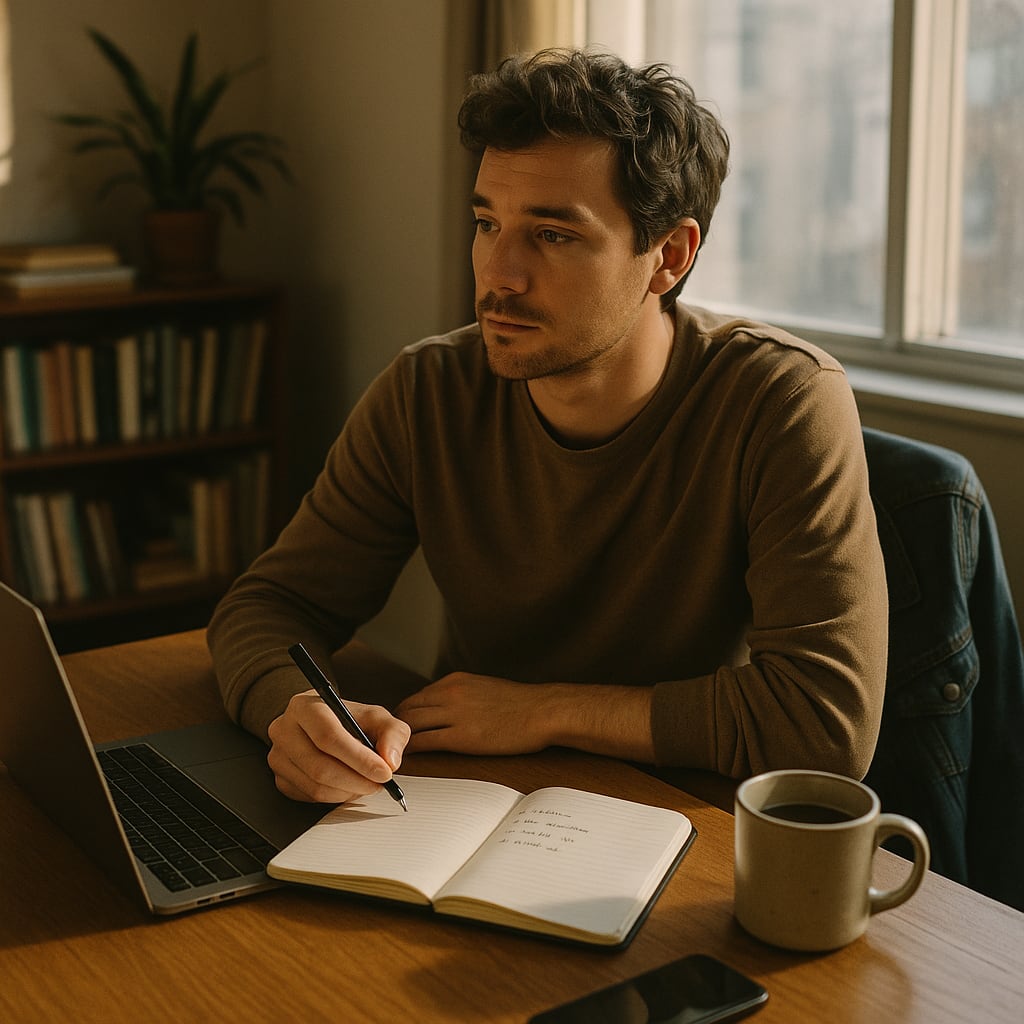
I turned my life into a TikTok habit experiment for a month. Spoiler: most of it was aesthetic nonsense, but a few things quietly changed everything.
The day I realized my “productivity” problem wasn’t laziness, I was sitting on the bathroom floor scrolling TikTok with a cold cup of coffee beside me.
I’d been “getting ready to start my day” for 90 minutes.
My laptop was open on the kitchen table with three unfinished drafts. My to‑do list looked like a CVS receipt. And my brain felt like a browser with 72 tabs open and music playing somewhere, but I couldn’t find the source.
So naturally, instead of working, I was watching people on TikTok who seemed to have solved this exact feeling.
You know the ones.
Color-coded calendars. Dawn alarms. 5 a.m. workouts. Journals that look like they were designed by an architect with a washi tape sponsorship. Every single one of them somehow running three businesses, a YouTube channel, a newsletter, and still making time for a 10‑step skincare routine and a 20‑minute “gratitude walk.”
Meanwhile, I was wearing the same T‑shirt for the third day in a row.
At some point, after the fifth “watch me organize my entire life at 4:45 a.m.” video, a particularly unhelpful thought showed up:
What if they’re right and you’re just not trying hard enough?
That thought stung enough that I did something very on‑brand for a person who procrastinates via self‑improvement content.
I made a plan.
For 30 days, I would actually live like the productivity gurus on TikTok. Not just watch. Not just “save for later.” I would copy the habits, the routines, the systems—the whole aesthetic.
And then I’d see what, if anything, actually made my life better.
The Rules: How I Turned TikTok Advice Into a 30‑Day Experiment
I gave myself three rules so this wouldn’t turn into another vague “I should be more disciplined” shame spiral.
If I saved it, I had to try it.
I went through my “saved” folder on TikTok and made a list: morning routines, time-blocking, digital planning, analog planning, habit stacking, brain dumping, 10k-step days, no-phone mornings, deep work blocks, all of it.
Each week had a theme.
Week 1: Morning routines and wake-up times
Week 2: Planning systems and to‑do lists
Week 3: Focus techniques (Pomodoro, deep work, blocking apps)
Week 4: “Optimization extras” (cold showers, habit stacking, walking meetings, etc.)
No aesthetic pressure.
I didn’t need a Stanley cup, a standing desk, or a beige matching set. I would do the habits with whatever I actually owned. If a system only worked with $200 worth of stationery, it didn’t count.
I told two people what I was doing so I couldn’t quietly quit on day 3: a friend who loves productivity videos and a friend who hates them.
One said, “This sounds amazing, I’m so jealous.”
The other said, “This sounds like a nervous breakdown in bullet points.”
Both of them were a little bit right.
Week 1: The 5 A.M. Fantasy Meets My Actual Body
If TikTok had its way, we’d all be waking up somewhere between 4:30 and 5:30 a.m., journaling, reading, working out, meditating, doing skincare, and making a matcha latte before the sun even shows up.
So I set my alarm for 5:30 a.m.
The first morning, I woke up to the alarm like it was a personal attack. I stumbled to the kitchen, made coffee strong enough to legally qualify as a performance‑enhancing drug, and tried to follow a “perfect morning routine” I’d seen at least thirty versions of:
No phone for the first hour
10 minutes of meditation
20 minutes of reading
Journaling: “three things you’re grateful for,” “three things you’re excited about,” “three things you’ll accomplish today”
Light stretching or a walk
Here’s what actually happened.
I cheated on the no‑phone rule by minute five because I “needed to check the time,” which became 15 minutes of scrolling. The meditation felt like having a wrestling match with my own thoughts. My journal entries looked like they were written by someone auditioning for an inspirational poster.
By 10 a.m., I was exhausted.
By 2 p.m., I was useless.
By 8 p.m., I was googling “can too much productivity content make you less productive.”
The second morning, I tried again.
By the fourth morning, I turned off my alarm in my sleep and woke up at 8:30, confused and furious.
Here’s what I learned in a week I mostly spent yawning:
I don’t need a 5:30 a.m. wake‑up time. I need a consistent one.
My body absolutely can adjust to earlier mornings, but not when I’m still going to bed at midnight.
Mimicking someone else’s perfect 90‑minute routine made me more focused on hitting “all the steps” than on feeling ready to work.
The weirdly useful part? Two things stuck.
First, the “no phone in the first 20 minutes” rule.
I couldn’t do an hour. But 20 minutes felt tolerable. I moved my phone across the room and bought a cheap alarm clock. The difference between rolling over into the internet and actually standing up before I’ve seen a single notification was enormous.
Second, the “top three priorities” journal line.
Not a full 30‑minute journaling session. Just one line where I wrote the three things that would make the day feel “not wasted.”
That tiny habit made more difference than any sunrise yoga flow.
Week 2: Planning Systems, or How Many To‑Do Lists Does One Person Need?
If Week 1 was about mornings, Week 2 was about trying every planning system productivity TikTok has ever tried to sell me.
I tested:
A digital calendar time‑blocking method
A Notion “second brain” setup
A paper bullet journal
A basic legal pad to‑do list
The “2‑minute rule” and the “1 big thing + 3 medium + 5 small” task structure
Here’s what productivity creators don’t show you: the planning itself can become its own form of procrastination.
I spent an entire afternoon “building my Notion system,” which looked suspiciously like not doing any of the tasks I was organizing so beautifully.
At one point, I realized I’d just spent 25 minutes choosing between two shades of pastel pink for my digital calendar.
Meanwhile, my actual deadlines were not pastel.
But a couple things became very clear, very fast:
Time‑blocking only worked when I was honest.
When I scheduled my day like an aspirational robot—back‑to‑back 90‑minute focus blocks with 15‑minute breaks—I failed by 10 a.m. and threw the whole plan out.
When I made blocks that actually looked like my life—commute time, inevitable admin tasks, lunch, the 30‑minute slump after lunch—I suddenly had room to focus.
Notion was great—for storage, not for daily decisions.
It became a graveyard of ideas and half‑finished templates. Useful to dump everything into, terrible for figuring out what to do today.
My brain loves a simple, ugly list.
The most effective thing I tried was embarrassingly simple: each morning, on a single sheet of paper, I wrote:
1 non‑negotiable task
3 medium tasks
A short list of “would be nice” tasks
And beside each one, I gave it a tiny time estimate.
Something about seeing “Reply to client email (10 min)” made it feel too ridiculous to avoid.
By the end of Week 2, my desk looked less like a stationary store exploded and more like the work actually mattered more than the system holding it.
Planning stopped being an aesthetic hobby and went back to being what it was supposed to be: a way not to forget important things.
Week 3: Focus Hacks, Deep Work, and My Very Noisy Brain
This was the week I was secretly most hopeful about.
If a stranger on TikTok could fix my inability to focus with one weird trick and a tomato timer, I was ready.
I tried:
Pomodoro (25 minutes on, 5 off)
50/10 focus blocks
Blocking apps that locked me out of social media
Noise‑canceling headphones with brown noise
“Deep work” sessions where I did only one task with everything else closed
Pomodoro was… fine.
It helped for small tasks, but for anything that required thinking deeply, the timer made me feel rushed. I’d just get into something and then ding, break time, whether my brain wanted it or not.
The first time I did a real “deep work” block, it felt almost wrong.
No email tab. No phone within reach. One project. A 90‑minute timer that I told myself I did not have to honor if it felt horrible.
It felt like being underwater for the first 15 minutes. My brain kept reaching for a distraction like a phantom limb. But something strange happened around minute 30.
The noise turned down.
I wasn’t making genius‑level work. But I was doing the unsexy, necessary parts—the part of the project I usually abandon midway through because my attention gets tired.
The productivity gurus weren’t lying about this part. Focus is a muscle, and mine had become very used to scrolling.
The most effective combo turned out to be:
90 minutes of deep work
15–20 minutes of deliberate break (walk, stretch, snack, actual rest)
Repeat once or twice a day
Anything beyond two deep work sessions melted my brain, but even one per day changed how I felt at the end of the week.
Instead of drowning in unfinished tasks, I had at least one thing per day I could point to and say, “That. I did that properly.”
Weirdly, the biggest barrier to focus wasn’t TikTok or Instagram or my phone.
It was email.
The constant drip of new messages gave me the illusion that I was “busy” while I avoided harder, deeper work. When I restricted email checks to two or three specific times per day?
That’s when the real productivity spike happened.
Of all the “hacks,” the unglamorous decision to treat email like a chore and not like my homepage did more for my brain than any aesthetic timer.
Week 4: The Optimization Olympics (Cold Showers, Steps, Habit Stacking)
By Week 4, I felt both more productive and more suspicious.
TikTok productivity has a way of turning human beings into projects. There’s always another thing to optimize, another marginal gain to chase.
This last week was where most of that “extra” stuff lived:
Cold showers
10k steps a day
“Habit stacking” tiny habits onto things I already did
Walking meetings
Listening to educational podcasts instead of music
Night routines with skincare, gratitude lists, digital sunset, the whole thing
Cold showers: absolutely not.
Was I more awake? Sure. Was my mood better? No. Did I resent the imaginary people on the internet who jumped in smiling? Absolutely.
That one did not stick.
10k steps, though? That surprised me.
Not the number itself—that’s arbitrary—but the decision to actually leave my apartment and walk without a destination.
Those walks ended up being when I had my best ideas about the very work I’d been obsessing over.
Not while staring at the screen. Not while optimizing my desk layout. While walking aimlessly around the neighborhood, looking at trees, and eavesdropping on strangers’ conversations.
Habit stacking helped, too, but only when I was honest about what I’d actually do.
“After I brush my teeth, I will meditate for 10 minutes” didn’t happen.
“After I put the kettle on, I will write my top three priorities for the day” happened almost every single morning.
“After I close my laptop, I will put my phone in another room and stretch for five minutes” happened more often than not.
I noticed something uncomfortable: the more I “optimized” my day, the less I seemed to trust myself.
I had a system for everything, but I was treating myself like an unreliable employee I needed to micro‑manage.
The things that actually helped me be more productive didn’t feel like that.
They felt like small acts of respect toward my future self.
Putting my phone across the room.
Writing a short list so tomorrow‑me wouldn’t need to remember everything from scratch.
Giving my brain some quiet.
Leaving the house.
None of that would have gone viral in a 15‑second “day in my life” video, but it quietly made my life less chaotic.
What Actually Stuck After 30 Days (And What I Quietly Let Die)
At the end of the 30 days, I sat down with an unglamorous, non‑TikTok‑worthy cup of coffee and asked myself two questions:
What made my days feel heavier?
What made my days feel lighter?
The things that made my days heavier:
Extremely early wake‑ups that didn’t match my nighttime habits
Over‑designed planning systems that required constant maintenance
Treating every minute as something to optimize
Forcing habits that made me feel like a character in someone else’s life
The things that made my days lighter:
Waking up at the same time every day, even on weekends
No phone for the first 20 minutes
Writing three priorities for the day on paper
One (or two, on good days) deep work blocks with everything else closed
Checking email only a few times a day, on purpose
Walking without a destination, ideally outside
Very small, realistic habit stacks
If you strip away the aesthetics and the brand deals, that’s what was left.
No magic template. No “millionaire morning routine.” No color palette.
Just a handful of boring, sustainable things that helped me show up to my own life with a little bit more clarity.
Which is maybe the part productivity creators can’t film.
You can’t really capture that moment at 3:15 p.m. when you’re halfway through a task you’ve been avoiding for months and realize—without fanfare—that you are, finally, doing the thing.
No inspirational audio. No drone footage. Just you, your unwashed hair, a blinking cursor, and the quiet satisfaction of not running away from your own work.
The Real Problem TikTok Productivity Can’t Solve For You
There was one question that kept coming up during the experiment, but I did my best to ignore it.
It went something like: Why are you so desperate to be more productive in the first place?
It’s an uncomfortable question because the answer isn’t “to spend more time with my family” or “to chase my dreams.”
The honest answer, at least for me, was uglier.
I wanted to be more productive so I’d finally feel like I was allowed to rest.
Like if I got enough done, I could stop feeling guilty for existing.
Productivity TikTok is a perfect match for that kind of thinking. There’s always more you could do. Always a new routine. Always someone who seems to be doing more with the same 24 hours you have.
What the 30‑day experiment showed me wasn’t that productivity content is bad.
It’s that the moment it becomes a way to manage your self‑worth, you’ll never win.
There will always be another creator waking up earlier, reading more pages, building more streams of income, drinking more water from a more aesthetically pleasing bottle.
The parts of this experiment that helped were the parts that made me feel more human, not more efficient.
The 20 quiet minutes without my phone in the morning. The ugly piece of paper with three important tasks. The walk where my brain got bored enough to be creative. The decision to close my laptop at a reasonable hour, not because I’d “earned” rest, but because I’m a person, not a device.
At the end of 30 days, I didn’t become a productivity guru.
I became someone who trusts myself a little more to follow through on the things that actually matter to me.
And that turned out to be enough.
Not aesthetic. Not viral. But enough.
If You’re Tempted to Try This Yourself
If you’re reading this with 20 saved productivity videos and a browser full of tabs about “building your second brain,” here’s what I wish someone had told me before I turned my month into a self‑help science fair project:
You probably don’t need a whole new personality.
You probably need three or four small, kind constraints that protect your attention from getting stolen all day.
If you want somewhere to start, steal mine:
Keep your phone out of reach when you wake up.
Decide on three things you’ll be proud to have done today, and write them down on something physical.
Give yourself one block of protected time where you aren’t available to the whole world.
Go outside, even if it’s just around the block.
Then watch what happens to your relationship with your work over a few weeks, not a single afternoon.
TikTok is incredible at showing you what other people’s lives look like on their best, most curated days.
It is terrible at answering the only question that actually matters:
What kind of day makes you feel like your own life fits you?
That’s the experiment worth running.
Not for 30 days.
For as long as you’re here.
About the Creator
abualyaanart
I write thoughtful, experience-driven stories about technology, digital life, and how modern tools quietly shape the way we think, work, and live.
I believe good technology should support life
Abualyaanart
Keep reading
More stories from abualyaanart and writers in Lifehack and other communities.



Comments
There are no comments for this story
Be the first to respond and start the conversation.