
International Day of Family Remittances: Strengthening Bonds Across Borders
This article aims to provide a comprehensive overview of the International Day of Family Remittances, exploring its significance, impact, and the challenges faced by migrant workers and their families.
Introduction
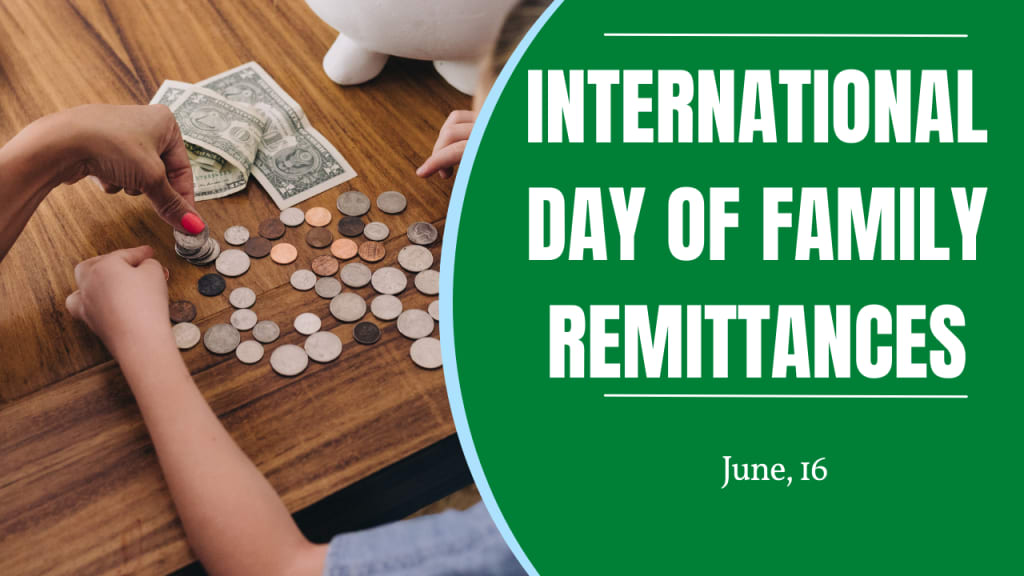
The International Day of Family Remittances is a significant global observance that highlights the contributions made by migrant workers to their families and home countries through remittances. It is celebrated on June 16th each year to acknowledge the vital role of remittances in improving the lives of millions of families worldwide. This article aims to provide a comprehensive overview of the International Day of Family Remittances, exploring its significance, impact, and the challenges faced by migrant workers and their families. Let's delve into the depths of this important commemoration.
International Day of Family Remittances: A Closer Look
The International Day of Family Remittances was officially recognized by the United Nations General Assembly in June 2018. It was established to raise awareness about the crucial role of remittances in alleviating poverty, promoting economic development, and fostering social well-being. The day serves as a reminder that remittances play a significant role in supporting families and communities, particularly in developing countries.
Why is International Day of Family Remittances Celebrated?
The celebration of the International Day of Family Remittances serves multiple purposes. Firstly, it aims to honor the commitment and sacrifices made by migrant workers who work tirelessly in foreign lands to support their families back home. Secondly, it highlights the positive impact of remittances on poverty reduction, education, healthcare, and overall socio-economic development in recipient countries. Lastly, it strives to encourage dialogue and collaboration among governments, financial institutions, and civil society organizations to enhance the efficiency and affordability of remittance transfers.
How Do Remittances Benefit Families?
Remittances are a lifeline for many families, enabling them to meet their basic needs and improve their quality of life. These financial transfers provide families with access to essential goods and services, such as food, education, healthcare, and housing. They also contribute to the overall socio-economic development of communities by fostering entrepreneurship, investment, and local economic growth.
Moreover, remittances often empower women and children who remain in their home countries. In the absence of male family members who migrate for work, women often take on additional responsibilities and become key decision-makers, thereby enhancing their socio-economic status and empowering them within their communities.
Challenges Faced by Migrant Workers and Their Families
While remittances have a transformative impact, the process of sending and receiving money across borders is not without challenges. Migrant workers often face exploitation, unfair working conditions, and limited access to social protection in their host countries. Additionally, they may encounter language barriers, cultural differences, and discrimination, which can significantly impact their overall well-being.
On the receiving end, families may face difficulties in accessing formal financial services, high transaction costs, and limited financial literacy, making it challenging to maximize the benefits of remittances. Furthermore, fluctuations in exchange rates and regulatory barriers can hinder the flow of remittances, affecting the stability of family incomes and economic development.
Frequently Asked Questions (FAQs)
Q1: What is the significance of the International Day of Family Remittances?
The International Day of Family Remittances holds immense significance as it acknowledges the critical role of remittances in supporting families, reducing poverty, and fostering economic development. It raises awareness about the challenges faced by migrant workers and their families, encouraging governments and stakeholders to develop policies and initiatives that promote the well-being of migrants and facilitate affordable and secure remittance transfers.
Q2: How can governments support migrant workers and their families?
Governments can play a crucial role in supporting migrant workers and their families by implementing policies that protect their rights, ensure fair working conditions, and promote social integration. They can also establish financial inclusion programs and initiatives to improve access to formal financial services, facilitate affordable remittance transfers, and enhance financial literacy among migrant families.
Q3: What are some innovative solutions to enhance the impact of remittances?
Innovative solutions such as digital financial services, mobile banking, and blockchain technology have the potential to revolutionize the remittance landscape. These technologies can reduce transaction costs, improve transparency, and provide convenient and secure channels for remittance transfers. Additionally, fostering partnerships between financial institutions, fintech companies, and development organizations can help drive innovation and create sustainable solutions that benefit migrant workers and their families.
Q4: How can individuals support the International Day of Family Remittances?
Individuals can support the International Day of Family Remittances by spreading awareness about the importance of remittances and the challenges faced by migrant workers and their families. They can engage in discussions, share informative content on social media platforms, and actively support initiatives and organizations working towards improving the lives of migrant families.
Q5: Are there any organizations working to address the challenges faced by migrant workers and their families?
Yes, numerous international organizations and civil society groups are actively engaged in addressing the challenges faced by migrant workers and their families. Organizations such as the International Organization for Migration (IOM), the United Nations Development Programme (UNDP), and the Global Forum on Remittances, Investment, and Development (GFRID) work collaboratively to promote inclusive policies, provide support services, and facilitate knowledge-sharing to enhance the impact of remittances.
Q6: What can be done to reduce the costs of remittance transfers?
Reducing the costs of remittance transfers is crucial to maximizing the benefits for both migrant workers and their families. Governments and stakeholders can work towards increasing competition in the remittance market, promoting transparency in pricing, and implementing regulations that reduce transaction fees. Additionally, enhancing financial infrastructure, expanding digital payment systems, and fostering partnerships between financial service providers can contribute to reducing the costs associated with remittance transfers.
Conclusion
The International Day of Family Remittances serves as a powerful reminder of the significant contributions made by migrant workers to their families and home countries through remittances. It sheds light on the challenges faced by migrant workers and their families while emphasizing the need for collective efforts to enhance the impact of remittances and promote the well-being of migrants. By recognizing the value of remittances and supporting initiatives that facilitate affordable and secure transfers, we can foster economic development, strengthen familial bonds, and create a more inclusive and prosperous world.
About the Creator
Keep reading
More stories from Ameenullah and writers in Lifehack and other communities.
World Elder Abuse Awareness Day: Protecting Our Senior Citizens
Introduction In today's society, it is crucial to bring attention to the issue of elder abuse and advocate for the well-being and safety of our senior citizens. World Elder Abuse Awareness Day serves as a reminder of the importance of protecting this vulnerable population. This article delves into the significance of World Elder Abuse Awareness Day, highlights the different forms of elder abuse, provides tips for prevention, and offers guidance on what to do if you suspect elder abuse. Let's explore this pressing issue together.
By Ameenullah3 years ago in Lifehack
Why Smartphones in 2026 Will Feel Very Different From the Ones You Use Today
The top phones from 2024 and 2025 don't appear that different when you put them next to each other. The displays are a little brighter. The cameras are a bit clearer. The CPUs are a little speedier. But in real life, things haven't altered much. You still swipe. You still tap. You still plug in your phone every night. You still care about battery life.
By abualyaanart7 days ago in Lifehack
Understanding Fabric Durability: How the Martindale Tester Shapes Modern Textile Quality
In the textile industry, durability is one of the most important indicators of product quality. From everyday clothing and upholstery to industrial and protective materials, fabrics are constantly exposed to friction, pressure, and repeated use. To evaluate how well a material performs under such conditions, laboratories rely on standardized testing methods. One of the most widely recognized tools for this purpose is the Martindale Tester, an instrument designed to assess fabric abrasion resistance and pilling behavior in a controlled, repeatable manner.
By Shazad Khanabout 10 hours ago in Lifehack



Comments
There are no comments for this story
Be the first to respond and start the conversation.