
Empowered Expression: How AI Can Help Neurodivergent and Anxiously Wired Communicators Build Confidence
Harnessing the Power of AI to Support Clearer, Calmer, and More Authentic Communication for Every Brain Type


As someone with ADHD—and a proud part of the neurodiverse community—communication has always felt like an uphill climb. Why? The world was not exactly built with us in mind, and a lot of Neurotypicals could not care less. We are often left squeezing into systems that were never designed to fit how our brains work. That alone makes it tough to speak openly about our experiences.
Worse, when we speak up, we are often dismissed because we seem "high functioning" or "too smart" to struggle. Our wins get thrown back at us like they cancel out our challenges. But here is the truth: these are not personality quirks or flaws. They are symptoms of a legitimate condition that changes how we process, connect, and express ourselves.
As both someone with lived experience and a mental health professional supporting neurodivergent folks, I keep circling back to this:
Can AI help? Not just with tasks or therapy but in something more human—how we connect and communicate. Especially when anxiety, executive dysfunction, or a lifetime of being misunderstood make even basic conversations feel like a mental maze.
So, I started exploring a different kind of question: How can AI help neurodivergent people—and those with anxious communication styles—feel more confident, understood, and empowered in everyday interactions?
Real-Time Practice, Minus the Pressure
Communication is not just about knowing what to say for folks like me. It is about holding your train of thought while your brain veers off-track mid-sentence. It is also misreading tones, freezing in high-stress moments, or overthinking a simple email for hours.
However, tools like ChatGPT and Google Gemini have shifted the game. You can use them to role-play job interviews, rehearse hard conversations, or practice small talk—all without judgment. These platforms offer real-time feedback on tone, pacing, and clarity. It is imperfect but more accessible than most traditional supports.
For those navigating executive dysfunction or social anxiety, is that kind of flexible, personalized practice? Game-changer. Instead of rigid scripts or one-size-fits-all social skills training, we get a sandbox to try things out, mess up safely, and build confidence.
Assistive Tech + AI = Actual Accessibility
Speech-to-text and text-to-speech tools have been around, especially for folks with dyslexia or auditory processing challenges (I am raising my hand here). But now, with AI layered in, these tools are not just supportive—they are adaptive.
Take Microsoft Copilot. It can help you structure a work email, summarize a report, or prep notes for a difficult meeting. Extensions powered by large language models are starting to predict follow-up questions, organize scattered thoughts, and suggest edits that make sense. The kind of cognitive lift that makes a real difference.
The combo of AI with assistive Tech does not just knock down barriers. It redefines what support can look like by working as our brains do.
Finding Your Voice Starts with Expression
For a lot of neurodiverse folks, asking for what we need can feel impossible, especially when we have spent years being misunderstood or dismissed. We may know something is off in a conversation, but not always how to name it. That is where AI can step in as a translator of sorts.
Whether it is prepping for a doctor's visit, advocating for accommodations, or rewriting a message that feels "too much," AI tools can help shape our thoughts into something clearer and more grounded. They do not replace our voices—they help us find them.
This is not about fixing neurodivergent people. It is about designing tools that finally adapt to us. AI has the potential to empower us to express ourselves more effectively, which is more likely to result in us being met with understanding, not just tolerance.
But Let Us Be Real: The Human Element Still Matters
Here is the thing: AI is not therapy. It is not peer support. It cannot replace the nuance of sitting across from someone who gets it or a trained professional.
The best-case scenario? AI gets paired with human insight—therapists, recovery coaches, educators—people who understand that communication is emotional and relational, not just functional.
And yes, the ethical concerns are real. From data privacy to algorithmic bias to becoming too dependent on a chatbot, there is much to keep in check (Vuong et al., 2024). But those risks do not have to be dealbreakers—they are design challenges we can solve if we keep users, especially disabled users, in the driver's seat.
Trust Built In, Not Tacked On
Misinformation is a huge problem in the mental health world. One bad TikTok or misleading Reddit thread can do actual harm. That is why I have been encouraged to see AI tools starting to flag harmful or inaccurate content.
No system is foolproof, but when AI is trained to filter out dangerous myths, pointing users toward verified, evidence-based sources, it does more than just streamline info. It is protecting trust. And when you have had to fight for trust, that is important.
It is not Sci-Fi—It is Something Better
The real promise of AI for neurodivergent people is not found in some shiny, distant future. It is here, in the simple but powerful stuff:
• Feeling less alone in a conversation
• Practicing hard talk without shame
• Saying what you mean and finally being heard
In those moments, a tool helps you say, "Here's what I need"—calmly and confidently. That is not just Tech progress. That is progress, period. AI will not replace the human connections we crave. But it can help us reach them more easily.
And for many of us, that is everything.
References and Resources
Abd-Alrazaq, A., Rababeh, A., Alajlani, M., Bewick, B. M., & Househ, M. (2023). ChatGPT in mental health: A scoping review. BMJ Health & Care Informatics, 30(1), e100789.
Hosseini, M., Hossain, M. S., & Muhammad, G. (2023). AI-based misinformation detection: A comprehensive survey. IEEE Access, 11, 23156–23178.
Russell, G., Ford, T., Steer, C., & Golding, J. (2022). Identifying children with developmental disorders using parent-reported data and AI: Bridging gaps in early support. Journal of Child Psychology and Psychiatry, 63(4), 442–450.
Vuong, Q.-H., Le, T.-T., La, V.-P., & Nguyen, H.-K. T. (2024). Ethical implications of AI in mental healthcare: Perspectives and frameworks. AI & Society.
About the Creator
SP
I'm a writer with ADHD/anxiety a certified recovery coach and peer support specialist. I've written 4 ADDitude Magazine,Thought Catalog,TotallyADD,BuzzFeed, and other publications. If you want follow my Instagram, it is mh_mattersyyc
The Quarterly OKR Review: Getting the Most from Your Retrospectives
The end of an OKR cycle is not simply an administrative milestone where scores are recorded and new objectives are set. It is, or should be, the most valuable learning opportunity in the entire process. Yet many organisations rush through their quarterly reviews, treating them as a box-ticking exercise rather than the strategic conversation they deserve.
By Jane Smithh4 days ago in Lifehack
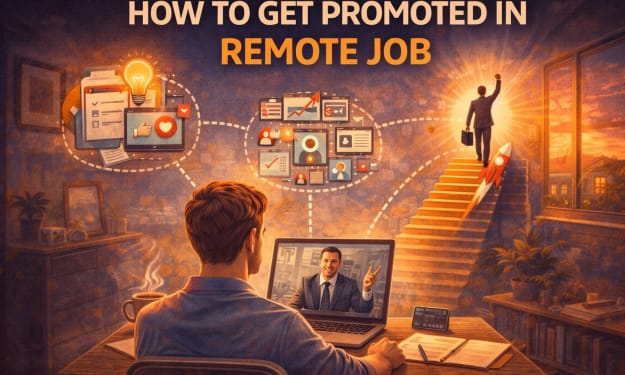
How to Get Promoted in a Remote Job
Remote work changed how we get hired. It also changed how we get promoted. In a traditional office, visibility is automatic. You’re seen walking in early. You’re seen staying late. You’re in meetings. You’re in the hallway conversations.
By Bahati Mulishi6 days ago in Lifehack



Comments (1)
I can really relate to the struggles with communication described here. It's so hard when the world isn't set up for how our brains work. The idea of using AI for practice is great. I wonder, though, how reliable is the feedback on tone and pacing? And could it ever fully replace the nuance of real human interaction?