
Emotions as Clues
Finding Balance Through Mood Tracking


Ever feel like you're merely riding the waves of your day, swept along by currents you can't see? One minute you're soaring, the next mysteriously low. We pilot our lives on automatic, reacting to situation without actually noticing the emotional currents building and ebbed within us. But imagine if you could chart those inner currents, forecast their rises and ebbs, and lastly, pilot your own ship. That's the magic of awareness of mood.
It’s beyond recognizing if you are “happy” or “sad.” Mood awareness is a delicate art, an investigation of the subtle nuances of your mind state throughout the day. It’s sensing the soft whisper of satisfaction against the faint bite of irritation, the soft rise of energy against creeping mist of fatigue.
Noticing your moods is the first step toward emotional balance. If you’re ready to track and understand your daily patterns better, the Digital Wellness Planner is a helpful tool to start with.
Why bother paying attention to these internal signals? Because they’re full of valuable information. Your moods are not arbitrary; they’re generally responses to your environment, your mind, your body, and even your social interactions. Tuning in to them opens a powerful feedback loop that can radically change the way you live.
The Untapped Intelligence of Your Feelings:
Think of your moods as internal messengers. They’re not necessarily delivering good tidings, but they’re always trying to convey something important to you.

- Getting in Touch with Your Triggers: Feeling a mood slump after reading social media? Or a burst of energy after a wonderful conversation? Sensing your moods allows you to recognize patterns and identify the triggers that influence your mood. With this awareness, you’re empowered to make conscious choices about your environment and interactions.
- Improving Self-Care: Are you constantly feeling drained by mid-day? This is often an indicator that you should adjust your workload, pay importance to recuperation, or incorporate additional energizing activities into your day. Being aware of your moods allows you to address your needs prior to burnout.
- Bettering Relationships: Your mood affects the way you speak with people. Catching yourself when you’re in a cranky mood can lead you to speak with more patience and understanding, avoiding unnecessary conflict and creating stronger relationships.
- Enhancing Decision-Making: When you understand your emotional state, you can make more effective decisions. Are you acting on impulse with a sunny outlook? You might want to hold off before committing big. Are you in a state of worry? Perhaps it’s not the best time to make a high-risk choice.
- Building Resilience: Because you understand the natural ups and downs of your moods, you are less reactive to the inevitable dips. You know that feeling down is only temporary and learn how to navigate through those periods with more kindness and resilience.
Building Your Inner Compass:
Building mood awareness is a process, not a destination. These are some practical steps to get you started:
- Start a Mood Journal: Write for a few minutes each day about how you’re feeling. Be specific. Instead of saying “good,” say “calm and focused” or “joyful and energized.” Record any activities or thoughts that might have influenced your mood.
Keeping a record of how you feel throughout the day can reveal more than you’d expect. This is where the Digital Wellness Planner comes in — it’s designed to make mood awareness a consistent, stress-free habit.
- Practice Mindful Observation: Take short breaks during the day to listen to yourself. What are you experiencing in your body? What are you thinking? What is your emotional state at this moment?
- Connect Emotions to Physical Sensations: Emotions have a physical component. Notice where you feel tension, lightness, or discomfort in your body. This can be a great source of data about your underlying mood.
- Experiment with Different Mood Wheels: Visual aids like mood wheels will help you to widen the vocabulary of emotions and tune in to lesser-known feelings beyond simple happiness or unhappiness.
- Be Kind and Patient: Some days your moods will be less stable or harder to decode. Be patient with yourself and compassionate. There is no good or bad about feeling.
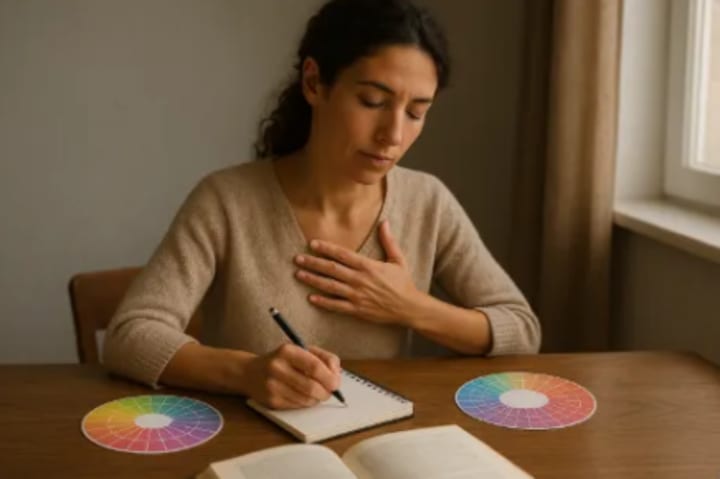
Decoding your days through mood awareness isn’t about achieving constant happiness. It’s a matter of creating a more sensitivity to yourself, your routines, and your needs. It’s a matter of moving away from being just a passive recipient of your emotions and becoming an active participant in the building of your experience.
By listening to the world within you, you gain access to an inner well of self-knowledge that can give you more health, deeper connections, and a life led with more wisdom and purpose. Take a minute, listen deeply — what’s your mood trying to tell you today?

Awareness leads to change. Whether you’re working on emotional clarity or simply want to feel more balanced, the Digital Wellness Planner is a great companion for your wellness journey.
About the Creator
Velma Lovemore
I’m Velma Lovemore. I write about self-improvement, healthy living, and simple habits to help you live with more intention, balance, and ease.
Keep reading
More stories from Velma Lovemore and writers in Lifehack and other communities.
What a Decade Taught Me About Self-Care (That I Wish I Knew at the Start)
1. Self-Care Is More Than Just Bubble Baths & Face Masks The biggest misconception I had about self-care was that it was solely about pampering myself. While enjoying a relaxing bath or a spa day can be nice, true self-care involves nurturing yourself in ways that promote lasting well-being.
By Velma Lovemore9 months ago in Lifehack
SEO Mentor Nestor Vazquez and a Different Way of Understanding Search
In many discussions about digital marketing, search engine optimization is often presented as a technical discipline. Articles tend to focus on rankings, backlinks, analytics dashboards, and algorithm updates. While these elements are certainly part of the field, they do not fully explain how people actually learn to understand search.
By House Doctorabout 4 hours ago in Lifehack
How to Use Sound Healing Tuning Forks for Balance and Wellness
Sound therapy has been used for centuries to support relaxation, clarity, and overall well-being. Today, sound healing tuning forks are one of the most accessible and effective tools for personal and professional energy work.
By Adria Hargrave7 days ago in Lifehack




Comments (1)
I get what you mean about riding emotional waves. Tracking my moods has helped me see patterns. The Digital Wellness Planner sounds like a good start.