
Elon Musk’s plans to go to Mars next year are toast
Elon Musk’s Mars Mission Dreams Derailed: 2026 Plans in Jeopardy

**Elon Musk’s Mars Mission Dreams Derailed: 2026 Plans in Jeopardy**
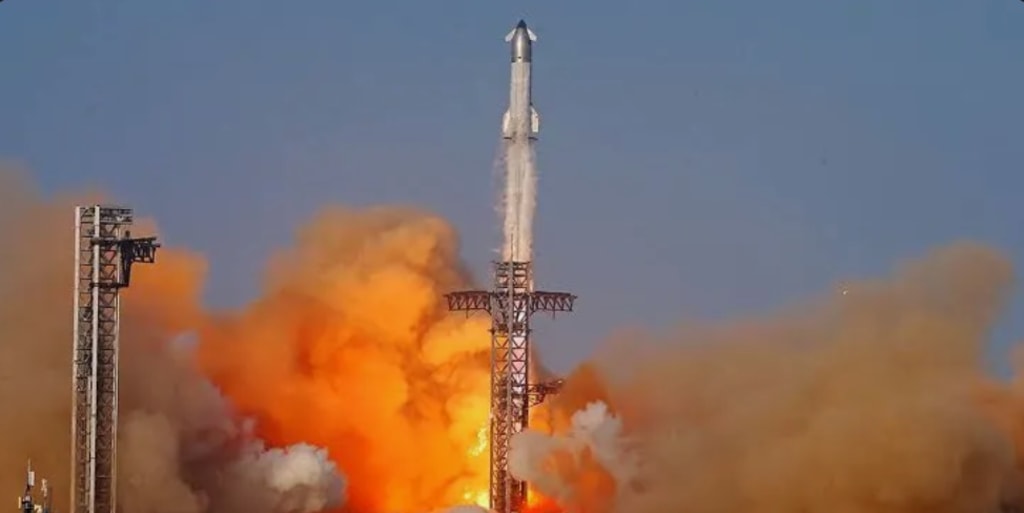
One of the most daring space projects in human history, Elon Musk's ambitious plan to send a crewed mission to Mars as early as next year appears to have hit a major roadblock. While SpaceX has long aimed to pioneer interplanetary travel, recent developments suggest that Musk’s goal of reaching the Red Planet by 2026 is no longer within reach.
For years, Musk has positioned Mars colonization as a core mission of SpaceX. The Starship rocket—SpaceX’s fully reusable spacecraft—was envisioned as the vehicle that would carry humans to Mars and beyond. Despite early skepticism from the scientific community, the company made impressive strides, including multiple suborbital tests and eventual orbital launches. Yet, the scale and complexity of Mars travel have proven far more challenging than Musk initially forecasted.
The Starship program's technical difficulties appear to be the most immediate cause of the delay. Starship's successful test flights have made headlines, but it is still far from ready for interplanetary missions. Critical systems like life support, in-space refueling, radiation shielding, and precision landing on Mars remain in development. NASA and other space agencies have spent decades wrestling with these issues, and SpaceX, despite its rapid pace, is not immune to the limitations of physics and engineering.
Further complicating matters is the lack of necessary infrastructure. It takes more than just a rocket launch to send people to Mars; it also takes a lot of support systems in orbit and on the Martian surface. These include fuel depots, habitats, power generation systems, and long-range communication networks. None of these components currently exist at scale. Even the logistics of producing fuel on Mars—a key part of Musk’s plan to make return trips feasible through in-situ resource utilization (ISRU)—remain largely theoretical at this stage.
The timeline for the Mars mission is being slackened by regulatory and financial constraints in addition to technical obstacles. Launching humans into deep space is a high-risk endeavor requiring approvals from multiple government agencies, including NASA and the FAA. The tragic history of crewed spaceflight has instilled caution in regulatory bodies, especially when it comes to new vehicles attempting unprecedented missions.
Meanwhile, SpaceX’s financial obligations are growing. Starship’s development, ongoing satellite launches for Starlink, and other projects such as the lunar lander for NASA’s Artemis program are stretching resources thin. While Musk has proven adept at securing funding—both public and private—the costs associated with a Mars mission run into tens of billions of dollars. Without concrete revenue streams directly tied to Mars development, investors may grow wary.
There’s also the matter of crew safety. Musk has acknowledged the dangers associated with Mars travel, including high radiation exposure, isolation, and lack of rescue options. In his characteristic candor, he has admitted that early missions could be fatal. While this honesty has earned him praise for transparency, it also raises serious ethical and operational concerns. Neither a reputable commercial enterprise nor a space agency can afford to disregard human life. Recent reports suggest that internal timelines at SpaceX are being quietly revised. Musk, known for his aggressive and often unrealistic timelines, has a history of overpromising. While that optimism has driven extraordinary progress, it also creates public and investor expectations that may not align with reality. The shifting goalposts are now evident in subtle changes to public statements, mission documentation, and test priorities.
Despite these setbacks, it would be premature to declare the Mars dream dead. SpaceX remains the world’s most capable private space company, with a proven track record of innovation and resilience. Its accomplishments—including pioneering reusable rockets, partnering with NASA for crewed missions, and deploying the world’s largest satellite constellation—are unparalleled. A delay, even a significant one, does not mean abandonment.
A Mars mission is a marathon, not a sprint, in the larger context. It took decades for humanity to reach the Moon, and Mars poses exponentially greater challenges. The collapse of a 2026 timeline may be disappointing, but it’s also a necessary recalibration in the face of reality. Musk’s ultimate goal—making life multiplanetary—remains inspiring. However, enthusiasm alone will not be enough to transform that vision into a scientifically sound, safe, and sustainable mission. It will take time.
About the Creator
GLOBAL NEWS
World News Updated
Short News upload
Technology News
Keep reading
More stories from GLOBAL NEWS and writers in Lifehack and other communities.
Trump news at a glance: Musk confirms White House exit after split with Trump on tax bill
Trump news at a glance: Musk confirms White House exit after split with Trump on tax bill. Following a growing disagreement over President Donald Trump's most recent tax reform bill, Elon Musk has officially confirmed his departure from the Trump administration. The split comes after months of internal tension surrounding economic priorities, government spending, and the controversial legislation known as the "One Big Beautiful Bill Act."
By GLOBAL NEWS9 months ago in Lifehack
Bullies Suck
We’ve all had to deal with bullies. The problem is when the bullies become a problem at work. You need to figure out ways to deal with the problem, and to do so in such a way that the problem is dealt with permanently. No one deserves to be humiliated where they work or play, and if someone makes you feel like you are worth less than nothing then they need to be dealt with, preferably by the book. Hopefully, you’ll find a way to deal with your bully that removes them from the situation.
By Jamais Jochim8 days ago in Lifehack
Digital Well-Being
We live in a time where the internet is not just a tool — it is an environment. From the moment we wake up to the moment we fall asleep, screens shape how we think, work, communicate, and relax. Technology connects us instantly, but constant connection can quietly drain our attention, energy, and peace of mind. Digital well-being is the practice of using technology in a way that supports — rather than harms — our mental, emotional, and physical health.
By shaoor afridi5 days ago in Lifehack



Comments
There are no comments for this story
Be the first to respond and start the conversation.