
Beating the Booze: My Experiment in Moderation
A personal week-long plan to cut back, try low-alcohol alternatives, and learn what works.

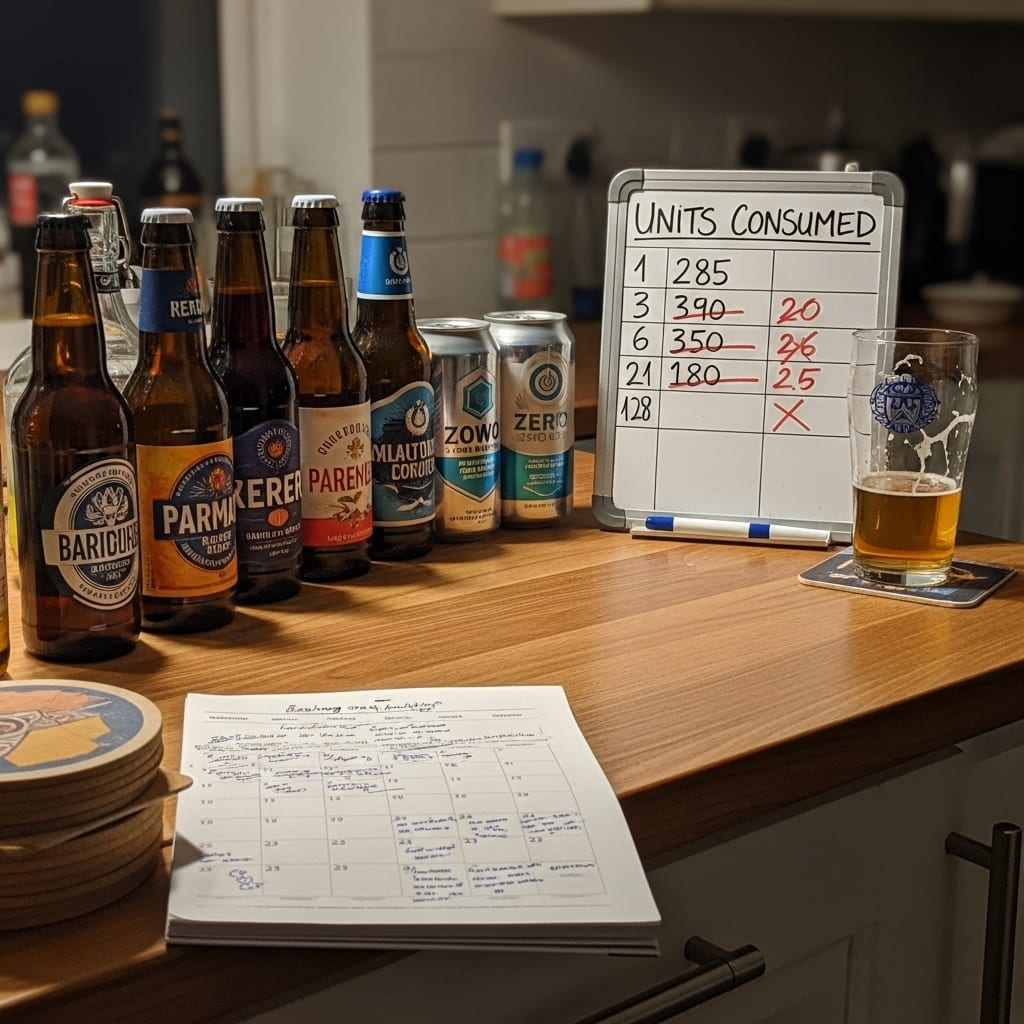
I’ve never claimed to be an alcoholic. Am I a problem drinker? Not really. But I do drink more than is strictly healthy, and from time to time, I try to cut down. Sometimes I succeed… for a while.
My doctor, lovely as she is, has been warning me for over a decade: cut down on drinking, lose some weight, get your blood pressure and cholesterol under control—or risk serious consequences. Clearly, doctors aren’t always right about timing, but the message is worth taking seriously.
Over the years, I’ve found counting units the most effective method. I keep a whiteboard with a daily tally, and watching the numbers shrink keeps me motivated. But motivation waxes and wanes, and I wanted a fresh approach—something a bit more… cunning.
The Plan
I’ll experiment with zero- and low-alcohol beers—not to replace my regular pints entirely, but to see if swapping even one beer can help me cut down. At the same time, I’ll track the results.
I set myself a weekly “budget” of just 12 units of alcohol. That’s below the UK medical recommendation of 14 units per week. My goal: three alcohol-free days, with the remaining units reserved for emergencies—those moments when a regular drink just seems essential.
I’ll use a moving average system: drink nothing one day, and I can use the leftover allowance the next. If I abstain for five days, I might allow myself a mini blow-out on day six—3 or 4 pints of strong beer—my favorite. And yes, it’s gloriously against the “spread it out” advice of the medical fun police.
Psychobabble suggests accountability helps, so instead of stressing loved ones with my ups and downs, I’m going public. No cheering, no hand-holding. Success or failure will be mine alone—but, as a proper experiment, either outcome is a win. I’ll learn, adjust, and maybe even enjoy the journey.
Day 1: Monday – The Start of Something
I wake up feeling a mixture of optimism and dread. The whiteboard stares at me, blank and expectant. Twelve units. Three alcohol-free days. I tell myself I can do this.
Dinner comes and goes. I stick to water with my meal. Later, around 8 p.m., the familiar itch arrives. That urge to crack open a pint just because I can, because I deserve it, because… well, just because.
I remind myself of the plan. One of the cunning low-alcohol beers sits in the fridge, unopened. I consider it. I sip water instead. Victory. Small, but meaningful.
Diary tally: 0 units today.
Day 2: Tuesday – Testing My Patience
By Tuesday afternoon, I notice a strange sensation: people at work seem louder, the sun feels brighter, and I actually have energy to concentrate. Who knew abstaining from alcohol could have side effects other than smugness?
Evening rolls around. I pour myself a glass of one of the low-alcohol beers I’ve been meaning to test. It tastes… acceptable. Not exactly a revelation, but acceptable. One pint counts as 0.5 units. I note it down.
The satisfaction of sipping something while staying under the limit is surprisingly gratifying. It’s like a cheat code I didn’t know I had.
Diary tally: 0.5 units today.
Day 3: Wednesday – The Real Temptation
Hump day hits. I consider it a minor moral crisis. The pub down the street smells like temptation, and my colleagues are buzzing about after-work drinks. I feel the old familiar tug: “Just one pint won’t hurt.”
I remind myself that the experiment is about learning, not perfection. I skip the pub. Instead, I try a different low-alcohol brand at home. Not bad. Half a unit consumed, full credit to my strategy.
By the end of the night, I realize something important: saying no can feel surprisingly empowering. Not in a preachy way, just… practical. I’m testing my limits, and that’s exciting.
Diary tally: 1 unit today.
Day 4: Thursday – The Curveball
Thursday brings a small crisis: a minor celebration at work. Cake, sparkling wine, and the inevitable toast.
Normally, I’d throw caution to the wind and join in. But the plan has rules. I allow myself 1.5 units—my emergency reserve—and measure it meticulously. One glass of sparkling wine later, I feel both included and in control.
The math is oddly satisfying: 12 units max, moving averages, reserves. I never thought I’d be calculating alcohol consumption like a stock portfolio, but here I am.
Diary tally: 2.5 units total this week.
Day 5: Friday – A Victory Lap
Friday is the true test. No social obligations. No emergencies. I stick to zero units. The sense of achievement is tangible.
I notice subtle benefits: I sleep better, my stomach feels calmer, and my brain seems sharper. Evenings feel quieter, in a good way. I’m not just cutting back on alcohol—I’m noticing what life feels like without it for a while.
Diary tally: 2.5 units total this week.
Day 6: Saturday – Reward Day
I’ve earned it. After five alcohol-conscious days, I allow myself a mini blow-out. Four pints of my favorite strong beer. I savor every sip, appreciating flavor and buzz in a way I haven’t in years.
Yet there’s a twist: I notice moderation can make indulgence sweeter. By limiting myself earlier in the week, the enjoyment is magnified. And, amazingly, it doesn’t lead to guilt or hangovers. Win-win.
Diary tally: 8.5 units total this week.
Day 7: Sunday – Reflection
I spend Sunday reflecting, partially hungover from joy rather than excess. The experiment is over, and the results are clear:
I enjoyed a blow-out without overdoing it.
Three alcohol-free days felt surprisingly good.
Low- and zero-alcohol beers are… useful, in moderation.
Tracking units, using a moving average, and having a small reserve made the plan workable and surprisingly fun.
Most importantly, I’ve learned something about myself: I don’t need to give up alcohol entirely to regain control. I just need a plan, a system, and the occasional moment of indulgence.
Lessons Learned
Accountability works—even if the accountability is to yourself or an audience online.
Planning beats willpower—a clear, measurable strategy removes much of the guilt and temptation.
Small substitutions add up—low-alcohol alternatives aren’t perfect, but they make moderation achievable.
Rewards make restraint sustainable—planned indulgence is more satisfying than spontaneous overconsumption.
Experiments are always wins—even if the week didn’t go perfectly, I’ve learned, adjusted, and noticed patterns.
Final Thoughts
Moderation isn’t glamorous. It isn’t exciting. But it’s practical. And, with a little creativity, it can even be fun. By the end of the week, I feel a mix of pride, relief, and anticipation for my next experiment. Maybe I’ll tweak the plan—longer periods of abstinence, different low-alcohol brands, or a higher blow-out allowance.
The point isn’t perfection. It’s learning, testing, and finding a balance that works for me.
So, did I beat the booze? Not exactly. But I came closer than I have in years—and had a surprisingly good time doing it.
And that, I’d say, counts as a win.
About the Creator
Muhammad Ilyas
Writer of words, seeker of stories. Here to share moments that matter and spark a little light along the way.
Keep reading
More stories from Muhammad Ilyas and writers in Lifehack and other communities.
The Loneliest Generation
Emma woke up to the familiar buzz of her phone, a soft vibration that pulled her from sleep into a world of endless notifications. Messages from friends she hadn’t spoken to in weeks, Instagram stories of people traveling, laughing, living lives that seemed brighter than her own. She scrolled, double-tapped, smiled at pictures, but inside, a quiet emptiness gnawed at her.
By Muhammad Ilyas5 months ago in Lifehack
A Planetary Alignment will coincide with Mercury Retrograde
Double phenomena in the heavens Some people say in jest that the planets have aligned in their favor when life works the way they desire. Were you aware that there are seasons when things do line up in the heavens? There will be a planetary alignment AKA a planet parade, on February 28, 2026.
By Cheryl E Preston7 days ago in FYI




Comments
There are no comments for this story
Be the first to respond and start the conversation.