
Apple WWDC Interview: Craig Federighi and Joz on Siri delay, new Apple Intelligence features and what's next for AI
Apple Delays Siri Reinvention, Holds to Quality-First AI Strategy

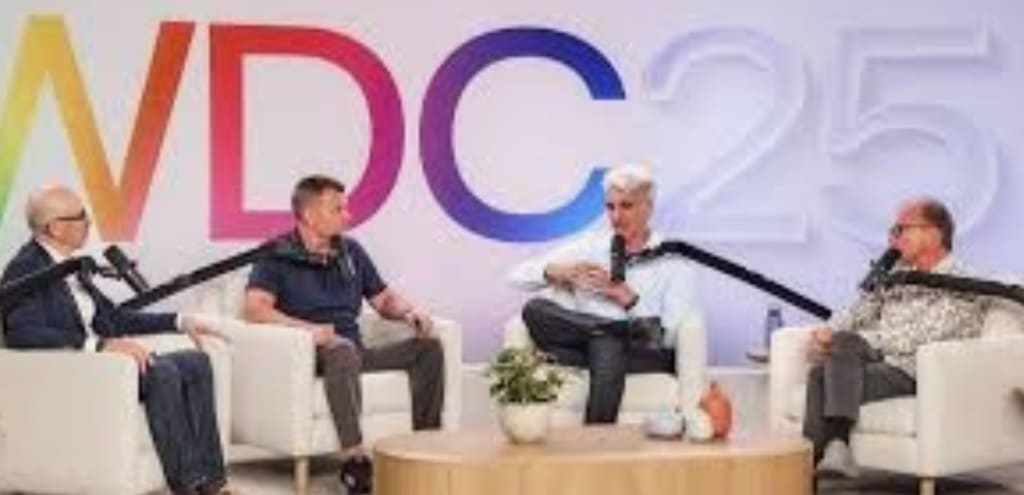
**Apple Delays Next-Gen Siri, Prioritizes Quality Over Speed at WWDC 2025**
Greg "Joz" Joswiak, Senior Vice President of Worldwide Marketing, and Craig Federighi, Senior Vice President of Software Engineering, presented fresh perspectives on the delaying of Apple's next-generation Siri and the broader rollout of "Apple Intelligence," the company's AI platform, at Apple's WWDC 2025 event. Early on, Federighi brought up the big issue: Siri's long-awaited transformation won't happen until 2026. He confirmed that Apple had initially developed and tested a new version of Siri based on the company's first-generation architecture, but that the project was shelved earlier this year because it did not meet Apple's internal standards. Federighi explained, "We had V1 working, but it just wasn't good enough when we looked at the whole picture—reliability, context understanding, app integration." We made the decision to delay it and develop a better version. Apple pivoted to a second-generation architecture that Federighi claims is more capable, reliable, and scalable. The decision meant delaying Siri’s official debut, but it also reflects Apple’s consistent philosophy: never ship until it’s ready.
"We didn't want to release something that didn't live up to the experience people expect from Apple," Joswiak stated, echoing the sentiment. Even if it worked in a demo, it has to work in everyday life.”
Fans and critics alike wondered if the Siri demo from last year was just a dream. Federighi rebutted by claiming that the demonstration was based on actual technology that was powered by Apple's foundation models. The internal version of Siri did function, but in real-world testing it fell short.
Apple's AI momentum has not stalled despite the delay. Instead of putting all focus on Siri, the company has introduced “Apple Intelligence,” a suite of features embedded across iOS, macOS, and iPadOS. Apple is incorporating intelligence into the experiences that users are already familiar with, in contrast to competitors who concentrate on AI chatbots on their own. A smarter notification summary system, on-device writing assistance, Genmoji creation, AI-enhanced image cleanup, and contextual awareness features were among the AI-powered tools that Apple unveiled at WWDC. “Workout Buddy” offers coaching in real time on the Apple Watch, and on the iPhone, users can now screen calls and control apps or find content with natural language. Apple Intelligence also includes a new system-wide capability called "Semantic Indexing," allowing the device to understand personal context better—emails, calendar events, documents, and more. This approach enhances AI's ability to serve users without compromising their privacy, since most processes happen on-device using Apple silicon.
Federighi stated, "We're building intelligence that is private, personal, and useful." “We’re not chasing novelty—we’re enhancing what people already do.”
Developers are also getting in on the action. Third-party developers will be able to incorporate Apple's models into their apps with the release of a Foundation Models API and toolchain by Apple. Under Apple's privacy and performance guidelines, features like structured output, context awareness, and image generation will all be accessible. Joswiak emphasized that Apple’s focus is on trust. People want an assistant who is always reliable rather than one who is 80% right. That’s what we’re building.”
The company made it clear: the delayed Siri is not canceled—it’s just evolving. The new version is now expected to be available in 2026, possibly in time for iOS 20 updates. The goal is to deliver a deeply contextual assistant that understands your screen, your habits, and your language.
Apple’s AI strategy continues to differ from other tech giants. There’s no single “Apple GPT” app. The company, on the other hand, is incorporating AI throughout the system. Core apps, system behaviors, and even developer experiences are all included in this. Siri is included as well. Due to the Siri delay, some analysts deemed this year's WWDC to be subpar, while others praised Apple's dedication to quality and privacy. For Apple, success in AI isn’t about being first—it’s about being trusted.
"We're not just adding features," Federighi summarized. We're rethinking the experience so that Siri will feel like it was worth the wait when it finally arrives.
About the Creator
GLOBAL NEWS
World News Updated
Short News upload
Technology News
Keep reading
More stories from GLOBAL NEWS and writers in Lifehack and other communities.
Elon Musk’s plans to go to Mars next year are toast
**Elon Musk’s Mars Mission Dreams Derailed: 2026 Plans in Jeopardy** One of the most daring space projects in human history, Elon Musk's ambitious plan to send a crewed mission to Mars as early as next year appears to have hit a major roadblock. While SpaceX has long aimed to pioneer interplanetary travel, recent developments suggest that Musk’s goal of reaching the Red Planet by 2026 is no longer within reach.
By GLOBAL NEWS8 months ago in Lifehack
If You’ve Always Done What You’ve Always Done
At the start of 2025, I started to post articles on my website under the category of ’52 Guiding Lights.' The goal was to share insights on sayings and idioms that aid daily life. I got up to number 16. The goal is to publish these as a management aid. However, we plan to release them in smaller batches, such as 12 at a time. That’s a year’s worth.
By Calvin Londona day ago in Lifehack
The Nutrient Gap No One Talks About When It Comes to Focus and Attention
Key Takeaways Taking the proper nutrients helps maintain optimal body function. The vagus nerve is a vital component in the connection between the brain and the gut. The right supplements, such as Neupril Pure Methylfolate, play a key role in helping clear brain fog.
By Tess DiNapoli5 days ago in Lifehack
The Devil's Cut
“Comrade, finally you’re awake.” The voice was smooth, sensual. A flickering incandescent bar was all that lit the white, sterile room. All Vladimir remembered was everything going black. He tried to move his arms and found them strapped to the gurney.
By Matthew J. Fromm5 days ago in Fiction



Comments
There are no comments for this story
Be the first to respond and start the conversation.