
AI in Healthcare
Transforming Patient Care and Medical Research
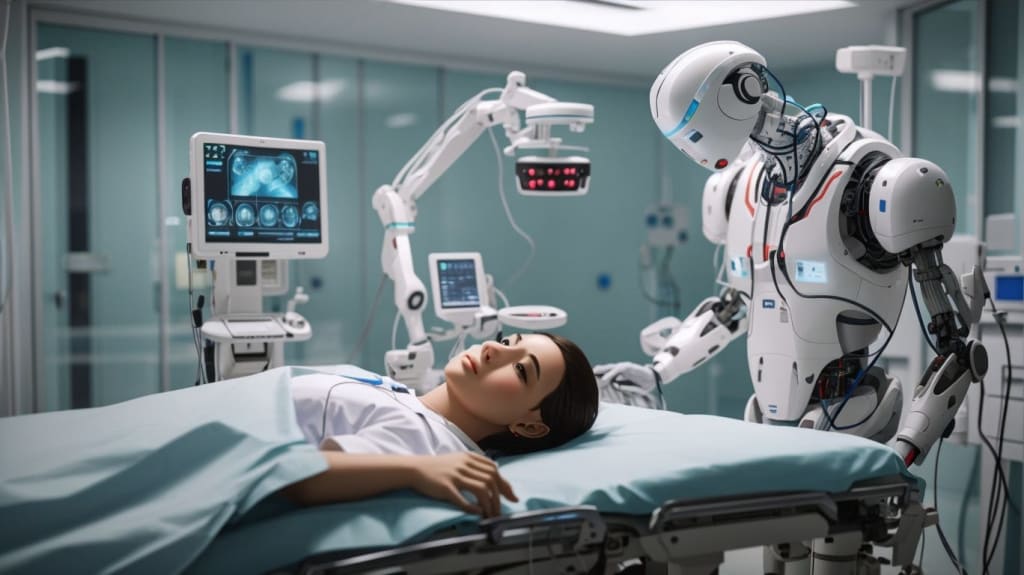
Artificial Intelligence (AI) is revolutionizing the healthcare industry, offering innovative solutions that enhance patient care, improve outcomes, and accelerate medical research. From early disease detection to personalized treatment plans, AI's impact on healthcare is profound and far-reaching. This article explores the transformative power of AI in healthcare, highlighting inspiring real-life examples that showcase its potential to save lives and shape the future of medicine.
Early Disease Detection: Catching Illnesses Before They Escalate
One of the most promising applications of AI in healthcare is its ability to detect diseases at an early stage, when they are most treatable. AI algorithms can analyze medical images, genetic data, and patient records to identify subtle patterns and anomalies that may indicate the presence of disease.
Real-Life Example: Google's AI for Breast Cancer Detection
Google Health has developed an AI model that can detect breast cancer in mammograms with greater accuracy than human radiologists. In a study published in Nature, the AI system reduced false positives by 5.7% and false negatives by 9.4%. This early detection capability is crucial, as it allows for timely intervention and treatment, significantly improving patient outcomes and survival rates.
Personalized Treatment Plans: Tailoring Care to Individual Needs
AI's ability to analyze vast amounts of data enables the creation of personalized treatment plans tailored to the unique needs of each patient. By considering factors such as genetic information, lifestyle, and medical history, AI can recommend the most effective therapies and interventions.
Real-Life Example: IBM Watson for Oncology
IBM Watson for Oncology uses AI to assist oncologists in developing personalized cancer treatment plans. By analyzing medical literature, clinical trial data, and patient records, Watson provides evidence-based recommendations for cancer treatment. For example, in one case, Watson suggested a treatment for a patient with a rare form of leukemia that human doctors had overlooked. This personalized approach ensures that patients receive the most effective therapies, improving their chances of recovery.
Predictive Analytics: Anticipating Health Risks and Outcomes
Predictive analytics powered by AI can forecast health risks and outcomes, enabling proactive measures to prevent diseases and manage chronic conditions. By analyzing patient data and identifying risk factors, AI can predict the likelihood of adverse health events and recommend preventive strategies.
Real-Life Example: Sepsis Prediction at Johns Hopkins Hospital
Johns Hopkins Hospital developed an AI-based predictive analytics tool called the "Sepsis Early Detection Algorithm" (SEDA). Sepsis, a life-threatening condition, requires rapid diagnosis and treatment. SEDA analyzes patient data in real-time, identifying early signs of sepsis and alerting healthcare providers before the condition escalates. This early warning system has significantly reduced sepsis-related mortality rates, showcasing the life-saving potential of AI in predictive analytics.
Drug Discovery and Development: Accelerating Medical Breakthroughs
AI is transforming the drug discovery and development process by identifying potential drug candidates and predicting their effectiveness more quickly and accurately than traditional methods. This acceleration can lead to faster development of new treatments and therapies.
Real-Life Example: BenevolentAI in Drug Discovery
BenevolentAI, a London-based biotechnology company, uses AI to accelerate drug discovery. During the COVID-19 pandemic, BenevolentAI's algorithms identified baricitinib, an existing drug, as a potential treatment for COVID-19. Clinical trials confirmed its efficacy, and the drug received emergency use authorization from regulatory bodies. This rapid identification and repurposing of existing drugs demonstrate how AI can expedite the development of life-saving treatments.
Robotic Surgery: Enhancing Precision and Minimizing Risks
AI-powered robotic surgery systems are enhancing the precision and safety of surgical procedures. These systems assist surgeons in performing complex operations with greater accuracy, reducing the risk of complications and improving patient outcomes.
Real-Life Example: The da Vinci Surgical System
The da Vinci Surgical System, developed by Intuitive Surgical, uses AI and robotics to assist surgeons in performing minimally invasive procedures. The system provides high-definition, 3D visualization and precise control of surgical instruments. For instance, in prostatectomy procedures, the da Vinci system allows for more precise removal of cancerous tissue while preserving surrounding nerves and structures. This results in faster recovery times, fewer complications, and better overall outcomes for patients.
Remote Monitoring and Telemedicine: Expanding Access to Care
AI-driven remote monitoring and telemedicine solutions are expanding access to healthcare, particularly for patients in remote or underserved areas. These technologies enable continuous monitoring of health conditions and facilitate virtual consultations with healthcare providers.
Real-Life Example: AI in Telehealth during the COVID-19 Pandemic
During the COVID-19 pandemic, telehealth platforms like Teladoc and Amwell integrated AI to enhance remote patient care. AI-powered chatbots and virtual assistants helped screen patients for COVID-19 symptoms, schedule appointments, and provide medical advice. These tools reduced the burden on healthcare systems and ensured that patients received timely care, even when in-person visits were not possible.
Conclusion: Embracing the AI-Driven Future of Healthcare
The integration of AI in healthcare is transforming the industry, offering innovative solutions that enhance patient care, improve outcomes, and accelerate medical research. From early disease detection and personalized treatment plans to predictive analytics and robotic surgery, AI is revolutionizing every aspect of healthcare.
As we continue to embrace AI-driven technologies, the potential to save lives and improve health outcomes is immense. By leveraging AI's capabilities, we can create a future where healthcare is more efficient, effective, and accessible for all. The journey towards a healthier world is just beginning, and AI is leading the way, inspiring hope and innovation in the pursuit of better health for everyone.
About the Creator
The 5 Morning Habits That Destroy Your Brain
Two years ago, I sat staring at my computer screen with a blank, heavy mind. My online business was tanking, my website traffic had flatlined, and I could barely string together a coherent sentence for my weekly newsletter. I was exhausted before the day even started.
By John Arthor6 days ago in Lifehack
A System That Isn’t Working Challenge Winners
Systems promise order. They organize behavior, distribute opportunity, and suggest that if everyone follows the rules, things will work. The entries in A System That Isn’t Working look closely at what happens when that promise begins to slip.
By Vocal Curation Team3 days ago in Resources



Comments (1)
Interesting to read.