
The 5 Morning Habits That Destroy Your Brain
(And How I Fixed Them)

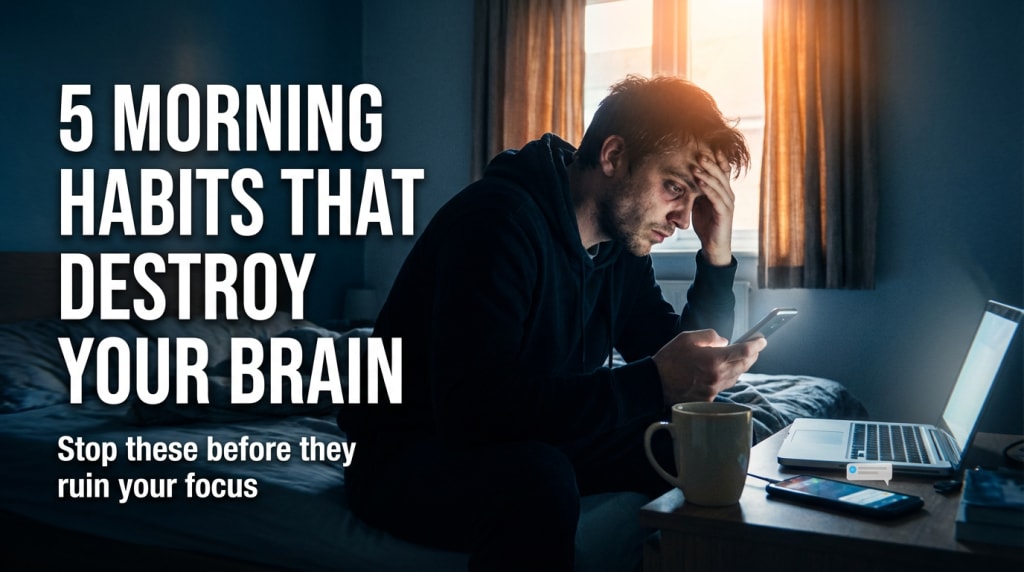
Two years ago, I sat staring at my computer screen with a blank, heavy mind. My online business was tanking, my website traffic had flatlined, and I could barely string together a coherent sentence for my weekly newsletter. I was exhausted before the day even started.
I thought I just needed more sleep or maybe a new productivity app to force me to focus. I tried taking expensive supplements, drinking gallons of green tea, and setting strict deadlines, but nothing changed. The brain fog was so thick I felt like I was trying to run a marathon underwater.
The worst part was the guilt. I saw other creators and entrepreneurs crushing it while I spent three hours trying to write a single blog post. I started believing I just wasn't cut out for this. I thought my brain was broken.
It wasn't until a mentor of mine asked a very simple question that everything shifted: "What exactly do you do in the first sixty minutes after you wake up?"
I told him my routine, thinking it was completely normal. He listened, shook his head, and told me I was actively sabotaging my cognitive function before I even sat down at my desk. It turned out I wasn't burned out from the work. I was participating in 5 morning habits that destroy your brain, and I had absolutely no idea.
Once I identified these toxic behaviors and completely overhauled my mornings, the results were explosive. My mental clarity returned, my writing speed tripled, and my website revenue grew because I finally had the mental energy to execute my ideas. I want to share my journey with you because I know exactly how awful it feels to run on empty.
The Breaking Point
Before we get into the specifics, you need to understand where I was coming from. I was the classic work-from-home entrepreneur who treated sleep as an inconvenience. I believed that rolling out of bed and throwing myself directly into the digital grind was the only way to hustle.
My mornings were a rushed, anxious blur. I thought I was being efficient by multitasking my wake-up process, but I was actually training my brain to be stressed, scattered, and fatigued.
If you constantly feel like you need a nap by 11 AM, or if you struggle to hold your attention on a single task, you might be doing exactly what I did. Let me break down the exact things I was doing wrong.
The Phone Grab
This was my biggest offense. The literal second my eyes opened, my hand was reaching for the phone on my nightstand. Before my feet ever touched the floor, I was checking my website analytics, reading emails, and scrolling through social media.
I thought I was just getting a head start on the day. In reality, I was hijacking my brain's natural waking process. When you look at stressful stimuli right after waking up, you trigger an immediate spike in cortisol.
Instead of letting my brain gently transition from sleep into a state of relaxed alertness, I was throwing it directly into fight-or-flight mode. By the time I actually got out of bed, my mind was already racing with anxiety about a slightly angry customer email or a dip in ad revenue.
The fix was painful at first but incredibly simple. I bought an old-school alarm clock and started charging my phone in the kitchen. Giving my brain just thirty minutes of offline peace every morning changed my entire stress baseline for the day.
The Snooze Trap
I used to think of the snooze button as my best friend. I set my alarm for 6:00 AM, but I would slap that button three or four times, eventually dragging myself up closer to 6:45 AM. I convinced myself those extra nine-minute chunks of sleep were helping me rest.
What I didn't know was that hitting snooze throws your brain into a state called sleep inertia. When you fall back asleep for just a few minutes, your brain tries to start a brand new sleep cycle.
When the alarm jolts you awake again a few minutes later, you are interrupting that cycle right in the middle. This is why you feel groggy, confused, and physically heavy. I was artificially creating brain fog that would last well into the afternoon.
I stopped setting optimistic alarms that I knew I wouldn't obey. I set my alarm for the exact time I actually needed to get up, placed it across the room, and forced myself to stand immediately. The grogginess disappeared almost overnight.
Sugar For Breakfast
My breakfast used to consist of whatever was fast and sweet. Usually, it was a bowl of sugary cereal, a piece of toast with jam, or a heavily sweetened vanilla latte. I craved the immediate energy hit.
Eating a massive dose of simple carbohydrates first thing in the morning causes a rapid spike in blood sugar. Your body releases a flood of insulin to bring that sugar down, which inevitably leads to a massive crash a few hours later.
That 10 AM crash was the exact moment I would stare at my website dashboard feeling completely brain-dead. I was starving my brain of the sustained, steady energy it needed to perform deep work.
I swapped the sugar for high-protein, high-fat alternatives. Now, I eat eggs with avocado or a protein shake. The difference in my mental endurance is staggering, keeping me focused right through lunch.
The Dark Room
Because I worked from home, my commute was a ten-second walk from my bedroom to my office. Both rooms had blackout curtains that I kept drawn until the afternoon. I was living like a vampire, staring only at the artificial glow of my monitors.
Our brains rely on natural light to regulate our circadian rhythm. When sunlight hits your eyes in the morning, it sends a powerful signal to your brain to stop producing melatonin and to increase alertness.
By staying in the dark, I was telling my biology that it was still nighttime. My brain was constantly fighting to stay awake because its internal clock was completely confused.
Now, the very first thing I do when I walk outside is spend ten minutes drinking my water on the balcony. Even on cloudy days, getting natural light into my eyes has become a non-negotiable part of waking my brain up.
Coffee Before Water
For years, I treated water like an optional beverage. I would wake up completely dehydrated from eight hours of sleep and immediately pour a hot cup of black coffee. I thought the caffeine was the only thing keeping me going.
Your brain is composed mostly of water. Even mild dehydration can cause brain tissue to shrink slightly, leading to poor concentration, mood swings, and headaches.
Caffeine is a mild diuretic, meaning my morning coffee was actively making my dehydration worse. I was trying to run an engine without any oil, expecting it to win a race.
I bought a large, 32-ounce water bottle and placed it by my bedroom door. Before I am allowed to touch a single drop of coffee, I have to finish the entire bottle. This simple act hydrates my brain and flushes out the sluggishness before the caffeine even hits my system.
My Turnaround
Breaking these habits wasn't easy. For the first two weeks, I felt a deep withdrawal from my morning dopamine hits and sugar spikes. I wanted nothing more than to grab my phone in bed and hide under the covers.
But as I pushed through, the changes were undeniable. I started sitting down at my desk with a quiet, focused mind. I could write an entire article in a single sitting without getting distracted or feeling the urge to take a nap.
My website traffic eventually tripled because I finally had the mental bandwidth to execute a proper SEO strategy instead of just putting out fires. I stopped feeling like a victim of my own fatigue. I realized that my brain wasn't broken at all; it was just poorly managed.
If you are struggling with low energy, poor focus, or that awful feeling of being overwhelmed by your own goals, I challenge you to look closely at your mornings. You might be fighting an uphill battle against your own biology.
Your Action Plan
You don't need to change everything at once. Pick one area to improve starting tomorrow morning.
- Charge your phone in a completely different room overnight to kill the morning scroll.
- Place your alarm clock out of arm's reach so you have to stand up to turn it off.
- Drink a massive glass of water before you even look at your coffee maker.
- Step outside for five minutes of sunlight immediately after waking up.
- Swap out sweet breakfast foods for eggs, nuts, or a protein-heavy option.
You have the power to protect your mental energy. Your business, your creativity, and your peace of mind are worth the effort it takes to build a better morning. Stop letting bad habits steal your success before your day even begins.
About the Creator
John Arthor
seasoned researcher and AI specialist with a proven track record of success in natural language processing & machine learning. With a deep understanding of cutting-edge AI technologies.
Keep reading
More stories from John Arthor and writers in Lifehack and other communities.
The Truth in My Lab Report: How I Slashed My Triglycerides and Changed My Cholesterol for Good
My Lipid Wake-Up Call: How Untangling Triglycerides vs. Cholesterol Changed My Health (And Probably Saved Me) Let’s be real. For years, the words from my doctor’s office just washed over me. A mumbled monologue about “lipid panels,” “numbers,” and “cardiovascular risk.” I’d nod, see a few flagged results on my printout—usually something about triglycerides and LDL—feel a pinch of worry, and then… life would happen. I’d grab a quick sandwich, skip the gym because I was tired, and tell myself I’d deal with it later. The confusion itself was a comfort zone. If I didn’t truly understand it, I couldn’t be fully responsible for fixing it, right?
By John Arthor2 months ago in Lifehack
5 Best AI Tools for Women
A modern woman's life is full of tasks. We need to balance work, home, family, friends, and personal care. But with only 24 hours in a day, we often struggle to find time for our favorite activities because we need to plan what to cook for dinner or make a shopping list for the week. It can all feel overwhelming, but the load can be made lighter with the help of AI, as many of our daily tasks can be delegated to various AI assistants. What apps can help you spend more time on yourself? Read on to find out.
By Lesya Chumak3 days ago in Lifehack
The BAFTA Awards
By now, in a stunning departure from recent years, most of the world is aware of what happened at the BAFTA film awards. Social Media Headlines will tell you the bare bones: that John Davidson, a Tourette's Syndrome advocate, shouted a racial slur at two Actors of Colour, Michael B Jordan and Delroy Lindo.
By Natasja Rose5 days ago in Psyche




Comments
There are no comments for this story
Be the first to respond and start the conversation.