
Machine Learning vs. Deep Learning
Demystifying the Future of Artificial Intelligence
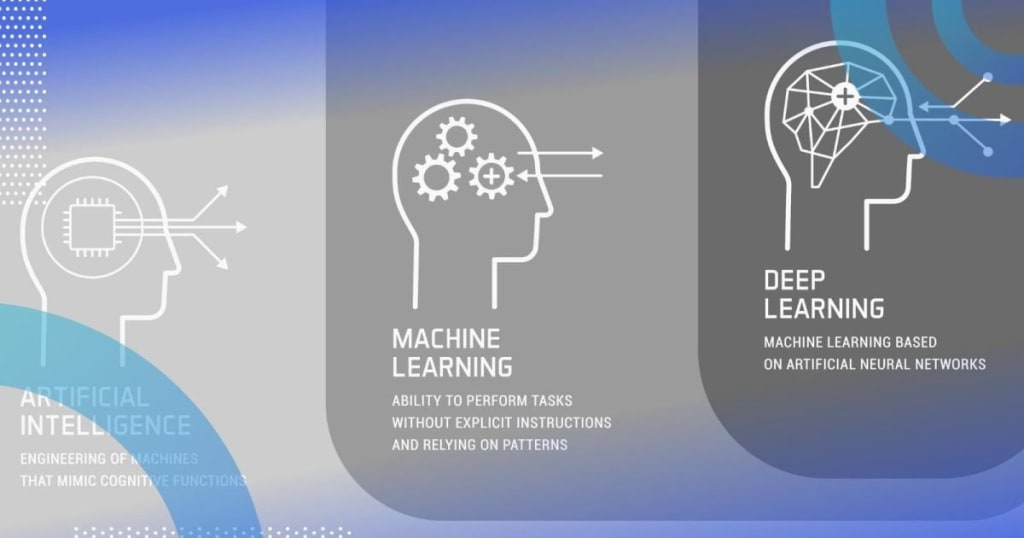
Artificial Intelligence (AI) is reshaping the way we interact with technology and revolutionizing various industries. At the heart of AI are two powerful concepts: Machine Learning (ML) and Deep Learning (DL). While these terms are often used interchangeably, they represent distinct approaches to AI with unique capabilities and applications. In this article, we delve into the world of ML and DL, demystifying their differences and exploring the future they hold.
Understanding Machine Learning
Machine Learning is a subset of AI that focuses on enabling machines to learn from data without being explicitly programmed. Instead of relying on predefined rules, ML algorithms analyze large datasets to identify patterns and make predictions or decisions. This iterative process allows machines to improve their performance over time.
Real-Life Example: Spam Email Detection
A classic example of ML in action is spam email detection. ML algorithms can analyze thousands of emails, learning to distinguish between legitimate messages and spam based on factors like content, sender, and user behavior. As users flag spam emails and the algorithm receives feedback, it refines its criteria for identifying spam, ultimately improving its accuracy.
Exploring Deep Learning
Deep Learning is a subset of ML that uses artificial neural networks to mimic the human brain's structure and function. These neural networks consist of multiple layers of interconnected nodes, or neurons, that process data in a hierarchical manner. Deep Learning excels at tasks like image and speech recognition, natural language processing, and playing strategic games.
Real-Life Example: Image Recognition
Deep Learning powers many image recognition applications, such as facial recognition on social media platforms. These systems analyze millions of images, learning to identify patterns and features that distinguish one face from another. As a result, users can easily tag friends in photos, search for images, and receive personalized recommendations based on their interests.
Key Differences and Applications
While both ML and DL are rooted in the same principles, they differ in terms of complexity, scalability, and the types of problems they can solve.
Machine Learning: ML algorithms are typically simpler and require less computational power than DL models. They excel at tasks like classification, regression, and clustering, making them suitable for a wide range of applications, including spam detection, recommendation systems, and predictive maintenance.
Deep Learning: DL models are more complex and computationally intensive, requiring large amounts of data and computational resources to train. They excel at tasks like image and speech recognition, natural language processing, and autonomous driving. DL has enabled groundbreaking advancements in areas like healthcare, finance, and autonomous vehicles.
The Future of AI: Advancements and Opportunities
As AI continues to evolve, ML and DL will play increasingly vital roles in shaping the future of technology and society. From personalized healthcare and autonomous transportation to intelligent virtual assistants and predictive analytics, the possibilities are endless.
Real-Life Example: Autonomous Vehicles
Autonomous vehicles (AVs) are a prime example of how ML and DL are transforming transportation. AVs use DL algorithms to process sensor data and make real-time decisions, enabling them to navigate complex environments and safely transport passengers. As AV technology advances, we can envision a future where accidents are minimized, traffic congestion is reduced, and mobility is accessible to all.
Empowering Innovation and Collaboration
The key to unlocking the full potential of ML and DL lies in collaboration, innovation, and ethical stewardship. By leveraging diverse perspectives, interdisciplinary collaboration, and responsible AI practices, we can harness the power of AI to address some of society's most pressing challenges.
Real-Life Example: AI for Social Good
Numerous initiatives and organizations are using ML and DL to drive positive social impact, from improving healthcare outcomes and addressing climate change to advancing education and promoting social justice. For instance, AI algorithms are being used to analyze medical images and detect diseases early, reducing mortality rates and improving patient outcomes.
Conclusion: Embracing the Future of AI
Machine Learning and Deep Learning are not just buzzwords; they are transformative technologies that hold the key to unlocking a future of innovation, opportunity, and progress. By understanding their differences and applications, we can harness their power to create a better world for generations to come.
As we embark on this journey into the future of AI, let us embrace curiosity, collaboration, and ethical responsibility. Together, we can shape a future where AI serves humanity, enhances our capabilities, and empowers us to tackle the challenges of tomorrow. The possibilities are limitless, and the future is ours to create.
About the Creator
The Essential Role of a Quantum Expert Witness in High-Tech Litigation
With the increasing speed in quantum technology, quantum computing, cryptography, telecommunications, and advanced materials, cases are increasingly pitting themselves against each other in courts. They are the cases when one has to deal with the concepts that are much higher, which is why the assistance of a professional specialist cannot be avoided. When the stakes involve intellectual property, algorithm performance, or the integrity of quantum systems, attorneys often rely on a quantum expert witness to clarify and validate the complex scientific issues at the heart of the dispute.
By Jane Smithha day ago in Lifehack
how do I choose the right concrete restoration service?
When it comes to maintaining the integrity and aesthetics of your concrete surfaces, the choice of a concrete restoration service is critical. Whether it's a driveway, patio, or commercial space, various factors can contribute to the deterioration of concrete, including weather exposure, heavy foot traffic, and improper installation.
By Neck Akilaabout 22 hours ago in Lifehack


Comments (1)
Great work !