
7 Habits of Highly Effective People: A Step-by-Step Guide to Personal Mastery
Unlock your potential with seven transformative habits that pave the way to a life of purpose, balance, and continuous growth

Self-improvement and personal development are about taking intentional steps to become the best version of yourself. Self-improvement focuses on enhancing specific skills—mental, emotional, or physical—while personal development is the broader journey of aligning your life with your values, goals, and purpose. In today’s fast-moving world, where distractions abound and demands never cease, these practices are essential for thriving. They empower you to take control, build resilience, and create a life that reflects who you aspire to be. Inspired by Stephen Covey’s timeless 7 Habits of Highly Effective People, let’s explore seven habits—woven with themes of goal-setting, time management, emotional intelligence, habit-building, and overcoming procrastination—that can lead you to personal mastery.

1. Be Proactive: Take Ownership of Your Life
Effective people don’t wait for opportunities—they create them. Being proactive means taking responsibility for your choices and actions. Set a clear personal vision by defining your goals. Research shows that writing down specific, measurable goals increases your likelihood of achieving them by 42%. For example, Maria, a graphic designer, felt unfulfilled until she proactively set a goal to launch her own studio. She started by taking one online course, which led to her first client within months. Tip: Write down one goal today and list three small actions to start moving toward it.
2. Begin with the End in Mind: Define Your Vision
Imagine your life covers your life like a project with a clear deadline. Habit two is about envisioning your desired outcome and aligning your actions to it. This ties directly to goal-setting: without a clear vision, your efforts lack direction. Take Alex, who dreamed of becoming a teacher. By visualizing his ideal classroom and breaking his goal into steps (like enrolling in a certification program), he stayed focused. Tip: Create a vision board with images and words that reflect your long-term goals to keep them front and center.
3. Put First Things First: Master Time Management
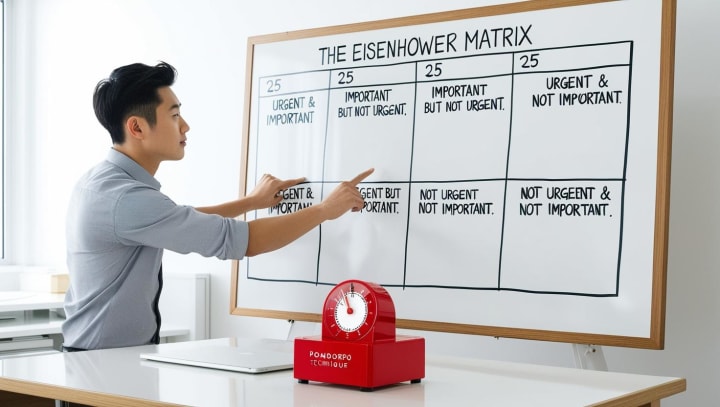
Productivity isn’t about doing more—it’s about doing what matters. This habit emphasizes prioritizing tasks that align with your goals. The Eisenhower Matrix, which sorts tasks by urgency and importance, can help. Sarah, a nurse, struggled with work-life balance until she scheduled her most important tasks—like family time and studying for a promotion—before less critical ones. Tip: Each evening, list your top three priorities for the next day and tackle them first.
4. Think Win-Win: Cultivate Emotional Intelligence
Effective people seek mutually beneficial solutions, which requires emotional intelligence (EQ). EQ involves understanding your emotions and empathizing with others. Studies suggest high EQ boosts career success by up to 80%. When Tom, a team leader, noticed tension in his group, he practiced active listening to understand his colleagues’ perspectives, fostering collaboration. Tip: Practice reflective listening—paraphrase what someone says to ensure understanding and build trust.
5. Seek First to Understand, Then to Be Understood
This habit deepens emotional intelligence by prioritizing empathy before self-expression. It’s about truly hearing others without rushing to respond. When Lisa, a project manager, started asking open-ended questions during team meetings, she uncovered hidden concerns, improving morale. Tip: Next time you’re in a conversation, pause before replying and ask, “Can you tell me more?” to deepen connection.
6. Synergize: Build Positive Habits Through Collaboration
Synergy happens when collaboration creates results greater than the sum of individual efforts. This habit ties to building positive habits by surrounding yourself with supportive people. James Clear’s Atomic Habits emphasizes making habits easy and rewarding. When Emma wanted to run daily, she joined a running group, making the habit fun and accountable. Tip: Find an accountability partner or group to reinforce your new habits, like a weekly check-in with a friend.
7. Sharpen the Saw: Overcome Procrastination Through Renewal
Continuous growth requires regular renewal—physical, mental, emotional, and spiritual. Procrastination often stems from fear or burnout, but renewing yourself builds resilience. John, an aspiring author, delayed writing due to fear of criticism. By scheduling short writing sessions after morning walks (renewing physically and mentally), he finished his first draft. Tip: Use the “2-Minute Rule”—start tasks with just two minutes of action to overcome inertia.

Practical Tips for Personal Mastery
Goal-Setting: Use the SMART framework (Specific, Measurable, Achievable, Relevant, Time-bound) to craft clear goals.
Time Management: Try the Pomodoro Technique (25 minutes of focused work, 5-minute breaks) to boost productivity.
Emotional Intelligence: Journal daily about your emotions to increase self-awareness.
Habit-Building: Stack new habits onto existing ones (e.g., meditate after brushing your teeth) for consistency.
Overcoming Procrastination: Break tasks into tiny steps and reward yourself for starting.
Synergy: Join a community (online or in-person) aligned with your goals for support.
Renewal: Schedule 10 minutes daily for self-care, like reading, stretching, or reflecting.

The Power of Lifelong Growth
Mastering these seven habits isn’t about perfection—it’s about progress. Each habit builds on the others, creating a cycle of growth that transforms your life. As Covey wrote, “The key is not to prioritize what’s on your schedule, but to schedule your priorities.” By being proactive, envisioning your goals, managing time, nurturing EQ, collaborating, and renewing yourself, you overcome fear and procrastination to live with purpose.
Personal development is a lifelong journey. Every small step—whether it’s writing one sentence, listening deeply, or taking a moment to breathe—shapes who you become. Embrace the process, celebrate your wins, and keep learning. Your future self is waiting. What’s the first habit you’ll start building today?
About the Creator
Keep reading
More stories from Commondo Khan and writers in Lifehack and other communities.
How to Build Atomic Habits: 5 Science-Backed Strategies for Lasting Change
In today’s fast-paced world, the pursuit of self-improvement and personal development has become a cornerstone of living a fulfilling life. Self-improvement is about consciously enhancing your skillsmental and emotional skills to become the best version of yourself. Personal development, on the other hand, is the ongoing process of understanding and refining your values, goals, and habits to align with your vision for life. Together, these practices empower you to take charge of your growth, navigate challenges, and create a life of purpose. In an era of constant distractions and endless demands, investing in yourself is not just a luxury—it’s a necessity.
By Commondo Khan8 months ago in Motivation
My New Book is Finally Here
My poetry collection Beautiful and Brutal Things is done. It's actually done and finally published over 270 pages. Over a year of my life went into this book. More than a year, really. Long days at my computer, sometimes seven days a week because I couldn't stop even when I probably should have. Then two months of editing that felt harder than the writing itself. But it's finished, and I'm still standing, and the book is real.
By Tim Carmichaela day ago in BookClub




Comments
There are no comments for this story
Be the first to respond and start the conversation.