
7 Everyday Psychology Tricks That Quietly Control Your Choices
These hidden mental shortcuts shape your spending, emotions, and habits more than logic ever will.
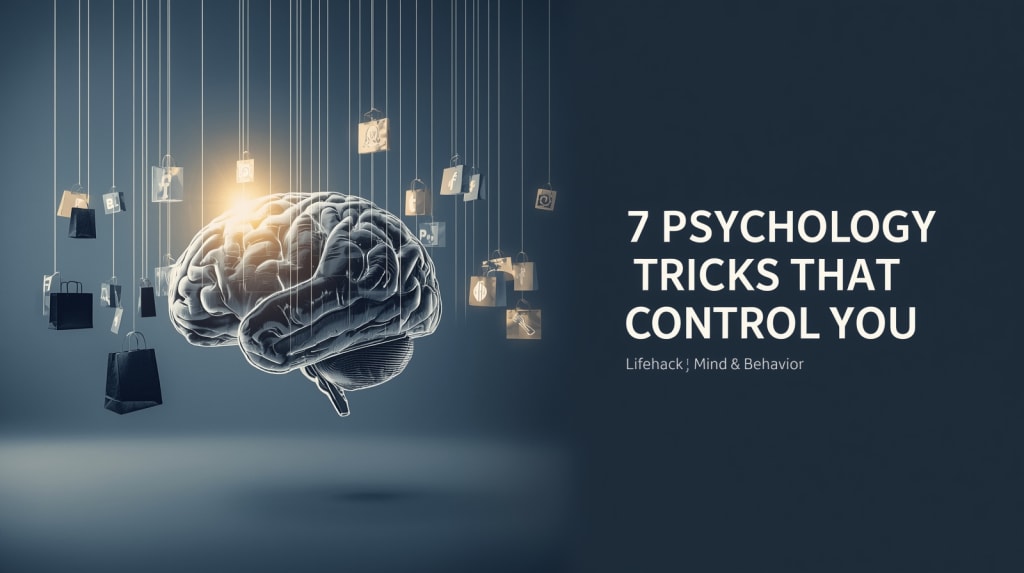
Ever wonder why you pick one snack over another, scroll a few more minutes on social media, or buy things you didn’t plan for?
That’s not randomness, it’s psychology at work.
Every day, dozens of invisible mental shortcuts drive your choices, from what you eat to how you react to people.
Most of them happen before you’re even aware.
Let’s uncover seven powerful psychological tricks that quietly steer your behavior, and how to stop being controlled by them.
🧠 1. The Anchoring Effect — Your Brain’s Lazy Shortcut
When you see a “50% OFF” sign, you instantly feel you’re saving money, even if you don’t need the product.
That’s the anchoring effect, your brain clings to the first number or idea it sees and uses it to judge everything else.
Marketers know this well.
That’s why they show the most expensive option first, so everything else looks like a bargain.
How to hack it:
Before buying anything, ask, “Would I want this if I didn’t see that discount?”
Pause five seconds before accepting the first number, price, or impression you see.
🪞 2. The Halo Effect — Why Looks Fool You
You tend to believe attractive or confident people are smarter, kinder, or more capable.
That’s the halo effect, one good trait creates a “glow” that covers everything else.
It’s why you might trust influencers who look polished or why certain brands seem “better” because their packaging looks premium.
How to hack it:
When judging something, a product, a person, or a social post, separate appearance from evidence.
Ask, “What facts support my impression?”
🎯 3. The Commitment Bias — Why You Stick With Bad Choices
Ever continued watching a boring show because you already started it?
That’s commitment bias. Once you commit to something, your brain hates admitting you were wrong.
People stay in bad relationships, jobs, or investments longer than they should because “I’ve already come this far.”
How to hack it:
Reframe your thinking: “If I wasn’t already involved, would I start this today?”
If the answer is no, it’s time to pivot.
---
🛒 4. The Scarcity Effect — Limited Stock, Unlimited Influence
“Only 3 items left!” “Flash sale ends tonight!”
These trigger your brain’s fear of missing out. The scarcity effect makes things seem more valuable just because they’re rare or temporary.
In reality, scarcity doesn’t always mean quality.
It means your brain links “rare” with “desirable”, a leftover survival instinct from when limited resources meant survival.
How to hack it:
If something claims to be limited, stop for 60 seconds.
Ask, “Would I still want this if it were always available?”
📱 5. Social Proof — Why You Follow the Crowd
When you see a product with thousands of reviews or a post with millions of likes, you assume it’s trustworthy.
That’s social proof. Your brain uses others’ actions as shortcuts for decision-making.
It saves effort but also makes you copy bad decisions when the majority is wrong.
Think about viral misinformation or fad diets, popularity doesn’t equal truth.
How to hack it:
Use the crowd as information, not validation.
If everyone’s doing it, look for one credible source to confirm if it’s actually good.
⌚ 6. The Default Effect — Why You Avoid Choices
Most people stick with default settings, in apps, bank accounts, or even life plans, because deciding feels exhausting.
That’s the default effect. You subconsciously assume the default is the safest option.
Companies use this in everything from newsletter sign-ups to insurance plans.
By leaving boxes pre-checked, they count on your mental laziness.
How to hack it:
Before accepting any “default,” pause and ask, “Who benefits if I don’t change this?”
You’ll realize the default isn’t always best for you — it’s best for whoever set it.
💡 7. The Framing Effect — How Wording Tricks You
“90% fat-free” sounds better than “10% fat,” even though they mean the same thing.
That’s framing — how information is presented changes how you feel about it.
Politicians, marketers, and media outlets use framing constantly to sway opinions without lying.
How to hack it:
When you read or hear a statement, flip it.
If a product says “95% success rate,” ask, “So, 5% failure?”
Reframing helps you see the full picture, not the pretty version.
🧾 Final Thought: Awareness = Power
Your mind is wired to save effort, it takes shortcuts to make life easier.
But in doing so, it hands control to external influences — ads, headlines, peer pressure, even mood lighting.
The good news? Awareness alone weakens their power.
Once you learn to spot these tricks, you pause before reacting.
You question before spending.
You decide instead of being nudged.
Every decision becomes less automatic, more intentional.
And that small shift, from reaction to awareness — is how you start truly owning your mind.
About the Creator
How Millennials and Gen Z Are Buying Gold Without Ever Touching It
The first time Sarah tried to buy gold, she hit a wall. Not a metaphorical one, but a real barrier. The minimum purchase at her local dealer was far more than she wanted to spend, and even if she could afford it, where would she store it? What about insurance? What about a safe deposit box?
By Marcus Briggsabout 18 hours ago in Lifehack


Comments
There are no comments for this story
Be the first to respond and start the conversation.