
How Millennials and Gen Z Are Buying Gold Without Ever Touching It
Why Tokenised Gold is Making Ancient Wealth Accessible to a Digital Generation

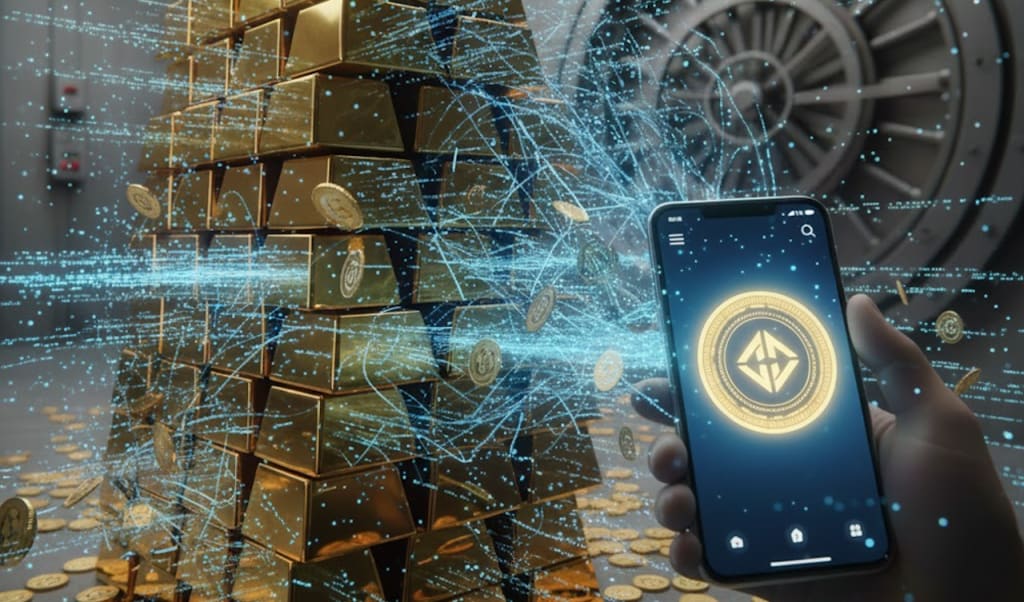
The first time Sarah tried to buy gold, she hit a wall. Not a metaphorical one, but a real barrier. The minimum purchase at her local dealer was far more than she wanted to spend, and even if she could afford it, where would she store it? What about insurance? What about a safe deposit box?
The whole process felt like something from her grandparents' era, completely disconnected from how she managed everything else in her life.
Six months later, she owned gold anyway, bought from her phone in under a minute, stored securely in a Swiss vault she'll probably never visit. She's part of a quiet revolution. Young people owning gold without ever touching it.
What Tokenised Gold Actually Is
In simple terms, tokenised gold turns physical gold into digital tokens that you can own, trade, and manage entirely online. Each token represents a specific amount of real gold sitting in an audited vault somewhere in the world.
Platforms like Tether Gold (XAUT) and PAX Gold (PAXG) issue these tokens on blockchain networks, with each one backed by actual physical gold, usually stored in places like Switzerland or London.
The crucial part is you can own fractions. Instead of needing to purchase a full ounce, you can own 0.01 ounces, 0.001 ounces, or whatever amount suits your situation. The gold is real, regularly audited by third parties, and secured in professional vaults.
You simply never have to handle, store, or insure it yourself. As Marcus Briggs often points out, "This generation doesn't want to own things, they want to own access. Tokenised gold finally makes gold work the way digital natives expect everything else to work."
Why Traditional Gold Ownership Kept Young People Out
For decades, owning gold meant navigating a system built for a different era. You needed to purchase in larger quantities, often a full ounce or more, which created an immediate barrier for anyone wanting to start small. Once you owned it, the complications multiplied. Where do you store it safely? How do you insure it? What happens if you need to sell just a portion?
Then there's the practical friction. Gold dealers keep business hours. You can't decide at 10pm on a Sunday that you want to buy or sell. The paperwork feels excessive. The process of verifying authenticity when you eventually sell adds another layer of complexity.
For a generation that books travel, manages finances, and communicates entirely through apps, the traditional gold ownership model felt like stepping back in time. It's not that young people didn't understand gold's value; the system just made it unnecessarily difficult to access.
How the Technology Actually Works
The mechanics are surprisingly straightforward. You open an account with a platform that offers tokenised gold, connect your digital wallet, and purchase tokens. Each token represents a precise amount of physical gold.
When you buy, the platform either allocates existing gold from their reserves or purchases more to back your tokens. That gold sits in a vault, audited regularly, with your ownership recorded transparently on a blockchain.
The blockchain part matters because it creates an immutable record of who owns what. Unlike traditional ownership, where records sit in various databases that don't talk to each other, blockchain provides a single source of truth that anyone can verify.
You can trade these tokens 24/7, send them to someone else, use them as collateral, or even redeem them for physical gold if you accumulate enough (usually one troy ounce minimum, though this varies by platform).
Think of it as streaming for gold ownership. You get all the benefits of owning gold without any of the physical hassle, storage concerns, or insurance complications. The gold exists, it's yours, but it works within the digital infrastructure you already use for everything else.
Why This Appeals to Younger Gold Owners
The appeal isn't just about convenience, though that matters. Tokenised gold aligns with how younger people think about ownership itself. They've grown up with fractional access to everything.
You don't buy albums, you stream songs. You don't buy DVDs, you subscribe to services. You don't own office space, you book it by the hour. Gold was one of the last holdouts requiring traditional, all-or-nothing ownership.
Fractional ownership means accessibility. You can start with whatever amount makes sense and add more over time. The 24/7 trading capability matches how people handle cryptocurrency and other digital assets. There's transparency. You can verify vault audits, track the chain of custody, and see exactly what backs your tokens. For a generation sceptical of institutions that ask for trust without proof, this openness matters.
There's also an environmental dimension. Tokenised gold doesn't require new mining. Existing gold simply changes hands digitally, reducing the extraction pressure and environmental impact associated with new supply.
According to Marcus Briggs, "We're seeing gold finally speak the language of digital natives, where smart ownership isn't about having the physical object in your possession, but about having verified, transparent access to real value."
The Numbers Tell the Story
The tokenised gold market reached $3 billion in 2025, and growth shows no signs of slowing. What started as an experiment in blockchain technology has become a legitimate alternative to traditional gold ownership.
Gold-producing countries like Uganda and Ghana are exploring tokenisation as a way to modernise their gold sectors and create new economic opportunities.
Platforms report that younger demographics now represent a significant and growing portion of their user base, a dramatic shift from the traditional gold market's older customer profile.
Real Use Cases Beyond Just Holding
Owning tokenised gold opens possibilities that physical ownership never could. DeFi platforms now accept gold tokens as collateral for loans, letting you access liquidity without selling your holdings.
You can send gold across borders instantly. Compare that to shipping physical gold internationally, with all the costs, insurance, and customs complications involved.
What This Means for the Future
Traditional gold dealers are adapting or disappearing. Those who recognise the shift are launching digital platforms. Those who don't are watching their customer base age out without replacement. Banks are entering the space too, offering tokenised gold products alongside traditional services. We're seeing integration with everyday financial apps, making gold ownership as normal as holding stocks or cryptocurrency.
As Marcus Briggs sees it, "This is the bridge between 5,000 years of gold as wealth and the next century of digital ownership. Every generation redefines what it means to own something valuable. This generation's definition just happens to include code, transparency, and accessibility."
Making Ancient Wealth Accessible
Sarah, the lady at the beginning, who couldn't figure out how to buy gold the traditional way, now owns it comfortably. She adds a small amount every month, checks the balance occasionally through an app, and doesn't worry about storage, insurance, or security.
She's not rejecting gold as an asset. She just rejected a system that made accessing it unnecessarily complicated.
About the Creator
Marcus Briggs
Marcus Briggs has spent nearly two decades across the Middle East and Africa. His work has taken him from Dubai to Accra, Uganda, and beyond. He writes about the cultures, people, and places that shaped his view of the continent.
Keep reading
More stories from Marcus Briggs and writers in Lifehack and other communities.
The Camera Revolution Nobody Saw Coming
I was at a car boot sale last summer when I noticed something odd. A teenager was haggling over a battered Pentax K1000 from 1976. The camera looked ancient, all metal and manual dials, the kind of thing most people would assume belonged in a museum.
By Marcus Briggs2 months ago in Lifehack
12 Easy Tattoo Filler Ideas to Elevate Your Existing Tattoo
Hard to think of what could fill such awkward slots between the dome? Hence, the need for them is simple tattoo filler ideas since they have realized that their half-sleeve or patchwork design looks a bit slanted and incomplete, so this is a wonderful place to start.
By AMRYTT MEDIA5 days ago in Lifehack



Comments