
Berlin Blackout: Protest Over AI and Climate Crisis Leaves Tens of Thousands Without Power
How a mass demonstration exposed the fragile intersection of technology, climate anxiety, and urban infrastructure

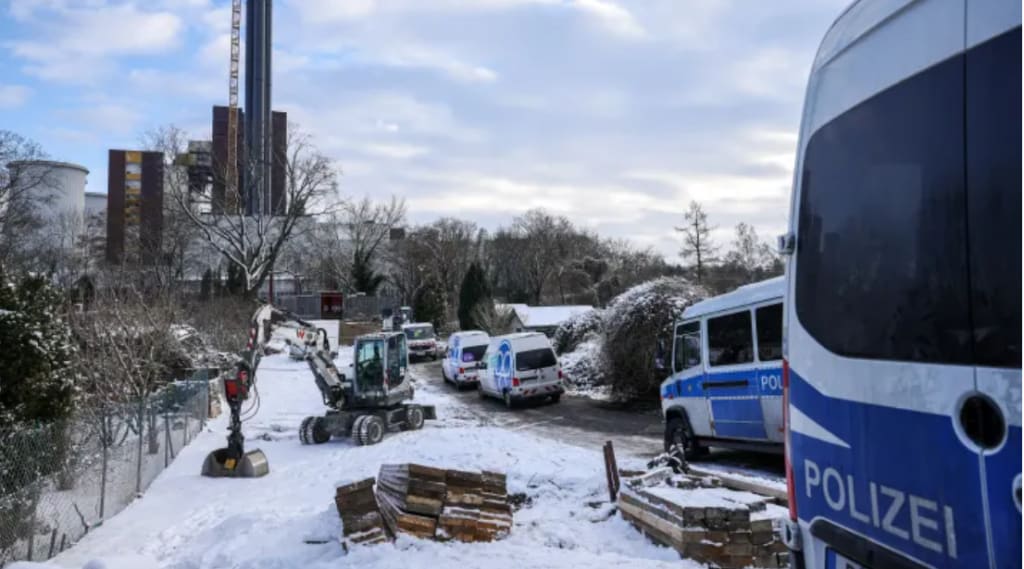
Berlin has long been a city defined by protest. From Cold War demonstrations to modern climate marches, the German capital has served as a stage for dissent, debate, and political pressure. But a recent protest over artificial intelligence and the climate crisis pushed that tradition into unprecedented territory, leaving tens of thousands of residents without electricity and forcing Germany to confront uncomfortable questions about activism, infrastructure resilience, and the future of technological governance.
What began as a coordinated demonstration aimed at drawing attention to AI regulation and climate inaction quickly escalated into a disruptive event with real-world consequences. By the end of the day, large parts of Berlin were in darkness, public transport was disrupted, and emergency services were stretched. The blackout has since ignited a nationwide debate: where should the line be drawn between legitimate protest and actions that endanger public safety?
The Protest That Shut the Lights Off
According to authorities, the blackout occurred after protesters targeted key infrastructure points during demonstrations across the city. Activist groups had announced days in advance that they planned “non-violent but disruptive” actions to force policymakers to act on what they describe as twin existential threats: unchecked artificial intelligence and accelerating climate collapse.
Protesters argue that AI systems are rapidly being deployed without democratic oversight, while fossil fuel dependence continues to drive climate disasters. Their goal, they say, was to interrupt “business as usual” and make the cost of inaction visible.
What few expected was the scale of disruption. Power outages affected residential neighborhoods, businesses, and parts of Berlin’s transport network. Hospitals and critical facilities were able to rely on backup generators, but many residents were left without heating, internet access, or working traffic signals for hours.
A City Exposed
Berlin’s power outage did not last long by international standards, but it was enough to expose vulnerabilities in one of Europe’s most advanced cities. Tens of thousands of households experienced sudden darkness, reminding residents how dependent daily life has become on uninterrupted electricity.
City officials were quick to stress that no critical systems failed and that emergency protocols functioned as intended. Still, the incident raised alarms about how easily coordinated actions can disrupt essential services in major urban centers.
Security experts warn that as infrastructure becomes more interconnected and digitized, it also becomes more sensitive to disruption. Whether motivated by protest, cybercrime, or geopolitical conflict, interference with energy systems poses growing risks.
The Protesters’ Argument
Organizers of the protest defended their actions, arguing that dramatic disruption is justified given the scale of the crises they are trying to highlight. In their view, temporary inconvenience pales in comparison to the long-term consequences of climate breakdown and unregulated AI development.
They point to rising global temperatures, extreme weather events, and fears that artificial intelligence could deepen inequality, displace workers, and concentrate power in the hands of a few corporations. According to protest leaders, conventional demonstrations have failed to produce meaningful change, leaving civil disobedience as the only remaining option.
“We are already living with blackouts,” one activist statement claimed, “just slower ones — collapsing ecosystems, lost jobs, and democratic systems overwhelmed by algorithms.”
Public Backlash and Divided Opinion
Despite these arguments, public reaction in Berlin has been deeply divided. While some residents expressed sympathy for the protest’s goals, many were angered by the disruption. Small business owners reported lost income, commuters faced long delays, and vulnerable residents were left anxious during the outage.
Critics argue that actions which disrupt essential services risk alienating the very public support movements need to succeed. They also warn that targeting infrastructure crosses a dangerous line, potentially putting lives at risk.
Political leaders echoed these concerns. Several German officials condemned the blackout, emphasizing that while protest is a protected democratic right, actions that interfere with critical infrastructure are unacceptable. Calls have grown for tougher penalties against demonstrators who cause large-scale disruptions.
AI, Climate, and Political Paralysis
The Berlin protest reflects deeper frustrations within German and European politics. On climate policy, governments face pressure to accelerate energy transitions while managing economic costs and public resistance. On artificial intelligence, lawmakers are racing to regulate technologies that are evolving faster than legislation can keep up.
The European Union has taken steps with proposed AI regulations and climate targets, but activists argue these measures are too slow and too cautious. The sense of urgency driving protests is fueled by a belief that institutional politics cannot keep pace with technological and environmental change.
This disconnect between activist urgency and political process lies at the heart of the Berlin blackout. Protesters wanted to force immediate attention; authorities wanted to preserve order and safety.
Infrastructure as a New Battleground
The blackout also highlights how infrastructure has become a focal point in modern protest movements. Roads, airports, energy systems, and data centers are increasingly seen as leverage points to gain attention in an overcrowded media landscape.
Experts warn that this trend presents serious challenges for democratic societies. While infrastructure disruption can be powerful, it also risks normalizing tactics that could be exploited by more malicious actors.
Germany now faces the challenge of strengthening infrastructure protection without undermining civil liberties — a delicate balance in a country with a strong protest culture and a deep historical sensitivity to state overreach.
Lessons for the Future
The Berlin power outage may serve as a turning point in how protests are policed and how infrastructure is protected. Authorities are expected to review security protocols and legal frameworks to prevent similar incidents.
At the same time, the protest has succeeded in one crucial way: it forced conversations about AI governance and climate urgency into the national spotlight. Whether that attention translates into meaningful policy change remains uncertain.
What is clear is that public patience for disruption has limits. Movements that rely on escalating tactics risk losing legitimacy if their actions are perceived as reckless or harmful.
Conclusion: A City, a Warning, and a Choice
The Berlin blackout was more than a temporary loss of power. It was a warning about the fragile balance between protest, technology, and modern urban life. As societies grapple with rapid AI development and an accelerating climate crisis, tensions between urgency and stability are likely to grow.
Berlin’s experience raises a difficult question for democracies everywhere: how do we address existential threats without tearing at the systems that keep societies functioning?
The answer will shape not only future protests, but the resilience of cities in an increasingly uncertain world.
About the Creator
Muhammad Hassan
Muhammad Hassan | Content writer with 2 years of experience crafting engaging articles on world news, current affairs, and trending topics. I simplify complex stories to keep readers informed and connected.
Keep reading
More stories from Muhammad Hassan and writers in Earth and other communities.
Trump’s Venezuela Gambit Tests Investor Appetite for Geopolitical Risk
Former U.S. President Donald Trump’s renewed hardline posture toward Venezuela has reopened a familiar—but newly volatile—front in global geopolitics. By signaling tougher enforcement of sanctions and hinting at a recalibration of U.S. policy toward Caracas, Trump has injected uncertainty into energy markets and emerging-market assets, forcing investors to reassess how much geopolitical risk they are willing to absorb. For Wall Street and global funds alike, Venezuela has long been a paradox: a country with some of the world’s largest proven oil reserves, yet burdened by sanctions, political instability, and institutional collapse. Trump’s gambit is testing whether investors believe opportunity can outweigh risk—or whether capital will once again retreat at the first sign of escalation. Why Venezuela Is Back on the Radar Venezuela’s reemergence in U.S. political discourse is not accidental. Energy security has climbed back to the top of global priorities, driven by conflicts, sanctions, and supply chain disruptions. With oil prices sensitive to geopolitical shocks, even marginal producers can influence sentiment. During Trump’s previous term, the United States imposed sweeping sanctions aimed at pressuring President Nicolás Maduro to step down. Those measures sharply curtailed Venezuela’s oil exports and isolated its financial system. While later policy adjustments under subsequent administrations allowed limited easing—particularly to stabilize energy markets—Trump’s rhetoric suggests a return to maximum pressure. For investors, this raises a critical question: are sanctions about to tighten again, and if so, what does that mean for oil flows, regional stability, and risk premiums? Markets React to Policy Signals, Not Just Policy Financial markets are forward-looking. They react not only to decisions but to signals—and Trump’s statements are powerful signals. Even without immediate policy changes, the prospect of tougher sanctions or diplomatic confrontation can shift investor behavior. Oil traders are watching closely. Venezuela’s production remains far below its historical peak, but incremental barrels matter in a tight market. Any hint that U.S. policy could disrupt exports—even indirectly—tends to push volatility higher. Beyond oil, Venezuela-linked assets are thinly traded but symbolically important. Bonds, energy service contracts, and regional equities can swing sharply on geopolitical headlines, reinforcing the perception that politics, not fundamentals, drives outcomes. Investor Appetite Meets Political Reality The core test posed by Trump’s Venezuela gambit is whether investors are prepared to price in elevated geopolitical risk for potential upside. Some funds specialize in distressed assets, betting on political shifts or partial normalization. Others prefer stability and predictability, steering clear of jurisdictions where policy can change overnight. In recent months, there has been cautious interest in Venezuela-related opportunities, fueled by limited sanctions relief and the prospect—however remote—of political dialogue. Trump’s stance complicates that calculus. A harder U.S. line could reverse fragile gains, leaving investors exposed to sudden losses. For institutional investors with strict compliance requirements, even the perception of heightened sanctions risk can be enough to stay away. The Energy Dimension: Oil as Leverage Energy sits at the center of this drama. Venezuela’s oil sector has deteriorated after years of underinvestment and mismanagement, but it still represents strategic leverage. For Washington, sanctions are a tool to influence behavior; for Caracas, oil is both lifeline and bargaining chip. Trump’s approach historically framed sanctions as pressure mechanisms rather than negotiating tools. If that philosophy returns, markets may expect less flexibility and more confrontation. That expectation alone can deter capital, slow production recovery, and amplify price swings. Ironically, tighter sanctions could also strengthen Venezuela’s reliance on non-Western partners, reshaping trade routes and complicating enforcement—another layer of uncertainty investors must weigh. Regional Spillovers and Emerging Market Risk Venezuela does not exist in isolation. Its instability has ripple effects across Latin America, from migration pressures to regional energy dynamics. For investors, this means contagion risk. A sharper U.S.–Venezuela standoff could elevate risk premiums for neighboring markets, particularly those with political fragility or economic ties to Caracas. Currency volatility, capital outflows, and equity selloffs often follow periods of heightened regional tension. In this sense, Trump’s gambit tests not just appetite for Venezuela-specific risk, but for emerging markets broadly—especially at a time when global interest rates and macro uncertainty already weigh on sentiment. Election-Year Calculations and Uncertainty Trump’s Venezuela rhetoric also carries a domestic political dimension. Hardline foreign policy positions can resonate with certain voter blocs, particularly in an election context. For investors, election-year geopolitics are notoriously difficult to model. Policy announcements may serve political messaging rather than economic strategy, increasing the likelihood of abrupt shifts. Markets dislike surprises, and Trump’s unpredictability—whether admired or criticized—adds a premium to uncertainty. As a result, investors may demand higher returns to compensate for risk, or simply choose to allocate capital elsewhere. What Investors Are Watching Next Several indicators will shape market reaction in the months ahead: Sanctions enforcement: Any concrete moves to tighten or expand restrictions would have immediate market impact. Oil export data: Changes in Venezuelan output or shipment patterns will signal whether rhetoric is translating into reality. Diplomatic posture: Engagement—or lack thereof—with allies and regional partners will influence how isolated or escalatory U.S. policy becomes. Corporate exposure: Energy companies and service providers will reassess involvement, offering clues about private-sector confidence. Together, these signals will determine whether Trump’s gambit remains a headline risk or becomes a material market driver. A Calculated Risk—or a Warning Shot? It remains unclear whether Trump’s stance is a negotiating tactic, a campaign message, or a preview of future policy. For investors, the distinction matters less than the risk it introduces. Venezuela’s story has taught markets a hard lesson: political risk can overwhelm fundamentals. Even the promise of vast resources cannot compensate for uncertainty when rules change without warning. Conclusion Trump’s Venezuela gambit is testing investor appetite for geopolitical risk at a time when markets are already navigating inflation, interest rate shifts, and global instability. By reopening the question of sanctions and U.S. policy toward Caracas, Trump has reminded investors that politics remains a powerful market force. Whether capital retreats or selectively engages will depend on how rhetoric translates into action. But one thing is clear: in today’s interconnected world, geopolitical gambits do not stay confined to diplomacy—they ripple through markets, portfolios, and risk calculations worldwide.
By Muhammad Hassan2 months ago in Earth
Face to Face with Creatures of the Deep
Asia The Maldives At the Maldives you can enjoy the wonder of whale sharks, the largest fish in the ocean. These gentle giants swim among coral reefs of the Maldives archipelago, which has the world’s largest population of whale sharks. You can swim alongside these creatures from May to December, during the southwest monsoon season when plankton blooms and attracts the whale sharks.
By Rasma Raisters3 days ago in Earth


Comments
There are no comments for this story
Be the first to respond and start the conversation.