Latest Stories
Most recently published stories on Vocal.
ivp stock: The Quiet Investment Set to Gain Momentum
ivp stock has stayed under the radar, but it shows signs of growing interest. Many investors focus on fast-moving shares and miss quiet opportunities. In this article, we explore why ivp stock could gain momentum soon, its key strengths, and why patient investors should pay attention.
By John.doe79815 days ago in Trader
Saudi Arabia Edible Oil Market: Changing Food Habits, Premium Oils & Growth Outlook. AI-Generated.
Saudi Arabia's edible oil market thrives on soaring demand from a growing population and urbanization, with palm oil dominating imports alongside sunflower varieties. According to IMARC Group's latest research publication, Saudi Arabia edible oil market size reached USD 2.4 Billion in 2025. The market is projected to reach USD 3.5 Billion by 2034, exhibiting a growth rate (CAGR) of 3.99% during 2026-2034.
By Jeffrey Wilson15 days ago in Futurism
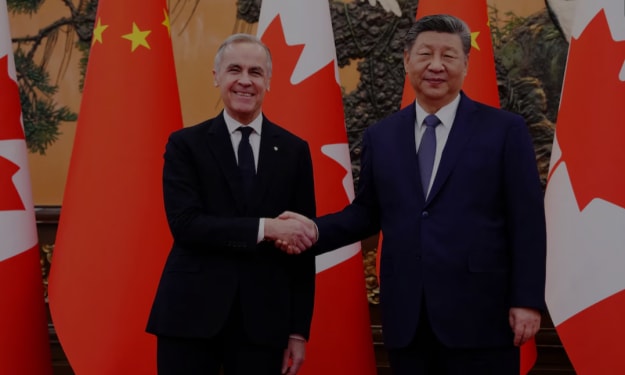
Canada and China Reach Initial Trade Deal on Electric Vehicles and Canola. AI-Generated.
After years of strained relations and trade uncertainty, Canada and China have reached an initial trade agreement focused on two strategically important sectors: electric vehicles (EVs) and canola. While limited in scope, the deal marks a notable step toward stabilizing economic ties between the two countries at a time when global trade is increasingly shaped by geopolitics, supply-chain risks, and climate goals. Officials on both sides have described the agreement as preliminary rather than comprehensive, but its symbolism carries weight. For Canada’s farmers and clean-technology sector — and for China’s rapidly expanding EV market — the deal offers cautious optimism. Why This Deal Matters Now Relations between Canada and China have been tense for much of the past decade, affected by diplomatic disputes, trade restrictions, and growing mistrust between Western nations and Beijing. Agriculture and technology, in particular, have often been caught in the crossfire. Canola has long been a flashpoint. Canada is one of the world’s largest producers and exporters of the crop, while China is one of its most important markets. Past trade disruptions severely affected Canadian farmers, forcing Ottawa to seek alternative buyers. At the same time, electric vehicles have emerged as a new frontier of economic competition. China dominates global EV manufacturing, while Canada is positioning itself as a critical supplier of batteries, minerals, and clean-energy manufacturing. This deal reflects a shared recognition: economic realities are pushing both sides toward cooperation, even amid political differences. What the Agreement Covers While full details have not yet been released, officials confirm that the agreement addresses two key areas: 1. Canola Market Access China has signaled a willingness to ease restrictions on Canadian canola exports, addressing long-standing concerns from Canadian farmers and exporters. Improved access could help stabilize prices and restore confidence in one of Canada’s most valuable agricultural sectors. For producers in provinces like Saskatchewan and Alberta, this represents a potential economic lifeline after years of uncertainty. 2. Electric Vehicles and Clean Technology The deal also opens the door to cooperation in the EV sector. This includes trade discussions around electric vehicles, batteries, and related clean-energy components. Canada has been investing heavily in EV supply chains — from lithium and nickel mining to battery manufacturing — while China remains the world’s largest EV market and producer. The agreement suggests opportunities for investment, technology exchange, and supply-chain collaboration, though significant barriers remain. A Strategic Shift Toward Economic Pragmatism Rather than signaling a full reset in relations, the deal reflects a pragmatic shift. Canadian officials have emphasized that engagement does not mean abandoning concerns over human rights, national security, or foreign interference. Instead, the approach suggests that selective economic cooperation can coexist with political caution. China, meanwhile, benefits from reliable agricultural imports and diversified supply chains at a time when trade relations with the United States and parts of Europe remain strained. In short, both sides appear motivated by mutual economic interest rather than political alignment. Implications for Canadian Farmers For Canada’s agricultural sector, the canola portion of the deal is especially significant. China has historically been one of the largest buyers of Canadian canola, and past restrictions led to financial losses and market instability. Re-entry into the Chinese market could: Increase export volumes Improve farm incomes Reduce dependence on alternative, less predictable markets However, farm groups remain cautious. Many remember how quickly access was lost in the past and are urging the government to diversify export markets rather than rely too heavily on any single buyer. What It Means for the EV Industry The inclusion of electric vehicles highlights how trade priorities are shifting globally. Canada has positioned itself as a future EV powerhouse, leveraging its reserves of critical minerals and close proximity to U.S. manufacturing hubs. China, meanwhile, leads in EV production, battery technology, and consumer adoption. The deal could allow Canadian companies greater access to Chinese markets or supply chains, while Chinese firms may seek investment or partnerships in Canada’s growing clean-tech ecosystem. Still, challenges remain. National security concerns, investment screening rules, and political scrutiny mean that any deeper EV cooperation will be carefully managed. Political Reactions and Caution Reaction in Canada has been mixed. Supporters argue that the deal demonstrates responsible diplomacy — protecting jobs and industries without escalating tensions. Critics warn that economic engagement with China carries risks, particularly in strategically sensitive sectors like clean technology. Opposition parties have called for transparency, urging the government to clearly outline safeguards and ensure Canadian interests are protected. In China, state media has framed the agreement as evidence that cooperation remains possible despite global polarization — a narrative that emphasizes stability and economic growth. A Limited Deal, Not a Full Reset It’s important to note what this agreement does not do. It does not resolve broader diplomatic disputes, nor does it eliminate trade risks overnight. Instead, it establishes a framework for dialogue and incremental progress. Analysts describe it as a confidence-building step — one that tests whether limited cooperation can succeed without triggering political backlash on either side. If successful, it could pave the way for expanded talks in other sectors. If tensions resurface, it may remain an isolated exception. Global Context: Trade in a Fragmented World This deal comes amid a global shift toward strategic trade. Countries are increasingly prioritizing supply-chain security, climate goals, and economic resilience over pure free-market efficiency. In this environment, selective bilateral agreements are becoming more common. Canada’s move reflects an attempt to balance values, alliances, and economic necessity — a challenge facing many middle-power economies navigating rivalry between global giants. Final Thoughts The initial trade deal between Canada and China on electric vehicles and canola is modest in scope but significant in meaning. It signals that, despite deep political differences, economic pragmatism still has a place in international relations. For farmers, manufacturers, and policymakers alike, the agreement offers cautious hope — paired with a clear reminder that diversification and vigilance remain essential. Whether this deal marks the beginning of a broader thaw or remains a narrow exception will depend on how both sides manage trust, transparency, and the inevitable pressures of geopolitics in the months ahead.
By Muhammad Hassan15 days ago in The Swamp
UAE Amusement Parks Market: Theme Park Expansion & Future Growth. AI-Generated.
According to IMARC Group's latest research publication, UAE Amusement Parks Market size was valued at USD 299.03 Million in 2025 and is projected to reach USD 496.63 Million by 2034, growing at a compound annual growth rate of 5.80% from 2026-2034.
By Abhay Rajput15 days ago in Futurism
Arsenal Take Step Toward Ending Semi-Final Nightmares – But Regrets Remain. AI-Generated.
For Arsenal, semi-finals have often represented a painful psychological barrier rather than a gateway to glory. Over the years, the club has suffered a series of near-misses in domestic and European competitions, creating a narrative of promise followed by disappointment. This time, however, Arsenal have taken a meaningful step toward breaking that cycle—though not without lingering regrets.
By Aarif Lashari15 days ago in The Swamp
The Truck Stop Waitress Who Talked a Man Out of Suicide at 3:17 A.M.
The Interstate is a singular, rhythmic entity. Especially Interstate 40, the great concrete artery that slices through the belly of America, running from the chaotic ports of North Carolina to the dusted plains of California. By day, it is a blur of commerce and vacationers. But by night, the road changes. It becomes a kingdom of shadows, red taillights, and solitary souls.
By Frank Massey 15 days ago in Motivation
There’s an Internet Blackout in Iran. How Are Videos and Images Getting Out. AI-Generated.
When mass protests erupted across Iran, the government responded with a familiar tactic: cut the internet. Mobile data slowed to a crawl, international connections dropped, and social media platforms went dark. For millions inside the country, the blackout meant isolation — no messaging apps, no news, no way to tell the outside world what was happening. And yet, despite these sweeping restrictions, videos and images of protests, arrests, and street violence continue to surface online. Clips circulate on X, Instagram, and international news broadcasts, raising a pressing question: How is information escaping one of the most tightly controlled internet shutdowns in the world? Why Iran Turns Off the Internet Iran has repeatedly used internet shutdowns as a tool of control during periods of unrest. By restricting access, authorities aim to: Disrupt protest coordination Prevent footage from reaching global media Limit international scrutiny Control domestic narratives During previous protests in 2019 and 2022, near-total shutdowns coincided with some of the deadliest crackdowns. Human rights organizations argue that internet blackouts create conditions where abuses can happen unseen. In the current wave of protests, the blackout has been broader and more sustained than before — affecting not just social media but core mobile and broadband infrastructure. If the Internet Is Down, How Is Content Escaping? Despite the blackout, Iran is not completely sealed off. Information leaks through a combination of technology, ingenuity, and risk-taking. The most important factor? Satellite internet. Starlink: A Signal From Space Starlink, the satellite internet service operated by SpaceX, has become the most powerful tool for bypassing Iran’s blackout. Unlike traditional internet, which relies on cables and telecom towers controlled by the state, Starlink connects directly to satellites orbiting Earth. As long as a user has a receiver terminal and a clear view of the sky, they can access the global internet — even when national networks are shut down. Over the past few years, thousands of Starlink terminals have reportedly been smuggled into Iran, often at great personal risk. These devices are illegal under Iranian law, but activists say they are now essential for keeping the country digitally connected. Once connected, users can upload videos, send images, and communicate with journalists and human rights groups abroad — often in near real time. The Risks of Staying Connected Using satellite internet in Iran is extremely dangerous. Authorities have declared Starlink equipment illegal and have reportedly conducted raids to seize terminals. Possession can lead to arrest, interrogation, or worse. In some areas, users hide terminals on rooftops, power them briefly, upload content, then disconnect to avoid detection. The government has also attempted to jam satellite signals, disrupting connections in certain regions. While jamming can weaken service, it hasn’t fully eliminated access — turning the situation into a technological cat-and-mouse game. Every video that makes it out is a calculated risk. Old-School Methods Still Matter Satellite internet isn’t the only way information escapes Iran. Some protesters rely on slower, more traditional methods: Saving videos on memory cards or USB drives Physically transporting data across borders Sending footage through trusted intermediaries Uploading content during brief moments of restored connectivity These methods are far less efficient than satellite internet, but they still play a role — especially in areas where Starlink access is limited or heavily jammed. Why These Images Matter The footage coming out of Iran isn’t just viral content — it’s evidence. With foreign journalists largely barred from operating freely inside the country, citizen-recorded videos are often the only window into events on the ground. Human rights organizations rely on this material to document abuses, verify deaths, and pressure governments to respond. Without these images, the international community would be forced to rely almost entirely on official statements — a scenario that overwhelmingly benefits those in power. Experts warn that internet shutdowns often correlate with spikes in violence, precisely because visibility disappears. The continued flow of images disrupts that strategy. The Digital Battlefield What’s unfolding in Iran is part of a global trend. Governments around the world increasingly view the internet as a battlefield — a space to be controlled during unrest. Protesters, in turn, adapt with new tools, from encrypted messaging to satellite connectivity. Iran’s blackout shows both sides of this struggle: A state attempting to enforce digital silence Citizens using technology to break it This dynamic raises difficult questions about sovereignty, technology companies, and the future of information control. Can Iran Fully Seal the Blackout? So far, the answer appears to be no. While the government can dramatically reduce connectivity, total isolation is increasingly difficult in a world of satellites, portable tech, and global networks. Every advancement in censorship is met with an adaptation in resistance. Still, access remains uneven. Many Iranians are completely offline, unable to communicate with loved ones or access basic information. The videos reaching the world represent only a fraction of what’s happening inside the country. What Comes Next As protests continue and international pressure grows, the digital struggle will remain central to Iran’s crisis. The government will likely intensify efforts to block satellite access, while activists look for new ways to stay connected. What’s clear is this: the blackout has not achieved total silence. Each image uploaded, each video shared, and each message sent is a reminder that even the most aggressive internet shutdown cannot fully suppress human voices. Final Thoughts Iran’s internet blackout is not just a technical issue — it’s a human one. It reveals how deeply communication is tied to freedom, accountability, and power in the modern world. In an era where truth travels through pixels and signals, the battle over connectivity may be just as important as the protests themselves. And for now, despite the darkness, the signal is still getting through.
By Muhammad Hassan15 days ago in The Swamp
ivp stock: Small Share, Big Potential for Smart Investors
ivp stock may seem quiet, but it has hidden potential that many investors overlook. While others chase flashy names, ivp stock quietly builds value. In this article, we explain why ivp stock deserves attention, its current strength, and how patient investors could benefit.
By hamza mirza15 days ago in Trader
Death of Chimamanda Ngozi Adichie’s Son Prompts Calls for Overhaul of Nigeria’s Healthcare Sector. AI-Generated.
The reported death of the son of celebrated Nigerian author Chimamanda Ngozi Adichie has sent shockwaves across Nigeria and beyond, transforming a deeply personal tragedy into a broader national reckoning about the state of the country’s healthcare system. While details surrounding the incident remain private, the loss has reignited public debate over systemic failures in Nigeria’s medical infrastructure, access to quality care, and the widening gap between public and private health services.
By Aarif Lashari15 days ago in The Swamp
8 Mobile App Development Companies Working Across Multiple Industries
As mobile technology becomes central to business operations, organizations across industries are relying on mobile applications to improve efficiency, customer engagement, and digital reach. From healthcare and finance to retail, logistics, and education, mobile apps now support a wide range of use cases, each with unique technical and regulatory requirements.
By Apptunix usa15 days ago in Futurism
Exclusive: Bipartisan Plan Aims to Create a U.S. Reserve for Critical Minerals. AI-Generated.
In a rare moment of bipartisan unity, U.S. lawmakers are advancing a proposal that could reshape America’s economic and national security strategy for decades to come. The plan, revealed through congressional discussions and policy drafts, aims to establish a strategic U.S. reserve for critical minerals — resources essential for modern technologies, clean energy systems, and defense manufacturing. As global competition intensifies and supply chains grow more fragile, Washington is increasingly aware that control over critical minerals may prove just as important as control over oil once was. Why Critical Minerals Matter More Than Ever Critical minerals such as lithium, cobalt, nickel, rare earth elements, and graphite form the backbone of today’s advanced economy. They are used in electric vehicle batteries, renewable energy infrastructure, smartphones, semiconductors, medical devices, and military hardware. Despite their importance, the United States relies heavily on foreign sources for many of these materials — often from geopolitically sensitive regions. China, in particular, dominates the global processing and refining of rare earth elements, raising concerns in Washington about strategic dependence. Lawmakers from both parties now agree on one point: the U.S. cannot afford to remain vulnerable when access to essential minerals could be weaponized in future geopolitical conflicts. What the Bipartisan Plan Proposes The proposed legislation would create a federally managed reserve of critical minerals, similar in concept to the Strategic Petroleum Reserve. Instead of crude oil, the stockpile would consist of carefully selected minerals deemed essential to economic stability, technological leadership, and national defense. Key elements of the plan include: Identifying minerals critical to U.S. industry and security Authorizing the federal government to purchase and store these minerals Supporting domestic mining, processing, and recycling Creating safeguards against sudden global supply disruptions The proposal has drawn support from both Democratic and Republican lawmakers, signaling broad recognition that mineral security transcends party lines. National Security at the Center of the Debate One of the strongest arguments behind the initiative is national security. Defense systems — from fighter jets to missile guidance technologies — depend on materials that are often sourced from overseas. Any disruption, whether due to trade disputes, sanctions, or conflict, could leave the U.S. military exposed. Supporters of the bill argue that a strategic mineral reserve would act as a buffer, ensuring that essential industries and defense contractors can continue operating even during global supply shocks. This concern has grown sharper amid rising tensions with China and increasing awareness of how supply chains can be leveraged as political tools. Economic Stability and Clean Energy Goals Beyond security, the plan also ties directly into America’s economic future. The transition to clean energy — a priority for the Biden administration and many lawmakers — will dramatically increase demand for minerals like lithium and cobalt. Electric vehicles, solar panels, and wind turbines all rely on materials that are currently in short supply or heavily imported. Without a stable and secure mineral supply, the U.S. risks slowing its clean energy transition, increasing costs for consumers, and falling behind global competitors. Proponents argue that a national reserve would help stabilize prices, reduce market volatility, and encourage long-term investment in U.S. manufacturing. Environmental and Community Concerns Not everyone is fully convinced. Environmental groups and local communities have raised concerns that expanding domestic mining could lead to environmental damage, water contamination, and disruption of Indigenous lands. Past mining projects in the U.S. have left lasting ecological scars, fueling skepticism about rapid expansion. To address these concerns, lawmakers behind the bipartisan plan emphasize that the reserve would not rely solely on new mining. Recycling, urban mining, and improved processing technologies are expected to play a major role. Supporters also stress the need for strong environmental safeguards and community consultation as part of any expansion. A Shift in U.S. Industrial Strategy The push for a critical minerals reserve reflects a broader shift in U.S. policy thinking. For decades, America relied on global markets to supply raw materials cheaply and efficiently. That assumption is now being challenged by trade wars, pandemics, climate disruptions, and geopolitical rivalry. The bipartisan proposal signals a return to strategic planning and industrial policy, areas once considered politically controversial but now increasingly mainstream. Similar strategies are already being pursued by the European Union, Japan, and South Korea, all of whom have recognized the risks of overdependence on limited suppliers. Challenges Ahead While momentum is building, the proposal still faces hurdles. Funding the reserve could require billions of dollars, and lawmakers will need to agree on which minerals qualify and how much should be stockpiled. Storage, market impact, and coordination with private industry also present logistical challenges. There is also the risk that government intervention could distort markets or discourage private investment if not carefully designed. Despite these concerns, bipartisan support suggests that lawmakers see inaction as a greater risk. Why Bipartisanship Matters In today’s polarized political climate, bipartisan cooperation is rare — and meaningful. The fact that lawmakers from both sides support the creation of a critical minerals reserve underscores how seriously the issue is being taken. It reflects a growing consensus that economic resilience and national security require long-term planning, not short-term political gains. If passed, the legislation could mark one of the most significant shifts in U.S. resource policy in generations. Final Thoughts The bipartisan plan to create a U.S. reserve for critical minerals highlights a changing world where raw materials are once again strategic assets. As competition for resources intensifies and clean energy demands soar, securing access to essential minerals is no longer optional — it is foundational. Whether this proposal becomes law will depend on negotiations in Congress, but its message is already clear: America is rethinking how it protects its economic future in an increasingly uncertain world.
By Muhammad Hassan15 days ago in The Swamp
HOW TO CREATE MOBILE APPLICATION IN 2026
Google has officially shifted from a link-based indexing system to a Trust Graph architecture that prioritizes Entity Accountability over traditional technical signals. This tectonic movement means mobile applications are no longer discovered through keyword strings but through AI Retrieval systems that demand verified developer authority.
By Del Rosario15 days ago in 01