
Canada and China Reach Initial Trade Deal on Electric Vehicles and Canola
A cautious thaw in relations signals economic pragmatism as Ottawa and Beijing seek common ground amid global trade tensions.

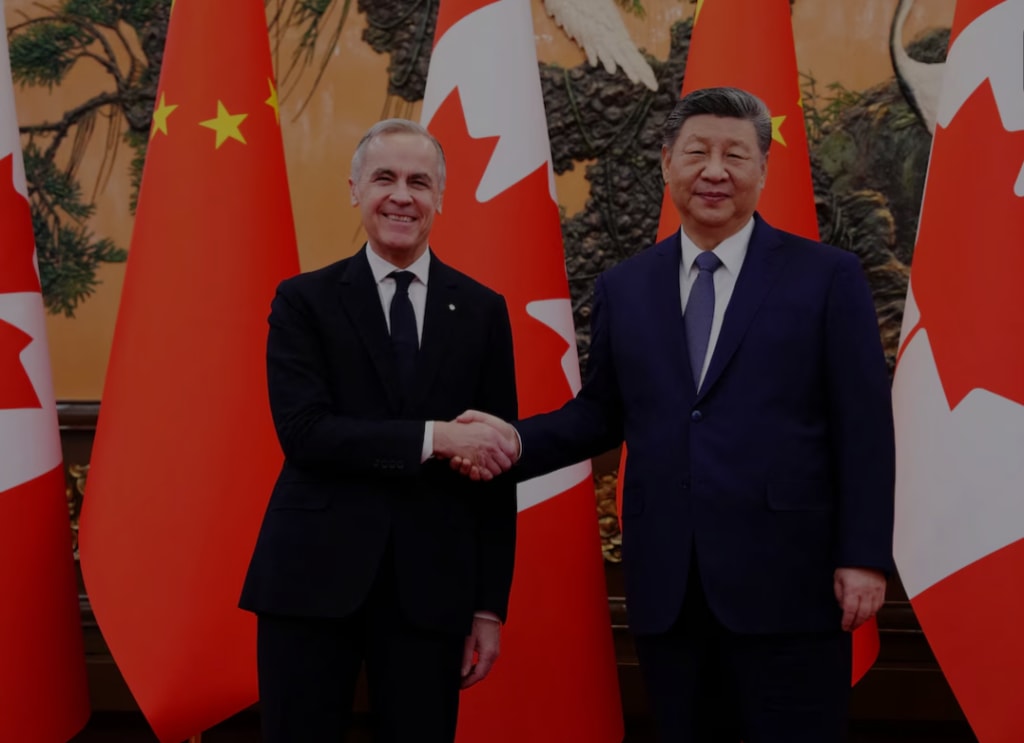
After years of strained relations and trade uncertainty, Canada and China have reached an initial trade agreement focused on two strategically important sectors: electric vehicles (EVs) and canola. While limited in scope, the deal marks a notable step toward stabilizing economic ties between the two countries at a time when global trade is increasingly shaped by geopolitics, supply-chain risks, and climate goals.
Officials on both sides have described the agreement as preliminary rather than comprehensive, but its symbolism carries weight. For Canada’s farmers and clean-technology sector — and for China’s rapidly expanding EV market — the deal offers cautious optimism.
Why This Deal Matters Now
Relations between Canada and China have been tense for much of the past decade, affected by diplomatic disputes, trade restrictions, and growing mistrust between Western nations and Beijing. Agriculture and technology, in particular, have often been caught in the crossfire.
Canola has long been a flashpoint. Canada is one of the world’s largest producers and exporters of the crop, while China is one of its most important markets. Past trade disruptions severely affected Canadian farmers, forcing Ottawa to seek alternative buyers.
At the same time, electric vehicles have emerged as a new frontier of economic competition. China dominates global EV manufacturing, while Canada is positioning itself as a critical supplier of batteries, minerals, and clean-energy manufacturing.
This deal reflects a shared recognition: economic realities are pushing both sides toward cooperation, even amid political differences.
What the Agreement Covers
While full details have not yet been released, officials confirm that the agreement addresses two key areas:
1. Canola Market Access
China has signaled a willingness to ease restrictions on Canadian canola exports, addressing long-standing concerns from Canadian farmers and exporters. Improved access could help stabilize prices and restore confidence in one of Canada’s most valuable agricultural sectors.
For producers in provinces like Saskatchewan and Alberta, this represents a potential economic lifeline after years of uncertainty.
2. Electric Vehicles and Clean Technology
The deal also opens the door to cooperation in the EV sector. This includes trade discussions around electric vehicles, batteries, and related clean-energy components.
Canada has been investing heavily in EV supply chains — from lithium and nickel mining to battery manufacturing — while China remains the world’s largest EV market and producer. The agreement suggests opportunities for investment, technology exchange, and supply-chain collaboration, though significant barriers remain.
A Strategic Shift Toward Economic Pragmatism
Rather than signaling a full reset in relations, the deal reflects a pragmatic shift.
Canadian officials have emphasized that engagement does not mean abandoning concerns over human rights, national security, or foreign interference. Instead, the approach suggests that selective economic cooperation can coexist with political caution.
China, meanwhile, benefits from reliable agricultural imports and diversified supply chains at a time when trade relations with the United States and parts of Europe remain strained.
In short, both sides appear motivated by mutual economic interest rather than political alignment.
Implications for Canadian Farmers
For Canada’s agricultural sector, the canola portion of the deal is especially significant.
China has historically been one of the largest buyers of Canadian canola, and past restrictions led to financial losses and market instability. Re-entry into the Chinese market could:
Increase export volumes
Improve farm incomes
Reduce dependence on alternative, less predictable markets
However, farm groups remain cautious. Many remember how quickly access was lost in the past and are urging the government to diversify export markets rather than rely too heavily on any single buyer.
What It Means for the EV Industry
The inclusion of electric vehicles highlights how trade priorities are shifting globally.
Canada has positioned itself as a future EV powerhouse, leveraging its reserves of critical minerals and close proximity to U.S. manufacturing hubs. China, meanwhile, leads in EV production, battery technology, and consumer adoption.
The deal could allow Canadian companies greater access to Chinese markets or supply chains, while Chinese firms may seek investment or partnerships in Canada’s growing clean-tech ecosystem.
Still, challenges remain. National security concerns, investment screening rules, and political scrutiny mean that any deeper EV cooperation will be carefully managed.
Political Reactions and Caution
Reaction in Canada has been mixed.
Supporters argue that the deal demonstrates responsible diplomacy — protecting jobs and industries without escalating tensions. Critics warn that economic engagement with China carries risks, particularly in strategically sensitive sectors like clean technology.
Opposition parties have called for transparency, urging the government to clearly outline safeguards and ensure Canadian interests are protected.
In China, state media has framed the agreement as evidence that cooperation remains possible despite global polarization — a narrative that emphasizes stability and economic growth.
A Limited Deal, Not a Full Reset
It’s important to note what this agreement does not do.
It does not resolve broader diplomatic disputes, nor does it eliminate trade risks overnight. Instead, it establishes a framework for dialogue and incremental progress.
Analysts describe it as a confidence-building step — one that tests whether limited cooperation can succeed without triggering political backlash on either side.
If successful, it could pave the way for expanded talks in other sectors. If tensions resurface, it may remain an isolated exception.
Global Context: Trade in a Fragmented World
This deal comes amid a global shift toward strategic trade.
Countries are increasingly prioritizing supply-chain security, climate goals, and economic resilience over pure free-market efficiency. In this environment, selective bilateral agreements are becoming more common.
Canada’s move reflects an attempt to balance values, alliances, and economic necessity — a challenge facing many middle-power economies navigating rivalry between global giants.
Final Thoughts
The initial trade deal between Canada and China on electric vehicles and canola is modest in scope but significant in meaning. It signals that, despite deep political differences, economic pragmatism still has a place in international relations.
For farmers, manufacturers, and policymakers alike, the agreement offers cautious hope — paired with a clear reminder that diversification and vigilance remain essential.
Whether this deal marks the beginning of a broader thaw or remains a narrow exception will depend on how both sides manage trust, transparency, and the inevitable pressures of geopolitics in the months ahead.
About the Creator
Muhammad Hassan
Muhammad Hassan | Content writer with 2 years of experience crafting engaging articles on world news, current affairs, and trending topics. I simplify complex stories to keep readers informed and connected.
Keep reading
More stories from Muhammad Hassan and writers in The Swamp and other communities.
There’s an Internet Blackout in Iran. How Are Videos and Images Getting Out
When mass protests erupted across Iran, the government responded with a familiar tactic: cut the internet. Mobile data slowed to a crawl, international connections dropped, and social media platforms went dark. For millions inside the country, the blackout meant isolation — no messaging apps, no news, no way to tell the outside world what was happening. And yet, despite these sweeping restrictions, videos and images of protests, arrests, and street violence continue to surface online. Clips circulate on X, Instagram, and international news broadcasts, raising a pressing question: How is information escaping one of the most tightly controlled internet shutdowns in the world? Why Iran Turns Off the Internet Iran has repeatedly used internet shutdowns as a tool of control during periods of unrest. By restricting access, authorities aim to: Disrupt protest coordination Prevent footage from reaching global media Limit international scrutiny Control domestic narratives During previous protests in 2019 and 2022, near-total shutdowns coincided with some of the deadliest crackdowns. Human rights organizations argue that internet blackouts create conditions where abuses can happen unseen. In the current wave of protests, the blackout has been broader and more sustained than before — affecting not just social media but core mobile and broadband infrastructure. If the Internet Is Down, How Is Content Escaping? Despite the blackout, Iran is not completely sealed off. Information leaks through a combination of technology, ingenuity, and risk-taking. The most important factor? Satellite internet. Starlink: A Signal From Space Starlink, the satellite internet service operated by SpaceX, has become the most powerful tool for bypassing Iran’s blackout. Unlike traditional internet, which relies on cables and telecom towers controlled by the state, Starlink connects directly to satellites orbiting Earth. As long as a user has a receiver terminal and a clear view of the sky, they can access the global internet — even when national networks are shut down. Over the past few years, thousands of Starlink terminals have reportedly been smuggled into Iran, often at great personal risk. These devices are illegal under Iranian law, but activists say they are now essential for keeping the country digitally connected. Once connected, users can upload videos, send images, and communicate with journalists and human rights groups abroad — often in near real time. The Risks of Staying Connected Using satellite internet in Iran is extremely dangerous. Authorities have declared Starlink equipment illegal and have reportedly conducted raids to seize terminals. Possession can lead to arrest, interrogation, or worse. In some areas, users hide terminals on rooftops, power them briefly, upload content, then disconnect to avoid detection. The government has also attempted to jam satellite signals, disrupting connections in certain regions. While jamming can weaken service, it hasn’t fully eliminated access — turning the situation into a technological cat-and-mouse game. Every video that makes it out is a calculated risk. Old-School Methods Still Matter Satellite internet isn’t the only way information escapes Iran. Some protesters rely on slower, more traditional methods: Saving videos on memory cards or USB drives Physically transporting data across borders Sending footage through trusted intermediaries Uploading content during brief moments of restored connectivity These methods are far less efficient than satellite internet, but they still play a role — especially in areas where Starlink access is limited or heavily jammed. Why These Images Matter The footage coming out of Iran isn’t just viral content — it’s evidence. With foreign journalists largely barred from operating freely inside the country, citizen-recorded videos are often the only window into events on the ground. Human rights organizations rely on this material to document abuses, verify deaths, and pressure governments to respond. Without these images, the international community would be forced to rely almost entirely on official statements — a scenario that overwhelmingly benefits those in power. Experts warn that internet shutdowns often correlate with spikes in violence, precisely because visibility disappears. The continued flow of images disrupts that strategy. The Digital Battlefield What’s unfolding in Iran is part of a global trend. Governments around the world increasingly view the internet as a battlefield — a space to be controlled during unrest. Protesters, in turn, adapt with new tools, from encrypted messaging to satellite connectivity. Iran’s blackout shows both sides of this struggle: A state attempting to enforce digital silence Citizens using technology to break it This dynamic raises difficult questions about sovereignty, technology companies, and the future of information control. Can Iran Fully Seal the Blackout? So far, the answer appears to be no. While the government can dramatically reduce connectivity, total isolation is increasingly difficult in a world of satellites, portable tech, and global networks. Every advancement in censorship is met with an adaptation in resistance. Still, access remains uneven. Many Iranians are completely offline, unable to communicate with loved ones or access basic information. The videos reaching the world represent only a fraction of what’s happening inside the country. What Comes Next As protests continue and international pressure grows, the digital struggle will remain central to Iran’s crisis. The government will likely intensify efforts to block satellite access, while activists look for new ways to stay connected. What’s clear is this: the blackout has not achieved total silence. Each image uploaded, each video shared, and each message sent is a reminder that even the most aggressive internet shutdown cannot fully suppress human voices. Final Thoughts Iran’s internet blackout is not just a technical issue — it’s a human one. It reveals how deeply communication is tied to freedom, accountability, and power in the modern world. In an era where truth travels through pixels and signals, the battle over connectivity may be just as important as the protests themselves. And for now, despite the darkness, the signal is still getting through.
By Muhammad Hassan4 days ago in The Swamp
Saudi Arabia Deports More Than 14,600 Illegal Residents in One Week
Saudi Arabia has recently intensified its efforts to manage undocumented migration, deporting more than 14,600 illegal residents in a single week, according to the country’s official authorities. This significant action highlights the kingdom’s ongoing commitment to enforcing residency laws while balancing labor needs and national security priorities. The Ministry of Interior reported that the deportations took place across several regions, involving residents who had overstayed visas, violated residency regulations, or were present in the kingdom without proper documentation. Officials emphasized that these measures are part of a broader campaign to maintain public order, security, and compliance with legal regulations. The kingdom’s push to regulate its population comes amid reforms in labor and residency systems. Saudi Arabia has experienced a rapid influx of foreign workers over the past decades, largely driven by the growth of construction, healthcare, retail, and service sectors. While expatriates have been instrumental in supporting the kingdom’s economic expansion, managing undocumented residents has become a pressing challenge for authorities. The deportations also reflect Saudi Arabia’s efforts to protect citizens’ employment opportunities. By ensuring that labor markets are regulated and compliant with residency laws, the government aims to prevent job competition from undocumented workers and improve working conditions for legal residents. Officials stated that the operation was conducted with strict adherence to legal procedures, ensuring that deportees were processed fairly and humanely. Among the deported residents were individuals from various countries, highlighting the kingdom’s role as a key destination for labor migrants across the Middle East and South Asia. Many of the deportees were employed in informal sectors or lived in unauthorized housing. Saudi authorities have repeatedly emphasized that undocumented residency not only violates the law but can also pose risks to public health, safety, and social services. This week’s deportation drive is one of the largest reported in recent years and comes in the wake of ongoing reforms under Vision 2030, Saudi Arabia’s ambitious roadmap for economic diversification. The plan emphasizes modernization, regulatory reform, and national workforce development. Controlling illegal residency is considered a crucial component in achieving these goals, ensuring that the kingdom’s economic progress is sustainable and legally compliant. Authorities also highlighted the role of technology and data-driven monitoring in tracking residency compliance. Recent years have seen the implementation of digital platforms and electronic systems to monitor foreign workers, validate work permits, and detect irregularities. These tools have enabled authorities to identify undocumented residents more efficiently and conduct deportations with minimal disruption to public services. However, the move has raised concerns among human rights advocates, who argue that mass deportations should be accompanied by safeguards to protect vulnerable individuals, particularly those who may be fleeing conflict, persecution, or economic hardship in their home countries. Advocates have urged Saudi Arabia to provide adequate legal support, access to appeals, and safe repatriation processes. Despite these concerns, Saudi authorities maintain that the operation is necessary to maintain law and order and to ensure that migration flows are managed responsibly. The kingdom has repeatedly emphasized that individuals with valid work permits and residency documents are welcome, and that efforts are focused solely on those violating legal regulations. Experts note that such large-scale deportations are not uncommon in countries experiencing rapid urbanization, economic growth, and high migration inflows. Saudi Arabia, with its ambitious infrastructure projects and expanding economy, faces unique challenges in balancing the demand for foreign labor with national security and social stability. Looking ahead, the kingdom plans to continue monitoring illegal residency closely while strengthening bilateral cooperation with labor-sending countries. These partnerships aim to improve migrant documentation processes, facilitate safe and legal employment abroad, and reduce irregular migration flows. In conclusion, the recent deportation of over 14,600 illegal residents in one week underscores Saudi Arabia’s commitment to enforcing immigration laws and maintaining social and economic order. While it highlights the kingdom’s resolve, it also points to the complex interplay between migration, labor markets, and national security in a rapidly developing nation. Balancing strict enforcement with humane treatment of migrants remains a key challenge as the country navigates its ambitious reform agenda.
By Fiaz Ahmed Brohia day ago in The Swamp
My New Book is Finally Here
My poetry collection Beautiful and Brutal Things is done. It's actually done and finally published over 270 pages. Over a year of my life went into this book. More than a year, really. Long days at my computer, sometimes seven days a week because I couldn't stop even when I probably should have. Then two months of editing that felt harder than the writing itself. But it's finished, and I'm still standing, and the book is real.
By Tim Carmichael2 days ago in BookClub




Comments
There are no comments for this story
Be the first to respond and start the conversation.