Latest Stories
Most recently published stories on Vocal.
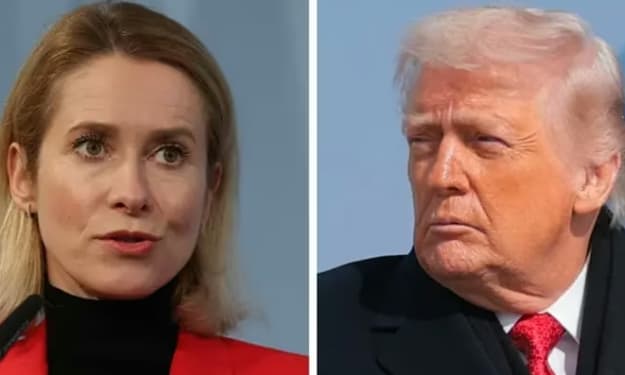
Trump Says He Will “100%” Carry Out Greenland Tariffs Threat, as EU Vows to Protect Its Interests. AI-Generated.
When former U.S. President Donald Trump declared that he would “100%” follow through on imposing tariffs connected to Greenland, the statement landed like a geopolitical thunderclap. Once again, Trump revived a familiar mix of economic pressure, unconventional diplomacy, and headline-grabbing rhetoric—this time triggering a firm response from the European Union, which vowed to protect its interests. The moment reflects more than a trade dispute; it reveals how economic tools are increasingly used as instruments of political power. Greenland, the world’s largest island, occupies a unique position in global politics. Though geographically part of North America, it is an autonomous territory within the Kingdom of Denmark and closely tied to the European Union through trade and political agreements. Its strategic importance has grown in recent years due to melting Arctic ice, access to rare earth minerals, and its location along emerging shipping routes. Trump’s renewed focus on Greenland taps into these realities, but his approach has reignited controversy rather than cooperation. Trump’s tariff threat echoes his earlier, widely publicized interest in acquiring Greenland during his presidency. At the time, the idea was dismissed by Danish officials as absurd, yet it underscored a serious point: the United States views Greenland as a critical strategic asset. Now, instead of proposing a purchase, Trump is leaning on tariffs—an economic lever he frequently favored while in office. By framing the move as something he would carry out “100%,” Trump signaled both resolve and defiance, a style that has long defined his political brand. From Trump’s perspective, tariffs are a straightforward solution. He has repeatedly argued that they protect American interests, rebalance unfair trade relationships, and force allies and rivals alike to negotiate on U.S. terms. Supporters see this approach as tough but effective, believing that economic pressure is sometimes the only language international partners respect. In this context, Greenland becomes part of a larger narrative: America asserting itself in a competitive, multipolar world. The European Union, however, sees the issue differently. EU officials responded swiftly, making it clear that any tariffs affecting Greenland or Denmark would be met with firm resistance. For the EU, the threat is not just economic but symbolic. Allowing unilateral tariffs to go unanswered could set a precedent that undermines collective bargaining power and the rules-based international order the bloc relies on. The EU’s vow to protect its interests reflects a broader determination to stand united when faced with external pressure. At the heart of the dispute lies a clash of philosophies. Trump’s worldview prioritizes national leverage and bilateral deals, often at the expense of multilateral institutions. The EU, by contrast, emphasizes cooperation, shared rules, and mutual benefit. When these two approaches collide, trade disputes quickly escalate into political standoffs. Greenland, despite its relatively small population, finds itself caught in the middle of this ideological tug-of-war. There are also economic implications to consider. Tariffs rarely operate in isolation; they ripple through supply chains, affect prices, and influence investor confidence. Greenland’s economy, which relies heavily on fishing, mining, and trade partnerships, could face uncertainty if caught between U.S. tariffs and EU countermeasures. For ordinary people—workers, exporters, and consumers—these high-level political decisions translate into real-world consequences. Beyond economics, the situation raises questions about sovereignty and respect. Greenland’s leaders have consistently emphasized their right to self-determination and their desire to shape their own future. Being treated as a bargaining chip in a larger power struggle risks sidelining local voices. Any long-term strategy involving Greenland will need to acknowledge not only its strategic value but also the aspirations of its people. The timing of Trump’s statement is also notable. As global tensions rise and alliances are tested, bold declarations resonate more strongly than ever. For Trump, reaffirming his willingness to use tariffs reinforces his image as a decisive leader unafraid of confrontation. For the EU, responding firmly helps maintain credibility and unity among member states. Both sides are speaking not only to each other but also to domestic audiences watching closely. Ultimately, Trump’s promise to “100%” carry out the Greenland tariffs threat highlights a broader reality of modern geopolitics: economic policy is inseparable from political strategy. Whether this standoff evolves into a full-blown trade conflict or becomes a catalyst for renewed dialogue remains uncertain. What is clear is that Greenland—once seen as remote and peripheral—is now firmly at the center of global conversations about power, influence, and the future of international relations. As the EU prepares to defend its interests and Trump doubles down on his hardline stance, the world is reminded that even the most unexpected places can become flashpoints. In this new era, tariffs are not just about trade—they are about who sets the rules and who is willing to challenge them.
By Aqib Hussain13 days ago in The Swamp
Number of Employed People in UK Falls Again as Wage Growth Slows. AI-Generated.
The UK labour market is sending out fresh warning signals. According to the latest official data, the number of employed people in the UK has fallen again, while wage growth has slowed to its weakest pace in years. For workers, employers, and policymakers, these developments raise serious questions about where the economy is heading in 2026.
By Aarif Lashari13 days ago in The Swamp
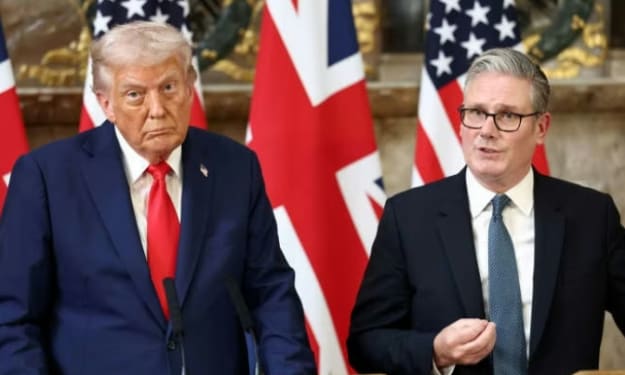
‘Act of Great Stupidity’: Trump Launches Another Tirade Against a NATO Ally — This Time It’s the UK. AI-Generated.
Former U.S. President Donald Trump has once again stirred controversy on the international stage, this time directing his ire toward one of America’s closest allies: the United Kingdom. In a recent public tirade, Trump reportedly described a UK policy decision as an “act of great stupidity,” marking yet another episode in his long-running pattern of criticizing NATO allies. The remarks have sparked backlash in both Washington and London, while reigniting debate about Trump’s approach to diplomacy and alliances. A Familiar Pattern of Criticism Trump’s criticism of NATO members is hardly new. During his presidency from 2017 to 2021, he repeatedly accused alliance members of failing to meet defense spending commitments and portrayed the United States as unfairly burdened by the cost of collective security. Germany, France, and Canada were frequent targets. The UK, however, largely escaped Trump’s harshest rhetoric during those years, often being described by him as a reliable partner. That dynamic now appears to have shifted. In his latest comments, Trump took aim at a UK government decision related to defense and foreign policy—framing it as reckless and harmful to Western interests. While Trump did not shy away from dramatic language, critics argue that his remarks lacked nuance and ignored the complex political and security considerations facing Britain. Why the UK Became a Target Analysts suggest Trump’s criticism of the UK may be rooted in broader frustrations with NATO and the post–World War II alliance system. Trump has long argued that alliances should be transactional, measured primarily by financial contributions rather than shared values or long-term strategic stability. The UK’s strong alignment with NATO and its continued support for multilateral cooperation stand in contrast to Trump’s “America First” worldview. By singling out Britain, Trump may be attempting to reinforce his message to U.S. voters that traditional alliances are outdated or mismanaged—a theme that resonates with parts of his political base. Reactions from Britain and Beyond British officials have responded cautiously, avoiding direct escalation while reaffirming the strength of the U.S.–UK relationship. Diplomats emphasized that the alliance between the two countries is built on decades of cooperation, shared intelligence, and mutual defense commitments that extend beyond any single political figure. Political commentators in the UK were less restrained. Several lawmakers and analysts criticized Trump’s remarks as uninformed and unnecessarily provocative, arguing that they undermine unity at a time when NATO faces significant challenges, including ongoing tensions with Russia and global security instability. Across Europe, Trump’s comments have revived concerns about the future of NATO should he return to power. Many leaders remember the uncertainty of his first term, when he openly questioned the alliance’s relevance and reportedly considered withdrawing the U.S. altogether. Implications for NATO Unity Trump’s renewed attacks come at a sensitive moment for NATO. The alliance has worked to present a united front amid geopolitical crises, and internal divisions—especially involving the United States—could weaken its deterrence capabilities. Experts warn that rhetoric like Trump’s, even when delivered outside of office, can have real consequences. It may embolden adversaries, sow doubt among allies, and complicate diplomatic efforts. For countries like the UK, which rely heavily on transatlantic cooperation, such uncertainty is deeply unsettling. A Political Strategy or Personal Grievance? Some observers view Trump’s comments less as a policy critique and more as a political strategy. As he remains a dominant figure in U.S. politics, his statements often serve dual purposes: shaping foreign policy narratives and energizing domestic supporters. By attacking a NATO ally, Trump reinforces his image as a leader willing to defy convention and challenge established norms. Supporters praise this as honesty and strength, while critics see it as reckless and damaging to global stability. Conclusion Trump’s description of a UK decision as an “act of great stupidity” is more than just another headline-grabbing insult—it reflects a deeper divide over the role of alliances in a rapidly changing world. While the U.S.–UK relationship remains strong at an institutional level, repeated attacks from influential political figures risk eroding trust and cooperation. As global security challenges continue to mount, the question remains whether future leaders will prioritize unity and diplomacy or embrace confrontation—even with long-standing allies. For now, Trump’s latest tirade serves as a reminder that the debate over NATO, and America’s place within it, is far from over.
By Aqib Hussain13 days ago in The Swamp
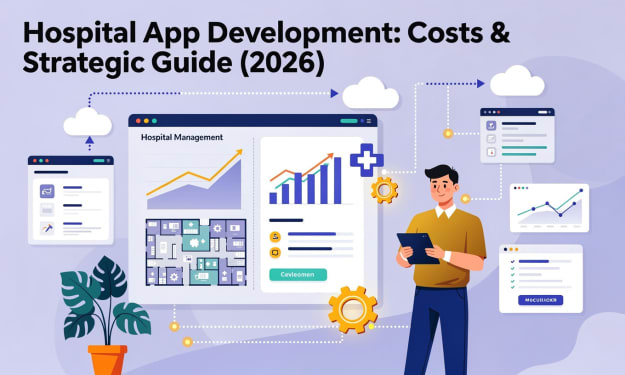
Hospital App Development: Cost and Planning Guide. AI-Generated.
I was sat in a Texas clinic last week, fixin' to get my knee looked at. The app for the hospital wouldn't load my chart. Fair dinkum, it was useless. It’s 2026. We have robot taxis, yet my doctor's app acts like a 2004 flip phone.
By Sherry Walker13 days ago in 01
Surrounded by Billionaires in Davos, Trump Plans to Lay Out How He’ll Make Housing More Affordable. AI-Generated.
As the world’s wealthiest leaders gather in Davos for the annual World Economic Forum, former U.S. President Donald Trump is making headlines for a different reason: he plans to unveil a strategy to make housing more affordable in the United States. The juxtaposition is striking — surrounded by billionaires discussing global markets, Trump’s focus is on a domestic challenge that affects millions of ordinary Americans.
By Muhammad Hassan13 days ago in The Swamp
Wireless Charging Market: Smartphone Adoption, Fast Charging & Market Growth. AI-Generated.
Rising cyber threats, increased digitalization, and stricter regulatory requirements are accelerating demand for advanced security solutions. Businesses and governments are investing heavily to protect data, infrastructure, and critical assets amid growing connectivity and remote operations. Rapid adoption of cloud computing, IoT, and smart technologies further expands attack surfaces, making comprehensive security systems essential for risk mitigation, compliance, and long-term operational resilience. According to IMARC Group's latest research publication, The global wireless charging market size reached USD 19.9 Billion in 2024. Looking forward, IMARC Group expects the market to reach USD 52.4 Billion by 2033, exhibiting a growth rate (CAGR) of 11.4% during 2025-2033.
By James Whitman13 days ago in Futurism
Artificial Intelligence Decides A Vocal Top Story
Introduction This is a complete fiction, but I sometimes wonder how artificial intelligence can be used to make objective decisions on certain things. Even as I write this piece of fiction draft using Google Docs, there is a basic Artificial Intelligence running behind me, correcting my spelling, suggesting that my grammar is not correct and putting forward possible alternatives and sometimes getting it completely wrong. The intelligence doing that is called Grammarly, and at times it can be really annoying, but it is more than worth putting up with to help me produce something that is at least halfway readable by my audience. There is also the Google Docs checker that also tries to put me right, and between these two, you might get something without too many spelling and grammatical mistakes.
By Mike Singleton 💜 Mikeydred 13 days ago in Fiction
Saudi Arabia Paper Cups Market: Sustainable Packaging, Rising Consumption & Market Expansion. AI-Generated.
According to IMARC Group's latest research publication, Saudi Arabia paper cups market size reached USD 64.4 Million in 2025. The market is projected to reach USD 79.4 Million by 2034, exhibiting a growth rate (CAGR) of 2.35% during 2026-2034.
By Jeffrey Wilson13 days ago in Futurism
How to Become a Mobile App Developer in 2026
Google’s January 2026 core update has officially codified the transition from a link-based index to a comprehensive Trust Graph. This tectonic shift fundamentally redefines the journey of how to become a mobile app developer by prioritizing Entity Signals over traditional skill certifications.
By Del Rosario13 days ago in 01
Why Your AI Agents Still Can't Talk to Each Other (And How 2025 Fixed It). AI-Generated.
Look, if you've been building AI agents lately, you know the frustration. Your shiny new LangGraph agent can't talk to your colleague's Autogen setup. Your company's chatbot lives in its own little bubble.
By Eira Wexford13 days ago in 01