Latest Stories
Most recently published stories on Vocal.
Wealth Reserves and Economic Power of the Madurai Rulers during the First Sangam Age. AI-Generated.
The Madurai rulers of the Sangam Age possessed immense wealth derived from trade, agriculture, tribute, and natural resources, making them among the richest monarchs of ancient India.
By Say the truth 12 days ago in History
United Arab Emirates Plans to Bankroll First ‘Planned Community’ in South Gaza. AI-Generated.
Ambitious project aims to transform urban living and boost regional development The United Arab Emirates (UAE) has announced plans to finance the creation of the first planned community in southern Gaza, signaling a significant investment in infrastructure, housing, and regional development. This initiative represents an ambitious effort to rebuild and modernize urban life in one of the world’s most densely populated and conflict-affected regions. While the project promises new homes, services, and economic opportunities, it also faces challenges related to logistics, security, and long-term sustainability. What Is a Planned Community? A planned community is a carefully designed urban area, created with the goal of balancing residential, commercial, and recreational spaces. Unlike informal neighborhoods that develop organically, planned communities offer: Structured Urban Design – Streets, parks, and public spaces are laid out with precision. Integrated Infrastructure – Reliable access to electricity, water, sewage, and transportation. Community Services – Schools, clinics, markets, and recreational areas are included from the start. Economic Opportunities – Dedicated spaces for businesses and employment help stimulate local economies. In Gaza, where population density is extremely high and resources are limited, a planned community could serve as a model for sustainable urban development. The UAE’s Role The UAE, already known for supporting development projects across the Middle East, is providing both financial backing and technical expertise for the Gaza initiative. Officials from the UAE and Palestinian authorities have outlined plans to: Fund construction of residential and commercial areas Introduce modern infrastructure for water, power, and transport Support local workforce development, creating jobs during and after construction Promote long-term sustainability, including environmentally friendly building practices By taking on this project, the UAE demonstrates its commitment to humanitarian aid and regional development, while also strengthening diplomatic and economic ties with Palestine. Potential Benefits for Gaza The planned community could bring a range of positive changes for residents and the broader region: Improved Housing Conditions – Modern, safe, and functional homes could replace overcrowded or damaged structures. Enhanced Public Services – Schools, hospitals, and community centers improve quality of life. Job Creation – Construction and service sectors provide employment opportunities for local residents. Urban Planning Model – Could serve as a blueprint for future projects across Gaza. Economic Development – Planned commercial zones may attract businesses and investors, boosting local economies. In essence, the project aims to balance humanitarian needs with long-term economic and social development, rather than just providing temporary relief. Challenges Ahead While the UAE’s initiative is ambitious, there are several challenges to its success: Security Risks – Gaza has faced decades of conflict, which could affect construction and long-term stability. Resource Limitations – Ensuring sufficient water, electricity, and building materials may be difficult. Coordination and Governance – Effective management is needed to align international support with local needs. Community Acceptance – Residents must adapt to new urban layouts and integrate with planned systems. Experts emphasize that while planned communities can bring major benefits, careful planning and cooperation with local authorities are essential to avoid delays or setbacks. International and Regional Implications The UAE’s project could have broader significance beyond Gaza: Diplomatic Significance – By funding the community, the UAE strengthens its role as a regional actor committed to development and peace-building. Humanitarian Model – The project may serve as a template for post-conflict reconstruction in other regions. Economic Cooperation – Enhancing Gaza’s infrastructure may facilitate trade, investment, and regional integration. Political Messaging – Demonstrates that development initiatives can coexist with broader diplomatic efforts in the Middle East. Regional observers note that this initiative could shift perceptions of Gaza’s future, focusing on growth and stability rather than solely on conflict. Voices From Gaza Local residents have expressed cautious optimism about the project: Some welcome the promise of safer housing and jobs, hoping it will improve daily life. Others stress the need for transparency, ensuring that the community serves ordinary citizens rather than only elite or political interests. Community leaders highlight the importance of ongoing consultation, so the project reflects local needs and culture. The success of the planned community will depend on active engagement between the UAE, local authorities, and residents. Looking Ahead If successful, the UAE-backed planned community in southern Gaza could become a landmark project in urban development. By combining modern infrastructure, community services, and economic opportunities, it has the potential to transform lives and set a new standard for development in the region. The project also illustrates how strategic international support can complement local initiatives, demonstrating that carefully designed urban planning can be a powerful tool for humanitarian and economic progress. Conclusion The UAE’s decision to bankroll the first planned community in southern Gaza represents a bold step toward sustainable development in a challenging region. By combining financial support, technical expertise, and a long-term vision, the project aims to create homes, services, and opportunities for thousands of residents. While challenges remain, including security and resource constraints, the initiative offers hope for a future where urban planning, economic development, and humanitarian goals intersect. For Gaza, this could mark the beginning of a new chapter in rebuilding, growth, and resilience.
By Fiaz Ahmed 12 days ago in The Swamp
The Keeping Hour
The Keeping Hour Every evening at 8:17, Miriam set the table for two. The time was not arbitrary. She had tried, once, to move it—8:15, then 8:20—but something in the apartment resisted. The kettle took longer to boil. The light above the sink flickered. Her own hands shook, as if she were attempting to write with the wrong name. At 8:17, everything settled. The air found its balance.
By Muhammad Irfan Afzal12 days ago in Fiction
The Secret Most AI Gurus Won't Tell You: Why I Switched to Open-Source Models (And My Content Has Never Been Better).
How I Stopped Paying the "AI Tax" and Took Back Control: My Open-Source Awakening Let’s be real. For the last year and a half, I felt like I was standing at the edge of a technological tsunami. Every day, a new headline. Every week, a new “revolutionary” AI tool promising to transform my business. I run a niche educational website for hobbyist woodworkers. My readers are passionate, detail-oriented people who can sense insincerity from a mile away. My content needs to be trustworthy, deeply practical, and human.
By John Arthor12 days ago in Journal
Guy Fieri and the Loud Heart Behind American Comfort Food
Guy Fieri is more than spiked hair and bold shirts. For many people, his face is tied to late-night TV, roadside diners, and meals that feel familiar and comforting. But behind the volume and confidence is a story shaped by work, risk, and a deep connection to everyday food. Guy Fieri did not appear overnight. His rise came from small steps, long days, and a strong belief in simple flavors and real people. Love him or question his style, his presence changed how many Americans look at comfort food. This article looks closely at Guy Fieri’s life, career, and influence, not as a TV personality alone, but as a reflection of how food connects to memory, place, and identity.
By Muqadas khan12 days ago in Humans
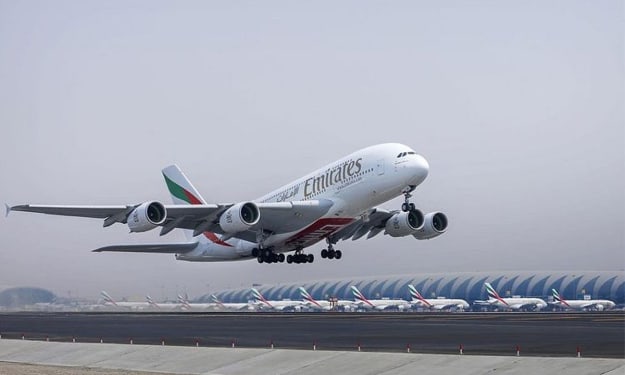
Emirates Cancels Dubai–US Flights Amid Heavy Snow and Severe Weather. AI-Generated.
Safety concerns force airline to halt transcontinental routes Emirates Airlines has announced the cancellation of several flights between Dubai and the United States due to heavy snow and severe winter weather affecting multiple US airports. The airline emphasized that passenger safety is the top priority, and the decision comes as a precautionary measure amid worsening conditions. The cancellations have impacted travelers on routes including New York, Chicago, and Boston, creating disruptions for business and leisure passengers alike. While Emirates works to reschedule flights and accommodate affected travelers, weather-related challenges continue to complicate transcontinental travel. Severe Weather Hits the US The United States is currently experiencing extreme winter weather, with heavy snowfall, strong winds, and icy conditions reported across the Northeast and Midwest. Airports are facing delays, cancellations, and operational difficulties as crews work to clear runways and ensure passenger safety. Meteorologists warn that the storm may continue for several days, with some regions expecting snowfall totals exceeding 20 inches (50 cm). Travel authorities advise passengers to check flight statuses, monitor weather alerts, and plan for delays. Emirates’ Response Emirates has issued an official statement noting that: Safety remains the highest priority for passengers and crew. Flights impacted by the storm have been temporarily canceled or rescheduled. Affected travelers will be offered alternate flights, refunds, or accommodations as needed. The airline continues to monitor weather developments closely to minimize disruption. The airline’s customer service teams are working around the clock to assist passengers with travel adjustments, while airport staff coordinate with air traffic authorities to manage arrivals and departures safely. Impact on Travelers For passengers, the cancellations present several challenges: Delayed Travel Plans – Business meetings, vacations, and personal schedules may be disrupted. Accommodation Needs – Some travelers may require hotels or temporary lodging while waiting for rescheduled flights. Financial Concerns – Unexpected cancellations can lead to additional costs for transportation, meals, and accommodation. Travel Anxiety – Uncertainty around flight schedules adds stress and emotional strain for passengers. Experts recommend that travelers affected by flight disruptions contact the airline directly, monitor official flight updates, and avoid traveling to airports during severe storms. Airline Safety Protocols Airlines like Emirates follow strict safety protocols during severe weather: Pre-flight Assessment – Pilots and operations teams evaluate conditions to determine if flights can depart safely. Weather Monitoring – Constant tracking of snow, wind, visibility, and runway conditions. Ground Crew Operations – Runways, taxiways, and aircraft are cleared of snow and ice to prevent accidents. Passenger Safety Measures – Instructions are provided for boarding, deboarding, and in-flight safety during turbulence or adverse weather. These measures ensure that passengers and crew remain protected, even if travel is delayed. The Broader Aviation Context Severe winter storms are a major challenge for international airlines, particularly for long-haul flights. Factors affecting operations include: Airport Closures – Heavy snow and ice can lead to temporary airport shutdowns. Air Traffic Congestion – Delayed flights create a domino effect, affecting arrivals and departures globally. Aircraft Safety Checks – Icy conditions require de-icing procedures that take extra time. Crew Scheduling – Staff availability may be limited due to delays and weather-related restrictions. Experts emphasize that preemptive flight cancellations are often safer than attempting to operate during extreme conditions, even if it causes inconvenience. Advice for Travelers Passengers planning to fly on Dubai–US routes during the storm should: Check Flight Status Frequently – Use Emirates’ official website, app, or customer service hotline. Allow Extra Travel Time – Airport check-ins and security lines may take longer than usual. Stay Informed About Local Conditions – Weather updates can indicate whether airports are operational. Prepare for Delays – Pack essentials, including snacks, medications, and warm clothing, in case of extended waits. Consider Travel Insurance – Provides financial protection in case of cancellations or extended delays. By taking proactive steps, travelers can reduce stress and adapt to changes while waiting for safe flights. Looking Ahead Meteorologists predict that the storm will gradually move eastward, allowing airports to resume normal operations over the next several days. Airlines, including Emirates, are closely coordinating with air traffic control and local authorities to restore service safely. While winter weather may temporarily disrupt transcontinental flights, the airline emphasizes that passenger safety always comes first, and operations will resume once conditions permit. Conclusion The cancellation of Dubai–US flights by Emirates amid heavy snow and severe weather underscores the importance of safety in air travel. While passengers face inconvenience and delays, the airline’s decision reflects responsible risk management in the face of extreme conditions. By prioritizing safety, following strict protocols, and keeping travelers informed, Emirates demonstrates how airlines navigate the challenges of winter storms while maintaining global connectivity. Passengers are advised to remain patient, monitor updates, and plan for delays as the weather gradually improves.
By Fiaz Ahmed 12 days ago in The Swamp
Suspected Russia ‘Shadow Fleet’ Tanker Bound for French Port. AI-Generated.
European authorities monitor unusual maritime activity European authorities are closely watching a suspected Russian “shadow fleet” tanker reportedly heading toward a French port. The vessel, part of a network of ships operating under opaque ownership and registration structures, has raised concerns among maritime regulators and security officials about the transportation of oil and fuel amid sanctions and geopolitical tensions. The term “shadow fleet” refers to vessels that often operate in secrecy, bypassing standard reporting procedures, or employing flags of convenience to obscure their activities. In this case, the tanker’s destination in France has prompted questions about compliance with international sanctions and energy security. What Is the Shadow Fleet? Russia’s so-called shadow fleet consists of oil and fuel tankers that often operate under hidden or misleading identities. These vessels can: Change names, flags, or identification numbers to avoid detection Navigate through sanctioned regions or restricted waters Transport oil or fuel to countries that may circumvent international restrictions The network has drawn international attention because it challenges sanctions enforcement and complicates maritime monitoring efforts. European Response French and European authorities are monitoring the tanker using radar tracking, satellite imagery, and maritime intelligence networks. Officials emphasize that: Safety and Security – Authorities must ensure the vessel poses no threat to port infrastructure or the environment. Compliance Checks – Customs and port officials are prepared to inspect cargo and verify documentation upon arrival. International Cooperation – Coordination with NATO partners, the European Union, and maritime agencies ensures transparency and enforcement of sanctions. The situation highlights the complexity of enforcing sanctions when vessels operate under opaque conditions and underscores the need for advanced monitoring technologies. Why the French Port Is Significant The French port in question is a major hub for fuel imports and energy distribution in Europe. The arrival of a suspected shadow fleet tanker raises several issues: Energy Security – Ensuring that fuel entering Europe complies with sanctions and safety regulations. Environmental Concerns – Tankers carrying oil present a risk of spills and ecological damage, particularly in sensitive port areas. Diplomatic Implications – The docking of a vessel linked to Russia’s shadow fleet could influence relations between France, the EU, and the United States. Authorities must carefully balance economic, environmental, and political considerations in handling the tanker. The Shadow Fleet and Sanctions Evasion Analysts note that shadow fleet vessels are often used to circumvent international sanctions, particularly on Russian oil. Techniques may include: Ship-to-Ship Transfers – Transferring cargo at sea to obscure origin and ownership. Re-Flagging – Changing the ship’s registration to a country with less strict maritime enforcement. False Documentation – Mislabeling cargo or providing incomplete paperwork to evade inspection. These practices make enforcement challenging for port authorities, requiring close coordination with international monitoring organizations. Global Implications The movement of shadow fleet tankers has implications for global trade, energy markets, and geopolitical stability: Energy Prices – Any disruption in the monitoring or inspection of fuel shipments can influence regional energy costs. Sanctions Effectiveness – Shadow fleets test the strength and enforcement of international sanctions. Maritime Security – Unregulated vessel movements can increase the risk of accidents, spills, or conflicts in international waters. European authorities’ vigilance is crucial for maintaining transparency and stability in energy imports. Expert Opinions Maritime security analysts stress that the tanker’s arrival serves as a reminder of the complexity of modern shipping networks: Dr. Elena Morozov, a European energy analyst, noted, “Shadow fleets are not just about evading sanctions—they’re about creating uncertainty in global energy markets.” Captain Jean-Luc Martin, a retired naval officer, added, “Ports must remain vigilant. Even a single tanker can pose serious environmental and security challenges if not properly monitored.” The combination of intelligence monitoring, inspections, and international cooperation is key to managing the risks associated with shadow fleet operations. Next Steps French port authorities are expected to inspect the tanker thoroughly upon arrival, verifying cargo manifests, ownership details, and compliance with EU sanctions. Depending on the findings, the vessel may: Be allowed to offload if all documentation and cargo comply with regulations. Face detainment or fines if any discrepancies are discovered. Trigger further diplomatic consultations with EU and NATO partners if violations are suspected. The situation will be closely watched by energy markets, international regulators, and geopolitical analysts over the coming days. Conclusion The suspected Russia shadow fleet tanker bound for a French port underscores the challenges of modern maritime security and sanctions enforcement. With opaque ownership, potential sanctions evasion, and environmental risks, authorities must navigate a complex intersection of safety, diplomacy, and commerce. As Europe continues to monitor maritime activity closely, this incident highlights the importance of intelligence, regulation, and international cooperation in maintaining the security and integrity of global energy supplies.
By Fiaz Ahmed 12 days ago in The Swamp
7 Business-Boosting Benefits of an HCI Solution
A hyperconverged infrastructure solution is a modern way for businesses to run their computer systems and data centers. In simple terms, it combines computing power, storage, and networking into a single easy platform. Many companies worldwide are choosing HCI solutions to make their work faster, easier, and cheaper.
By Amelia Hebrew12 days ago in Education
Mark Carney Takes On Donald Trump and Emerges as a Global Political Star. AI-Generated.
How a former central banker became a voice on the world stage Mark Carney, the former Governor of the Bank of England and former Governor of the Bank of Canada, has become a global political figure after taking a high-profile stance against former U.S. President Donald Trump. Once primarily known for his expertise in finance and central banking, Carney has leveraged his credibility to shape political and economic debates worldwide. Carney’s rise demonstrates how individuals with financial expertise and international influence can step into the political spotlight, influencing both policy and public opinion. The Clash with Donald Trump Carney publicly criticized Donald Trump on multiple occasions, particularly regarding climate policy, fiscal responsibility, and global economic stability. In one notable instance, Carney highlighted the risks of disregarding climate change and sustainability in economic planning, directly challenging Trump’s approach to environmental regulations and energy policy. This confrontation was unusual because Carney had traditionally avoided partisan politics, focusing instead on economic stability and financial oversight. By speaking out, he positioned himself as a thought leader with moral and professional authority, which garnered global attention. Why Carney’s Voice Matters Several factors have contributed to Carney’s emergence as a political star: Credibility and Expertise – As a former central banker, Carney commands respect in economic, financial, and policy circles. Global Perspective – Having served in Canada, the UK, and international financial forums, he brings a worldwide perspective to issues. Moral Authority – Carney combines data-driven analysis with ethical considerations, particularly on climate change and sustainable finance. Public Communication – His speeches, interviews, and public appearances are clear, persuasive, and widely covered by media. Carney’s interventions have helped shape debates on financial regulations, climate risk, and global economic strategy, giving him influence beyond traditional central banking roles. From Banker to Political Figure Mark Carney’s career path illustrates how finance professionals can transition into global political roles: Bank of Canada (2008–2013) – Carney guided Canada through the global financial crisis, gaining a reputation for decisive leadership and economic foresight. Bank of England (2013–2020) – He managed the UK economy during periods of post-Brexit uncertainty, reinforcing his international profile. International Advocacy – Carney has championed green finance, sustainable investment, and climate disclosure, engaging governments, businesses, and international organizations. These experiences provided Carney with both the authority and platform to speak on political and global issues, including publicly challenging leaders like Donald Trump. Carney and the Climate Debate One of Carney’s most influential arenas has been climate finance. He has emphasized that climate change is not just an environmental concern but a financial and economic risk. Carney’s key contributions include: Advocating for mandatory climate risk disclosures for companies and investors Urging governments to align financial policies with environmental sustainability Highlighting the economic dangers of ignoring climate change, from stranded assets to global instability By framing climate change in terms of economic consequences, Carney has appealed to a wide audience, including policymakers, investors, and the general public. This approach has enhanced his political influence globally. Impact of Taking On Trump Carney’s public critique of Donald Trump further elevated his profile: Global Media Coverage – Interviews, articles, and news segments amplified Carney’s voice worldwide. Public Recognition – He became known not just as a banker but as a policy influencer and political commentator. Policy Influence – Carney’s warnings about economic risks tied to political decisions resonated with governments, regulators, and international institutions. By taking a principled stand, Carney demonstrated that experts in finance can shape political discourse, particularly when their messages intersect with public interest and global challenges. Lessons From Carney’s Rise Carney’s emergence as a political star offers several lessons: Expertise Builds Authority – Deep knowledge in a technical field can provide credibility in broader political debates. Global Experience Matters – Working across countries and institutions enhances perspective and influence. Moral Leadership Resonates – Taking principled positions on critical issues, such as climate change, can amplify influence beyond traditional roles. Communication Is Key – Clear, persuasive, and accessible messaging is essential for connecting with diverse audiences. In short, Carney’s trajectory shows how professionals with global expertise can evolve into influential voices in politics and policy. Looking Ahead Mark Carney’s involvement in political and economic debates is likely to continue. Analysts predict he will play a leading role in global finance, climate policy, and international economic cooperation. His rise also demonstrates a broader trend: technocrats and experts are increasingly shaping political conversations, especially on issues like sustainability, financial stability, and global governance. Carney’s voice serves as a reminder that knowledge, credibility, and moral courage can elevate individuals to global prominence. Conclusion Mark Carney’s challenge to Donald Trump has transformed him from a respected banker into a global political star. By leveraging his expertise, credibility, and principled stance on critical issues like climate change, Carney has become a voice that influences both policy and public discourse. His journey highlights how experts in finance and governance can step into political arenas, shaping debates on global economic stability, sustainability, and leadership. In an increasingly interconnected world, figures like Carney show that knowledge and integrity can create influence far beyond traditional roles, inspiring a new generation of global thought leaders.
By Fiaz Ahmed 12 days ago in The Swamp
The Chola Dynasty and the Legend of the Hundred-Elephant-Slaying Warrior. AI-Generated.
Among the many heroic traditions associated with the Cholas is the legendary account of a warrior said to have slain one hundred war elephants in battle—a symbol of unmatched courage, strength, and battlefield mastery. Though this account blends history and legend, it reflects the martial culture of the Chola era and the extraordinary challenges faced by warriors during medieval warfare. Rise of the Chola Dynasty
By Say the truth 12 days ago in History