Latest Stories
Most recently published stories on Vocal.
Modern world is just a joke
Artificial food, chemical substances in tools, virtual currency……… As you can see, the thing i listed above are all fake. So what actually is real in modern? And as the barrier between “real” stuff and “fake” stuff gets more and more blurry, what can we do? should be just give up and resign by accepting the fake stuff, or are there any alternative ways to solve this modern madness? So pause for a while and think.
By Curtis Wong12 days ago in Humans
The Advice That Changed My Path
I had always believed that life was something you could control if you worked hard enough. I was smart, confident, and determined. But I didn’t realize that my confidence was slowly turning into pride. I started thinking I didn’t need anyone’s guidance. I was convinced I knew everything, and that attitude slowly pushed me into a dangerous path.
By NAIB REHMAN12 days ago in Motivation
The Small Door at the End of the Street
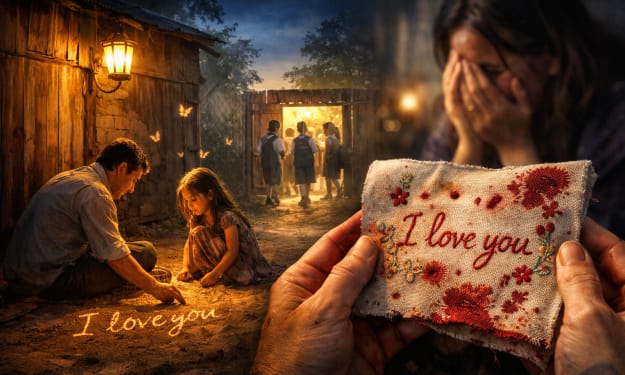
The Small Door at the End of the Street A Child’s Dream, Written in Blood and Hope. Every night, I would go for a short walk, leaving for half an hour and then returning. On my way, I would see a girl who was no more than seven years old. She was chasing butterflies around one of the lights hanging on the fence of a house. Her appearance and clothes caught my attention. She was wearing a torn dress and no shoes. She had long hair and green eyes.
By Mahmoud Ahmed 12 days ago in Humans
From Slums to Empires: the Rothschild Success Formula. AI-Generated.
Introduction: The Rothschild Legacy The Rothschild family didn't just build a banking empire—they revolutionized how money moves across continents and shaped the very foundations of modern finance. From a cramped Frankfurt ghetto to palatial estates across Europe, their meteoric rise represents one of history's most extraordinary transformations of wealth and influence.
By World Finance Observatory12 days ago in Writers
The Hidden Door: A Family Secret Unveiled. AI-Generated.
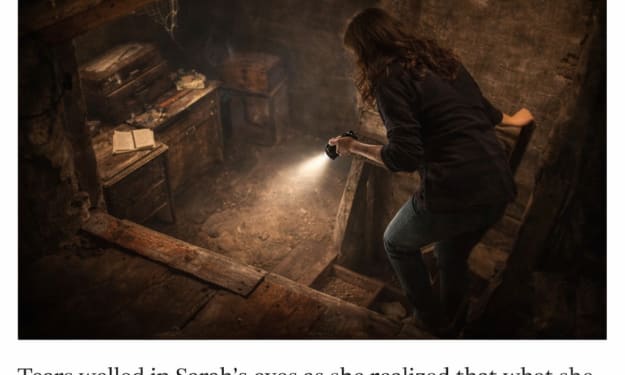
The Hidden Door: A Family Secret Unveiled A forgotten map leads to an ancient mystery hidden beneath the attic. It was a rainy evening when Sarah, curled up in the warmth of her grandmother’s study, found herself once again going through the many boxes of memories her grandmother had left behind. She had never quite known what to do with these things. Every object seemed to hold a piece of the past — an old family photograph, a faded letter, a trinket here and there — and each one stirred up emotions she didn’t know how to process. But on this particular evening, one box in the back corner of the room caught her eye. Unlike the others, it wasn’t full of old pictures or knick-knacks. It was packed with what appeared to be her grandmother’s journals, each worn and yellowed with time. Sarah hadn’t known her grandmother very well before her passing, and now these journals seemed like a window into the woman who had once been the family matriarch, full of stories, wisdom, and memories. As she flipped through the first few pages of one of the journals, something fell out — a small, crumpled piece of paper. She unrolled it carefully, revealing a faded map that seemed to have been drawn by hand. The paper was old, its edges torn, and the ink had blurred in some places, but Sarah could still make out the important details. The map was marked with symbols and what appeared to be a path leading to an “X” in the center of a room she didn’t recognize. It was the attic. Her curiosity piqued, and she immediately began to wonder what her grandmother had hidden all those years ago. Sarah sat back, staring at the map, trying to make sense of it. It had been years since she had explored the attic. As a child, the attic had always seemed like a forbidden place — dark, dusty, and filled with the remnants of a bygone era. Her parents had always warned her not to venture up there, saying it was too dangerous, too cluttered. But now, the map seemed to call her. Her mind raced with thoughts of what could possibly be hidden in that attic. Was it just a memory, or was there something more? Was this map leading her to a treasure, an heirloom, or perhaps an answer to a family mystery that had long been forgotten? Without hesitation, Sarah grabbed the map and hurried to the attic. The wooden steps creaked beneath her weight as she ascended. The musty air hit her the moment she opened the door, and the dim light from a single window barely illuminated the cluttered space. Dust motes floated lazily in the air, and old furniture, boxes, and antique furnishings were piled high, nearly reaching the ceiling. It was the same attic she had visited as a child, but it seemed even more mysterious now. She pulled the rug away from the center of the room, just as the map had indicated. The floorboards creaked as she knelt down, her heart pounding in her chest. Slowly, she ran her fingers over the worn wood and found a small hatch — it was barely noticeable, but there it was, as though it had been waiting for her all this time. The hatch was old, its wood splintered and faded with age, but it had a rusted latch. Sarah hesitated for a moment, wondering if she was about to uncover something her family had kept hidden for generations. She turned the latch slowly, the sound of metal against wood echoing in the quiet attic. As she lifted the hatch, a wave of cold air rushed up from the darkness below. The space beneath the hatch was small, and Sarah could barely make out the shape of an old, wooden door. It was unlike anything she had ever seen — covered in dust and cobwebs, but solid, like it had been shut for years. The key, it seemed, had always been in her hands — the map, the clue she had uncovered in her grandmother’s journal, had led her here. With a mix of excitement and trepidation, Sarah descended into the hidden space, her flashlight illuminating the way. The room was smaller than the attic, but it was filled with strange artifacts — old trunks, letters, and trinkets from a past era. It was like stepping into a time capsule. And there, in the corner, stood a chest — just as the map had suggested. She felt a rush of adrenaline as she approached the chest and opened it carefully. Inside, she found an old family heirloom, a beautiful silver necklace, its intricate design shining even in the dim light. Along with the necklace was a letter, written in her grandmother’s handwriting, explaining the significance of the necklace — a piece of their family’s history, passed down through generations. Tears welled in Sarah’s eyes as she realized that what she had uncovered wasn’t just a hidden treasure, but a piece of her family’s story. The hidden door had opened, revealing more than just a room filled with relics. It had revealed a legacy she never knew existed.
By ÅBBÅS KHÅÑ12 days ago in Fiction
Trump Praises UK Troops as Brave Warriors After Widespread Condemnation. AI-Generated.
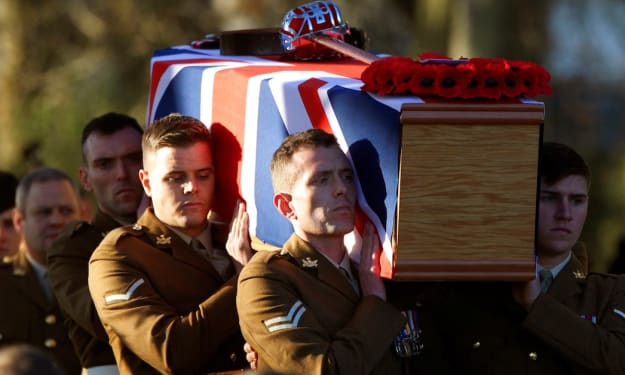
Former US president hails British forces amid criticism over remarks Former US President Donald Trump has publicly praised UK troops, calling them “brave warriors” after facing widespread criticism for earlier controversial remarks. The statements, made during a recent interview, sparked intense debate in political circles and the media, highlighting the influence of public figures on international perceptions of military service. Trump’s comments have drawn both support and criticism, reflecting the polarized nature of his public image and the ongoing sensitivity surrounding military recognition. Trump’s Statements on UK Troops In his latest remarks, Trump lauded the dedication, courage, and professionalism of British armed forces. He emphasized their role in international security and described them as “among the most capable and disciplined military personnel in the world.” These statements came shortly after Trump faced widespread condemnation for earlier comments that some interpreted as dismissive of allied forces or critical of UK military operations. By highlighting the bravery of UK troops, Trump appeared to aim at repairing diplomatic and public perception, particularly in the United Kingdom. Public and Media Reactions Media coverage of Trump’s praise has been extensive, with outlets across the political spectrum weighing in. Reactions can be grouped into three broad categories: Supporters Applauded the recognition of British troops’ professionalism Praised Trump for showing appreciation for international allies Viewed the remarks as an example of bipartisan respect for military service Critics Questioned the timing of the praise, seeing it as politically motivated Criticized Trump for previous comments that were seen as undermining allies Expressed concern that the statements might oversimplify complex international military engagements Neutral Observers Focused on the importance of acknowledging all military personnel’s contributions Analyzed how public figures’ comments can impact diplomacy and morale The mixed response reflects both Trump’s polarizing status and the broader sensitivity surrounding discussions of military service. Context: Trump and Military Relations Trump’s relationship with military issues has been complicated. During his presidency, he frequently praised US troops while occasionally sparking controversy through comments about allies, funding, and engagement strategies. Analysts note that public praise for foreign troops is uncommon for US presidents, making Trump’s statements particularly noteworthy. It demonstrates an awareness of international perception and the symbolic power of recognizing allied military efforts. UK Troops: Dedication and Global Role The British armed forces play a significant role in global security, participating in peacekeeping, humanitarian missions, and multinational operations. Their service includes: Deployments in conflict zones Maritime security and anti-piracy operations Disaster response and humanitarian aid Trump’s praise aligns with the broader public perception of UK troops as highly trained, disciplined, and globally respected warriors. Recognizing these contributions resonates both with military personnel and citizens invested in national security. Diplomatic and Political Implications While Trump no longer holds office, his statements can influence public discourse and diplomatic perception. Experts suggest that such praise may: Improve US-UK military rapport in public opinion Signal respect for international allies, even after controversial remarks Shape narratives in media coverage of past and present military relations However, critics argue that verbal recognition alone cannot address broader policy concerns, such as troop welfare, funding, and strategic coordination between countries. Public Figures and Military Recognition Trump’s praise highlights a broader issue: how prominent figures influence public understanding of military service. Positive statements can boost morale and public respect, while controversial remarks may spark debates on ethics, diplomacy, and leadership. In democracies, leaders’ words carry weight, especially when discussing armed forces. Recognition, timing, and context all affect how statements are received by both the military community and the general public. Conclusion Donald Trump’s comments praising UK troops as “brave warriors” demonstrate the power of public acknowledgment in shaping perceptions of military service. While the remarks have been met with both support and criticism, they underscore the importance of recognizing the dedication of armed forces around the world. For UK troops, and indeed international military personnel, such recognition is a reminder of their courage, professionalism, and global impact. For observers, it serves as an example of how public figures’ statements can influence diplomacy, media narratives, and public perception—even years after leaving office.
By Fiaz Ahmed 12 days ago in The Swamp
My Freecash.com Saga
If you’ve ever wondered what it feels like to slowly grind your way through thousands of mobile game levels only to be rewarded with absolutely nothing, allow me to introduce you to my recent relationship with Freecash.com. This relationship started cute, got messy, and ended with me staring at my phone like a betrayed spouse.
By Sara Wilson12 days ago in Gamers
Europe’s R37.9 Billion Commitment to Africa Could Shrink to R3.8 Billion as Ukraine Gets Priority. AI-Generated.
Funding priorities shift as European nations focus on Eastern Europe amid global crises Europe’s ambitious R37.9 billion commitment to Africa is now facing the possibility of a dramatic reduction to just R3.8 billion, as attention and resources increasingly shift toward Ukraine amid ongoing conflict. The development has raised concerns among African nations and international development experts, who warn that scaling back aid could slow critical progress on economic growth, infrastructure, and humanitarian programs across the continent. The potential reduction reflects the broader challenge European countries face in balancing domestic, regional, and global priorities, particularly in times of crisis. Background: Europe’s Commitment to Africa In recent years, European governments pledged significant financial support to Africa to address pressing challenges such as: Poverty reduction Infrastructure development Healthcare improvements Climate change adaptation The total commitment of R37.9 billion was intended to strengthen economic partnerships and provide humanitarian assistance in countries facing political instability, natural disasters, and public health crises. Africa, home to over 1.4 billion people, relies heavily on external funding to support development programs and stabilize regions affected by conflict or extreme poverty. A reduction in promised aid could have far-reaching consequences for millions of people. Why Ukraine Is Taking Priority The ongoing conflict in Ukraine has demanded unprecedented financial, military, and humanitarian resources from European countries. As the war continues, Europe has had to allocate funds to: Support Ukraine’s defense and reconstruction Provide humanitarian aid to displaced populations Strengthen security in neighboring regions With Europe facing rising energy costs, inflation, and refugee crises, officials argue that Ukraine represents an urgent and immediate geopolitical priority. This shift, however, comes at the expense of long-term commitments elsewhere, including Africa. Impact on African Nations African leaders and international development organizations have expressed concern about the potential reduction in aid: Economic consequences: Reduced funding could slow infrastructure projects, affect trade agreements, and limit access to capital for small businesses. Healthcare setbacks: Programs targeting vaccination, disease prevention, and maternal health could face delays. Climate initiatives: Funding cuts may hinder efforts to implement renewable energy projects and adapt to climate change impacts. Many African countries rely on European aid not only for direct financial support but also for capacity-building, technological assistance, and policy development. European Officials Speak Out Some European leaders acknowledge the difficult choices but defend the prioritization of Ukraine: Officials cite the urgent need to support a sovereign nation under attack, emphasizing security and stability in Europe as a global concern. Policymakers argue that while aid to Africa remains important, urgent crises must take precedence, particularly those affecting European borders or international security. Critics argue that this approach risks alienating African partners, weakening trust, and undermining decades of diplomatic and development work. Broader Implications for Global Development The potential reduction of aid to Africa highlights the fragility of international development funding, which is often dependent on shifting political and economic priorities. Experts warn that: Short-term reallocations may have long-term consequences, particularly in fragile states Africa’s development goals, including the United Nations’ Sustainable Development Goals (SDGs), could face significant setbacks Global inequities may widen as resource-rich regions focus on their immediate needs while lower-income countries face reduced support This situation underscores the challenges of global responsibility, where rich nations must balance domestic concerns with obligations to other regions. Reactions from Africa African diplomats and civil society leaders have expressed concern over the potential funding cuts: Many emphasize the importance of predictable, stable funding for long-term development Some argue that Europe should find ways to support both Africa and Ukraine, avoiding the appearance of choosing one region over another Calls for innovative financing solutions are growing, such as multi-donor funds, public-private partnerships, and regional investment strategies The African Union has highlighted the need for dialogue with European partners to ensure that critical development projects continue despite global crises. Looking Ahead: Balancing Priorities As Europe navigates its commitments, several key questions remain: Can funding for Africa be partially restored or supplemented through other international partnerships? How will European countries balance immediate geopolitical concerns with long-term global development responsibilities? Will African nations seek alternative funding sources from Asia, the Middle East, or multilateral institutions? Experts suggest that creative solutions and strengthened international cooperation may help mitigate the impact of funding reductions, but urgent action is required to avoid significant setbacks. Conclusion Europe’s R37.9 billion commitment to Africa, now at risk of shrinking to R3.8 billion due to the prioritization of Ukraine, highlights the complex trade-offs faced by global powers. While supporting Ukraine is an urgent necessity, scaling back aid to Africa could have lasting economic, humanitarian, and social consequences. African leaders, international organizations, and European policymakers must collaborate to ensure that development goals are not sidelined, balancing immediate crises with long-term global responsibilities. The situation serves as a reminder that in an interconnected world, political, economic, and humanitarian priorities are deeply intertwined, and decisions in one region can ripple across the globe.
By Fiaz Ahmed 12 days ago in Humans
TikTok Outages
## What Are TikTok Outages and Why Are They Happening TikTok outages refer to times when the TikTok app or its features stop working properly for users around the world. These issues can range from parts of the app not loading correctly to complete service interruptions where users cannot access their accounts, load videos, comment, search, or interact with the platform. Recently, thousands of users reported problems early Sunday morning with TikTok not functioning as expected, leaving many confused and frustrated about whether the problem was widespread or just affecting their device. Reports indicated significant user complaints about feeds not refreshing, comments and bookmarks failing to load, and difficulty accessing content across major U.S. cities during the disruption.
By America today 12 days ago in 01
The Top 10 Reasons Why Hackers Target Facebook Accounts: A Complete Guide to Methods, Malware, and Protection. AI-Generated.
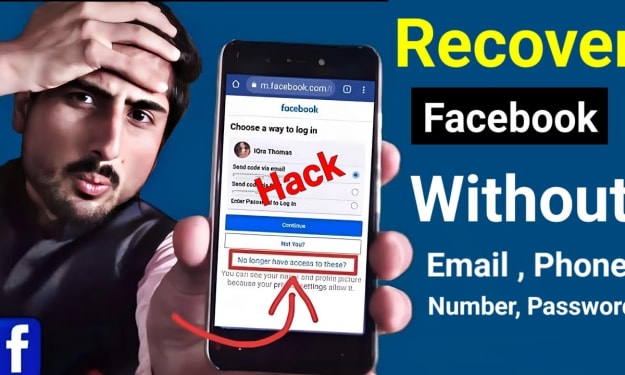
The Billion-Dollar Black Market of Stolen Identities A Facebook account is more than a social profile—it’s a digital identity, a repository of personal connections, memories, and often, a gateway to other online services. This immense value has made Facebook accounts a prime target for cybercriminals worldwide. But what truly drives hackers to invest time and resources in compromising these accounts? This in-depth article explores the top motivations, reveals the real methods and tools used, and provides a robust defense blueprint to protect your digital life.
By Alexander Hoffmann12 days ago in 01