
What is Uptime Monitoring?
Understanding how free uptime monitoring keeps websites online, reliable, and trusted.

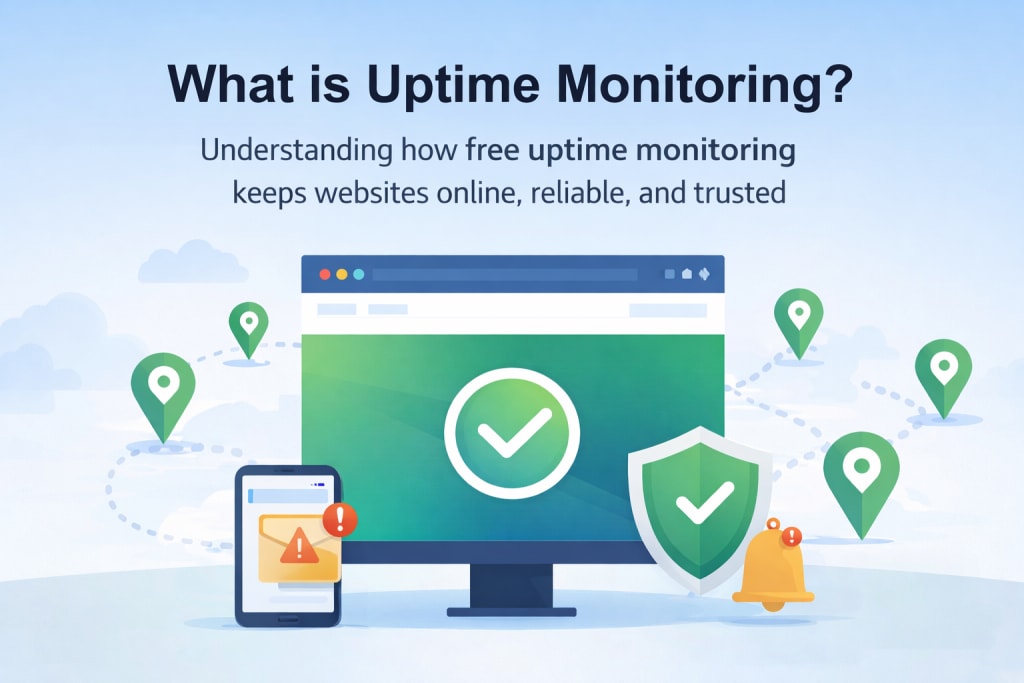
If you run a website, an app, or any kind of online service, you know the quiet anxiety that comes with wondering if everything is working when you are not actively looking. A site can go down at 2 a.m., lose visitors, and damage trust long before you notice. This is where uptime monitoring becomes essential, especially when you can use free uptime monitoring tools to protect your online presence without stretching your budget.
Uptime monitoring is not just a technical concept. It is about reliability, credibility, and peace of mind. Whether you are a blogger, a small business owner, or a startup founder, understanding how uptime monitoring works can make a real difference in how your audience experiences your brand.
What is uptime monitoring?
Uptime monitoring is the process of regularly checking whether a website or online service is available and responding as expected. These checks happen automatically from external servers that try to access your site at set intervals. If the site fails to load or returns an error, the monitoring system records downtime and often sends an alert.
The goal is simple. You want to know the moment your website becomes unavailable so you can take action quickly. Free uptime monitoring tools allow individuals and small teams to do this without investing in expensive infrastructure.
In practical terms, uptime monitoring answers one critical question. Can users reach your site right now?
Why uptime matters more than you think?
Website downtime affects more than just traffic numbers. When a site goes offline, visitors may assume the business is unreliable or no longer active. For e-commerce stores, even a few minutes of downtime can mean lost sales. For content creators, it can lead to lost readership and broken trust.
Search engines also pay attention to site availability. Frequent downtime can negatively impact search visibility because search engines aim to recommend stable and reliable websites. From an experience standpoint, users expect websites to load quickly and consistently. When they do not, frustration builds.
Free uptime monitoring plays a key role here. It gives you visibility into problems before they turn into patterns that hurt your reputation.
How does free uptime monitoring work?
Most free uptime monitoring services operate in a similar way. You enter your website URL into the monitoring platform and select how often it should be checked. Common intervals include every five minutes or every ten minutes.
The service then sends automated requests to your site from one or more locations. If the site responds successfully, it is marked as up. If it fails to respond within a set time or returns an error code, it is marked as down.
Many free tools also provide basic reports. These reports show uptime percentages, recent downtime incidents, and response times. While advanced analytics are often part of paid plans, free uptime monitoring still delivers valuable insights for everyday users.
Benefits of using free uptime monitoring tools
One of the biggest advantages of free uptime monitoring is accessibility. You do not need technical expertise or a large budget to get started. This makes it ideal for bloggers, freelancers, nonprofits, and early-stage businesses.
Another benefit is early detection. Even short outages can be caught quickly, allowing you to contact your hosting provider or fix configuration issues before visitors notice. This proactive approach builds confidence in your site operations.
Free monitoring also helps you understand patterns. Over time, you may notice downtime happening at specific hours or after updates. These insights can guide better decisions about hosting, maintenance schedules, and performance optimization.
Common features you can expect
While free uptime monitoring tools vary, many offer a core set of features. These often include regular availability checks, email notifications for downtime, basic uptime reports, and simple dashboards.
Some free tools also include response time tracking, which shows how fast your site loads from different locations. Even without advanced features, this information can highlight performance issues that affect user experience.
It is important to set realistic expectations. Free uptime monitoring is designed to cover essential needs. For many users, that is more than enough to maintain a healthy and reliable website.
Limitations of free uptime monitoring
Free tools are powerful, but they are not perfect. Check intervals may be less frequent than paid options, which means very short outages could go unnoticed. Alert options may also be limited to email rather than instant messaging or SMS.
Monitoring locations may be fewer, which can affect how global performance is measured. Despite these limitations, free uptime monitoring still provides meaningful protection for most small to medium websites.
Understanding these limits helps you use the tools wisely rather than expecting enterprise-level coverage from a free service.
Best practices for using uptime monitoring effectively
To get the most value from free uptime monitoring, start by choosing a check interval that balances accuracy and limits. Shorter intervals provide faster alerts, but may be restricted on free plans.
Always use a valid alert email and check that notifications are not going to spam. An alert that you never see is no better than having no monitoring at all.
Review your uptime reports regularly. Even if everything seems fine, these reports can reveal trends that point to deeper issues with hosting or site configuration.
Finally, treat uptime monitoring as part of a broader reliability strategy. Combine it with regular backups, updates, and performance checks to protect your site fully.
Why does free uptime monitoring support trust and expertise?
From an experience and trust perspective, uptime monitoring shows that you take your website seriously. It reflects a commitment to reliability and user experience. When your site stays online consistently, visitors feel confident returning and recommending it to others.
Free uptime monitoring also supports informed decision-making. Instead of guessing why traffic dropped or complaints appeared, you have real data to guide your actions. This aligns with best practices for building authority and credibility online.
In many ways, uptime monitoring is a quiet guardian. Users may never notice it when things go right, but its impact is felt every time your site loads without issue.
Conclusion
Uptime monitoring is one of the most practical and overlooked tools for maintaining a healthy online presence. It ensures that your website remains accessible, trustworthy, and responsive to user needs. Free uptime monitoring makes this protection available to everyone, regardless of budget or technical background.
By using free tools wisely, you gain visibility into downtime, respond faster to issues, and build a more reliable digital experience for your audience. In a world where users expect constant availability, uptime monitoring is not optional. It is a foundational step toward long-term online success.
About the Creator
Keep reading
More stories from writers in Education and other communities.
Why Creative Thinking is the Catalyst for Higher Productivity
In many professional settings, creativity and productivity are often seen as separate, even conflicting, concepts. Productivity is typically associated with structure, deadlines, and measurable output, while creativity is considered unstructured, unpredictable, and harder to quantify. But this outdated thinking overlooks a critical truth: a creative mindset is a powerful driver of productivity.
By Norman Badger4 days ago in Education


Comments