Latest Stories
Most recently published stories on Vocal.
Unusual Names To Go In Writing Fiction
Anne Bernays and Pamela Painter — What If? Writing Exercise for Fiction Writers prompts The Exercise — In your notebook, keep a list of unusual names for potential characters. In fact, every writer should have a collection of old yearbooks, benefit programs, phonebooks, and so forth to browse through when he needs to name a character. And don't stop there. Keep lists for things you might need to name sometime in a story. Remember that tone is important, so when naming the list below of things choose an earnest name and a farcical one. Name the following things. Imagine stories they might go in. The Objective - To loosen up your imagination by naming things you wouldn't ordinarily have to name - never mind "own."
By Denise E Lindquist11 days ago in Writers
Stroke Victim Unable to Call Emergency Services as BT Cuts Landline
In a shocking incident that highlights the vulnerability of the elderly and disabled, a stroke victim was unable to dial 999 when an emergency struck due to their BT landline being disconnected. The incident has sparked widespread concern over the impact of telecommunications policies on public safety, particularly for those who rely on traditional landline services.
By Ayesha Lashari11 days ago in The Swamp
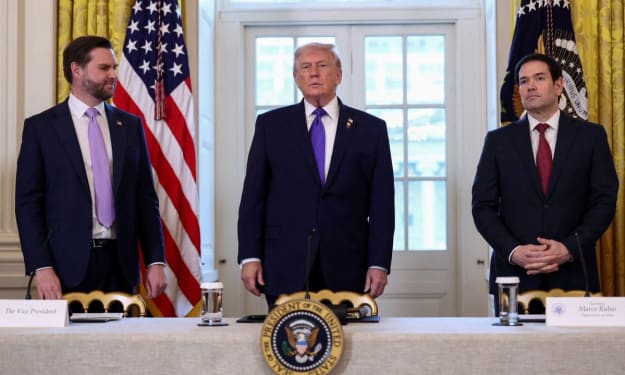
Exclusive: Trump Says Hamas Helped Find Last Hostage, Now Must Disarm. AI-Generated.
In a statement that has quickly made international headlines, former U.S. President Donald Trump claimed that Hamas helped locate the remains of the final Israeli hostage, calling the moment a turning point in the long-running Gaza conflict. But Trump didn’t stop there. According to him, this cooperation comes with a condition — Hamas must now disarm.
By Aqib Hussain11 days ago in The Swamp
The Bus Driver Who Refused to Turn Back: A Story of Survival in the Colombian Andes
Date: May 16, 2017. Location: The rural mountains of Antioquia, Colombia. Weather: Relentless. In the mountains of Colombia, rain is not just weather; it is a living entity. It doesn’t just fall; it hammers. When the wet season arrives in the department of Antioquia, the lush green peaks that look like paradise can turn into a death trap within minutes.
By Frank Massey 11 days ago in Humans
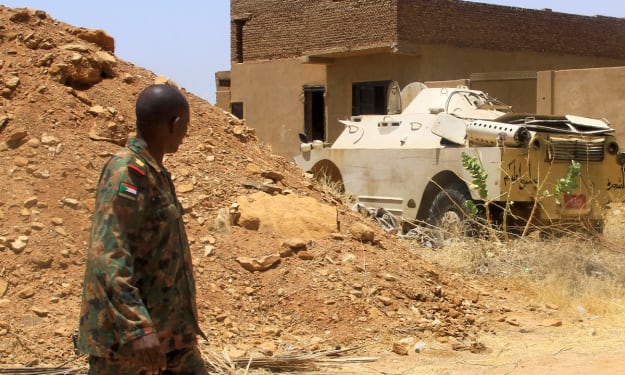
Sudan’s Military Claims Breakthrough After Lifting RSF Siege in Kordofan. AI-Generated.
Sudan’s enduring civil war — now in its third year — has been marked by devastating sieges, shifting frontlines, and immense human suffering. On January 26, 2026, the Sudanese Armed Forces (SAF) announced a significant military development: they have broken the nearly two‑year siege imposed by the paramilitary Rapid Support Forces (RSF) on the strategically located town of Dilling in South Kordofan. According to the military, this achievement also means regaining control over major supply routes that had been choked off by the RSF in its attempt to dominate the region. Dilling sits at the heart of South Kordofan and once served as a vital connector between the state’s capital, Kadugli, and key cities to the north and west. By holding Dilling, the RSF had effectively isolated large parts of the region, constricting the flow of food, medicine, and other essential goods and deepening a severe humanitarian crisis. But Sudan’s military says it has reopened the main Dilling road, allowing relief supplies and trade to begin flowing once again. In an official statement, the SAF declared that its forces had inflicted “heavy losses” on the RSF and its allies during the operation to retake access to the town. The military described its advance as a “successful operation” and vowed to continue pressing its campaign until stability is restored across the country. Despite these claims, there has been no immediate response from the RSF — a group that has been in open conflict with the military since April 2023, when a power struggle between the two factions erupted into widespread violence across Sudan. Background: A War That Has Reshaped Sudan Sudan’s conflict began as a clash over control of the state between the established army and the RSF — a powerful paramilitary force originally formed from militia units. What started as a dispute within the Sudanese power structure soon escalated into a full‑blown civil war, engulfing multiple regions, displacing millions, and creating profound humanitarian challenges. International agencies estimate that tens of thousands of people have lost their lives, though exact figures vary, and more than 14 million people have been forced from their homes. The fighting has not been limited to South Kordofan. Other regions — including Darfur and parts of central Sudan — have seen intense clashes, siege operations, and shifting territorial control. Notably, the RSF took control of el‑Fasher in North Darfur in October 2025, a territory that had long been a bastion of resistance against its expansion. Against this backdrop, breaking the siege of Dilling represents a strategic victory for the Sudanese army. The reopening of major supply lines may enable deeper military advances into Kordofan and potentially disrupt RSF operations in other strongholds. Analysts also suggest that this development could weaken the RSF’s ability to project influence across key transportation routes in central and southern Sudan. What This Means for Civilians For the residents of Dilling and surrounding districts, the siege’s end could bring much‑needed relief. During the period of isolation, shortages of food, clean water, and medical supplies were severe. While independent verification is limited due to the conflict conditions, humanitarian groups have reported that hunger and malnutrition were widespread, and many families faced extreme hardship. The lifting of the siege could allow for the delivery of food, medicines, and other critical supplies — a lifeline that had been cut off for months. Yet, the challenges remain enormous. Even with the route open, securing safe and sustained humanitarian access requires cooperation among warring parties and protections for aid workers — neither of which are guaranteed in Sudan’s fragmented and violent environment. International observers caution that improvements on the ground may be slow and uneven, especially as fighting continues elsewhere in the country. Broader Implications for the Conflict The battle for Dilling underscores a broader strategic contest in Sudan’s protracted war. Control over infrastructure, roads, and supply routes has been as consequential as territorial gains in urban centers. For the military, regaining Dilling strengthens logistical capabilities and could pave the way for further operations into RSF‑held areas. For the RSF, the loss signals pressure on its hold over critical regions and potential vulnerabilities in its supply and communication networks. It also reflects a wider pattern of shifting fortunes. In recent months, both sides have had notable gains and setbacks. The RSF’s capture of key positions in West Kordofan and other zones demonstrated its continued capabilities, even as the SAF has pursued aggressive counter‑offensives on multiple fronts. The war’s complex alliances — including splinter factions and regional political interests — make any long‑term prediction difficult. The conflict is also drawing increased international concern. Humanitarian agencies have repeatedly highlighted the urgent need for peace to prevent further catastrophe. Donors, mediators, and neighbouring states are watching developments closely, though substantive breakthroughs in negotiations have been elusive. Looking Ahead As Sudan marks this new moment in its long conflict, the immediate focus will be on whether the opening of Dilling’s supply lines can translate into lasting improvements for civilians and whether the SAF can sustain its recent momentum on the battlefield. For now, the announcement has been cast by Sudan’s military as a symbolic and practical victory — one that could have far‑reaching implications for the future of the war and the lives of millions caught in it.
By Saboor Brohi 11 days ago in Geeks
Heartbreak in Town Centre: Pensioner Dies in Early Morning Flat Fire. AI-Generated.
A devastating fire ripped through a ground‑floor flat in the heart of Shrewsbury in the early hours of Tuesday morning, leaving an elderly woman dead and another person injured. Emergency services were alerted to the blaze shortly after 3:20 a.m., and despite the swift response from firefighters and medical teams, the life of the woman—believed to be in her 80s—could not be saved. Another individual at the scene suffered injuries that are not thought to be life‑threatening. �
By Ayesha Lashari11 days ago in Humans
What Aircraft Lavatories and Galleys Taught Me About Aviation Discipline
Before one flight, I watched ground crews and cabin staff prepare the aircraft. They checked systems, tested water supply, and verified galley equipment. It looked routine but it revealed something deeper about aviation discipline.
By Beckett Dowhan11 days ago in Writers
NATO Chief Wishes ‘Good Luck’ to Those Who Think Europe Can Defend Itself Without U.S. Help. AI-Generated.
When NATO’s Secretary General bluntly tells Europe “good luck” if it believes it can defend itself without the United States, it’s more than just a sarcastic remark — it’s a wake-up call.
By Aqib Hussain11 days ago in The Swamp
Washington Signals Readiness for Dialogue with Tehran. AI-Generated.
In a development that may reshape diplomatic calculations in a volatile region, a senior United States official recently informed reporters that Washington remains “open for business” should Iran decide to pursue negotiations with the Trump administration. The statement, while cautious, reflects a distinct shift in tone from confrontation to conditional engagement, underscoring a complex interplay of domestic politics, regional security dynamics, and long‑term strategic interests. For years, U.S.‑Iran relations have been marked by deep mistrust, competing geopolitical aims, and periodic escalations that have threatened broader instability. The 2015 Iran nuclear deal — formally known as the Joint Comprehensive Plan of Action (JCPOA) — represented a rare point of cooperation between Tehran and a group of world powers including the United States. Yet under former President Donald Trump, the United States withdrew from the agreement in 2018, reimposing sanctions and adopting an “maximum pressure” campaign intended to compel Iran to accept broader limitations on its nuclear and missile programs. That policy, while aimed at curtailing Iran’s strategic capabilities, also contributed to increased tensions, including proxy conflicts in Yemen and Iraq, attacks on commercial shipping in the Gulf, and the U.S. killing of Iranian General Qassem Soleimani in 2020. In this context, any signal of willingness to talk — even one carefully framed — is notable and merits careful analysis. A Calculated Offer, Not a Promise The U.S. official’s comment that Washington is “open for business” with Iran is deliberately nuanced. It stops short of announcing a formal offer of negotiations or outlining specific terms. The phrasing suggests that the United States is prepared to engage if Iran takes the initiative, but it leaves the responsibility for starting dialogue on Tehran. This approach provides Washington with strategic flexibility while signaling seriousness to both domestic and international audiences. Such diplomatic language serves multiple purposes. It reassures U.S. allies in the region — who are wary of sudden shifts in American Middle East policy — that engagement will not come at the expense of their security. It also conveys to Iran that opportunities for dialogue remain available, even amid ongoing disagreements over nuclear activities, ballistic missile development, and regional influence. Iran’s Response: Cautious but Interested? So far, Iranian officials have offered mixed reactions. Some hardliners in Tehran continue to reject engagement with the United States outright, insisting that Western powers cannot be trusted. Others, particularly voices within Iran’s diplomatic corps, have expressed pragmatic interest in negotiations that could ease economic sanctions and improve conditions for the Iranian public. Iran’s economy has struggled under heavy sanctions that limit oil exports, foreign investment, and access to global financial systems. For many Iranians, the economic impact of these policies has translated into unemployment, inflation, and constrained access to essential goods. Against this backdrop, the prospect of negotiations that could lead to sanctions relief holds significant appeal — provided such talks respect national sovereignty and core strategic interests. Strategic Patience and Global Perceptions The United States’ willingness to appear open to negotiation reflects a broader strategy of patient diplomacy. Rather than demanding immediate concessions or imposing unrealistic preconditions, Washington appears ready to create an environment where Iran can engage without fear of precipitous escalation. This stance aligns with broader American interests in managing regional conflicts, ensuring the free flow of commerce through key waterways like the Strait of Hormuz, and fostering stability that benefits global markets. From a global perspective, the United States’ statement may also be aimed at reassuring other actors — including the European Union, China, and Russia — that Washington is not abandoning diplomatic avenues in favor of perpetual confrontation. Following the U.S. withdrawal from the JCPOA, European signatories endeavored to preserve the agreement while maintaining channels of communication with Iran. The latest U.S. position may complement those efforts by demonstrating that engagement remains a viable option for all parties. Domestic Political Calculations Domestic U.S. politics play a significant role in shaping foreign policy. For the Trump administration, which is preparing for an election year, foreign policy achievements — or at least the avoidance of new conflicts — carry political weight. By signaling openness to negotiation without committing to specific terms, the administration may be attempting to appeal to a broad constituency that favors strength tempered with diplomacy. This approach also allows Washington to manage expectations at home. Hardline critics of engagement with Iran remain vocal in American political discourse, insisting that Tehran must first demonstrate substantive changes in behavior. By framing the offer as contingent on Iranian willingness to negotiate, the administration can address domestic concerns about appearing weak or overly conciliatory. Regional Implications and Security Considerations For Middle Eastern countries, particularly U.S. allies such as Saudi Arabia, the United Arab Emirates, and Israel, the notion of U.S.‑Iran negotiations prompts both hope and apprehension. On one hand, reduced tensions between Washington and Tehran could lessen the likelihood of wider conflict and create space for cooperative security arrangements. On the other, these countries fear that negotiations might sideline their own concerns or lead to compromises that do not adequately address Iran’s regional activities. In the security realm, issues such as Iran’s ballistic missile program and support for non‑state armed groups remain top concerns for the United States and its allies. Any future negotiations would likely need to address these issues alongside nuclear constraints, requiring careful balancing of priorities and pragmatic expectations on all sides. The Path Forward: Opportunities and Obstacles The path toward meaningful negotiations between the United States and Iran is strewn with challenges, but it is not impassable. Key factors that will influence the trajectory include: Political Will in Tehran: Iran’s leadership must decide whether engaging with Washington is more advantageous than continued resistance. Internal debates between pragmatists and hardliners will shape this decision. International Support and Mediation: Third‑party actors, particularly European countries, may facilitate dialogue by offering forums, confidence‑building measures, or incentives for both sides. Clear Objectives and Phased Engagement: Both parties will need to establish realistic goals. A phased approach that begins with limited, confidence‑building measures could pave the way for broader negotiations. Managing Regional Stakeholders: Ensuring that Middle Eastern allies feel included or at least heard in negotiations will be critical to maintaining regional stability. Conclusion: Diplomacy Remains on the Table The recent U.S. official’s comment that Washington is “open for business” if Iran wishes to negotiate is more than a simple soundbite. It reflects a deliberate diplomatic posture aimed at preserving options, reducing risk, and signaling to a wary world that engagement remains possible even amid complex disagreements. While the path to substantive negotiations will not be straightforward, this moment offers a reminder that diplomacy, even when cautious and conditional, remains a vital tool in addressing some of the most entrenched international conflicts of our time. Whether Iran chooses to take the first step toward dialogue will be a decision with far‑reaching implications — not just for Tehran and Washington, but for the broader Middle East and global security alike.writing...
By Saboor Brohi 11 days ago in Geeks
“This Is Our Pain, Not a Spectacle”: Erosion Victim Issues Heartfelt Plea to ‘Trauma Tourists’. AI-Generated.
When people visit places marked by natural disaster or environmental loss, they often seek understanding, empathy, or even connection. But for one long‑time resident of a coastal village in England, the unwelcome attention has crossed a line into something deeply painful and hurtful.
By Ayesha Lashari11 days ago in Humans
7 Books That Pull You In From The First Page. AI-Generated.
There is a special kind of magic in a book that hooks you instantly—the kind that makes you forget the world, silence your phone, and whisper “just one more page” long past midnight. We’ve all experienced it: a gripping opening line, a vivid scene, or a question so compelling that turning back is no longer an option. These books don’t warm up slowly; they ignite from page one.
By Diana Meresc11 days ago in BookClub