Latest Stories
Most recently published stories on Vocal.
Legacy of Location: What Happens to Your Family's Data When You Stop Subscribing? . AI-Generated.
You spend months or years sharing your most sensitive data with a service: the precise daily movements of your family. Then, you decide to cancel. Maybe you found a better app, the kids are older, or you're reevaluating your privacy. You click "Cancel Subscription." But what really happens to all that location history?
By Olivia Martinez10 days ago in 01
What If Outcomes Are Only the Surface
It’s natural to judge life by outcomes. We look at what people do, how things turn out, what succeeds, what fails, what appears healthy, and what collapses. Outcomes are visible. They give the impression of clarity. When something goes wrong, we search for the moment it happened. When something goes right, we look for the decisive action that made the difference. But what if this instinct keeps us focused on the least informative part of the story.
By Peter Thwing - Host of the FST Podcast10 days ago in Motivation
Pokémon Ascended Heroes: A New Evolution of Trainers and Legends. AI-Generated.
How the idea of “ascended heroes” could reshape the Pokémon world For nearly three decades, the Pokémon universe has revolved around one powerful idea: ordinary people forming extraordinary bonds with Pokémon. Trainers begin their journey as beginners, face challenges, grow stronger, and often save entire regions along the way. But what if some trainers went beyond mastery? What if they ascended, becoming legends themselves?
By Fiaz Ahmed 10 days ago in Gamers
Ode to Mathematics
Simplifications, Indivisibilities, Constructivism. (I think the two three-word haikus that I have written are what Paul and partner had in mind, but I am not sure.) (The last word is more for logic, but in the subject of Logic is Mathematics in a sense for does math in its advanced forms deal with constructs of some form.)
By Mark Graham10 days ago in Poets
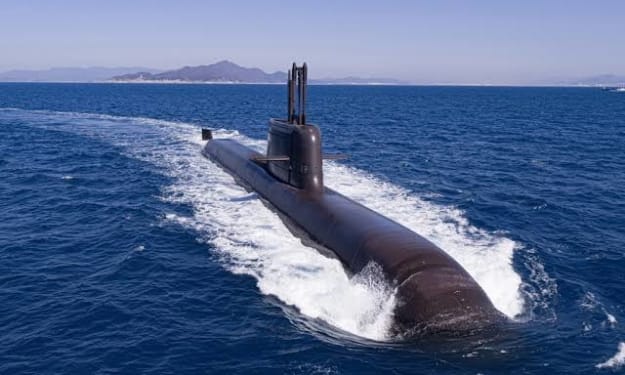
TKMS, Seaspan Shipyards sign teaming for Canadian Patrol Submarine Project. AI-Generated.
A strategic partnership aims to strengthen Canada’s naval future Germany’s Thyssenkrupp Marine Systems (TKMS) and Seaspan Shipyards of Canada have signed a teaming agreement for the Canadian Patrol Submarine Project, marking a major step forward in Canada’s effort to modernize its underwater fleet. The partnership brings together international submarine expertise and domestic shipbuilding capability, setting the stage for one of the most important defense procurement programs in Canadian history. The agreement reflects Canada’s growing focus on maritime security, Arctic operations, and fleet renewal, while also supporting long-term industrial growth at home. Why Canada Needs New Patrol Submarines Canada’s current submarine fleet has served the country for decades, but evolving security challenges and aging platforms have increased the need for replacement. Modern patrol submarines are essential for: Protecting national waters Monitoring Arctic and coastal regions Supporting NATO commitments Deterring potential threats below the surface As global competition intensifies in the world’s oceans, submarines remain one of the most effective tools for surveillance and defense. Canada’s vast coastline and growing Arctic interests make underwater capability especially critical. Who Are the Partners? Thyssenkrupp Marine Systems (TKMS) TKMS is one of the world’s leading designers and builders of submarines and surface warships. The company is best known for its advanced conventional submarines, which are used by navies across Europe, Asia, and beyond. TKMS brings decades of experience in stealth technology, underwater endurance, and combat systems integration. Seaspan Shipyards Seaspan Shipyards is Canada’s largest shipbuilding company and a key partner in the country’s National Shipbuilding Strategy. Based in British Columbia, Seaspan has been responsible for delivering major naval and coast guard vessels while building up Canada’s industrial and technical workforce. Together, the two companies aim to combine global expertise with local production, ensuring that Canada gains both advanced submarines and long-term economic benefits. What the Teaming Agreement Means A teaming agreement is an early-stage partnership that outlines how companies will work together if selected for a major defense program. In this case, it signals TKMS and Seaspan’s joint intent to compete for the Canadian Patrol Submarine Project as a unified team. Key elements of the agreement include: Shared design and production planning Canadian-based construction and assembly Technology transfer and skills development Long-term maintenance and support in Canada This approach aligns with Canada’s requirement that major defense projects support domestic industry and create jobs. Boosting Canada’s Shipbuilding Industry One of the most significant aspects of the partnership is its potential impact on Canada’s shipbuilding sector. By involving Seaspan in submarine construction, the project would help develop underwater vessel expertise within Canada — an area traditionally limited to a few specialized countries. Benefits include: Creation of high-skilled jobs Development of advanced manufacturing capabilities Strengthening of Canada’s defense supply chain Reduced reliance on foreign maintenance facilities Over time, this could position Canada as a regional center for submarine support and modernization. Strategic Importance of Submarines Submarines play a unique role in modern naval operations. Unlike surface ships, they can operate undetected for long periods, making them ideal for intelligence gathering and deterrence. For Canada, patrol submarines are especially valuable for: Arctic sovereignty missions, where stealth is essential Monitoring shipping lanes and underwater activity Training and joint exercises with allies Defending maritime approaches The TKMS-Seaspan partnership aims to deliver submarines capable of meeting these demands in both peacetime and high-tension environments. Global Context and Competition Canada’s submarine project is drawing interest from several international defense companies. Many countries are upgrading their underwater fleets as naval competition increases in the Atlantic, Pacific, and Arctic regions. By teaming with TKMS, Seaspan gains access to proven submarine designs that can be adapted to Canada’s specific needs. For TKMS, the partnership offers a strong local presence and a path to meeting Canada’s industrial participation requirements. This combination improves the bid’s competitiveness while reducing technical and delivery risks. Challenges Ahead Despite the promise of the partnership, the project still faces challenges. Large defense procurements are complex, involving: Long timelines High costs Strict technical requirements Political and budgetary oversight Both companies will need to demonstrate that their proposal is cost-effective, reliable, and aligned with Canada’s strategic goals. Clear planning, transparency, and strong coordination will be essential for success. What This Means for Canada’s Navy If selected, the TKMS-Seaspan team could play a central role in shaping the future of Canada’s submarine fleet. Modern patrol submarines would significantly enhance the Royal Canadian Navy’s ability to operate in challenging environments and support allied missions. More importantly, the project represents a shift toward greater self-reliance, ensuring that Canada can build, maintain, and upgrade critical naval assets at home. Conclusion The teaming agreement between TKMS and Seaspan Shipyards marks an important milestone in Canada’s pursuit of next-generation patrol submarines. By combining international submarine expertise with domestic shipbuilding strength, the partnership offers a compelling vision for modernizing Canada’s underwater capabilities. As the Canadian Patrol Submarine Project moves forward, this collaboration highlights the growing importance of strategic partnerships, industrial development, and maritime security. Whether ultimately selected or not, the agreement underscores Canada’s commitment to building a capable navy while investing in its own defense industry for the long term.
By Fiaz Ahmed 10 days ago in The Swamp