Latest Stories
Most recently published stories on Vocal.
How to Master the New Atlas Tree in PoE 3.27 for Maximum Profit
Path of Exile’s Atlas has always been at the heart of each league. With the 3.27 “Rising Tide” update, the game introduces a fresh Atlas tree, new Kirac missions, and a revamped scarab system. To turn your league experience into a profitable journey, you’ll need a solid three-phase strategy. This approach focuses on fast early-game progress, mid-league density farming, and late-game scarab optimization. By the end of each phase, you’ll have earned a consistent stream of PoE 1 Currency, enhancing your gameplay.
By Smsankar Goswami8 days ago in Gamers
Farah Nasser: Husband, Age, Biography, Career, Illness, Net Worth & More. AI-Generated.
Farah Nasser is one of Canada’s most respected journalists and news anchors. With her warm personality, sharp intellect, and decades of experience in broadcast journalism, she has become a familiar face to millions of Canadians.
By Enoch Sagini8 days ago in Humans
What Is Blox Stock? A Beginner’s Guide to Its Rising Popularity
What is blox stock is a question many investors are asking today. As this stock gains attention, people want to know why it is popular and if it is worth their time. This guide explains what is blox stock in easy language, so anyone can understand it and make smart decisions. If you are new to investing, check out our guide on how to invest safely as a beginner for tips before making any moves.
By John.doe7988 days ago in Trader
Sandie Rinaldo: Husband, Salary, Net Worth, Health, Children, Biography, Career & More. AI-Generated.
Veteran journalist Sandie Rinaldo has been a familiar face on Canadian television for more than five decades. As the first woman in Canada to anchor a national weekday newscast, Rinaldo has paved the way for generations of female journalists.
By Enoch Sagini8 days ago in Humans
The Final Legacy of Alexander the Great: How One Man Changed the Ancient World
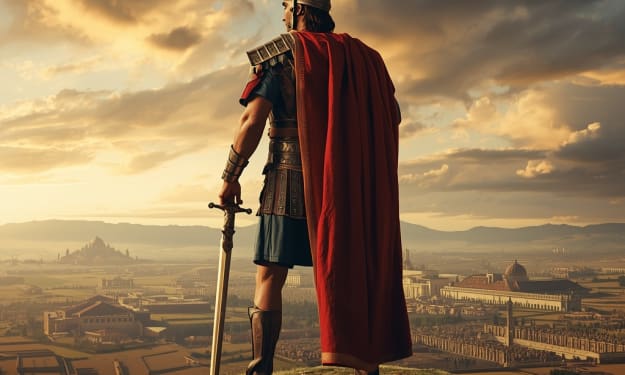
Alexander inherited a strong kingdom from his father, Philip II of Macedon, but he transformed it into something far larger. Within a little more than a decade, he conquered the Persian Empire, marched through Egypt, reached Central Asia, and entered parts of India. This rapid expansion created one of the largest empires of the ancient era. Yet Alexander’s vision went beyond military victory. He sought to create a world where Greek and Eastern cultures blended together. This cultural mixing became one of his most lasting achievements.
By Say the truth 8 days ago in History
Alexander the Great — Part 4: Death, Division, and an Immortal Legacy
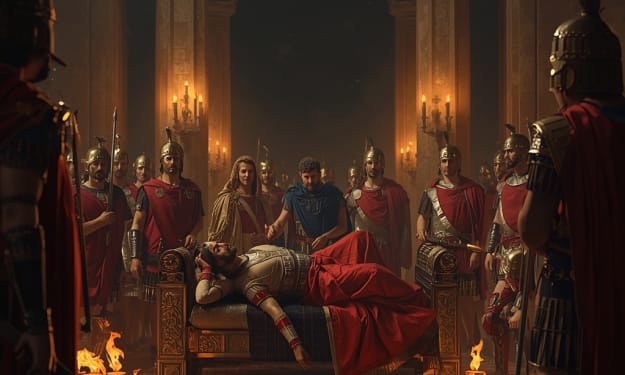
Babylon had become Alexander’s administrative center and was intended to be the capital of his vast empire. The city was strategically located and symbolized the blending of Eastern and Western cultures — a key vision for Alexander. He planned new military campaigns, including a possible invasion of Arabia, and began organizing naval expeditions. However, after days of heavy drinking and planning, Alexander suddenly fell ill. Ancient sources describe him suffering from fever, weakness, and the gradual loss of speech. Within roughly ten days, he died. The exact cause of Alexander’s death remains one of history’s great mysteries. Some historians suggest malaria, typhoid fever, or another disease common in the region. Others believe complications from old battle wounds and exhaustion contributed to his decline. There have also been theories of poisoning, though evidence remains inconclusive. Whatever the cause, the sudden loss of such a powerful ruler left a massive empire without clear leadership. Alexander had not named a definitive successor. When asked on his deathbed who should inherit the empire, he reportedly said, “To the strongest.” Whether this statement is accurate or not, it reflected the reality that followed. His generals, known as the Diadochi, began competing for control. At first, they attempted to maintain unity by ruling in the name of Alexander’s unborn son and his half-brother, but tensions quickly escalated into open conflict. The Wars of the Diadochi lasted for decades. Former allies turned against each other, carving the empire into separate kingdoms. Ptolemy took control of Egypt and established a dynasty that would rule for nearly three centuries. Seleucus gained vast territories in the east, forming the Seleucid Empire. Antigonus and his descendants controlled parts of Asia Minor and Greece. Instead of a single unified empire, Alexander’s conquests transformed into a network of Hellenistic states. Despite political fragmentation, Alexander’s cultural influence continued to grow. His campaigns had spread Greek language, art, and philosophy across Asia and the Middle East. This fusion of Greek and local traditions created what historians call the Hellenistic world. Cities founded by Alexander, especially Alexandria in Egypt, became centers of learning and innovation. The Library of Alexandria housed thousands of scrolls and attracted scholars from across the known world. Advances in science, mathematics, astronomy, and medicine flourished during this period. Alexander’s leadership style also left a lasting impact. He encouraged cultural integration, adopting aspects of Persian dress and customs and promoting marriages between his soldiers and local populations. Though some of his Macedonian troops resisted these policies, they contributed to the blending of cultures that defined the Hellenistic age. Trade routes expanded, connecting Mediterranean markets with those in India and Central Asia. Ideas and technologies traveled along these routes, shaping civilizations for centuries. Over time, Alexander became more than a historical figure; he became a legend. Stories about his life were retold in many cultures, each adding its own interpretations. In Greek and Roman traditions, he was portrayed as a heroic conqueror and brilliant strategist. In Persian and Middle Eastern tales, he appeared as a complex ruler, sometimes wise and sometimes destructive. In South Asian folklore, he was remembered as a powerful but distant invader. These varied portrayals demonstrate how deeply his story resonated across different societies. Historians continue to debate Alexander’s character. Some view him as a visionary who sought to unite diverse peoples under a shared culture. Others see him as an ambitious conqueror driven by personal glory. He could be generous and respectful toward defeated enemies, as seen with King Porus, but also ruthless when facing resistance. His execution of close companions, such as the general Parmenion, and his increasing demand for divine honors reveal the pressures and changes he experienced as his empire grew. What is certain is that Alexander transformed the ancient world in an extraordinarily short time. In little more than a decade, he dismantled one of the largest empires in history and replaced it with a new cultural and political landscape. His campaigns opened routes for trade and communication between East and West, influencing the spread of ideas that would shape future civilizations. Even the rise of the Roman Empire was indirectly influenced by the Hellenistic states that emerged from Alexander’s conquests. Alexander’s tomb itself became part of the mystery surrounding his legacy. After his death, his body was placed in a golden sarcophagus and eventually transported to Egypt. It was displayed in Alexandria, where later rulers and visitors reportedly paid their respects. Over time, however, the exact location of his tomb was lost. Despite numerous searches, it has never been definitively found, adding another layer to the legend of the man who conquered so much yet left behind unanswered questions. Part 4 of Alexander’s story shows that while his life ended abruptly, his influence did not. His empire fractured, but his vision of cultural connection endured. He remains a symbol of ambition, leadership, and the complexities of power. Alexander the Great’s journey from a young Macedonian prince to the ruler of a vast empire continues to inspire fascination. His story is not only about conquest but also about the spread of ideas, the blending of cultures, and the enduring impact one individual can have on the course of history.
By Say the truth 8 days ago in Humans
Philippines Data Center Rack Market 2026: Digital Infrastructure Expansion & Enterprise IT Growth. AI-Generated.
Philippines Data Center Rack Market Overview The Philippines data center rack market growth is emerging as a critical component of the country’s digital infrastructure as businesses, governments, and service providers accelerate their transition toward cloud computing and data-driven operations. Data center racks — the structural backbone that houses servers, networking equipment, and storage systems — are gaining importance as demand for reliable, scalable, and secure IT environments continues to rise. The Philippines data center rack market size reached USD 20.1 Million in 2025. Looking forward, IMARC Group expects the market to reach USD 38.9 Million by 2034, exhibiting a growth rate (CAGR) of 7.60% during 2026-2034.
By Manisha Dixit8 days ago in Trader
Is it me you're looking for?
The phone rang. He searched everywhere for it. His excuses of old age were wearing thin; his wife’s patience had worn even thinner long ago. He found it in his raincoat pocket. They laughed together at his joke. ‘Saving it for a rainy day.’ He had missed the call from his son in New Zealand. He wouldn’t ring back, not all that way. It must be expensive, it’s the other side of the World, isn’t it?
By Keith Butler8 days ago in Writers
Footsteps Across the Hills. AI-Generated.
Aiden had always loved wandering. Ever since he was a child, he enjoyed exploring new places, walking down quiet paths, and discovering hidden corners of his town. But as he grew older, life became busy—school, homework, chores, and responsibilities left little time for adventure. One weekend, Aiden decided to break the routine and go on a hike in the nearby hills.
By Sudais Zakwan8 days ago in Wander
US-Iran talks: A percentage assessment of the chances of success, failure and partial success. AI-Generated.
The high-level talks between the United States and Iran, held today in Muscat, the peaceful and beautiful capital of the Sultanate of Oman, are a very sensitive and historic stage in global diplomacy, where the eyes of the whole world are fixed on this table because these talks are not only for the relations between the two countries, but also for the Middle East and the entire international community to guarantee peace, security and economic stability. In the current delicate and complex geopolitical context, the increasing tension between the United States and Iran, economic sanctions, the risks of military conflict, and the balance of power in the region have ensured that a safe, neutral and credible place is needed for the talks, and the Sultanate of Oman, as always, has provided this platform under its historical traditions, high-level and impartial mediation policy, in which the Omani leadership not only highlighted its key role of hospitality but also implemented its consistent policy of finding a peaceful solution in the region. The calm atmosphere of Muscat and Omani mediation are extremely important in balancing the positions of the United States and Iran on Iran's nuclear program and economic sanctions. are playing a role, and analytically, this time, a clear “strategic flexibility” is expected from the US because Washington is preferring a de-escalation arrangement rather than a direct confrontation in the region, under which partial return of Iran’s frozen assets and some humanitarian relief of sanctions can be provided, while Iran is also showing potential flexibility to not exceed the 60% limit in uranium enrichment and limit international monitoring in view of public pressure, demands for economic improvement, and the internal policy of the new administration of President Masoud Pazishkian. As a result, the chances of success of the negotiations are appearing to be 60 to 70% in the current circumstances, because both countries have now run out of room to maintain the status quo, and in case of success, an interim deal is possible that will provide the basis for a permanent solution in the future. However, there are also risks of failure, because the internal political Pressure, regional adversaries, and the political demands of global power can affect it. Oman's foreign policy has always been based on goodwill, neutrality, and the promotion of world peace, which Sultan Qaboos bin Said established and the current Sultan Hisham bin Tariq has taken it to new heights, establishing the Sultanate of Oman as an exemplary diplomatic center on the global stage. Oman also played a key role in the process of the historic nuclear deal in 2013 and the same dedication to world peace remains today. Technical issues such as Iran's nuclear program, enrichment levels, cooperation with the International Atomic Energy Agency (IAEA), and complex issues of monitoring would not have been possible to resolve without Oman's mediation. These negotiations are also the focus of other powerful countries in the region, including Saudi Arabia, Israel, and the United Arab Emirates, where Saudi Arabia and the United Arab Emirates seek stability and see Oman's mediation in the wider interest of the region. While despite Israel's strategic concerns, the attention of the international community is focused on Muscat's peaceful corridors, the global politics of oil and Given the importance of the Strait of Hormuz, the success of these negotiations is essential for the entire world. Muscat's geographical importance and Oman's impartial mediation are like the backbone for the security of this waterway, the restoration of the global energy supply chain, and long-term stability in the region. The details of the delegations involved in the negotiations are also important; The US delegation is led by Brett McGurk, a highly experienced White House official and expert on Middle East affairs, and is accompanied by Acting Special Envoy Abram Paley. The Iranian delegation is led by Abbas Araghchi and Ali Bagheri Kani. All of these experienced diplomats are advancing the negotiations in light of global tensions, economic pressures, and security threats in the region. The impartial facilitation provided by Oman has been appreciated not only by Washington and Tehran, but also by the United Nations and the European Union. Oman has proven that it is not a country but a neutral and effective diplomatic institution for the international community that is capable of protecting human life and global security from threats. The success of the negotiations will provide solid support to Iran's economy and will also be a success in foreign policy for the United States, which will have a positive impact on the global energy market, investment opportunities, regional security, and international relations. There will be, while the failure of the negotiations could lead to military tension in the region, economic uncertainty, and global instability. In short, these negotiations held today in Muscat are not just talks between two countries, but the foundation of a new global diplomatic system, where wisdom, dialogue, and negotiations take precedence over the use of force. Oman's mediation has once again played its historic role in turning the tide of world history towards peace, and it is hoped that this process will provide new horizons of lasting peace, cooperation, and balance for the region and the international community. — Malik Sarfaraz Hussain Awan
By Malik Sarfraz Hussain Awan8 days ago in Journal