Latest Stories
Most recently published stories on Vocal.
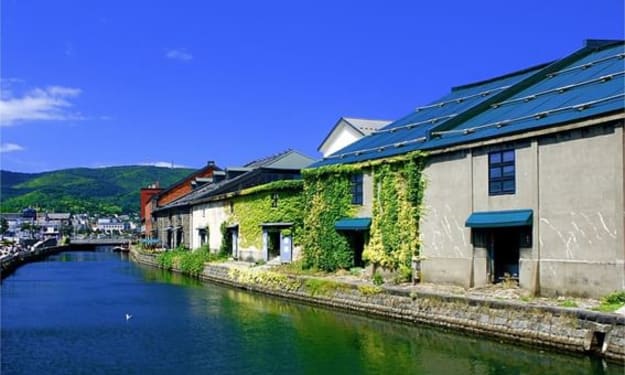
How to Take the Best Photos in Otaru’s Most Scenic Spots
One of the prettiest towns in Hokkaido, Japan, Otaru is a place with an undeniable nostalgic feel. With its charming streets lit by gas lamps, the canal, and old warehouses, it’s a town that makes you feel as though you’ve just stepped into the past – it’s a wonderful feeling. You could be visiting for a day or planning to stay a bit longer – however long it is, if you have your camera with you, you’ll be endlessly clicking away.
By Claudia Fennel7 days ago in Viva
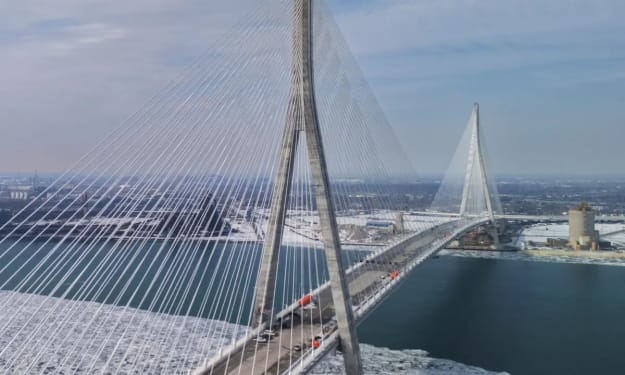
Bridge Owner Lobbied Trump Administration Before President’s Blast at U.S.–Canada Crossing. AI-Generated.
In early February 2026, a high-profile controversy emerged over the Detroit–Windsor border crossing, drawing attention to both political influence and international trade policy. Reports indicate that the owner of the privately held Ambassador Bridge met with senior Trump administration officials just hours before President Donald Trump publicly criticized and threatened to block the opening of the new Gordie Howe International Bridge, a project jointly managed by the United States and Canada.
By Ayesha Lashari7 days ago in The Swamp
FCC Greenlights Massive Expansion of Amazon Leo Satellite Network. AI-Generated.
In a game-changing move for satellite broadband, the U.S. Federal Communications Commission (FCC) has approved Amazon’s plan to significantly expand its Amazon Leo low Earth orbit (LEO) satellite constellation. This approval allows Amazon to launch roughly 4,500 additional satellites, bringing the total network to nearly 7,736 spacecraft. It’s a bold step toward challenging SpaceX’s Starlink and pushing forward Amazon’s vision of global internet connectivity.
By Ayesha Lashari7 days ago in Earth
Russia-Ukraine War Enters Fourth Year: Can Flamingo, Oreshnik Missiles, F-16 Jets and AI Drones Change the Balance?
On the 24th of this month, four years will be completed since Russia’s invasion of Ukraine. This war has continued without pause for four years, and there are still no visible signs that it will end. Negotiations between Russia and Ukraine are being held in Abu Dhabi under U.S. mediation. On Thursday, another round of these talks ended without any progress. If diplomacy is failing to deliver results, do the two countries possess such advanced weapons that could potentially tilt the balance of war in favor of either side?
By Real content7 days ago in Chapters
The Pride Flag and the Diversion. Top Story - February 2026.
For nearly a decade, the LGBTQIA Pride Flag rippled in the wind at Christopher Park, a kaleidoscope of color staked into the soil of America’s first national monument to LGBTQIA+ liberation. That flag came down this week. Federal officials, citing new guidance from the Trump Administration, silently lowered the rainbow flag from its pole across the street from the Stonewall Inn. The birthplace of the modern gay rights movement now flies only the United States flag.
By Tim Carmichael7 days ago in Pride
10 Countries With the Most Billionaires in 2025–26: Where Does India Rank? . AI-Generated.
The world’s billionaires have always captured our imagination. From tech innovators to industrial moguls, these individuals don’t just hold immense wealth—they shape industries, influence economies, and sometimes even politics. But have you ever wondered which countries produce the most billionaires? And more importantly, where does India stand in this elite club in 2025–26?
By Aqib Hussain7 days ago in The Swamp
10 Countries With the Most Billionaires in 2025–26: Where Does India Rank? . AI-Generated.
The world’s billionaires have always captured our imagination. From tech innovators to industrial moguls, these individuals don’t just hold immense wealth—they shape industries, influence economies, and sometimes even politics. But have you ever wondered which countries produce the most billionaires? And more importantly, where does India stand in this elite club in 2025–26?
By Aqib Hussain7 days ago in The Swamp
Telegram Is Reportedly Being Slowed and Restricted in Russia. AI-Generated.
In recent days, Telegram — one of the world’s most widely used messaging platforms — has reportedly been slowed and restricted in Russia, prompting concern among millions of users. The Russian communications regulator, Roskomnadzor, has been throttling Telegram’s network traffic, affecting media uploads, downloads, and the smooth operation of voice and video messages. While text messaging continues to work, the degraded performance has left many users frustrated. This is part of a broader effort by Russian authorities to tighten control over foreign technology platforms and push citizens toward government-backed alternatives. For Telegram users in Russia, this has significant implications for daily communication, business operations, and access to news. What Exactly Is Happening? Reports indicate that Telegram’s functionality has slowed significantly across Russia. Media-heavy features such as voice messages, videos, and large file transfers are experiencing delays, while connections often drop intermittently. Users have noted that group chats and channels that rely on fast updates have become less reliable. The slowdown appears to be a deliberate measure by Roskomnadzor, citing Telegram’s alleged non-compliance with Russian laws, including content regulation and data localization requirements. However, no official security threat has been publicly disclosed. This partial throttling means that Telegram is still accessible but its performance is noticeably hindered. Why Russia Is Targeting Telegram Russia’s authorities claim that Telegram has failed to comply with multiple legal requirements: Removing content flagged by authorities Hosting user data on Russian servers Preventing misuse of the platform for criminal or extremist activity The Kremlin has also been promoting “digital sovereignty,” encouraging the use of state-backed messaging platforms. Telegram’s refusal to fully comply with local laws makes it a prime target for regulation, as the government seeks greater control over online communication. Telegram’s founder, Pavel Durov, has criticized these measures, arguing that they violate privacy and freedom of expression while attempting to force users into government-supervised alternatives. Historical Context: Telegram and Russia Telegram has faced Russian restrictions before. In 2018, the platform was temporarily banned for failing to provide encryption keys to authorities, only for the ban to be lifted later due to widespread public disruption. In 2025, Russia also imposed partial restrictions on voice and video messaging. These recurring measures highlight a broader pattern: Russian regulators increasingly control foreign platforms through fines, throttling, or outright bans, often citing security, compliance, or national legislation. Telegram’s current slowdown is the latest example in a decade-long tension between the platform and Russian authorities. Impact on Users The restrictions have multiple consequences for Russian Telegram users: 1. Disrupted Communication Slower media uploads and downloads affect how users share photos, videos, and voice messages. Large group chats and public channels face delays, reducing their reliability for real-time communication. 2. Reduced Access to Information Telegram channels are widely used as news sources. Throttling media-rich content hampers the app’s role as a source of updates and public information, particularly in regions with restricted press freedom. 3. Adoption of VPNs Many users are turning to VPNs or proxy services to bypass the throttling, illustrating both the demand for unrestricted access and the limitations of government-imposed restrictions. 4. Shift Toward State-Backed Apps Russia is encouraging the adoption of its government-backed messaging platform, Max, raising concerns over privacy, surveillance, and state control. International Reactions Human rights organizations, including Amnesty International, have criticized the throttling as a restriction on freedom of expression. Limiting Telegram’s performance undermines digital rights and the ability of citizens to communicate privately and securely. Globally, the situation in Russia raises questions about the future of encrypted messaging and the balance between government oversight and personal privacy. Telegram’s challenges could set a precedent affecting other countries’ regulatory approaches to tech platforms. What Comes Next for Telegram? Telegram continues to function in Russia, but the future remains uncertain. Possible scenarios include: Further throttling or partial blocking of the platform New fines or legal actions against the company Full bans if compliance is not achieved Increased use of VPNs by users to bypass restrictions The platform’s commitment to privacy and free communication will continue to be tested as Russian authorities tighten regulatory controls. Users, both inside and outside Russia, will likely monitor the situation closely to see how it evolves. Conclusion Russia’s throttling of Telegram highlights a growing global tension between government control and digital freedom. While users in Russia still have access to the platform, its performance degradation affects daily communication, business activities, and access to news. For the international community, the Telegram situation serves as a reminder of the challenges facing encrypted communication in countries with strict online regulations. It also underscores the ongoing struggle between user privacy, freedom of expression, and government oversight in the digital age. As Telegram navigates these challenges, the resilience of both the platform and its users will be critical. For now, Russian users are adapting with workarounds, while the world watches closely to see if more severe restrictions are coming next.
By Ayesha Lashari7 days ago in The Swamp