Latest Stories
Most recently published stories on Vocal.
My Husband Has Started a Friendship With a Woman He Used to Work With. Am I Right to Be Worried?. AI-Generated.
When a partner forms a close friendship with someone of the opposite sex, especially someone from their past, it can stir emotions that are hard to ignore. Trust, insecurity, and fear of betrayal can all collide at once. For many spouses, the question is not whether the friendship itself is wrong, but whether the boundaries around it are healthy. A reader recently shared her concern: her husband has reconnected with a woman he once worked with years ago. What began as casual messages has slowly turned into frequent communication—texts, social media interactions, and even plans to meet for coffee. The reader insists she does not want to be controlling, but she cannot shake the feeling that something about the situation feels uncomfortable. This reaction is not unusual. Emotional discomfort does not always mean that something inappropriate is happening, but it does signal that something deserves attention. Why This Triggers Anxiety Friendships with former colleagues are common, but when one of those friendships becomes secretive or intense, it can blur into emotional territory that threatens a marriage. The fear is not always physical infidelity—it is emotional intimacy. Sharing personal problems, private jokes, and daily updates with someone outside the marriage can slowly replace the closeness that should exist between spouses. Experts say jealousy itself is not the enemy. It often points to unmet emotional needs or unclear boundaries. If a spouse feels excluded or dismissed when concerns are raised, the problem becomes less about the friend and more about communication within the marriage. Transparency Matters One of the strongest indicators of whether a friendship is healthy is transparency. Does your husband openly talk about this woman? Does he show you their messages willingly? Or does he become defensive when you ask questions? Healthy friendships survive daylight. If the relationship is innocent, there should be no need for secrecy. Hiding phones, deleting messages, or downplaying how often they talk are warning signs—not proof of cheating, but signals that boundaries may be slipping. Trust is built not only on faith but on behavior. If your partner’s actions create doubt, those feelings deserve to be discussed rather than buried. The Difference Between Control and Boundaries It is important to distinguish between controlling behavior and reasonable boundaries. You are not asking your husband to give up friendships. You are asking for reassurance and respect for your emotional safety. Boundaries might include: Not sharing intimate marital problems with this friend Limiting one-on-one meetings Including you in social settings when possible Being open about communication These are not demands—they are safeguards for the relationship. How to Start the Conversation Approach the topic calmly and without accusation. Instead of saying, “I don’t trust you,” try: “I feel uneasy because I don’t understand what this friendship means to you, and I need reassurance.” This keeps the focus on your feelings rather than placing blame. A loving partner will want to understand your concern, not dismiss it. If he responds with empathy and works with you to find solutions, that is a positive sign. If he mocks your worries or refuses to discuss boundaries, that is a deeper issue than the friendship itself. Self-Reflection Is Also Important Ask yourself what exactly worries you. Is it her specifically? Is it how much time they spend talking? Or is it a sense that your emotional connection with your husband has weakened? Sometimes fear is rooted in past experiences—betrayal, insecurity, or lack of communication. Understanding your own emotions helps prevent the discussion from turning into conflict. When to Seek Help If the tension continues or trust feels damaged, couples counseling can provide a neutral space to discuss expectations and fears. A counselor can help define boundaries that both partners feel comfortable with. Ignoring the issue will not make it disappear. Small doubts can grow into resentment if left unspoken. The Bottom Line You are not wrong to feel uneasy. Your feelings are signals, not accusations. A marriage should be a place where concerns are heard and respected. A friendship outside the marriage is not automatically dangerous, but it becomes problematic when it competes with the marriage for emotional closeness. The real question is not whether your husband should have this friendship, but whether your relationship still feels safe, valued, and prioritized. Trust thrives where openness exists. If both partners protect that trust, friendships do not have to become threats. Sometimes, what seems like a small issue is actually a chance to strengthen communication and reaffirm commitment. Handled honestly and calmly, this moment can bring clarity rather than conflict.
By Fiaz Ahmed 5 days ago in Longevity
The Spiritual Meaning of Solar Eclipses and How to Harness Their Energy.
A solar eclipse is more than an astronomical event. It marks a rare alignment between the sun, moon, and earth. In spiritual traditions, this alignment signals interruption, reset, and renewal. The sun represents identity and life force. The moon reflects emotions and the subconscious. When the moon covers the sun, you face a symbolic pause in your outer expression so your inner world can speak.
By Wilson Igbasi5 days ago in Humans
British Bakery Sales in UK: Growth, and Opportunities
The British bakery sector plays a pivotal role in the UK's food industry, blending time-honoured techniques with contemporary innovation to cater to evolving consumer needs. From the delightful scent of freshly baked goods filling local streets to the ease of online orders, the market has seen notable growth in recent years. This article explores the current state of bakery sales in the UK, highlights key trends shaping the sector, and identifies opportunities for businesses to thrive in this competitive arena.
By Larry Clark5 days ago in 01
The Theosophical Society. Content Warning.
A Convergence of Worlds: The Birth of the Theosophical Society Spiritual history during the nineteenth century reveals an era shaped by collision as much as by discovery. Industrial expansion transformed labor, cities, and social structures across Europe and North America. Railways, telegraphs, and mechanized production compressed distance and accelerated communication. Scientific advances challenged inherited cosmologies. Geological research extended the age of the Earth beyond biblical chronologies. Evolutionary theory, popularized by Charles Darwin, reframed humanity’s place in nature. Astronomy expanded the scale of the universe. Chemistry and physics advanced material explanations for phenomena once attributed to divine agency. Established religious institutions confronted growing skepticism among intellectual circles and the rising middle class.
By Marcus Hedare5 days ago in BookClub
7 Must-Read Personal Growth Books to Read Before You Turn 30. AI-Generated.
Turning 30 is a milestone that many of us approach with a mix of excitement and trepidation. It’s a time when we begin to reflect on our choices, aspirations, and the person we want to become. The right personal growth books can serve as invaluable guides on this journey, helping us cultivate resilience, clarity, and purpose. Below is a list of 7 must-read personal growth books to read before you turn 30.
By Diana Meresc5 days ago in BookClub
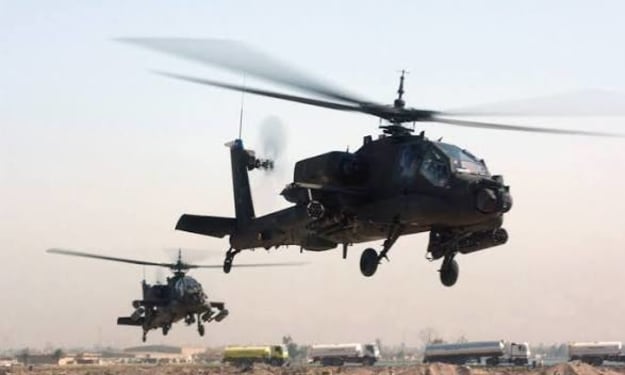
As Costly As Rafale, Far Less Survivable: Why U.S. Apache Helos Found No Place in India’s $40B Deal. AI-Generated.
India’s ambitious $40 billion defense modernization program has reshaped the future of its air combat fleet, with a strong emphasis on survivability, multirole capability, and long-term strategic autonomy. While the deal prominently features advanced fighter jets such as the French-made Rafale, the conspicuous absence of the U.S.-built Apache attack helicopter has raised questions among defense analysts. The Apache, widely regarded as one of the most lethal helicopter gunships in the world, was once expected to play a larger role in India’s expanding aerial arsenal. Instead, it found itself sidelined in favor of other platforms deemed better suited to India’s evolving operational doctrine. The Apache’s reputation is formidable. Designed for high-intensity battlefields, it boasts advanced radar, precision-guided munitions, and a long combat record in U.S. military operations. However, India’s $40 billion procurement strategy is not merely about firepower; it is about survivability in contested airspace, integration with indigenous systems, and long-term cost-effectiveness. Cost Without Strategic Flexibility One of the most striking comparisons is cost. Each Apache helicopter, depending on configuration, can approach the price range of modern fighter aircraft such as Rafale. This raises a critical question: why invest fighter-jet-level resources in a helicopter platform that is inherently more vulnerable to modern air defenses? Helicopters, by design, operate at lower altitudes and slower speeds, making them more exposed to surface-to-air missiles, shoulder-fired weapons, and radar-guided systems. In modern battlefields saturated with air defense networks, survivability is no longer measured by armor alone but by stealth, speed, and electronic warfare capabilities—areas where fighter jets significantly outperform attack helicopters. Survivability in High-Threat Environments India’s security challenges include two nuclear-armed neighbors and the possibility of conflict in high-altitude and technologically dense theaters. In such scenarios, survivability becomes paramount. The Apache, though heavily armored, lacks the low-observable features and high-speed escape profiles of advanced fighter jets. Military planners increasingly prioritize platforms that can penetrate defended airspace, deliver strikes, and exit before detection or interception. The Apache’s operational doctrine works best in environments where air superiority is already established. India’s planners, however, are preparing for situations where air superiority cannot be assumed from the outset. Logistics and Dependency Concerns Another factor is logistical dependence. Apache helicopters rely heavily on U.S. supply chains for spare parts, software updates, and weapon systems. India has long pursued a policy of reducing overreliance on any single foreign supplier. While cooperation with the United States has grown, New Delhi remains cautious about potential political or regulatory constraints that could affect availability of parts during crises. By contrast, the Rafale deal includes technology transfer, local maintenance infrastructure, and greater autonomy in operations. This aligns with India’s broader “Make in India” and self-reliance initiatives in defense production. Shifting Doctrines and Indigenous Alternatives India is also investing heavily in indigenous rotary-wing platforms and armed drones. Attack helicopters are increasingly seen as vulnerable assets compared to unmanned systems that can perform reconnaissance and strike missions without risking pilot lives. Drones can loiter longer, operate at higher altitudes, and integrate more seamlessly with network-centric warfare strategies. Moreover, India’s focus is shifting toward multi-domain warfare—coordinating air, land, cyber, and space assets. Fighter aircraft and unmanned systems are better suited for such integration than traditional attack helicopters. Political and Strategic Calculations Defense procurement is never purely technical. Political alignment, strategic signaling, and long-term partnerships all play roles. The Rafale deal strengthened ties with France, a country that has historically supported India’s strategic independence and provided fewer restrictions on operational use of equipment. The Apache, despite its battlefield credibility, represents a model tied closely to U.S. doctrine and export controls. For India, the priority is not just buying weapons but ensuring freedom of action in future conflicts. The Bigger Picture The exclusion of Apache helicopters from India’s $40 billion deal does not mean the platform is ineffective. It remains one of the most capable attack helicopters in the world. However, India’s requirements are evolving toward survivability in high-threat environments, reduced dependency on foreign supply chains, and integration with indigenous and unmanned systems. In a battlefield defined by long-range missiles, electronic warfare, and dense air defense networks, a helicopter—no matter how advanced—faces limitations that fighter aircraft and drones do not. When cost is nearly comparable to a multirole fighter jet, the calculus becomes even more unforgiving. Conclusion India’s decision reflects a strategic shift rather than a rejection of U.S. technology. The Apache’s absence from the $40 billion deal underscores how modern warfare priorities have changed. Survivability, autonomy, and flexibility now outweigh sheer firepower. In that context, a platform as costly as Rafale but far less survivable in contested airspace simply could not justify its place in one of the largest defense modernization efforts in India’s history. The message is clear: future wars will be fought not just with powerful machines, but with systems that can endure, adapt, and operate independently in the most hostile environments.
By Fiaz Ahmed 5 days ago in The Swamp
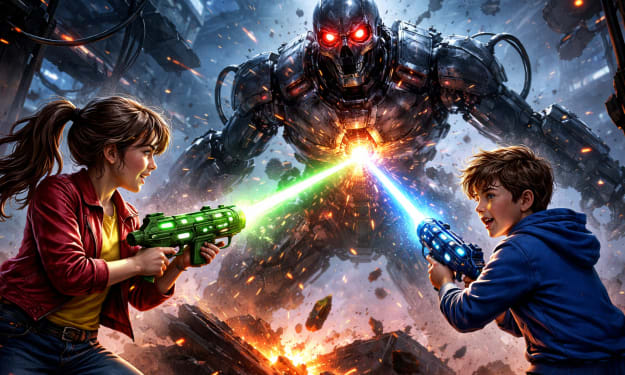
Stop the AI from taking over Earth!
It is the year 5132, I am a 12-year-old girl named Jazzy from the planet of Void and I am travelling to the planet known as ‘Earth’. In my planet, people called me the Princess of Space because I can control time and space, including the planets and the whole universe!
By *+*+*~Teja~*+*+*5 days ago in Chapters
The Whispering Mist of Blackwood Bay. AI-Generated.
The fog didn’t roll into Blackwood Bay; it inhaled it. It started at the jagged teeth of the lighthouse rocks, a thick, curdled white that smelled of wet iron and old secrets. By noon, the town was gone. Not destroyed, just erased from view. Elias stood on his porch, the wood groaning under his weight. He had lived through sixty winters here, but this was different. The mist was humming. It was a low, vibratory sound that felt like it was coming from inside his own teeth. He remembered what the old-timers used to say: “When the fog speaks, don’t answer.”
By GEORGIOS KOULOURIS5 days ago in Fiction
Archana Shivcharan:Building Presence in a Noisy Digital Age. AI-Generated.
The rise of social media has quietly reshaped how individuals and organizations present themselves to the world. Over the past decade, digital platforms have evolved from informal networking spaces into structured environments where communication, branding, and reputation intersect. Within this landscape, professionals like Archana Shivcharan represent a growing workforce that operates behind the scenes, shaping how voices are seen and heard online.
By Archana Shivcharan5 days ago in Education
Amar Bhujbal and the Quiet Architecture of Digital Work. AI-Generated.
In the expanding landscape of digital work in India, much of the attention often settles on influencers, entrepreneurs, or technology founders. Less visible are the professionals who build and maintain the structure behind online presence. Among them is Amar Bhujbal, born on 6 October 1996 in India, whose career as a social media manager reflects a broader shift in how communication and identity are shaped in the digital age.
By Amar Bhujbal5 days ago in Journal