
Why Apple Stores Make You Forget the Price Tag: The Subtle Science of Selling Premium Experiences
The Architecture of Yes: Engineering an Atmosphere Where Price Fades to Feeling

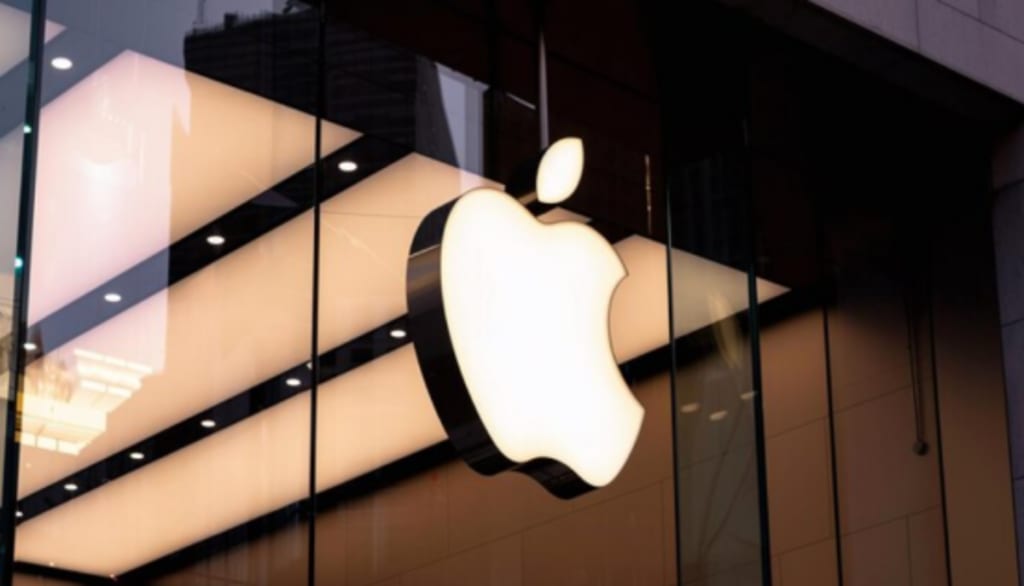
You’re strolling down the street, phone in hand, debating the latest headlines about rising tech prices. That new iPhone seems like a significant investment — one that gives you pause. But then you push open the heavy glass door of an Apple Store. Your feet glide across the smooth stone floor. Your fingers brush the cool, solid surface of a wide oak table. Sunlight pours through immense, flawless windows, illuminating a space that feels more like a contemporary art gallery than a retail outlet. Almost without realizing it, your earlier hesitation begins to dissolve. The premium price, once a glaring hurdle, now feels justifiable.
This isn’t a case of sudden financial carelessness. What you’ve entered is a meticulously engineered environment — an “atmospheric vessel” designed with profound psychological intent. Apple is conducting a masterclass in spatial influence: by systematically removing chaos and clutter, can they make customers more receptive to premium propositions?
In an era of heightened cost-consciousness, brands can no longer rely on specifications alone to command higher prices. Apple’s strategy is nuanced. It doesn’t scream “luxury.” Instead, it quietly embeds the rationale for its value into the very air you breathe, the surfaces you touch, and the light that surrounds you. The true genius of the Apple Store lies in this: the most valuable product it offers may not be the device in your hand, but the feeling it cultivates within you — one of calm, clarity, and confidence that investments seem not only reasonable, but wise.
Deconstructing the Sanctuary: How Space Guides Choice
Every element within an Apple Store is deliberate, working in concert to lower your psychological defenses and elevate your perception of value.
1. The Illusion of Boundlessness with Seamless Glass.
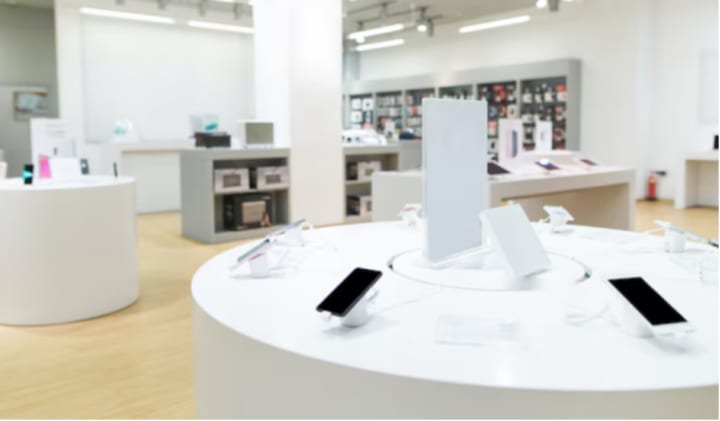
Consider the flagship store on New York’s Fifth Avenue. In its 2011 redesign, Apple replaced 90 individual glass panels with a mere 15 enormous, structurally bonded sheets. This pursuit of visual seamlessness isn’t just an architectural feat; it’s a cognitive trick. By eliminating frames and obstructions, the boundary between inside and outside softens. Your gaze is unobstructed, pulling you into a distraction-free zone. The mental noise of the street fades, replaced by a focused serenity that primes you for considered decision-making.
2. Banishing the Basement with Engineered Natural Light.
The 2019 renovation of that same store tackled a classic retail problem: the dreaded, stuffy underground level. Apple’s solution was a sophisticated system of light shafts and reflectors designed to channel genuine daylight into the subterranean sales floor. This single move transforms the psychology of the space. The underground no longer feels closed off or cheap; it feels connected and airy. Customers naturally linger longer, and increased dwell time, as any retailer knows, directly correlates with a higher propensity to purchase.
3. The 2025 Pivot: Sustainable Materials as the New Luxury.
Recent flagship stores signal a strategic evolution. The once-prevalent cool metals and hard stones are being warmed with responsibly sourced oak, maple, and curated textiles. Coupled with a strict commitment to carbon-neutral operations, the store’s narrative shifts. It is no longer a transactional “temple of commerce” but a “community plaza.” Each visit becomes a subtle, sensory alignment with a progressive value system. You’re not just buying a product; you’re participating in a responsible, forward-thinking ethos. This is premium, redefined for a new generation.
The Strategic Calculus Behind the Calm
Apple’s spatial choices are far more than aesthetic indulgences; they are calculated investments with deep business logic.
Investment as Permanent Marketing.
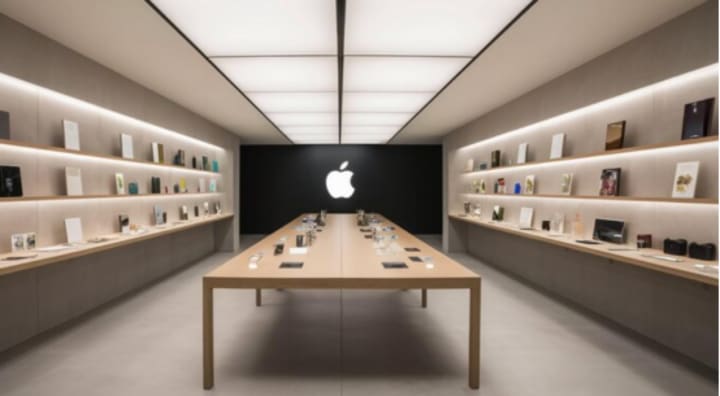
Apple doesn’t view its store construction as a recurring expense, but as a long-term customer acquisition cost. Those architectural landmarks in global city centers are perpetual advertising engines. Tourists photograph them, social media shares them, and they become iconic destinations in their own right. When your subconscious registers the quality of the surroundings — the heft of the doors, the clarity of the glass — the premium price of a MacBook Pro no longer seems anomalous. It feels intrinsically matched to its environment.
Setting the Rules of the Aesthetic Game.
For two decades, Apple defined technological premium through sterile minimalism and impeccable order. As competitors now embrace warmer, homier aesthetics or timeless classicism, Apple is moving the goalposts again. Its embrace of carbon neutrality and biophilic design sets a new, more demanding standard: true luxury is not merely visual, but ethical and sustainable. This raises the barrier to entry, forcing competitors to match not just a look, but a comprehensive, responsible worldview.
The Uncopyable Supply Chain Advantage.
Many brands attempt to mimic the “Apple Store look.” They install clean tables and white walls. What they can not replicate is the quality born of unprecedented supply chain control. Those massive, seamless glass panels are the result of exclusive partnerships and proprietary engineering. Wood and stone are sourced against near-impossible consistency standards. This isn’t just decor; it’s a moat built with capital, relentless patience, and operational dominance that smaller players simply cannot cross.
Cognitive Ease Equals Commercial Leverage.
Traditional retail often operates on a model of aggressive stimulation: loud promotions, stacked merchandise, eager sales associates. This creates visual and auditory noise, triggering anxiety and defensive, hurried decisions. Apple inverts this model entirely. It performs an environmental cleanse. Cables are hidden, promotional posters are absent, and even price tags are discreet. This radical reduction of noise induces a state of cognitive ease. In this calm state, you are more open, more exploratory, and more likely to conclude that your desire for the product is rational. You purchase the device, yes, but more importantly, you purchase the affirming feeling of having made a discerning choice.
Look Deeper Than the Surface
The critical lesson for any brand is to avoid the superficial traps. A beautiful store is not a strategy. I have visited spaces with materials more expensive than Apple’s, yet they were undermined by indifferent staff and disjointed service. This dissonance — -luxury staging paired with mediocre human experience — -is more damaging than having no pretense of premium at all.
Apple’s mastery lies in its holistic alignment. Its spatial design, its service philosophy (“Today at Apple,” the no-commission Genius Bar), and its corporate values (like environmental responsibility) sing the same chord. Carbon neutrality isn’t a marketing slogan; it’s a long-term strategic bet, positioning the brand ahead of a consumer trend that is becoming non-negotiable. Even the famed “aesthetics” are not merely about expense, but about the grueling discipline required to maintain flawless consistency across hundreds of stores worldwide, in every detail and every customer interaction.

Ultimately, transcendent design is human-centric. The most beautiful space fails if it doesn’t make the person within it feel respected, at ease, and profoundly understood.
So, the next time you find yourself in an Apple Store, take a moment. Look beyond the devices on the tables. Feel the space, notice the light, observe the quiet hustle. That — the carefully crafted atmosphere that makes the premium seem palpable and right — is Apple’s most powerful and enduring product.
About the Creator
Cher Che
New media writer with 10 years in advertising, exploring how we see and make sense of the world. What we look at matters, but how we look matters more.
The goals I did not achieve
Every writing goal I made for the year is a wash. It has been this way for a while, but I think it's important to be open about my failures and the reality of how life can get in the way. This is especially true considering the several times I have posted on Vocal about my writing goals, how I was changing my approach, and where I was hoping to be for the upcoming year. I will probably do that again in a couple months, but for now, it is time to acknowledge where I am today.
By Kay Husnick24 days ago in Journal
Which Tasks Benefit Most From a 1080p Desktop Monitor?
Screens guide how people work, learn, and relax every day. A clear screen reduces eye stress and keeps the mind fresh. Recent data show that 1920×1080 (Full HD) remains the most common desktop screen resolution worldwide, with a share of around 20 to 22 percent of all desktop displays in 2025.
By Gabriella Browne5 days ago in Journal
How, Too
Many people wonder how, too. You are not alone, and I am an expert. I will teach you how, too! First, you need to remit a small application fee and fill out an application describing the nature of your financial situation and how often payments will be made, as this will have great bearing on how well I teach you how, too.
By Harper Lewis3 days ago in Fiction




Comments
There are no comments for this story
Be the first to respond and start the conversation.